Most people land in Agra, see the Taj Mahal, click a few photos, and leave the same evening. That’s the biggest mistake first-time visitors make. If you’re searching for the best places to visit in Agra, know this upfront: the city holds several UNESCO World Heritage Sites and Mughal-era landmarks beyond its most famous monument. Agra was the seat of the Mughal Empire for nearly two centuries, and that history spilled into forts, gardens, tombs, and bazaars scattered across the city.
If you’re planning your trip, here’s the short version: Agra has at least 15 places worth your time, and you can realistically cover the top ones in 2 days if you plan your route smartly. This guide walks you through each one — what makes it worth visiting, what it costs, how to reach it, and where to stay nearby.
Quick Answer: Best Places to Visit in Agra
The top places to visit in Agra are the Taj Mahal, Agra Fort, Fatehpur Sikri, Itmad-ud-Daulah (Baby Taj), and Mehtab Bagh. Together, these five cover Mughal architecture, sunset views, and the classic postcard shots. If you’re looking for things to do near Taj Mahal specifically, Agra Fort and Mehtab Bagh are both within a 10-minute ride. Add Akbar’s Tomb, Jama Masjid, and Sadar Bazaar if you have a second day free for heritage tourism beyond the main circuit.
Most travellers need 2 full days to see Agra properly without rushing. A single day is possible but tiring, since the city’s key sites are spread across a 25–40 km radius.
Best Time to Visit Agra
October to March is genuinely the best time to visit Agra — daytime temperatures stay between 15–25°C, which makes long walks through Agra Fort and Fatehpur Sikri comfortable instead of exhausting.
- Winter (Oct–Mar): Best weather, but also peak season — book hotels and Taj Mahal slots early.
- Summer (Apr–Jun): Temperatures often cross 40°C. Only visit if you’re prepared to sightsee strictly before 10 AM and after 4 PM.
- Monsoon (Jul–Sep): Fewer crowds and greener gardens, but sudden showers can disrupt outdoor plans.
The recent trend shows this: more travellers are shifting to shoulder months (September and March) to dodge both peak-season prices and peak-summer heat — worth considering if your dates are flexible.
How to Reach Agra
Agra connects well by air, rail, and road, which is exactly why it fits neatly into same-day trips from Delhi.
- By Air: Agra’s Kheria Airport has limited direct flights; most travellers fly into Delhi (IGI Airport) and drive down, about 3.5–4 hours away.
- By Train: The Gatimaan Express and Vande Bharat Express connect New Delhi to Agra Cantt in under 2 hours — the fastest and most comfortable option.
- By Road: The Yamuna Expressway covers Delhi to Agra (~230 km) in roughly 3–4 hours by car or Volvo bus.
- Within Agra: Autos, e-rickshaws, and app-based cabs (Ola/Uber) cover the city easily. For a multi-stop day, hiring a full-day cab (₹1,500–2,500) usually works out cheaper and less stressful than booking separate rides.
Where to Stay in Agra
| Area | Best Suited For | Distance from Taj Mahal |
|---|---|---|
| Taj East Gate / Fatehabad Road | First-time visitors, sunrise Taj views | 1–3 km |
| Sadar Bazaar | Budget stays, easy market access | 4–5 km |
| Agra Cantt area | Train travellers, business stays | 5–6 km |
| Fatehpur Sikri Road | Travellers combining Sikri + Agra in one loop | 35–40 km (toward Sikri) |
One mistake many people make: booking a hotel far from the Taj to save money, then losing an hour each way in traffic. If sunrise photography matters to you, staying within walking distance of the East or West Gate is worth the slightly higher price.
- Suggested Tour: Agra Tour Packages
1. Taj Mahal
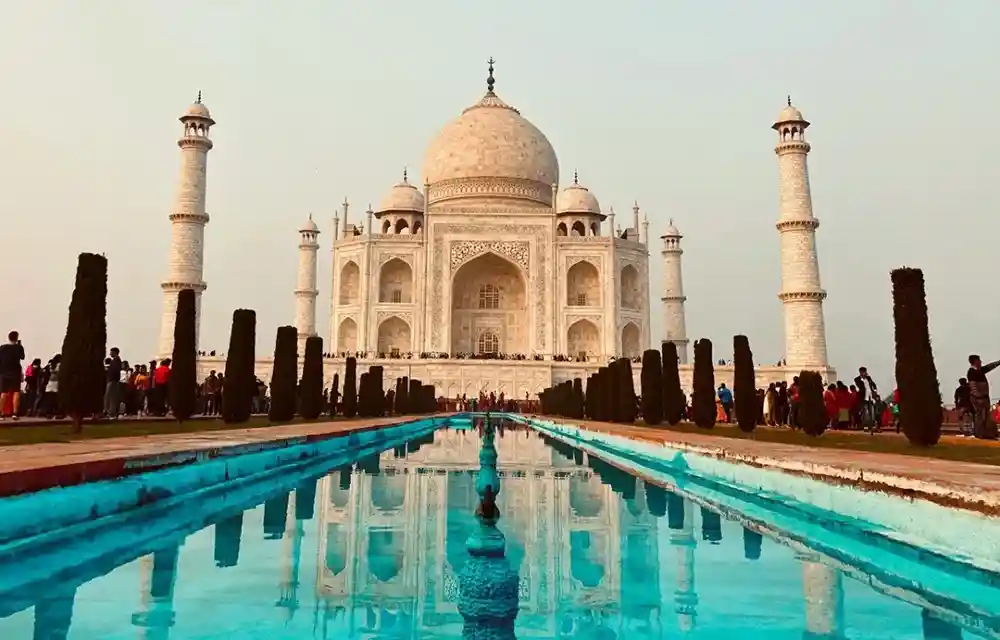
Quick Facts: Built 1632–1653 by Shah Jahan | UNESCO World Heritage Site (1983) | 2.5 km from Agra Fort | Closed Fridays
There’s no way around it — the Taj Mahal is why almost everyone comes to Agra, and it genuinely earns the hype. Built between 1632 and 1653 by Emperor Shah Jahan for his wife Mumtaz Mahal, it’s a UNESCO World Heritage Site and widely regarded as the finest example of Mughal architecture anywhere in the world.
What most people don’t realize is that the marble actually changes colour through the day — pinkish at dawn, milky white by noon, and golden at sunset. That’s why serious photographers plan two visits, not one.
Top Things to See
- The main mausoleum and the cenotaphs of Shah Jahan and Mumtaz Mahal
- The Charbagh (four-quadrant) garden layout leading up to the monument
- The red sandstone mosque and Jawab on either side of the main tomb
- Detailed pietra dura inlay work on the marble walls
Entry Fee & Timings
| Category | Entry Fee | Main Mausoleum |
|---|---|---|
| Indian Citizens / OCI | ₹50 | +₹200 |
| Foreign Tourists | ₹1,100 | +₹200 |
| Children below 15 | Free | Free |
The Taj opens roughly 30 minutes before sunrise and shuts 30 minutes before sunset. It stays closed every Friday for prayers at the inner mosque, so never plan a Friday visit here — shift that day to Agra Fort or Fatehpur Sikri instead.
How to Reach
The Taj Mahal sits close to Agra Cantt Railway Station (about 5–6 km) and roughly 13 km from Agra Airport. Autos and e-rickshaws from the city centre cost ₹100–200; private cabs run ₹300–500 one way.
Pro tip: Book your ticket online through the ASI portal a day in advance during peak winter season (October–March) — the East Gate queue moves faster for pre-booked slots.
2. Agra Fort
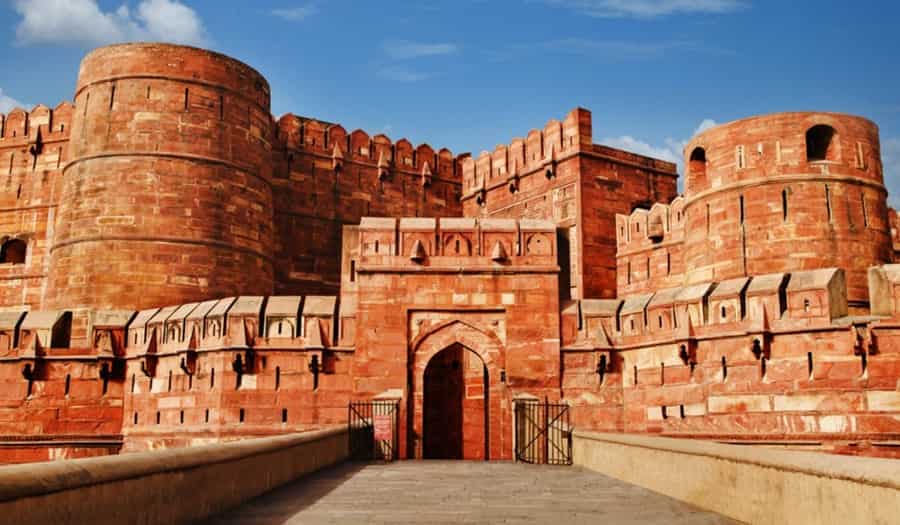
Quick Facts: Built by Akbar (1565), expanded by Shah Jahan | UNESCO World Heritage Site (1983) | 2.5 km from Taj Mahal | Open daily
A lot of visitors treat Agra Fort as an afterthought squeezed in after the Taj. That’s a mistake — this UNESCO-listed fort tells the actual political story of the Mughals, while the Taj tells a love story.
Built by Akbar and later expanded by Shah Jahan, the fort housed emperors, harems, and, eventually, a heartbreaking chapter: Shah Jahan spent his last years imprisoned here by his son Aurangzeb, reportedly gazing at the Taj Mahal from a window in Musamman Burj.
Top Places to Visit Inside
- Diwan-i-Aam and Diwan-i-Khas (halls of public and private audience)
- Jahangir Mahal and the Khas Mahal
- Sheesh Mahal (Glass Palace) with mirror-work walls
- Musamman Burj, where Shah Jahan spent his final days
- Anguri Bagh, the sunken garden inside the fort walls
Entry Fee & Timings
| Category | Entry Fee |
|---|---|
| Indian Citizens | ₹50 (₹40 on Fridays) |
| Foreign Tourists | ₹650 |
| Children below 15 | Free |
Open daily, sunrise to sunset. Give yourself 1.5 to 2 hours minimum — the fort’s courtyards are large and mostly unshaded, so carry water.
How to Reach
About 2.5 km from the Taj Mahal — a 10-minute auto ride (₹80–150). Most travellers combine both in a single morning since they’re this close.
3. Fatehpur Sikri
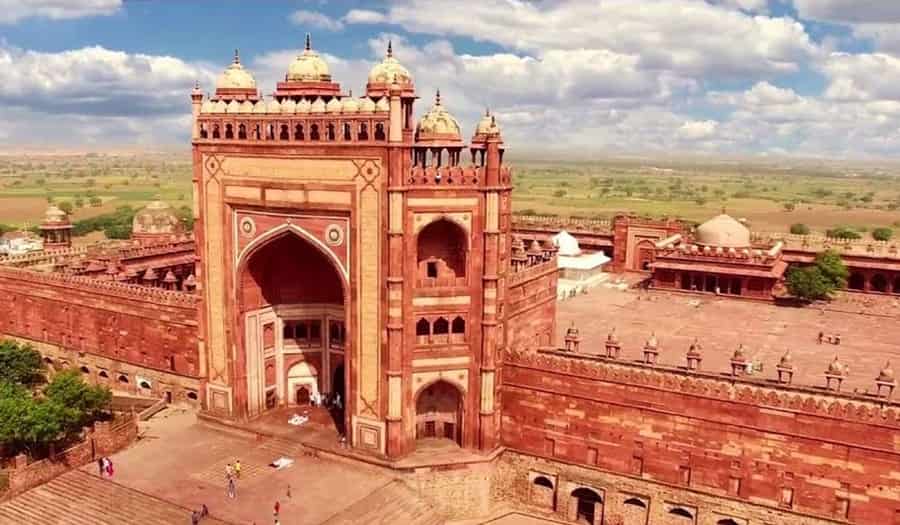
Quick Facts: Built by Akbar (1571–1585) | UNESCO World Heritage Site (1986) | 40 km from Agra | Open daily
Roughly 40 km from Agra city, Fatehpur Sikri was Akbar’s dream capital — built entirely from red sandstone and abandoned within 15 years, most likely because of water scarcity. What remains is one of the best-preserved Mughal ghost cities in India.
On the ground, this feels less crowded than the Taj or the fort, which makes it a favourite for people who want a slower, more atmospheric visit.
Top Places to Visit
- Buland Darwaza — one of the tallest gateways in the world, built to commemorate Akbar’s Gujarat victory
- Jama Masjid and the Dargah of Sheikh Salim Chishti (still an active shrine)
- Panch Mahal, a five-storey pillared pavilion
- Diwan-i-Khas and the famous Anup Talao pool
Entry Fee & Timings
Indian citizens pay around ₹40; foreign tourists around ₹550. The complex is open daily from roughly 6 AM to 6 PM. Salim Chishti’s dargah itself has no entry fee and stays open longer into the evening.
How to Reach from Agra
About 40 km, roughly 1–1.5 hours by road via NH19. Shared taxis and Rajasthan Roadways buses run regularly from Agra’s ISBT; private cabs cost ₹1,200–1,800 round trip including waiting time.
One mistake many people make: visiting Fatehpur Sikri as a rushed 45-minute stop. Budget at least 2 hours — the site is bigger and more layered than photos suggest.
- Check Out: Golden Tringle Tour Packages
4. Itmad-ud-Daulah (Baby Taj)
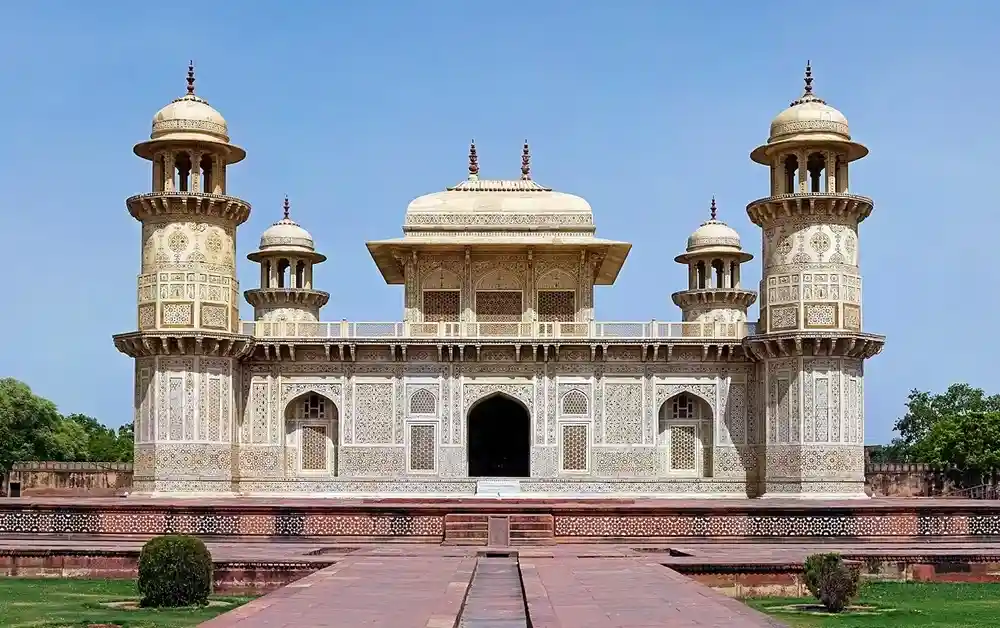
Quick Facts: Built 1622–1628 by Empress Nur Jahan | ASI-protected monument | 5–6 km from Taj Mahal | Open daily
Built between 1622 and 1628 by Empress Nur Jahan for her father Mirza Ghiyas Beg, this tomb is often called the “Baby Taj” — and for good reason. It’s widely considered the architectural bridge between older red-sandstone tombs and the pure white marble of the Taj Mahal itself.
Here’s what first-time visitors usually miss: this is the one monument tourists skip and later regret. It’s quieter, intricately detailed, and photographs beautifully without the crowds.
Top Places to Visit
- The main marble tomb with pietra dura inlay
- Riverside gardens along the Yamuna
- Detailed jali (lattice) screen work — some of the finest in Agra
Entry Fee & Timings
Indian citizens: around ₹20–30. Foreign tourists: around ₹250. Open sunrise to sunset daily.
How to Reach
Located on the eastern bank of the Yamuna, about 5–6 km from the Taj Mahal (15–20 minutes by auto, ₹100–150).
5. Mehtab Bagh
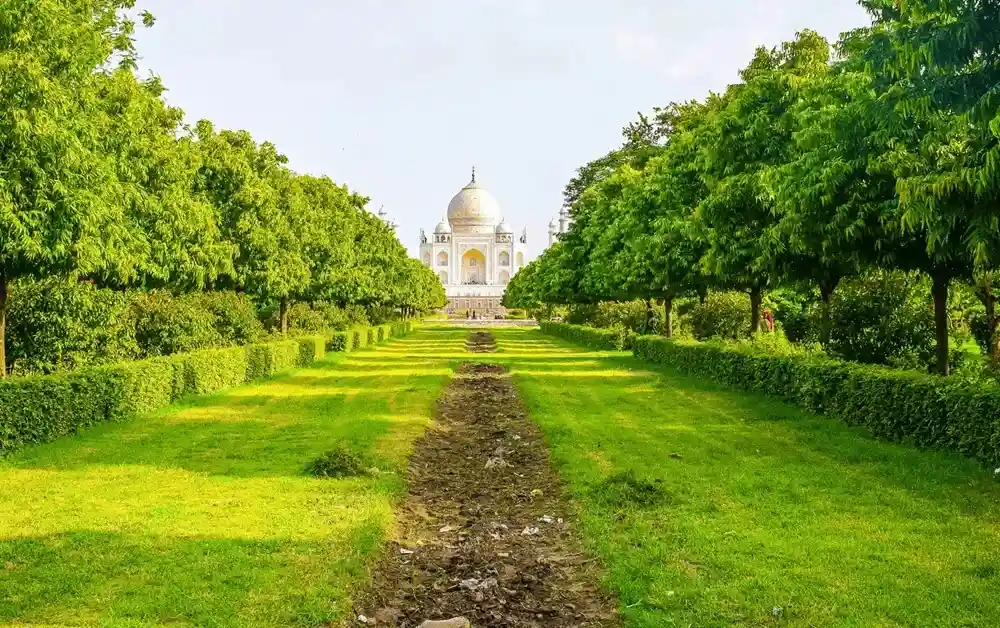
Quick Facts: Mughal charbagh-style garden | Best for sunset photography | 6–7 km from Taj Mahal | Open daily
If you want the “postcard” view of the Taj Mahal from across the river, Mehtab Bagh is where every serious photographer heads at sunset. This Mughal-era garden sits directly opposite the Taj on the Yamuna’s far bank. Babur is credited with introducing this style of riverside garden to Agra in the early 1500s, though most historians date Mehtab Bagh’s construction as a moonlight-viewing garden to Shah Jahan’s reign, built as a companion piece to the Taj Mahal itself.
Top Places to Visit
- Symmetrical garden layout with reflection pools
- Unobstructed sunset view of the Taj Mahal’s rear facade
- Riverside walking paths, quieter than the main Taj complex
Entry Fee & Timings
Around ₹25 for Indians, ₹300 for foreign tourists. Open sunrise to sunset.
How to Reach
About 6–7 km from the Taj Mahal via the Yamuna bridge route, roughly 20 minutes by auto or cab. Local drivers usually recommend reaching here by 5:30 PM in winter to catch peak golden light before sunset.
6. Akbar’s Tomb, Sikandra
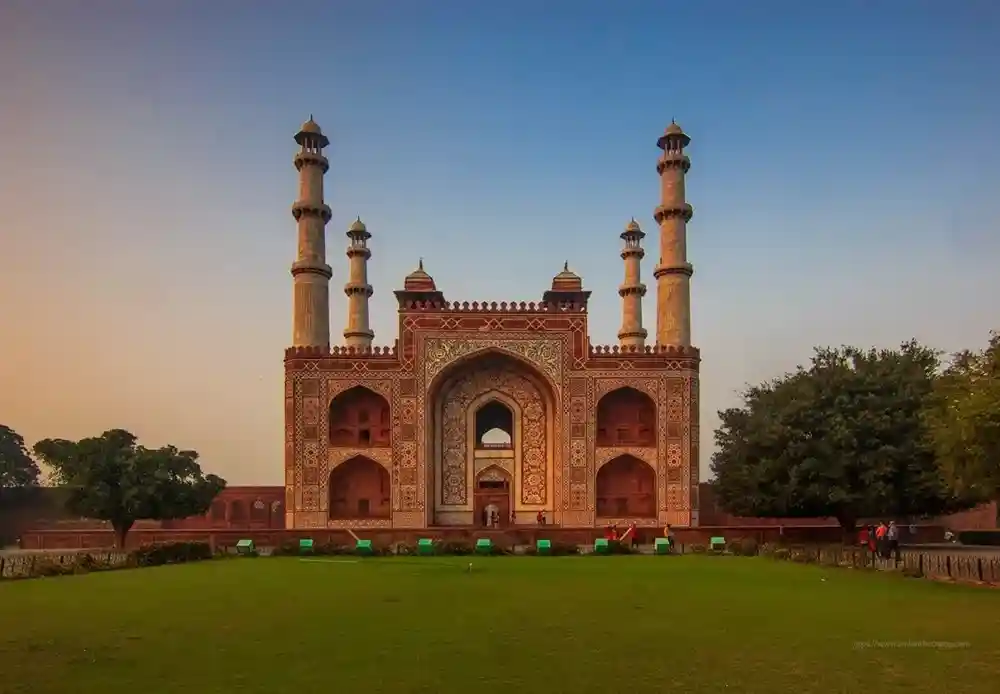
Quick Facts: Built 1605–1613, completed by Jahangir | ASI-protected monument | 10 km from central Agra | Closed Fridays
Located about 10 km from central Agra, Akbar’s Tomb sits inside a massive walled garden complex at Sikandra. Unlike the pure white Taj, this tomb blends Hindu, Islamic, Jain, and Persian architectural elements — a fitting resting place for an emperor known for religious tolerance.
Top Places to Visit
- The five-tier sandstone and marble tomb structure
- Deer roaming freely inside the garden grounds
- Panch Mahal-style gateway with intricate marble inlay
Entry Fee & Timings
Indian, SAARC and BIMSTEC citizens: ₹30. Foreign tourists: ₹310. Children below 15 enter free. Open sunrise to sunset (roughly 6 AM–6 PM), closed on Fridays.
How to Reach
About 10 km northwest of the city centre on NH19 (Agra-Delhi highway), roughly 20–25 minutes by cab (₹200–350). Mariam-uz-Zamani’s Tomb sits just 1 km away, so most travellers cover both in one trip.
7. Jama Masjid, Agra
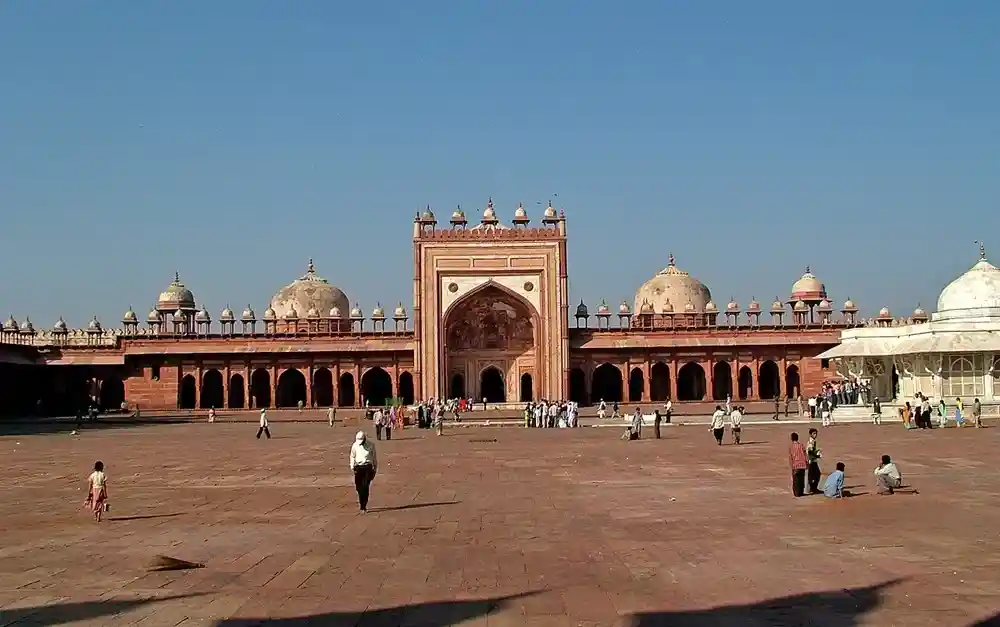
Right in the heart of the old city, opposite Agra Fort, stands Jama Masjid — commissioned by Shah Jahan’s daughter Jahanara Begum in 1648. This is a functioning mosque, not a monument frozen in time, and that’s precisely what makes it interesting.
Top Places to Visit
- The main prayer hall with red sandstone and marble dome work
- The bustling Kinari Bazaar surrounding the mosque
- Calligraphic inscriptions along the entrance facade
Entry Fee & Timings
Free entry. Open daily; avoid visiting during prayer timings if you’re not there to worship, out of respect for the congregation.
How to Reach
Walking distance from Agra Fort (under 1 km) — most visitors combine both in the same outing.
8. Chini Ka Rauza
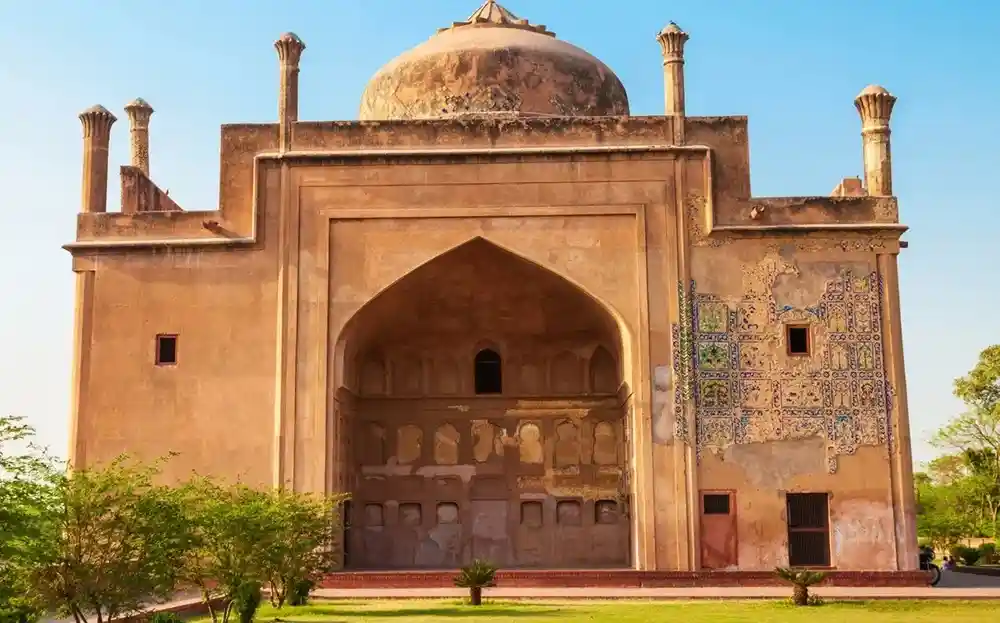
Tucked away and often skipped, Chini Ka Rauza is the tomb of Allama Afzal Khan Mullah, a Persian poet and minister in Shah Jahan’s court. What makes this monument stand apart is its Persian glazed-tile (chini) work — a style rarely seen elsewhere in Agra.
Top Places to Visit
- Blue, green, and yellow glazed tile facades (though weathered by time)
- Riverside setting along the Yamuna
- A calmer, less touristy atmosphere than the Taj complex
Entry Fee & Timings
Nominal or free entry at most times. Open sunrise to sunset.
How to Reach
About 1 km from Itmad-ud-Daulah, near the Yamuna riverbank — easy to combine with your Baby Taj visit.
9. Ram Bagh
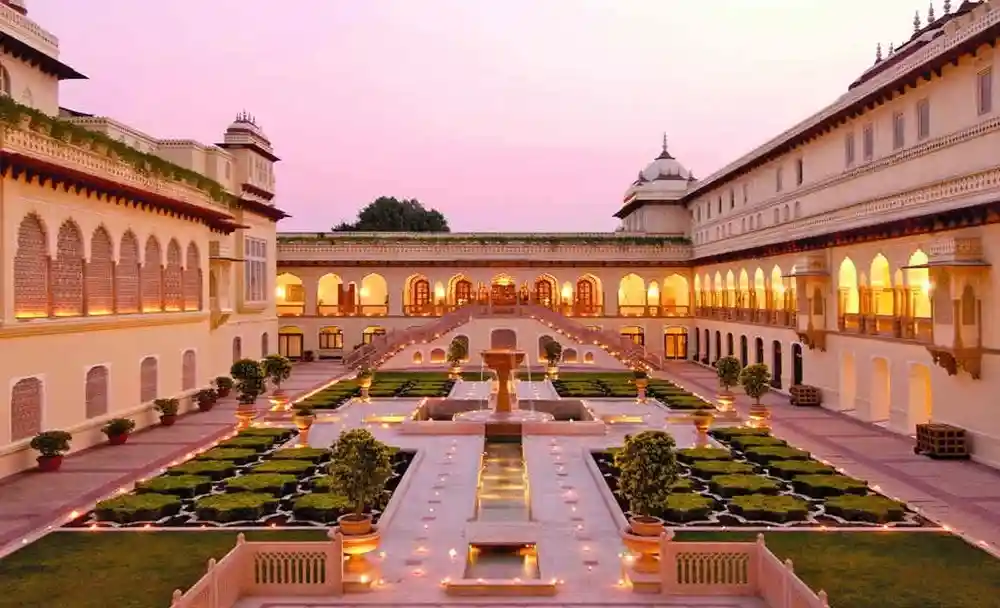
Believed to be one of the oldest Mughal gardens in India, Ram Bagh was laid out by Emperor Babur himself around 1528, reportedly where he was first buried before his remains were moved to Kabul.
Top Places to Visit
- Terraced garden layout with old pavilions
- Riverside views of the Yamuna
- A peaceful, shaded escape from Agra’s midday heat
Entry Fee & Timings
Nominal entry fee (under ₹25). Open daily from morning until sunset.
How to Reach
About 10 km from the Taj Mahal, near the Yamuna’s eastern bank; a 20–25 minute auto ride.
10. Tomb of Mariam-uz-Zamani
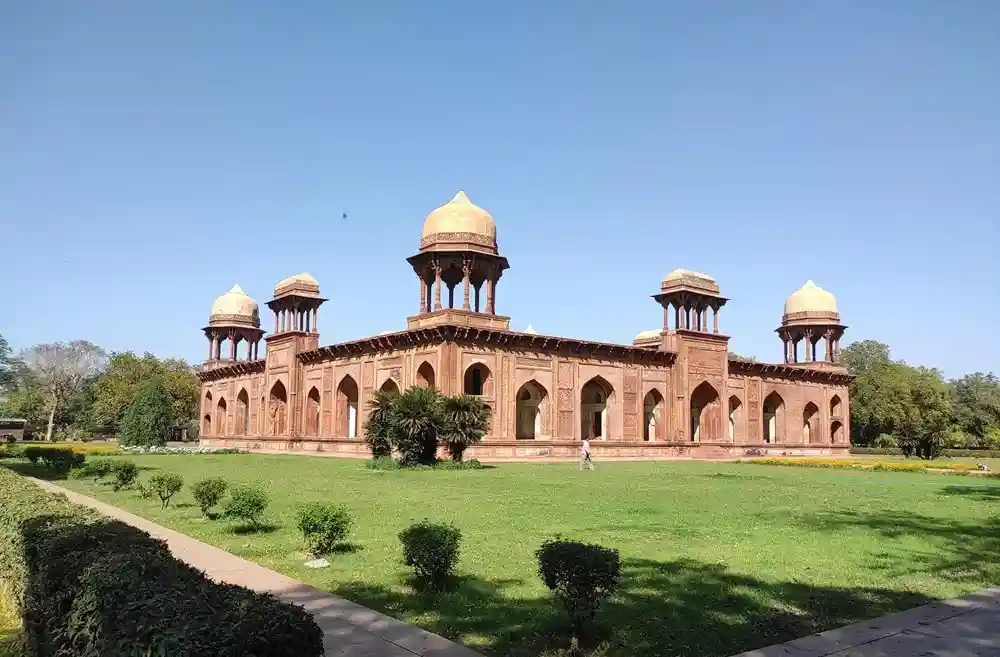
This lesser-known tomb belongs to Akbar’s Rajput wife, Mariam-uz-Zamani (also known as Jodha Bai in popular culture), and mother of Emperor Jahangir. The architecture blends Hindu and Islamic styles in a way that mirrors her own cultural identity.
Top Places to Visit
- Sandstone tomb structure with floral carvings
- A quiet, uncrowded historical site rarely covered in standard tour packages
Entry Fee & Timings
₹20 for Indians, ₹250 for foreigners. Open sunrise to sunset, closed Fridays.
How to Reach
Located near Sikandra, close to Akbar’s Tomb — visit both together to save travel time.
11. Dayal Bagh

For something completely different from Mughal-era monuments, Dayal Bagh offers a marble temple complex built by the Radha Soami spiritual movement — and it’s still under construction, over a century after it began, using traditional hand-carving techniques.
Top Places to Visit
- Intricately carved marble facade with floral and bird motifs
- Peaceful gardens surrounding the main samadhi
- A working example of traditional Mughal-style marble craftsmanship still practiced today
Entry Fee & Timings
Free entry. Open daily, generally 6 AM to 6 PM (closed on certain religious observance days — check locally).
How to Reach
About 10–12 km north of central Agra, roughly 25–30 minutes by cab.
12. Guru Ka Tal
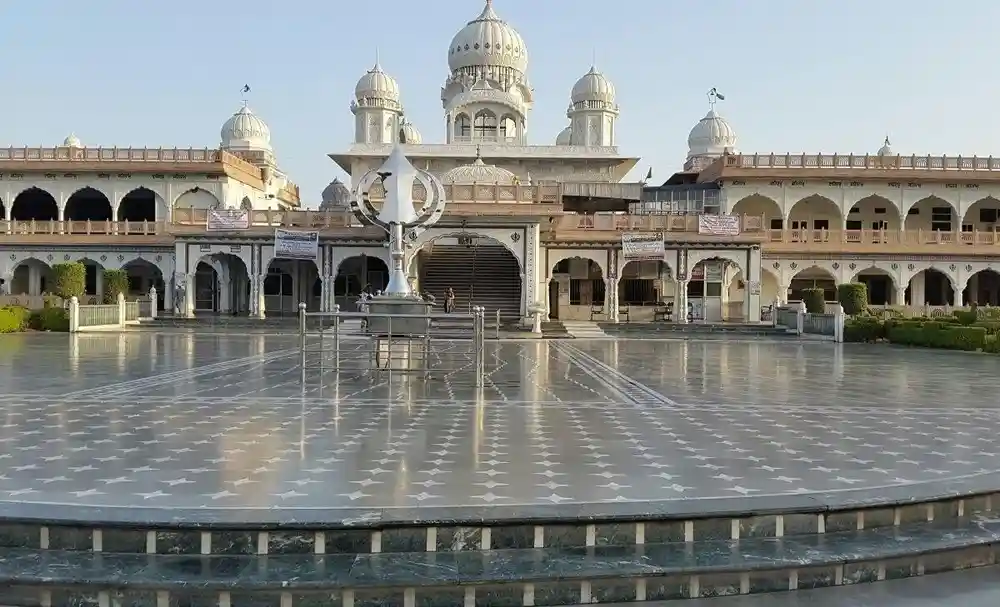
A historic Sikh gurudwara built near a large stepped water tank (baoli), Guru Ka Tal marks the spot where Guru Tegh Bahadur is believed to have stayed during his travels. It’s one of the largest step-wells in the Agra region.
Top Places to Visit
- The stepped tank (baoli) architecture
- The gurudwara complex and langar hall
- A quiet, spiritually significant stop away from the tourist crowds
Entry Fee & Timings
Free entry. Open daily, early morning to evening.
How to Reach
About 7–8 km from Agra city centre, near Shahganj.
13. Wildlife SOS Elephant Conservation and Care Centre
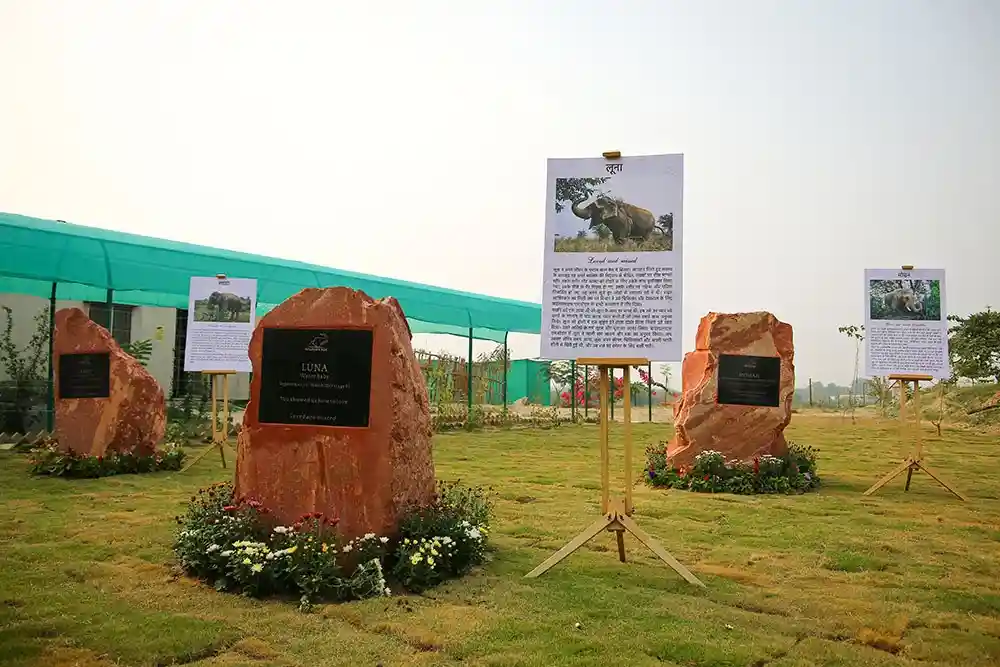
If you want a break from monuments, this rescue centre near Sur Sarovar (Keetham Lake) rehabilitates elephants recovered from abuse, illegal captivity, and street begging across India. It’s run by a genuine conservation NGO, not a commercial “ride an elephant” operation — which matters a lot if animal welfare is a concern for you.
Top Things to Do
- Guided walking tours to observe rescued elephants (no rides offered — this is a rehabilitation centre)
- Learn about each elephant’s rescue story from centre staff
- Feeding or interaction opportunities may be available depending on the current conservation program — confirm with the centre before your visit
Entry Fee & Timings
Entry fees vary by tour package (typically ₹500–1,500 depending on the experience level); advance online booking is recommended since slots are limited.
How to Reach
About 20 km from central Agra near Sur Sarovar Bird Sanctuary — best reached by private cab (₹500–700 round trip).
14. Kalakriti Cultural & Convention Centre
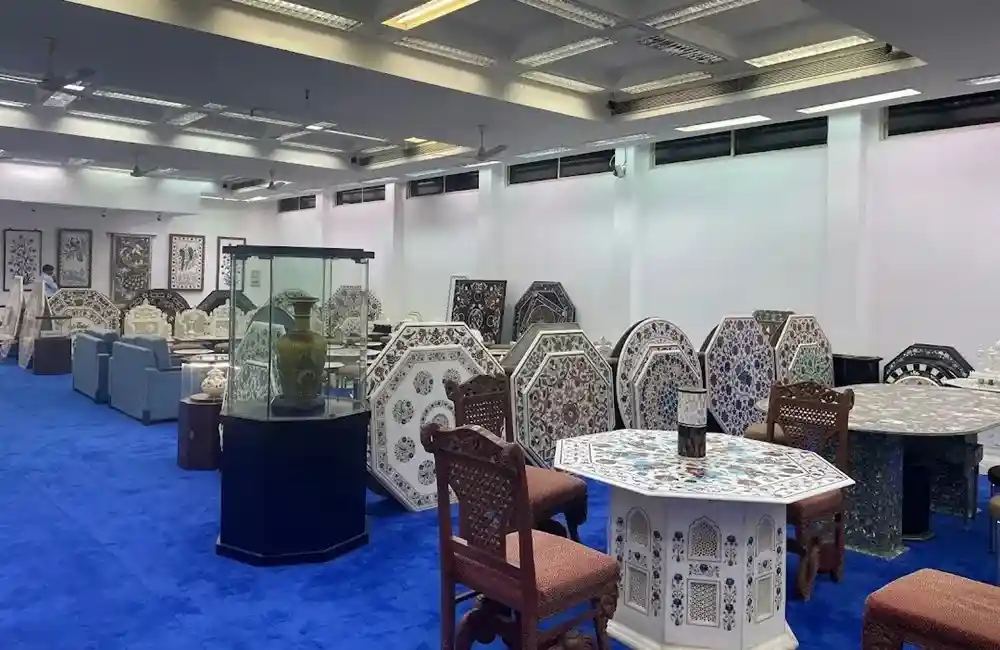
After a day of monument-hopping, Kalakriti offers something different: the “Mohabbat The Taj” show, a musical and theatrical retelling of the Taj Mahal’s love story, performed live most evenings.
What to Expect
- A 90-minute cultural performance with music, dance, and light effects
- A scaled replica of the Taj Mahal as a backdrop
- Family-friendly evening entertainment, especially good if you’re travelling with kids
Entry Fee & Timings
Ticket prices generally range from ₹500 to ₹1,500 depending on seating category. Shows typically run in the evening — check current showtimes before booking, as schedules shift seasonally.
How to Reach
Located on Fatehabad Road, about 3–4 km from the Taj Mahal — easily combined with dinner in the same area.
15. Sadar Bazaar & Kinari Bazaar
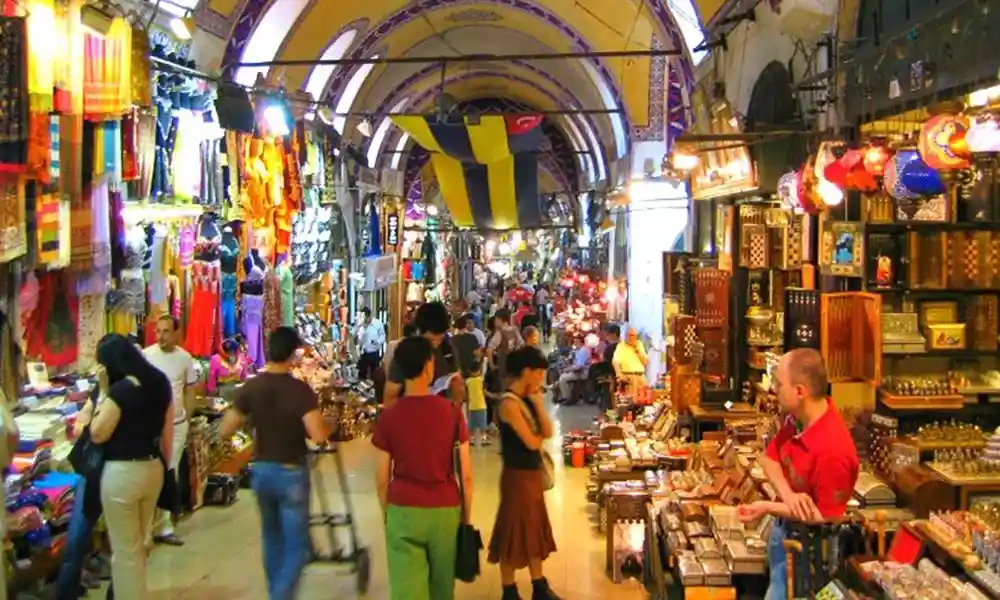
No Agra trip is complete without shopping for leather goods, marble handicrafts, and the famous Agra petha (a soft, translucent sweet made from ash gourd). Sadar Bazaar caters more to tourists with fixed-price shops, while Kinari Bazaar near Jama Masjid is the older, more chaotic local market — better prices if you’re comfortable bargaining.
What to Buy
- Marble inlay work (replicas of Taj Mahal pietra dura art)
- Leather shoes, bags, and jackets — Agra has a long leatherworking tradition
- Agra petha in multiple flavours (plain, kesar, chocolate, angoori)
- Zari and embroidery work from local artisans
Best Time to Visit
Evening, after 5 PM, when the markets come alive and the day’s heat has eased off.
How to Reach
Sadar Bazaar is close to Agra Cantt Railway Station; Kinari Bazaar sits right next to Jama Masjid and Agra Fort.
Bonus: Ancient Temples of Agra Worth Visiting
Agra’s story didn’t start with the Mughals — the city sits within the Braj region, sacred to Lord Shiva and Lord Krishna, and it still has a handful of centuries-old temples worth a visit if spirituality is part of your travel interest.
Shri Mankameshwar Mandir
One of Agra’s oldest Shiva temples, located at Rawatpara near Agra Fort Railway Station. Local tradition holds that Lord Shiva himself established the shivling here, which makes it especially significant during Sawan (July–August) and Mahashivratri. Entry is free; the temple is generally open from around 5 AM to 10 PM, with extended hours on Mondays.
Balkeshwar Mahadev Mandir
A roughly 700-year-old Shiva temple on the banks of the Yamuna, quieter and more riverside-atmospheric than Mankameshwar. Open daily, free entry, best visited early morning or during the evening aarti.
Prithvinath Temple
Dedicated to Lord Shiva and tucked into a residential part of the city near Shahganj, this temple sees mostly local worshippers rather than tourists — a good pick if you want an authentic, unhurried temple visit away from the main circuit.
Kailash Mandir, Sikandra
Another ancient Shiva shrine close to the Yamuna, best known for the Kailash Fair held here during the monsoon months (August–September), drawing large numbers of devotees from across the region.
Agra also has four historic Shiva temples marking its four corners (Balkeshwar, Rajeshwar, Prithvinath, and Mankameshwar) — a detail most standard Agra itineraries skip entirely, but worth knowing if you’re building a temple-focused day.
Sample 2-Day Agra Itinerary (Real Experience)
On the ground, most travellers underestimate how spread out Agra’s attractions are. Based on patterns we’ve seen work well for first-time visitors, here’s a realistic split:
Day 1: Sunrise at the Taj Mahal → breakfast → Agra Fort → lunch break → Itmad-ud-Daulah → Chini Ka Rauza → sunset at Mehtab Bagh.
Day 2: Early drive to Fatehpur Sikri → return via Akbar’s Tomb, Sikandra → Jama Masjid and Kinari Bazaar shopping → evening Mohabbat The Taj show at Kalakriti.
If you have a third day, add Dayal Bagh, Guru Ka Tal, and the Wildlife SOS centre — these sit slightly outside the usual tourist circuit but are genuinely worth the detour if you’re not in a rush.
Looking for hidden gems in Agra? Chini Ka Rauza, Ram Bagh, Prithvinath Temple, and Guru Ka Tal rarely appear on standard tour itineraries, yet they offer a quieter, more local side of the city that most first-time visitors never see.
Agra Monuments Comparison Table
| Monument | Distance from Taj Mahal | Indian Entry Fee | Time Needed |
|---|---|---|---|
| Agra Fort | 2.5 km | ₹50 | 1.5–2 hrs |
| Itmad-ud-Daulah | 5–6 km | ₹20–30 | 45 min–1 hr |
| Mehtab Bagh | 6–7 km | ₹25 | 45 min |
| Chini Ka Rauza | 6–7 km | Nominal | 30 min |
| Akbar’s Tomb | 10 km | ₹30 | 1 hr |
| Ram Bagh | 10 km | Nominal | 30–45 min |
| Fatehpur Sikri | 40 km | ₹40 | 2–3 hrs |
Fee figures are approximate 2026 ASI rates and are revised periodically — always confirm on the official ASI booking portal before your trip.
Common Mistakes to Avoid in Agra
- Planning a Friday visit to the Taj Mahal — it’s closed for prayers; the fort and Fatehpur Sikri work fine on that day instead.
- Rushing Fatehpur Sikri in under an hour — the complex deserves at least 2 hours.
- Skipping water and sun protection — Agra Fort and Fatehpur Sikri have long unshaded stretches, especially punishing April to June.
- Buying “genuine marble” souvenirs without checking — some Sadar Bazaar shops sell painted resin as marble; ask for a hallmark or buy from government emporiums if authenticity matters to you.
- Not booking Taj Mahal tickets online in peak season — October to March sees the heaviest footfall, and offline queues can eat an hour of your morning.
- Overlooking hidden charges — foreign tourists pay an additional ₹200 for the Taj Mahal’s main mausoleum and may be offered an optional ₹850 ASI heritage fee at Agra Fort; neither is compulsory, so confirm what you actually want before paying.
Pro Tips for Visiting Agra
- Visit the Taj Mahal at sunrise, not sunset — the light is softer and crowds are thinner.
- Carry a valid photo ID; it’s mandatory at every ASI monument.
- Combine Agra Fort and Jama Masjid in one outing since they’re barely a kilometre apart.
- If you’re on a same-day trip from Delhi, prioritise the Taj, Fort, and Fatehpur Sikri — the rest can wait for a second visit.
- Petha shops near Sadar Bazaar tend to be fresher and more reasonably priced than roadside stalls closer to the Taj.
Agra Travel Budget: What to Expect Per Day
| Travel Style | Approx. Daily Budget | Includes |
|---|---|---|
| Budget | ₹2,000–3,000 | Hostel/budget hotel, local transport, street food, monument entry |
| Mid-range | ₹5,000–8,000 | 3-star hotel, private cab for sightseeing, casual dining |
| Luxury | ₹12,000+ | 4–5 star hotel, private guide, fine dining, premium experiences |
These are rough per-person estimates for Indian travellers; foreign tourists should budget higher due to steeper monument entry fees.
What to Eat in Agra
Agra’s food scene goes well beyond petha. A few things worth trying:
- Bedai and jalebi — a popular Agra breakfast, best had fresh and hot at old-city stalls
- Agra ka petha — try the kesar and angoori variants, not just plain
- Mughlai-style kebabs and biryani — Agra’s Mughal history shows up on its plates too
- Dalmoth — a savoury, spiced namkeen unique to the region
Safety, Photography & Practical Tips
- Tourist Helpline: Dial 1363 for the 24×7 India Tourist Helpline; local police can be reached at 100.
- Photography: Personal cameras and phones are allowed free at most monuments; tripods and professional gear may need a small fee.
- Drones: Strictly banned at the Taj Mahal and most ASI-protected monuments — don’t risk it, equipment gets confiscated.
- Cash & cards: UPI works at most shops now, but carry some cash for autos, small vendors, and temple donations.
- Senior citizens & wheelchair users: Battery-operated carts are available at the Taj Mahal and Agra Fort entrances for an additional small fee.
FAQs
Q-1: What are the top 5 places to visit in Agra?
The Taj Mahal, Agra Fort, Fatehpur Sikri, Itmad-ud-Daulah (Baby Taj), and Mehtab Bagh cover the essential Agra experience for most first-time visitors.
Q-2: How many places to visit in Agra in one day is realistic?
One day works for a tightly planned Taj Mahal and Agra Fort visit, but you’ll miss Fatehpur Sikri and the lesser-known tombs. Two days lets you cover Agra without rushing.
Q-3: Which day is the Taj Mahal closed?
The Taj Mahal is closed every Friday for prayers at its inner mosque. Plan Agra Fort or Fatehpur Sikri for that day instead.
Q-4: What is the best time of year to visit Agra?
October to March offers the most comfortable weather, with cool mornings ideal for sightseeing. April to June gets extremely hot, often crossing 40°C.
Q-5: How far is Fatehpur Sikri from Agra?
Fatehpur Sikri is about 40 km from central Agra, roughly a 1–1.5 hour drive via NH19.
Q-6: Are there free entry days at Agra monuments?
Yes, the ASI offers free entry on select occasions like World Heritage Day and International Museum Day. Check the official ASI website closer to your travel dates for confirmed 2026 listings.
Q-7: Can foreigners take photos inside the Taj Mahal?
Personal photography is allowed free of charge. Commercial or professional shoots with tripods require a separate fee and prior permission.
Q-8: What should I buy in Agra as a souvenir?
Marble inlay handicrafts, leather goods, and Agra petha are the most popular souvenirs, widely available in Sadar Bazaar and Kinari Bazaar.
Q-9: Is Agra safe for solo and family travellers?
Agra is generally safe for tourists, with a well-established tourism infrastructure. Standard precautions apply — avoid unlicensed guides at monument gates and agree on auto/taxi fares before starting your ride.
Q-10: What is the Baby Taj, and is it worth visiting?
The Baby Taj (Itmad-ud-Daulah) is a marble tomb built before the Taj Mahal, often considered its architectural precursor. It’s quieter, detailed, and well worth an hour of your itinerary.
Q-11: How do I get from Delhi to Agra?
The Gatimaan Express and Vande Bharat trains cover Delhi to Agra in under 2 hours. By road via the Yamuna Expressway, it’s roughly 3–4 hours (about 230 km).
Q-12: Do I need a guide at Agra monuments?
A licensed guide isn’t mandatory but adds real value at Agra Fort and Fatehpur Sikri, where the historical context isn’t always obvious from signage alone.
Q-13: What are the best places to visit in Agra besides the Taj Mahal?
Agra Fort, Fatehpur Sikri, Itmad-ud-Daulah, Mehtab Bagh, and Akbar’s Tomb are the strongest non-Taj attractions, each showing a different side of Mughal-era Agra.
Q-14: Which temples are worth visiting in Agra?
Shri Mankameshwar Mandir, Balkeshwar Mahadev Mandir, Prithvinath Temple, and Kailash Mandir are Agra’s most notable ancient Shiva temples, all offering free entry.
Q-15: What is the entry fee for Agra Fort in 2026?
Indian citizens pay ₹50 (₹40 on Fridays); foreign tourists pay ₹650. Children below 15 enter free at Agra Fort.
Q-16: Can I visit the Taj Mahal and Agra Fort on the same day?
Yes, they’re just 2.5 km apart, and most travellers comfortably cover both in a single morning or afternoon.
Q-17: What are the best places to visit in Agra with family and kids?
The Mohabbat The Taj show at Kalakriti, the Wildlife SOS Elephant Centre, and Akbar’s Tomb’s deer-filled gardens are all family-friendly options beyond the standard monument circuit.
Q-18: Is Fatehpur Sikri worth a day trip from Agra?
Yes — it’s a well-preserved 16th-century Mughal capital with the Buland Darwaza and Salim Chishti’s dargah, and it’s easily done as a half-day trip from Agra.
Q-19: What does a good Agra travel itinerary for 2 days look like?
A 2-day plan covering the Taj Mahal, Agra Fort, Itmad-ud-Daulah, and Mehtab Bagh on day one, then Fatehpur Sikri, Akbar’s Tomb, and local markets on day two, works well for most travellers.
Q-20: Are Agra’s monuments wheelchair accessible?
Agra Fort and the Taj Mahal offer wheelchair and battery-cart assistance at the entry gates; Fatehpur Sikri’s uneven stone pathways make it harder to navigate for wheelchair users.
Q-21: What is a realistic daily budget for an Agra trip?
Budget travellers can manage on ₹2,000–3,000/day, mid-range trips run ₹5,000–8,000/day, and luxury stays start around ₹12,000/day per person.
Q-22: Are drones allowed at Agra monuments?
No. Drones are banned at the Taj Mahal and all ASI-protected sites in Agra; flying one risks confiscation and fines.
Q-23: What is the best sunset point in Agra?
Mehtab Bagh offers the best unobstructed sunset view of the Taj Mahal, especially from October to March when the sky stays clear.
Q-24: What are some hidden gems in Agra most tourists miss?
Chini Ka Rauza, Ram Bagh, Prithvinath Temple, and Guru Ka Tal are quiet, uncrowded spots that rarely make it onto standard tour itineraries.
Q-25: Is Agra a good destination for a family trip with kids?
Yes — the Mohabbat The Taj show, Akbar’s Tomb’s deer-filled gardens, and Wildlife SOS make Agra genuinely enjoyable for families, not just history buffs.
Conclusion
The Taj Mahal will always be Agra’s headline act, and rightly so — but the city rewards travellers who stick around for a second day. Agra Fort shows you the empire behind the monument, Fatehpur Sikri shows you an abandoned Mughal dream, and the quieter tombs along the Yamuna show you the details most tour groups walk straight past.
If you’re shortlisting places to visit in Agra, treat this list as a working itinerary, not just a checklist: book your Taj Mahal tickets online in advance, keep Friday free for the fort or Fatehpur Sikri, and budget at least two full days if you want to see this heritage-rich destination properly instead of rushing through it.


 Call
Call Enquiry