Last Updated on 30/04/2026
The Char Dham Yatra is not just four temples. Between Haridwar and Mana Village, every stop along the Garhwal Himalayan circuit carries a history, a story, and an experience that no photograph fully captures. In 2026, with the season opening earlier than usual – 19 April for Yamunotri and Gangotri, 22 April for Kedarnath – pilgrims who plan early will see these places at their purest.
This guide covers every must-visit place in the correct order, including the stops most organized tours rush past.
The Char Dham Route at a Glance
| Parameter |
Details |
| Route Name |
Char Dham Route |
| Dhams (with altitude) |
Yamunotri (3,293 m), Gangotri (3,100 m), Kedarnath (3,583 m), Badrinath (3,133 m) |
| Traditional Sequence |
West to East |
| Total Distance (from Haridwar) |
~1,200 km by road |
| Time Required |
10–12 days (comfortable), 5–6 days (helicopter package) |
| 2026 Opening Dates |
Yamunotri & Gangotri – 19 April
Kedarnath – 22 April
Badrinath – 23 April |
Day-by-Day Itinerary: Every Place to Visit
| Day |
Stop |
Key Places |
Practical Note |
| Day 1 |
Haridwar |
Har Ki Pauri, Mansa Devi, Chandi Devi |
Ganga Aarti at 6:15 PM – reach by 5:45 PM for good spot |
| Day 2 |
Barkot |
Kempty Falls (en route), Mussoorie optional |
~210 km from Haridwar; mountain drive begins here |
| Day 3 |
Yamunotri |
Janki Chatti, Divya Shila, Yamunotri Temple, Surya Kund |
6 km trek one way; 2.5–3.5 hrs; ponies ~₹1,500 one way |
| Day 4 |
Uttarkashi |
Vishwanath Temple, Bhairav Temple, local market |
Acclimatization night essential; altitude 1,158 m |
| Day 5 |
Gangotri |
Gangotri Temple, Bhagirathi Rock, Gangnani Hot Spring en route |
~100 km from Uttarkashi; return to Uttarkashi same evening |
| Days 6–7 |
Guptkashi |
Vishwanath Temple, Manikarnika Kund, Tehri Dam view |
~230 km from Uttarkashi; 8–9 hr drive |
| Days 8–9 |
Kedarnath |
Gaurikund, Kedarnath Temple, Bhairav Temple, Shankaracharya Samadhi |
16 km trek one way from Gaurikund; 5–7 hrs ascent |
| Day 10 |
Rudraprayag |
Alaknanda-Mandakini Sangam, Chamunda Devi |
~75 km transit day from Guptkashi |
| Days 11–12 |
Badrinath + Mana |
Tapt Kund, Badrinath Temple, Brahmakapal, Mana Village |
Return via Joshimath–Rishikesh–Haridwar |
1. Haridwar – The Starting Point of Every Yatra
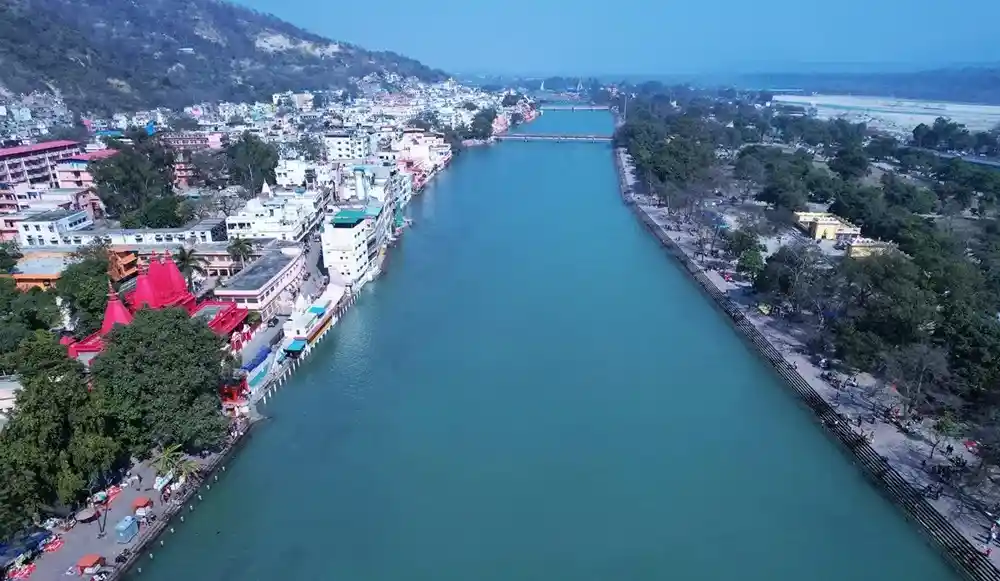
Every Chardham Yatra begins at Haridwar, where the Ganga descends from the Himalayas to the plains. The energy here is immediate – pilgrims from across India, the smell of incense, the sound of bells.
- Har Ki Pauri Ghat – The most sacred ghat. The evening Ganga Aarti (6:15 PM) is one of the most spectacular events in India: priests offer light to the river while hundreds of Diyas float downstream. Arrive by 5:45 PM for a spot near the water.
- Mansa Devi Temple – Ropeway ride (5 min); Shakti Peetha with panoramic views of Haridwar
- Chandi Devi Temple – Second Shakti Peetha across the river, also by ropeway
- Saptarshi Ghat – Quieter morning option; ideal for sunrise prayers
In real life: Most people rush through Haridwar to ‘start the Yatra.’ Don’t. The Ganga Aarti at Har Ki Pauri is something you remember for the rest of your life. Plan Day 1 to arrive in Haridwar by 4 PM at the latest.
2. Barkot – Base Town for Yamunotri
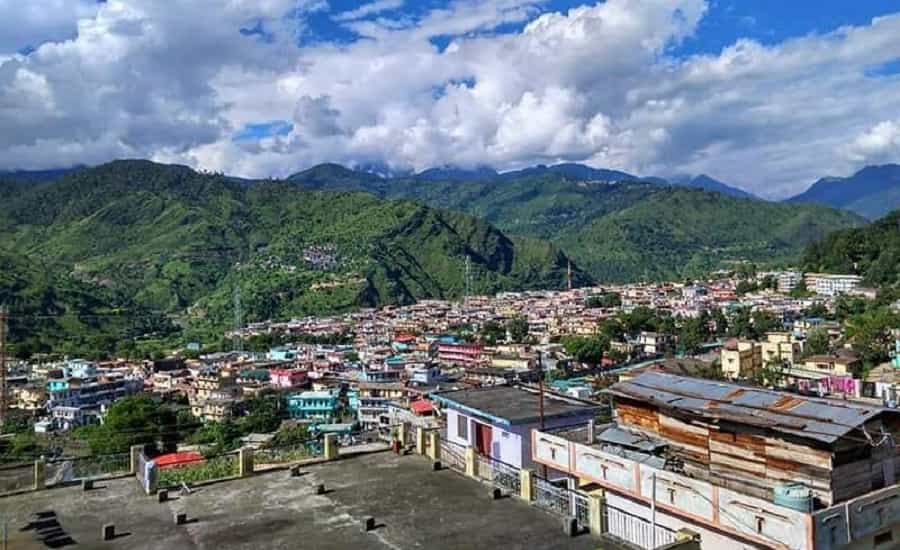
The drive from Haridwar to Barkot passes through Dehradun, Mussoorie, and the Yamuna valley. Kempty Falls (1,364 m), 15 km from Mussoorie, is the standard rest stop – a waterfall cascading 40 feet into a wide natural pool.
Barkot itself is a quiet mountain town. Most pilgrims arrive in the evening and leave early the next morning for Janki Chatti. Basic accommodation available; GMVN has a rest house here.
3. Yamunotri Dham – The Source of the Yamuna
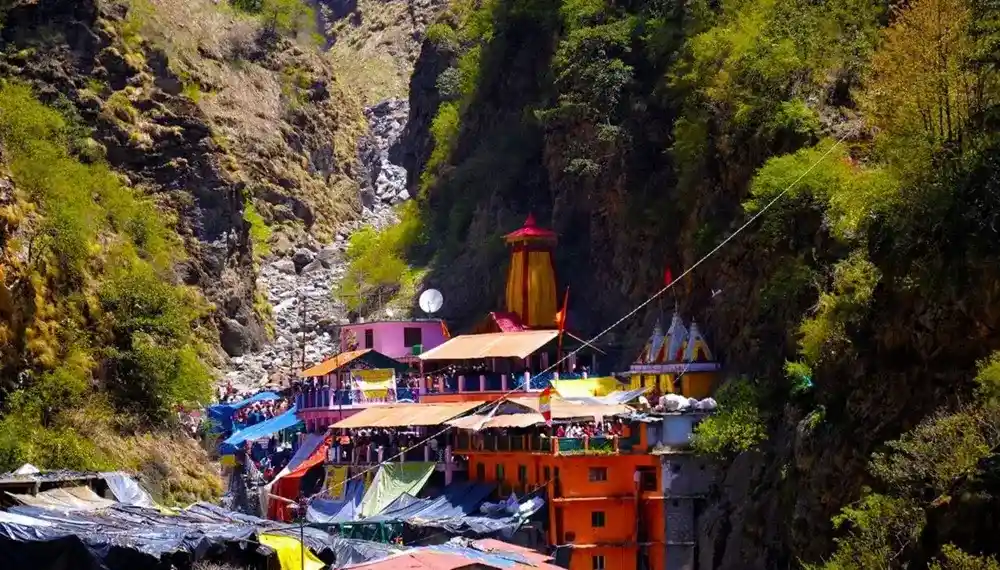
Yamunotri (3,293 m) is the first Dham and the source of River Yamuna. The temple is dedicated to Goddess Yamuna, daughter of the Sun God. It opens on 19 April 2026.
- Janki Chatti – The road head; starting point of the 6 km trek to the temple. Pony service available (~₹1,500 one way per person)
- Divya Shila – A sacred rock pillar that every pilgrim worships before entering the temple; considered the first act of Yamunotri Darshan
- Yamunotri Temple – Small sanctum; black marble idol of Goddess Yamuna. Gets crowded fast – arrive early morning
- Surya Kund – The hottest natural spring (~90°C) near the temple; pilgrims cook rice and potatoes wrapped in cloth here as ritual offering
- Gauri Kund – Smaller hot spring where devotees take a ritual dip before temple entry
Trek note: 6 km one way; 2.5–3.5 hours at a comfortable pace on stone steps. Morning treks are easier (cooler, less crowd). Return by 2 PM to avoid afternoon mountain rain.
4. Uttarkashi – The Mountain Kashi
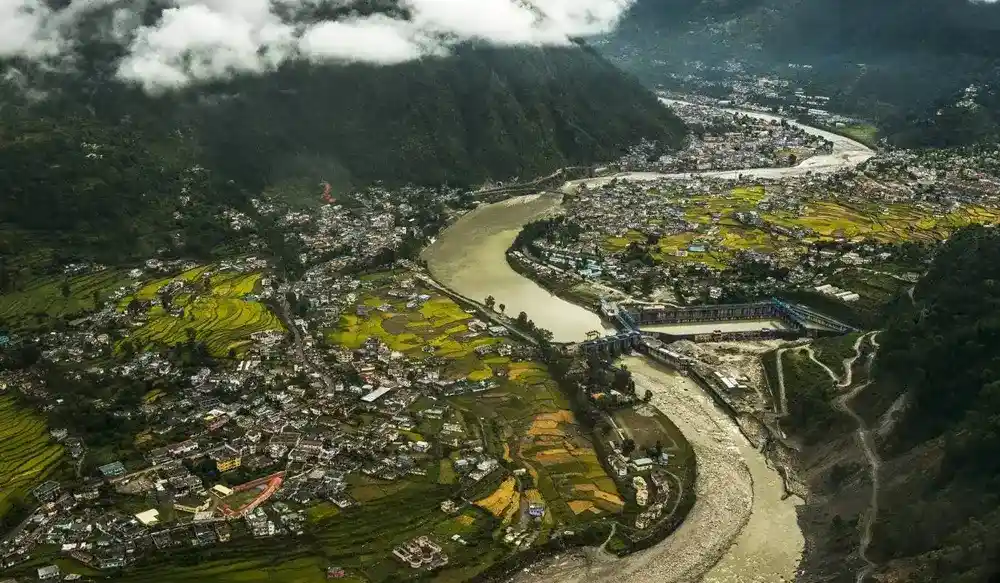
Uttarkashi (1,158 m) is often treated as just a transit stop. That’s a mistake. This town has genuine religious significance and essential supplies for the yatra ahead.
- Vishwanath Temple – Dedicated to Lord Shiva; modeled after Kashi Vishwanath, Varanasi. The 6-meter Trishul (trident) in the courtyard is a historic landmark
- Shakti Temple (Kuteti Devi Mandir) – Important Shakti shrine within the Vishwanath complex
- Bhairav Temple – Guardian deity of Uttarkashi
- Local market – Last well-stocked market before Gangotri and the higher altitudes. Buy warm clothes, medicines, dry fruits here
One night’s rest in Uttarkashi is essential acclimatization before Gangotri at 3,100 m.
5. Gangotri Dham – Origin of the Holy Ganga
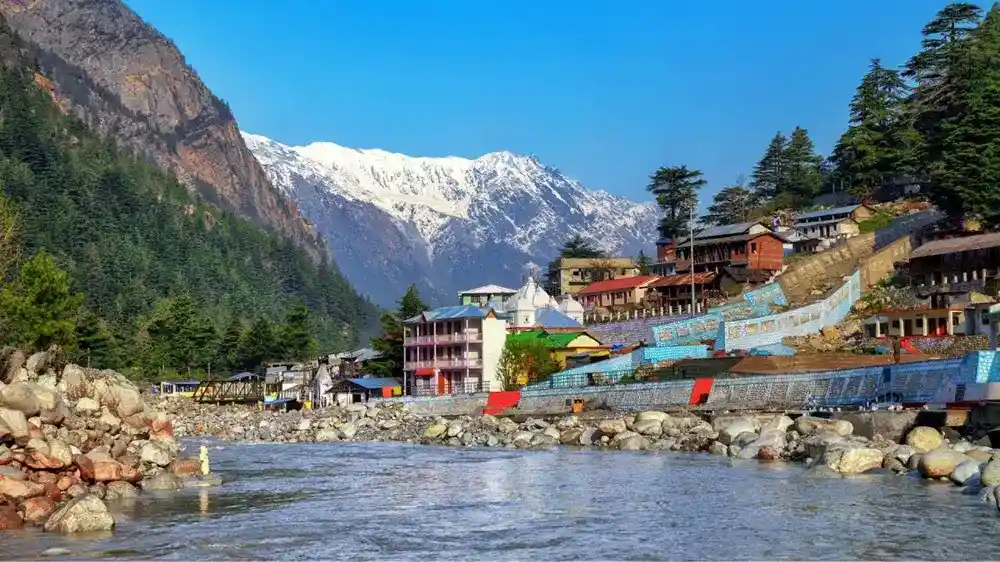
Gangotri (3,100 m) sits on the banks of the Bhagirathi River with snow peaks as backdrop. The temple was built in the early 18th century by Amar Singh Thapa. It opens 19 April 2026.
- Gangnani Hot Spring – ~47 km before Gangotri from Uttarkashi; sulphur spring where pilgrims stop for a ritual bath
- Gangotri Temple – Daily Aarti at dawn and dusk; the idol of Goddess Ganga faces east
- Bhagirathi Rock – A large boulder in the river where King Bhagirath is said to have meditated for ages to bring Ganga to Earth
- Submerged Shivling – A natural Shivling visible in the Bhagirathi River at low water (best seen in April–May before monsoon)
- Pandav Gufa – Cave ~1 km from temple; believed to be a Pandava meditation site
For adventurers: Gaumukh Glacier (actual Ganga source) is 18 km further by trek and needs a Forest Department permit. Not part of standard Chardham itinerary but one of the Himalayas’ great treks if you have an extra 2 days.
6. Guptkashi – The Gateway to Kedarnath
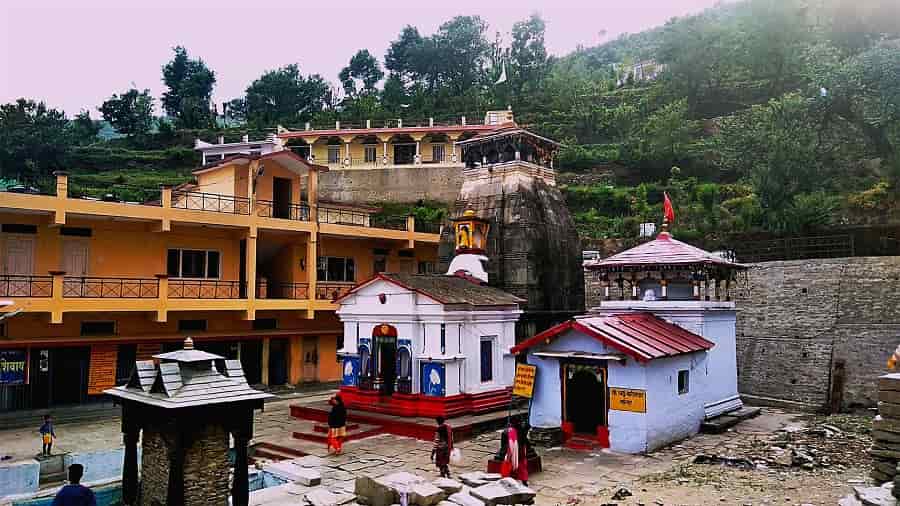
Guptkashi (1,319 m) is 47 km before Kedarnath and the most important staging town for the trek. Most pilgrims spend 1–2 nights here.
- Vishwanath Temple, Guptkashi – Houses the rare Ardhnarishwar image (Shiva and Parvati combined as one deity); theologically and artistically significant
- Manikarnika Kund – Sacred Kund where the Mandakini and Alaknanda waters are symbolically worshipped
- Tehri Dam view – Asia’s second-tallest dam (260.5 m) is visible on the road from Uttarkashi; a brief stop is worthwhile for the scale of the structure
7. Kedarnath – The Highest Jyotirlinga
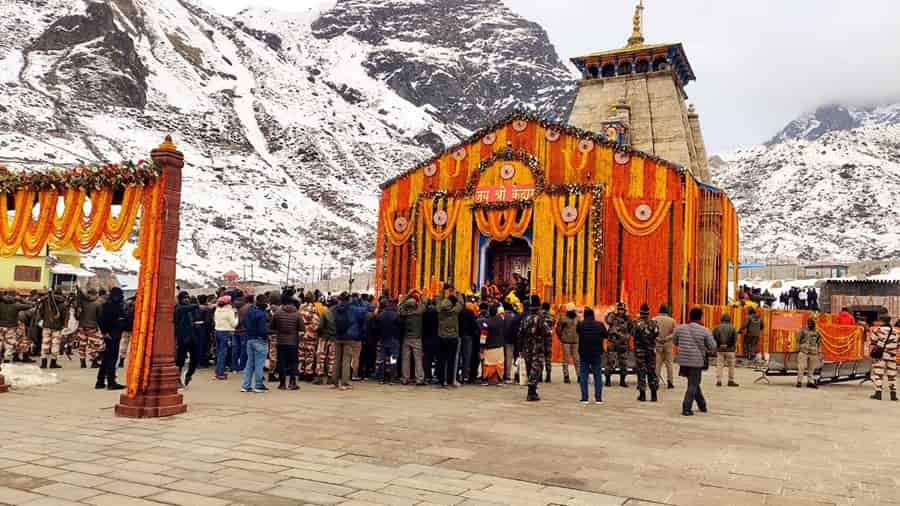
Kedarnath (3,583 m) is the most demanding and most emotionally powerful stop on the Chardham circuit. One of the 12 Jyotirlingas of Lord Shiva. The temple has stood for over 1,000 years. Kapat opens 22 April 2026 at 8 AM.
Getting There
Trek: 16 km one way from Gaurikund to the temple. Ascent takes 5–7 hours. Ponies, palanquins (palki), and helicopters (from Phata/Sirsi/Guptkashi) available as alternatives.
Key Places
- Gaurikund – Trek starting point; Goddess Gauri (Parvati) temple; hot spring for pre-trek ritual bath
- Kedarnath Temple – The Shiva lingam is a natural triangular rock (representing the hump of a bull in Hindu mythology); the ancient stone temple survived the catastrophic 2013 floods almost intact
- Bhairav Temple – 500 m behind the main temple; protector deity of Kedarnath; visit after main Darshan
- Shankaracharya Samadhi – Behind the temple; Adi Shankaracharya attained samadhi here at age 32, according to tradition
- Chorabari Lake (Gandhi Sarovar) – Glacial lake ~3 km above the temple; a further optional trek for those with energy
What most people don’t realize: The Kedarnath helipad is only 500 m from the temple on a stone-paved path. Flying in does not reduce the Darshan experience – the approach to the temple on foot, even for 500 m, is profound.
8. Rudraprayag – Sacred Confluence
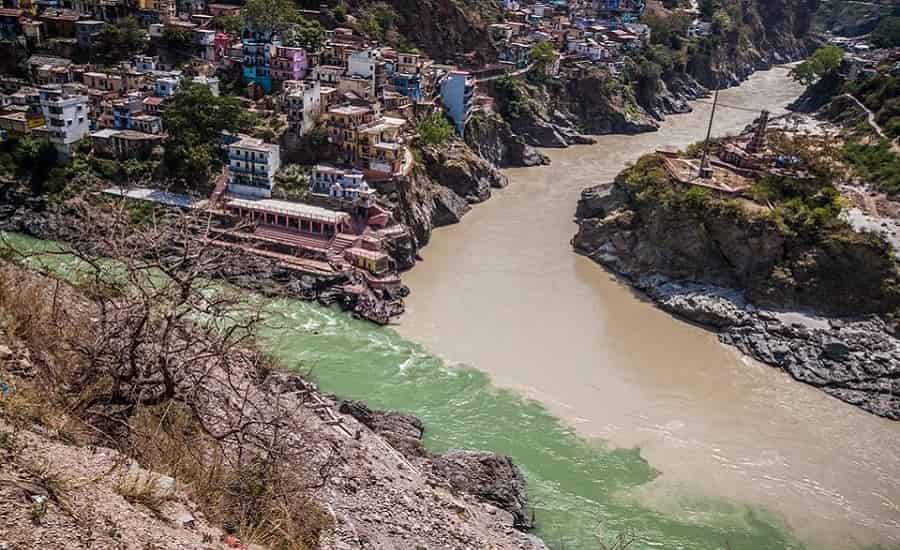
On the return from Kedarnath, Rudraprayag marks the meeting of the Alaknanda and Mandakini rivers. The sight of two distinct rivers joining is visually striking – the color difference between the glacial waters is often visible.
- Rudranath Temple – Dedicated to Rudra (fierce Shiva)
- Chamunda Devi Temple – Active Shakti temple on the Alaknanda bank
- The Sangam itself – A natural point to pause, sit, and reflect before the final leg
9. Badrinath – The Final Dham
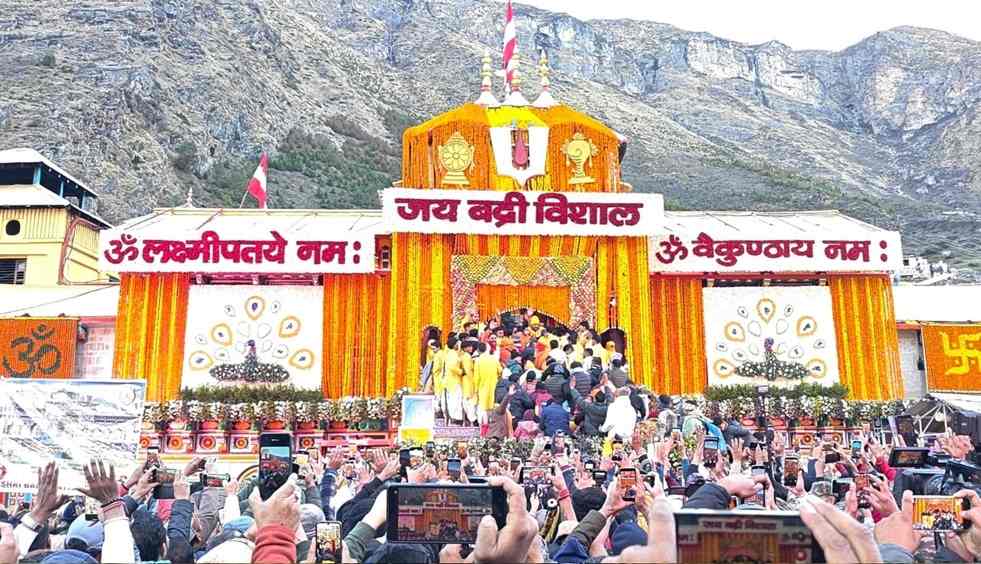
Badrinath (3,133 m) is the concluding stop, dedicated to Lord Vishnu in his Badrinarayan form. Framed by the Nar and Narayan mountain ranges with Nilkantha peak (6,596 m) rising behind, this is one of the most visually dramatic settings of any temple in India. Kapat opens 23 April 2026. Over 15 lakh pilgrims visited in 2024.
- Tapt Kund – Natural hot sulphur spring (45–55°C) just below the temple; bathing here before Darshan is mandatory by tradition
- Badrinath Temple – Black stone Badrinarayan idol, 1 m tall in meditative posture (Padmasana); the vividly painted temple facade is visible from far across the valley
- Narad Kund – Where Adi Shankaracharya retrieved the Badrinarayan idol from the kund; close to Tapt Kund
- Brahma Kapal – Rock platform on the Alaknanda bank where pilgrims perform Pind Daan (last rites for deceased ancestors); one of Hinduism’s most important ancestral rite sites
- Charan Paduka – White rock 3 km from the temple with a natural impression believed to be Vishnu’s footprint
10. Mana Village – The Last Village of India
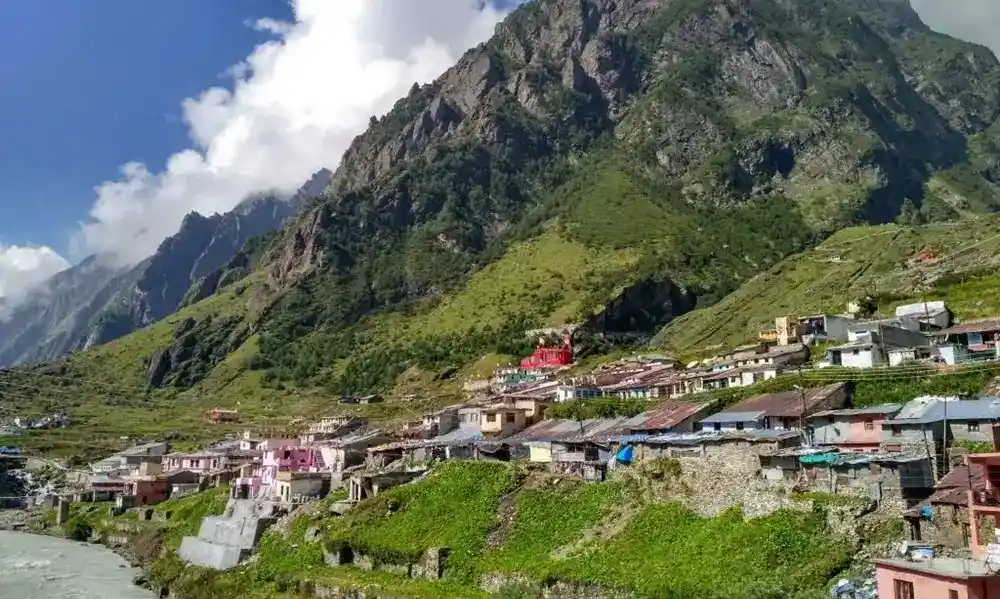
Located 3 km from Badrinath, Mana is the last inhabited village before the Tibet border. This is where most itineraries end – and most pilgrims say it was their favorite stop they almost missed.
- Vyas Gufa (Vyas Cave) – Sage Vedvyas is said to have composed the Mahabharata here; Ganesha wrote it down in the adjacent Ganesha Gufa as Vyas dictated. One of the most sacred literary sites in India
- Bhim Pul – A massive single boulder spanning the roaring Saraswati River, placed there by Bhima according to legend. The Saraswati River disappears underground here – nowhere else in its course
- Vasudhara Falls – 145-meter waterfall ~5 km further; popular with those who have extra time
- Local stalls – Himalayan herbs, woolen handicrafts, and hot chai; the vendors here are among the warmest people on the entire circuit
Do not rush past this: Most organized tours drive from Badrinath Darshan straight to the return journey. Insist on 2–3 hours at Mana. Vyas Gufa alone is worth it.
What the Circuit Actually Feels Like
On paper, these are a list of places. In real life, each one lands differently than described.
Har Ki Pauri at dusk isn’t ‘a Ghat.’ When hundreds of oil lamps are released and the current takes them downstream, and thousands of voices are chanting together, it genuinely overwhelms people who aren’t expecting it.
Kedarnath at 4 AM on a clear morning, with the temple bell echoing against snow peaks in absolute silence – this is why people come back. Not once. Multiple times.
And Mana Village, at the end of 10 days of Yatra, when you stand at Bhim Pul watching the Saraswati disappear into the earth – there is something about that moment that feels final in the best possible sense. Plan your time to be there.
Common Mistakes to Avoid
- Rushing Mana Village – by far the most common regret; build 2–3 hours into your Badrinath day
- Missing Ganga Aarti at Haridwar – most groups arrive late; plan your Day 1 arrival for 4 PM at the latest
- Passing Gangnani Hot Spring without stopping – a 30-minute detour with significant spiritual and physical reward
- Trying the Kedarnath descent in the afternoon – mountain weather deteriorates fast; be descending by 1–2 PM
- Treating Uttarkashi as just a transit stop – the Vishwanath Temple and market deserve one evening
Pro Tips
- Kedarnath and Badrinath temples open at 4 AM – Darshan at 4–6 AM means a fraction of the queue vs. afternoon
- VIP Darshan pass for Kedarnath costs ₹2,500/person; book on IRCTC HeliYatra alongside helicopter ticket
- Carry ₹100 and ₹500 notes – Prasad counters and pony operators cannot change large bills
- Wear socks inside all temples – stone floors are bone-cold even in April/May
- The 2026 season opens ~10 days earlier than 2025 – snow may still be present near Kedarnath on 22 April; pack accordingly
Why Choose Namaste India Trip
Namaste India Trip arranges complete Chardham Yatra tours that cover every stop in this guide with proper time allocation. On-ground guides who know the terrain keep the experience smooth and meaningful.
- Customized stops – add Gaumukh, Tungnath, Panch Kedar as extensions
- Packages from Delhi, Haridwar, Rishikesh, Dehradun
- Road and helicopter options available
- Transparent, all-inclusive pricing
Frequently Asked Questions
Q-1: What is the correct sequence for visiting the Char Dhams?
Ans: The traditional and logistically correct order is Yamunotri → Gangotri → Kedarnath → Badrinath. This moves west to east and matches road connectivity across Uttarakhand.
Q-2: What are the 2026 opening dates for all four Dhams?
Ans: Yamunotri and Gangotri: 19 April 2026 (Akshaya Tritiya). Kedarnath: 22 April 2026 at 8 AM. Badrinath: 23 April 2026. Helicopter service for Kedarnath starts 21 April 2026.
Q-3: How long is the Kedarnath trek and how hard is it?
Ans: The trek is 16 km one way from Gaurikund to Kedarnath Temple. Ascent takes 5–7 hours for average fitness. The altitude (3,583 m) makes it harder than the distance suggests. Ponies, palanquins, and helicopters are available as alternatives.
Q-4: Is Mana Village part of the Chardham Yatra?
Ans: Mana Village is not one of the four Dhams, but it is 3 km from Badrinath and an essential extension. Vyas Gufa (where the Mahabharata was composed according to tradition) and Bhim Pul make it a pilgrimage destination in its own right.
Q-5: What is special about Tapt Kund at Badrinath?
Ans: Tapt Kund is a natural hot sulphur spring (45–55°C) at the foot of the Badrinath temple steps. Bathing here before Darshan is a traditional requirement. The warm water contrasts sharply with the cold mountain air – the experience is unlike any other on the circuit.
Q-6: Can I do Do Dham (Kedarnath + Badrinath) instead of all four?
Ans: Yes. Do Dham Yatra is widely offered and accepted. It covers the two most visited shrines and can be done in 5–7 days by road or 2–3 days by helicopter.
Q-7: What is the significance of Bhagirathi Rock at Gangotri?
Ans: King Bhagirath of the Ikshvaku dynasty is said to have stood on this rock and meditated for thousands of years to bring Goddess Ganga to Earth to purify the ashes of his ancestors. The rock stands in the Bhagirathi River and is worshipped as a sacred site before temple darshan.
Q-8: Are there food options at all four Dhams?
Ans: Basic meals (dal-roti, rice, tea, Khichdi) are available at all four Dhams. Options are most limited at Kedarnath due to height restrictions on permanent structures. Carry dry snacks, ORS sachets, and energy bars as backup.
Q-9: What should I not skip on the Chardham circuit?
Ans: Three things most pilgrims regret skipping: (1) Ganga Aarti at Haridwar, (2) Gangnani Hot Spring on the way to Gangotri, and (3) Mana Village after Badrinath darshan. Each takes under 2 hours but adds immense value to the experience.
Q-10: How much time should I spend at each Dham?
Ans: Minimum recommended: Yamunotri – half day (trek + Darshan + return). Gangotri – half to full day. Kedarnath – full day to overnight. Badrinath – full day including Mana Village. Rushing any means regret.
Q-11: What is Vyas Gufa in Mana Village?
Ans: Vyas Gufa is a natural cave in Mana Village where Sage Vedvyas is traditionally said to have dictated the Mahabharata. The adjacent Ganesha Gufa is where Lord Ganesha is said to have written it down. Both are considered sacred literary and spiritual landmarks, and for many pilgrims, among the most meaningful stops of the entire Yatra.
Conclusion
The Char Dham Yatra is a circuit of experiences, not a checklist. From the river lights at Haridwar to the silence at Mana Village at the edge of India, every stop between those two points has earned its place in the Yatra.
Plan with enough time, follow the traditional sequence, and do not rush past the places that are not temples. The 2026 season opens in April – plan and book now.
Planning your Char Dham Yatra 2026? Contact Namaste India Trip for tailored packages covering every stop in this guide – road or helicopter, from Delhi, Haridwar, or Dehradun.


 Call
Call Enquiry