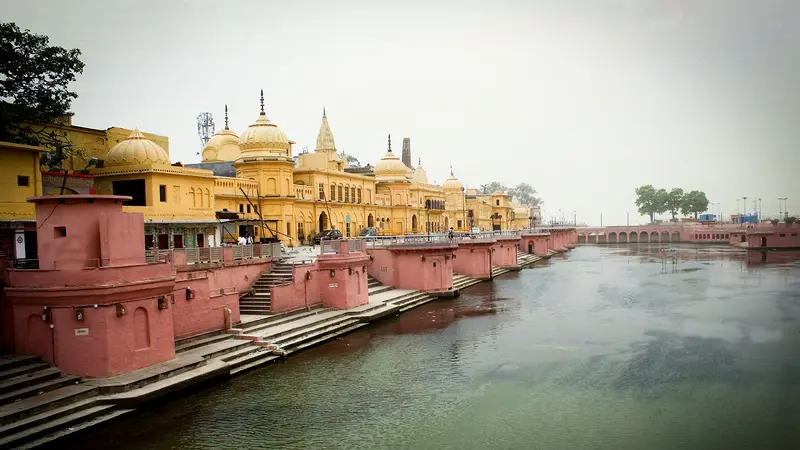
 Stay & Budget
5 min Guide
Places to Visit in Ayodhya – Best Hotels in Ayodhya
Discover the top places to visit in Ayodhya, explore the best hotels, and experience the city's rich heritage and spirituality.

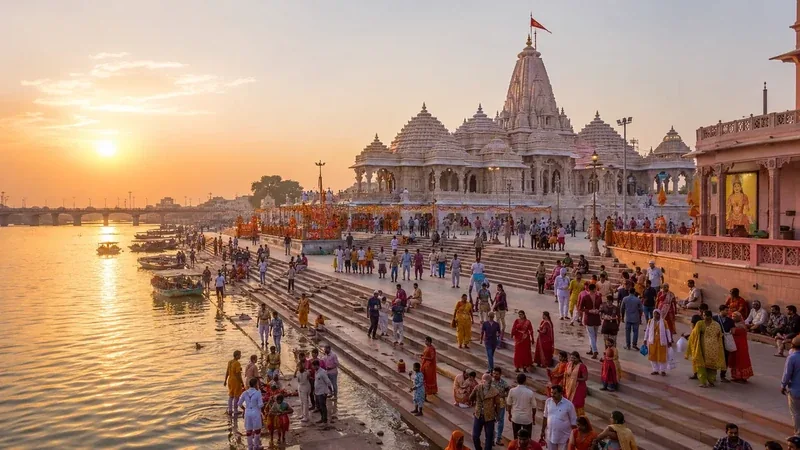
The city of Ayodhya is an important pilgrim place for Hindus in India. It is one of the seven holiest cities of India. Ayodhya is the birthplace of Lord Ram, who is an important deity in the Hindu pantheon. This small, quiet town attracts pilgrims from all over the country. Hindu pilgrims visiting Ayodhya during festivals and important religious functions consider a holy dip in the sacred Saryu River very auspicious.
| Information | Details |
|---|---|
| Location: | Uttar Pradesh, India |
| Population: | 450,899 |
| Religion: | Hinduism 93.23 % | Islam 6.19 % | Sikhism 0.14 % | Buddhism 0.12 % | Jainism 0.10 % | Christianity 0.09 % |
| Area: | 79.8 Km2 (30.8 sq mi) |
| Language: | Hindi, Urdu and Awadhi |
| Weather | 33° C - 10° C |
| Ideal Duration | 2-3 Days |
| Best Time | Nov-Feb |
| Nearest Airport | Faizabad |
Ayodhya is located in center of the state of Uttar Pradesh, in the northern region of India. It is a part of the great northern plains and is situated on the south bank of river Saryu. The climate of Ayodhya is tropical. The summers are hot (April-June) while the winters are cool (November-February). The southwestern monsoon rains hit Ayodhya in July-September. Ayodhya is 130 km east of Lucknow and 6 km from Faizabad.
Though the weather of Ayodhya is generally mild with hot spells in summer (April-June), it is advisable to travel here in the winter months.
Ayodhya city was the capital of the ancient kingdom of Ayodhya, where Lord Ram was born. It is also mentioned in Hindu mythology and the Ramayana. The ancient scripture of Atharvaveda describes Ayodhya as ‘a city built by gods’ and compares its prosperity with the glory and splendor of the paradise. Babur, the founder of the Mughal Empire in India, constructed a mosque in Ayodhya. It became the part of the great Mughal Empire and was ruled by them for many years. After the decline of the Mughal Empire, it became a part of the regional state of Awadh, which was later annexed by the British.
The main tourist attraction of Ayodhya was the Babri Masjid (Mosque), built by the Mughal king Babur. Unfortunately, the traveler can no longer see this monument as it was demolished in the riots that took place here in 1992. It is said that Ayodhya has 7000 temples, but there are some 100 temples of relative significance. Near the remains of the Babri Masjid, the traveler can see the Ram Janmabhumi (birthplace of Lord Ram) shrine. It is believed that Lord Ram spent much of his childhood here. Other places to visit in Ayodhya are Lakshman Ghat, Kala Ram temple and the Kanak Bhavan temple, which was built in the 19th century. There are several Jain shrines in Ayodhya. One kilometer east of the Ram Janmabhumi shrine is Hanumangadhi (Fortress of Hanuman, the revered monkey god and friend/devotee of Lord Ram). It is said that Lord Hanuman lived in a cave nearby to protect the Ram Janmabhumi.
Ayodhya also known as Saket, is an ancient city of India, believed to be the birthplace of Lord Rama and setting of the epic Ramayana. It is adjacent to Faizabad in the Indian state of Uttar Pradesh. Ayodhya was also the capital of the ancient Kosala Kingdom. It is on the right bank of the river Saryu river. This town is closely associated with Lord Rama. The city of Ayodhya is 9,000 years old and was founded by Manu, the first man in the Vedas, and law-giver of the Hindus. Other sources hold that it was founded by and is named after, King Ayudh. It was said to be the capital of the Solar dynasty, of which Lord Rama was the most celebrated king. Skanda Purana and other Puranas list Ayodhya as one of the seven most sacred cities of India, as it has been the backdrop for much of Hindu scriptures. Today it is predominantly a religious city with its historical significance and sacred temples. The Atharvaveda described Ayodhya as “a city built by God and being prosperous as paradise itself”.
Several religions have prospered in Ayodhya simultaneously in different periods. Elements of Hinduism, Buddhism, Jainism and Islam can be found in the city till date. In Jainism, for example, five Tirthankaras were born here, including Adinath, the first Tirthankar, Ajitnath was the second, Tirthankar, Abhinandanath (fourth), while Sumatinath was the fifth Tirthankar and Anantnath was fourteenth Tirthankar in line. According to the belief in Jainism, Ayodhya is the second eternal city after Shikharji, and will never vanish during the changing epochs. Ayodhya like Lucknow, demonstrates a Ganga-Jamuni culture of secularism where as an evidence the Hanuman Garhi temple was built by Nawab of Awadh.
History of Ayodhya, Uttar Pradesh, India is a fascinating one. According to the ancient history, Ayodhya was one of the holiest cities where the religious faiths of Hinduism, Buddhism, Islam and Jainism united together to build a place of enormous sacred importance.
Ayodhya History is a chequered one. In the Atharvaveda, this place was described as a city that was made by gods and was as prosperous as heaven itself. The powerful kingdom of ancient Kosala had Ayodhya as its capital. This city was also a significant trade centre in 600 BC. Historians have identified this place to be Saketa, a key Buddhist centre during the 5th century BC (it is a widely held belief that Buddha visited Ayodhya on several occasions) which it remained till the 5th century AD. In fact, Fa-hien, the Chinese monk, kept record of several Buddhist monasteries that he saw here.
Ayodhya has a historical significance for the Jain community too. This is the birth place of two important Jain tirthankaras who were born in the early centuries AD. Jain texts also stand testimony to the visit of Mahavira, Jainism’s founder to this city.
In the 7th century AD, Xuan Zhang (Hiuen Tsang), the Chinese monk, recorded spotting many Hindu temples in Ayodhya. In the epic Ramayana, the city of Ayodhya is cited as the birthplace of Lord Sri Rama, a Hindu deity who was worshipped as Lord Vishnu’s seventh incarnation. Ayodhya became a famous pilgrimage destination in the 1400’s when Ramananda, the Hindu mystic, established a devotional sect of Rama.
The 16th century witnessed a shift in power with Ayodhya coming under the rule of the Mughal Empire. Ayodhya was annexed in 1856 by the British rulers. Between 1857 and 1859, this place was one of the main centers where the sparks of the first war of Indian Independence originated. These sparks later led to a nationwide revolt of the Indian soldiers in opposition to the British East India Company that began in Calcutta.
| Tour Package | Duration |
|---|---|
| Ayodhya Sightseeing Tour Package | 03 Days & 02 Nights |
| Varanasi Ayodhya Allahabad Tour Package | 04 Days & 03 Nights |
| Best of Uttar Pradesh Tour Package | 13 Days & 12 Nights |
| Varanasi Bodhgaya Chitrakoot Tour Package | 07 Days & 06 Nights |
Lucknow is the capital of Uttar Pradesh and the architectural hub of Northern India. The skyline is crowded with buildings that showcase a fascinating range of ancient styles, most of which date back to Mughal or British rule. The city itself is famous for many aspects of its rich culture, from music, poetry, and embroidery to technology, finance and pharmaceuticals. From those rich roots, we’ve dug up the top 10 sights and things to do in Lucknow.
Get great deals on cheap hotels in Allahabad only on Yatra.com. Know about the best cheap hotels in Allahabad with their services, amenities, and read reviews from people before you make the final booking. Use promo code BONANZA18 and get 70% OFF on Allahabad hotels booking.
Allahabad City Transport Service Ltd. is a city based service under JnNURM scheme of Government of India which operates primarily in the city of Allahabad. It covers the entire city and is used by daily commuters. Allahabad City Transport Service Ltd. has 10 Non A/c low Floor Marcoplo Buses, 58 big ordinary buses with air suspension And 59 Mini Buses, totaling 127. These types of buses have been very successful in Allahabad is liked by all sections of commuters it is liked very much for environment friendly, easy, comfortable & safe transportation by daily commuters like office goers, students, senior citizen and ladies.
Stay & BudgetDiscover the top places to visit in Ayodhya, explore the best hotels, and experience the city's rich heritage and spirituality.
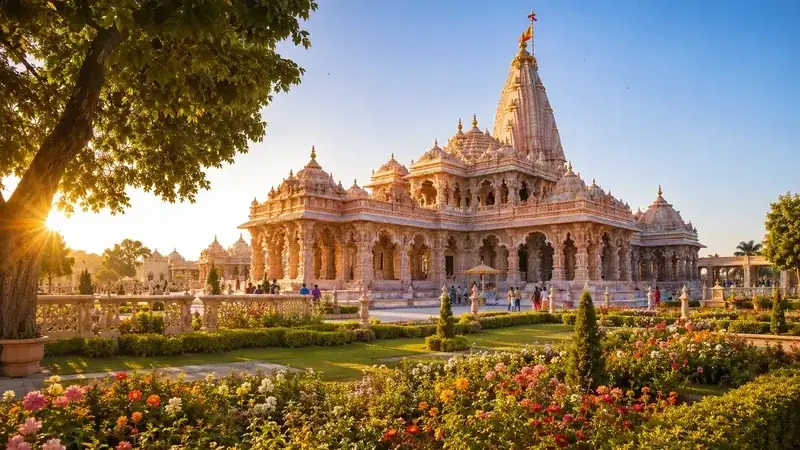 Travel Tips
In this article, we will explore the different seasons and festivals that can enhance your experience while visiting the Ram Mandir.
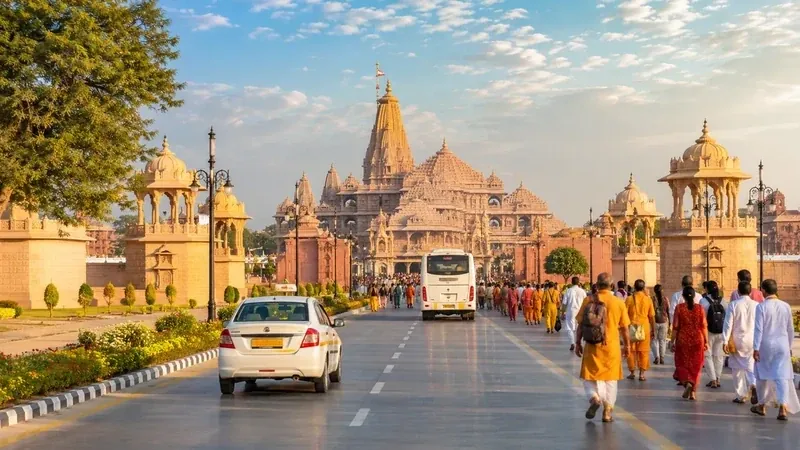 Travel Tips
Step-by-step guide to visiting Ram Mandir, Ayodhya. Explore travel options, airports, railway stations & local transport for easy journey.
 Travel Tips
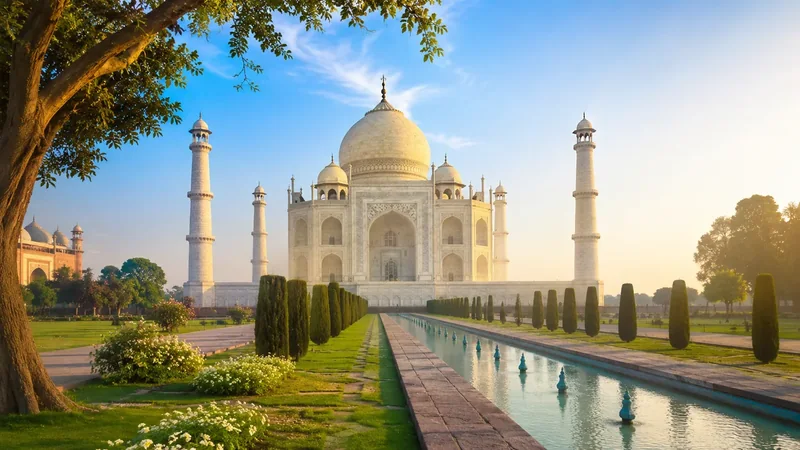
Uttar Pradesh, one of the most visited states in India is teeming with a plethora of key attractions and the best time to visit Uttar Pradesh.
 Food & Culture
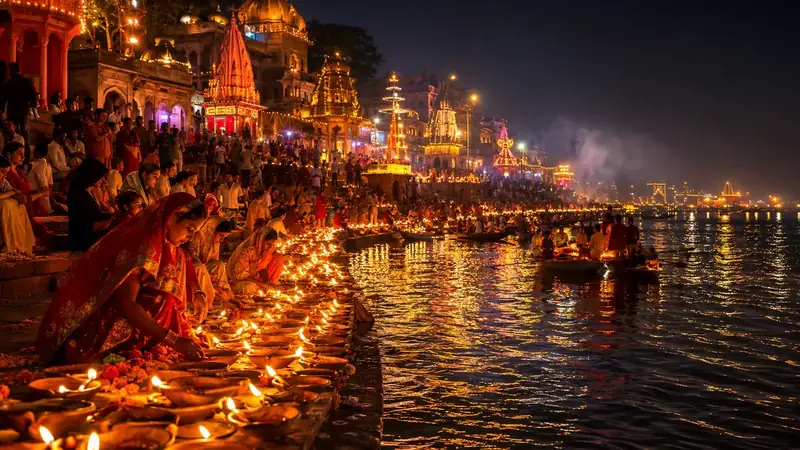
Uttar Pradesh, one of the most colorful states in India is Reckoned for organizing several fairs and festivals with great zeal and enthusiasm.
 Destination Guide
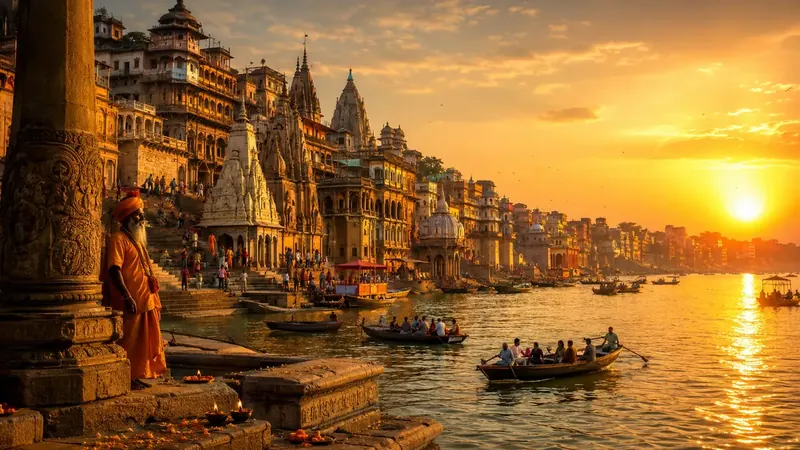
Read out the History of Uttar Pradesh, the birthplace of India's first Prime Minister has played a great role in the struggle for Independence.
Try adjusting your filters or search term.
Recommended