What Is the History Associated with Lord Shiva and Parvati’s Wedding at Triyuginarayan Temple?
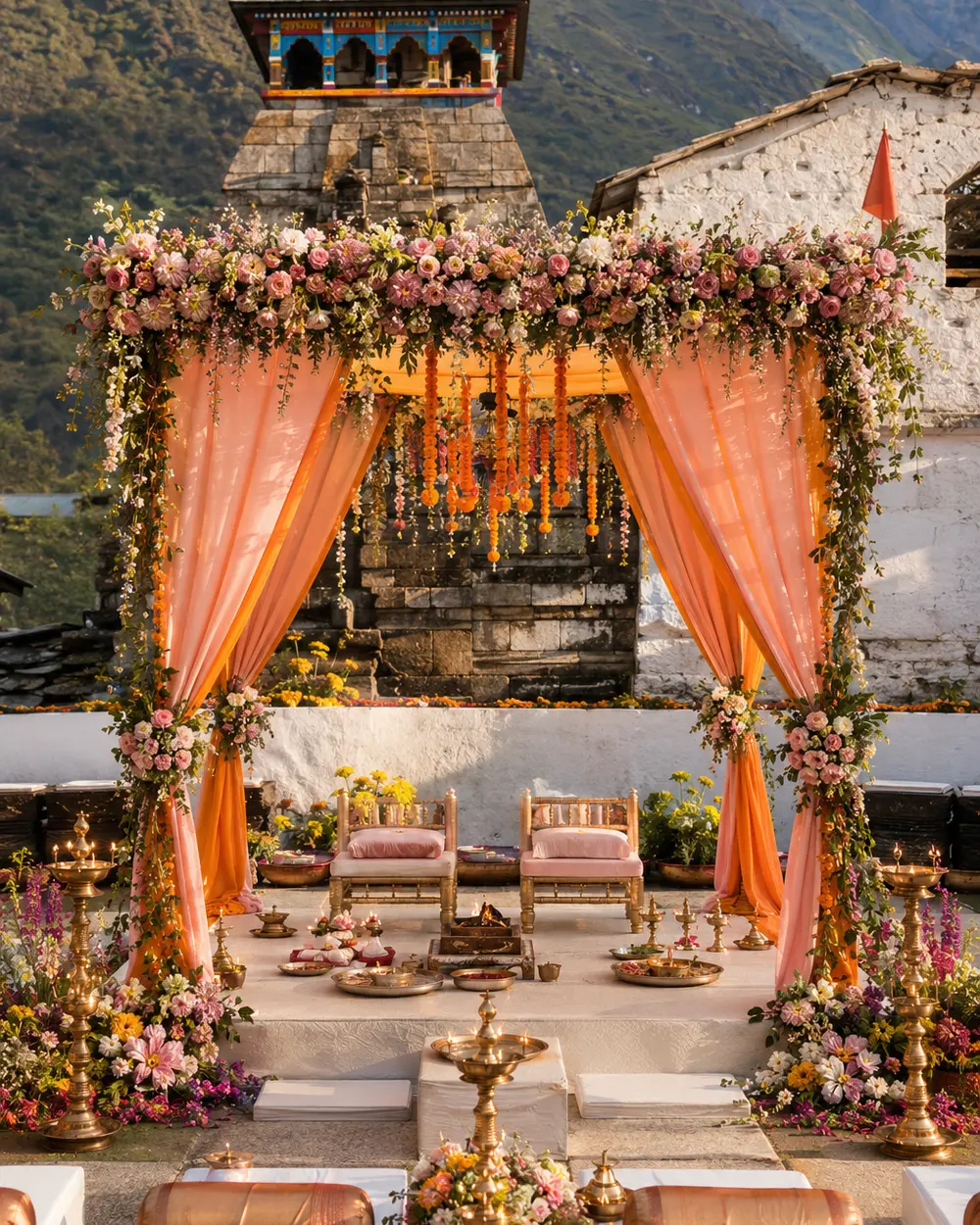
The Triyuginarayan Temple is the actual place where Lord Shiva and Goddess Parvati got married. This highly revered occasion is described in detail in Puranas and other Hindu scriptures. Here’s a historical account of the events based on Hindu texts:
Parvati’s Devotion
Parvati was born to King Himavan and Queen Maina. She is considered the reincarnation of Sati, the first wife of Lord Shiva. In Parvati’s quest to reunite with him and win his affection, she underwent intense penance and austerities. Meanwhile, Shiva had retreated into deep meditation and renounced attachments from the world. However, seeing Parvati’s stealthy determination, he eventually accepted her as his wife.
Wedding Preparation
Sage Narada played an important role in persuading Lord Shiva to take Parvati as his consort. He acted as the mediator and organised the celestial wedding. He also took the marriage proposal to Parvati’s father, King Himavan.
Lord Vishnu took on the role of Parvati’s brother (symbolically) and gave her away to Shiva, a ritual known as Kanyadaan.
The Divine Wedding Venue at Triyuginarayan
The wedding ceremony was held at Triyuginarayan, a Himalayan village. Today, the temple stands at that location. The name Triyuginarayan symbolizes that the wedding event has been remembered since three yugas – Satya Yuga, Treta Yuga, and Dwapara Yuga.
Guests at the Celestial Wedding
All the sages, major deities, and celestial beings were in attendance. The wedding rituals were officiated by Lord Brahma, marking it as the cosmos’ most auspicious marriage. The whole event is described in Shiva Purana, Skanda Purana, and Matsya Purana.