Ahmedabad → Vadodara → Kevadia → Ahmedabad
Statue of Unity Package
- Hotel
- Meals
- Transfer
- Tour
- Guide

Ahmedabad, or Amdavad as locals call it, is one of the most prominent cities of Gujarat and the state’s largest city. Sultan Ahmad Shah founded it in 1411 on the banks of the Sabarmati River. Apart from being a business hub and an educational centre, the city is also growing as a centre for science, industry and IT in Gujarat. The city falls into two parts: the old walled city on the east bank and new Ahmedabad on the west. In 2017, UNESCO added the old city to its World Heritage list as the Historic City of Ahmadabad, making it the first Indian city on the list. Our 2 Nights / 3 Days Ahmedabad sightseeing tour package covers the city’s main heritage sites, mosques, museums and lakes by car.
The city is home to many ethnic groups, religious communities and artisan communities alongside its modern residents, and this mix keeps its cultural traditions alive. You can see the city in its many moods, from the busy C.G. Road to the quiet of Sabarmati Ashram. Ahmedabad also hosts two big festivals, Uttarayan (the kite festival in January) and Navratri, which draw large crowds from far and wide.
| Detail | Information |
|---|---|
| Duration | 2 Nights / 3 Days |
| Destination | Ahmedabad |
| Pickup and drop | Ahmedabad railway station |
| Transport | Car/taxi for all transfers and visits |
| Hotel | 2 nights in Ahmedabad |
| Meals | Breakfast and dinner, as per itinerary |
| Main places covered | Sabarmati Ashram, Kankaria Lake, Calico Museum, old city monuments, Adalaj Stepwell, L.D. Museum |
| Best season | October to March |
| Tour price | 8,178 |
The price of this Ahmedabad city tour package is available on request. The final cost depends on the number of travellers, hotel category, type of car and travel dates. Share these details with our travel specialist to get a quote.
| Place | Timings | Closed on | Entry fee |
|---|---|---|---|
| Kankaria Lakefront | 9 am to 10 pm | Monday | ₹10 adult, ₹5 child |
| Calico Museum of Textiles | Guided tours only, morning tour 10:30 am to 1:45 pm, pre-registration mandatory | Monday | Free |
| Sidi Saiyyed Mosque | 6 am to 6:30 pm, not during prayers | Open daily | Free |
| Jhulta Minar (Sidi Bashir) | 5:30 am to 9 pm, seen from outside | Open daily | Free |
| Adalaj Stepwell | 8 am to 6 pm | Open daily | ₹25 |
| Hutheesing Jain Temple | 5:30 am to 7 pm | Open daily | Free (temple museum ₹20) |
| Lalbhai Dalpatbhai Museum | 10:30 am to 5 pm | Monday and public holidays | Free |
| Sabarmati Ashram | Open daily | Open all year | Free |
Timings and fees can change, so please check them again before you travel.
October to March is the most comfortable time for an Ahmedabad trip. Days are warm and evenings are pleasant. April to June is very hot, so plan outdoor visits for the early morning and late afternoon. If you want to see the city’s festivals, plan for Uttarayan in mid-January or Navratri in September or October, and book early.
Read more: Travel Tips for Ahmedabad
| Day | Tour Program | Distance / Time | Major Highlight / Sightseeing | Meals | Overnight |
|---|---|---|---|---|---|
| 01 | Arrive Ahmedabad & Sightseeing | As per itinerary | Upon arriving at Ahmedabad railway station, our tour representative will greet you and take you to your pre-booked hotel. After check-in and… | As per plan | the hotel |
| 02 | Old City Heritage Tour | 37 km | After breakfast, we head into the old walled city and the area around it. The plan for the day covers the Calico Museum of Textiles, Hutheesing… | As per plan | the hotel |
| 03 | Ahmedabad Departure | 19 km | The last day of your trip starts with breakfast, and then we check out from the hotel. Today we cover Adalaj Stepwell and the Lalbhai Dalpatbhai… | As per plan | Tour Ends |
Upon arriving at Ahmedabad railway station, our tour representative will greet you and take you to your pre-booked hotel. After check-in and some time to freshen up, we start the day’s tour, which covers Sabarmati Ashram, Nehru Bridge, Ellis Bridge, Vastrapur Lake and Kankaria Lake.
We begin with the famous Sabarmati Ashram. Mahatma Gandhi lived here from 1917 until 12 March 1930, when he left for the Dandi March. The museum inside the ashram preserves letters, photographs and other items from the life of the ‘Father of the Nation’.
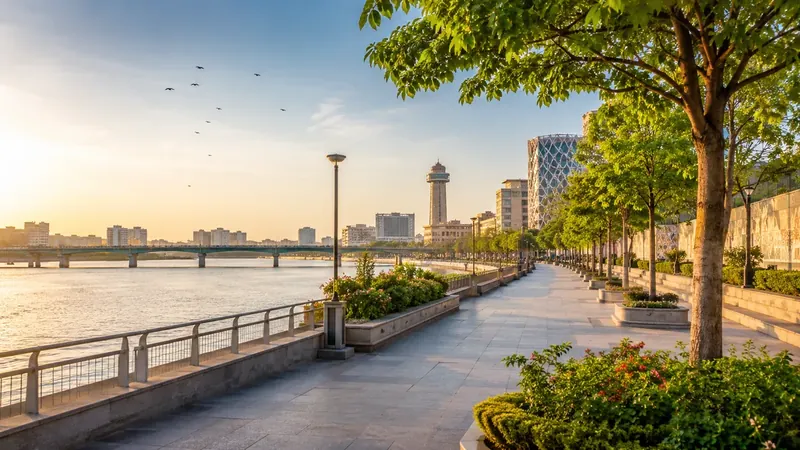
From the ashram, the drive along the Sabarmati River takes you past two of the city’s best-known bridges. Nehru Bridge, named after Jawaharlal Nehru, is one of the main road links between the eastern and western parts of the city. Ellis Bridge is a landmark more than 130 years old. The first bridge here, built of wood in 1870 to 1871, was destroyed by floods. The steel bridge that replaced it was built in 1892. In 1999, concrete bridges were built on both sides of it to carry the growing traffic, and the whole crossing is now called Swami Vivekanand Bridge. The old steel frame is still there between them.
Next, we visit Vastrapur Lake, an urban lake in the western part of the city. It is also called Bhakt Kavi Narsinh Mehta Sarovar. The lakeside is a relaxing picnic spot for locals, with wide jogging paths, gardens, stonework, a children’s park and an open-air theatre.
We end the day at Kankaria Lake, the second-largest lake in Ahmedabad, completed in 1451 by Sultan Qutb-ud-Din Ahmad Shah II. Today it is one of the city’s favourite picnic spots, with a lit walking track around the water, food stalls, the Nagina Wadi island garden and a zoo. The lakefront is open from 9 am to 10 pm, Tuesday to Sunday.
Dinner and overnight at the hotel.
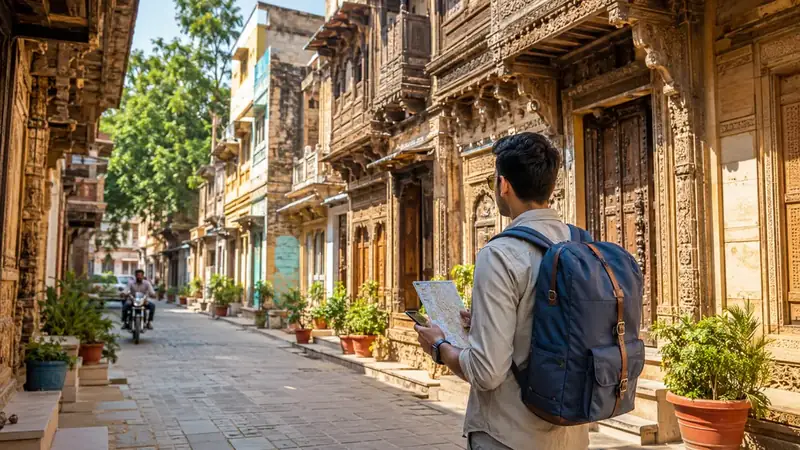
After breakfast, we head into the old walled city and the area around it. The plan for the day covers the Calico Museum of Textiles, Hutheesing Jain Temple, Sidi Saiyyed Mosque, Teen Darwaza, Jama Masjid, Rani no Hajiro and Sidi Bashir Mosque. The stretch from Bhadra Fort to Rani no Hajiro is covered on foot. As per AMC, Teen Darwaza is about 0.37 km from Bhadra Fort and 0.5 km from Rani no Hajiro, with the Jama Masjid in between. Sidi Bashir Mosque needs a short drive.
We start with the Calico Museum of Textiles. Gautam Sarabhai and his sister Gira Sarabhai set it up in 1949. Its collection of old and rare Indian textiles makes it one of the best-known textile museums in the country. Entry is free, but only on a guided tour. Pre-registration is mandatory and each tour takes a maximum of 20 visitors, so the slot has to be booked before the trip. The morning tour runs from 10:30 am to 1:45 pm, and phones, bags and cameras are not allowed inside. The museum is closed on Mondays.
Close by, near Delhi Darwaza, is the Hutheesing Jain Temple. Sheth Hathisinh Kesarisinh began this white marble temple, and his wife Harkunvar completed it in 1848 after his death. It is dedicated to Dharmanatha, the 15th Jain tirthankara.
Next is Sidi Saiyyed Mosque, completed in 1573 in the last years of the Gujarat Sultanate. People come here for its carved stone latticework (jali), and the tree-pattern jali window has become a symbol of Ahmedabad. It is a working mosque. Visitors can come in between 6 am and 6:30 pm, except during prayer times, and about 30 minutes is enough.
Teen Darwaza, a gateway with three arches, stands east of Bhadra Fort, which Ahmad Shah built in 1411. The gateway was completed in 1415 and once led into the royal square of the fort. It has seen many important events in the city’s history.
A short walk away is the Jama Masjid, the main mosque of the old city. Work on it began in 1423 and finished in 1424, under Sultan Ahmad Shah. Inside, 260 pillars hold up 15 domes. The Sultan’s own tomb, Badshah no Hajiro, stands just east of the mosque.
Close to the Jama Masjid, inside the busy Manek Chowk, is Rani no Hajiro. Built in 1445, this mausoleum holds the tombs of the queens of Sultan Ahmad Shah, the founder of Ahmedabad. It sits east of Badshah no Hajiro.
The last stop of the day is Sidi Bashir Mosque, near Ahmedabad railway station. The mosque takes its name from Sidi Bashir, an African-origin slave in the service of Sultan Mahmud Begada, though AMC notes it is also believed to have been built by Malik Sarang in 1452. The mosque was damaged in a Maratha attack in 1753. What survives is the arched gateway and two minarets, known as the Jhulta Minar, or shaking minarets. You can see them from outside, but entering the minarets is not allowed.
The evening is free for you to enjoy at leisure. Dinner and overnight at the hotel.
The last day of your trip starts with breakfast, and then we check out from the hotel. Today we cover Adalaj Stepwell and the Lalbhai Dalpatbhai Museum.
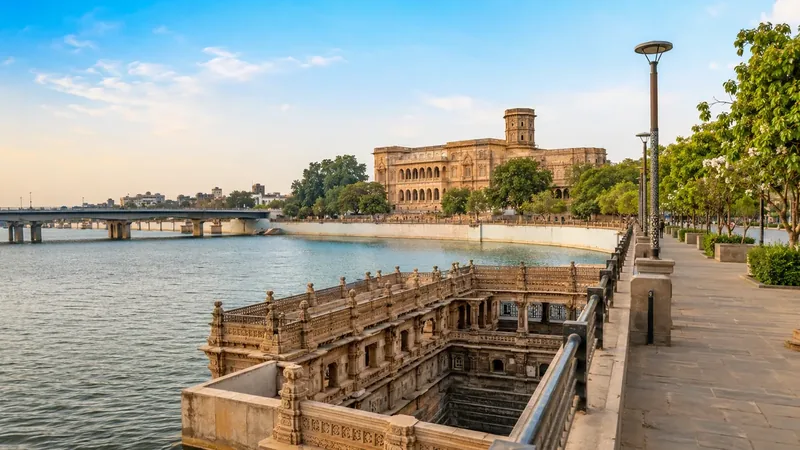
Adalaj Stepwell (Adalaj ni Vav) is 19 km north of Ahmedabad, as per Gujarat Tourism. This five-storey stepwell dates from the late 15th century. Queen Rudabai began it in memory of her husband, and Sultan Mahmud Begada completed it. Light comes in through openings above the landings, and the carvings on the walls show scenes of village life and mythology. It is open from 8 am to 6 pm.
Back in the city, we visit the Lalbhai Dalpatbhai Museum (L.D. Museum) in Navrangpura. Architect B. V. Doshi designed the building, and the museum was formally inaugurated in 1985. You can see a large collection of rare historical artefacts here, such as bronzes, miniature paintings, drawings, manuscripts and sculptures. Entry is free. The museum is about 7 km from Ahmedabad railway station and 12 km from the airport, and it is closed on Mondays and public holidays.
After the museum visit, you’ll be dropped at Ahmedabad railway station, where our representative will bid you goodbye as your journey ends here.
Suggested Tour: Ahmedabad Tour Packages
Book first, decide later. If your plans shift, you get a simple and flexible window to update or cancel your booking without stress.
Your money is safe with us. book today and enjoy the benefit of flexible travel dates and money back guarantee.
We understand that booking online can be a bit daunting, which is why we offer our customers a peace of mind Money Back Guarantee. This includes a 7-day cooling-off period. If you change your mind about your purchase or wish to cancel for any reason within this time, we will provide a 100% refund, no questions asked.
This guarantee is only applicable for those canceling their tour 60 days or more before their travel date.
Would you like help making a booking or have a few questions? Whatever the reason, don't hesitate to get in touch.
Ahmedabad is famous for its textile industry, its old walled city with pols (traditional residential clusters), Sabarmati Ashram and its 15th-century mosques. It is also known for its kite festival, Uttarayan.
The package includes a car/taxi for all transfers and visits, 2 nights’ hotel stay, breakfast and dinner as per the itinerary, driver allowance, parking and fuel, and pickup and drop at Ahmedabad railway station. Monument entry fees, insurance and personal expenses are not included.
The car drops you near the old city monuments, and you walk from Bhadra Fort to Rani no Hajiro. As per AMC, Teen Darwaza is about 0.37 km from Bhadra Fort and 0.5 km from Rani no Hajiro.
No. Swaminarayan Akshardham is in Gandhinagar, about 30 km from Ahmedabad. It is not part of this package and is closed on Mondays.
Two to three days are enough to see the main places. This 3-day plan gives you a full day for the old city and time for Adalaj Stepwell and the museums.
No. Pre-registration is mandatory and each guided tour takes up to 20 visitors, so the slot has to be booked before your visit.
Kankaria Lake, the Calico Museum and the L.D. Museum are closed on Mondays. Akshardham in Gandhinagar is also closed on Mondays.
No. Sanskar Kendra has been closed for renovation since March 2020.
Recommended
Ahmedabad → Vadodara → Kevadia → Ahmedabad



Koh Samui → Koh Phangan → Koh Samui