Last Updated on 11/04/2026
Char Dham Yatra holds immense religious importance in Hinduism and is known as one of the most revered sacred pilgrimage circuits in the country. It is associated with two major deities — Lord Shiva and Lord Vishnu — and two sacred rivers, Yamuna and Ganga. Millions of devotees embark on this holy pilgrimage journey in Uttarakhand every year, believing that it washes away all sins and opens the path to moksha, salvation, and spiritual awakening.
This devotional Yatra does not only reflect its religious relevance but also highlights the spiritual importance of the Char Dham circuit, radiating a sense of unity among Sanatan Dharma followers from diverse backgrounds — a living example of India’s unity in diversity.
In this blog, we explore its importance from multiple dimensions — historical, religious, cultural, and contemporary — and understand why this ancient pilgrimage continues to hold deep meaning in the modern world.
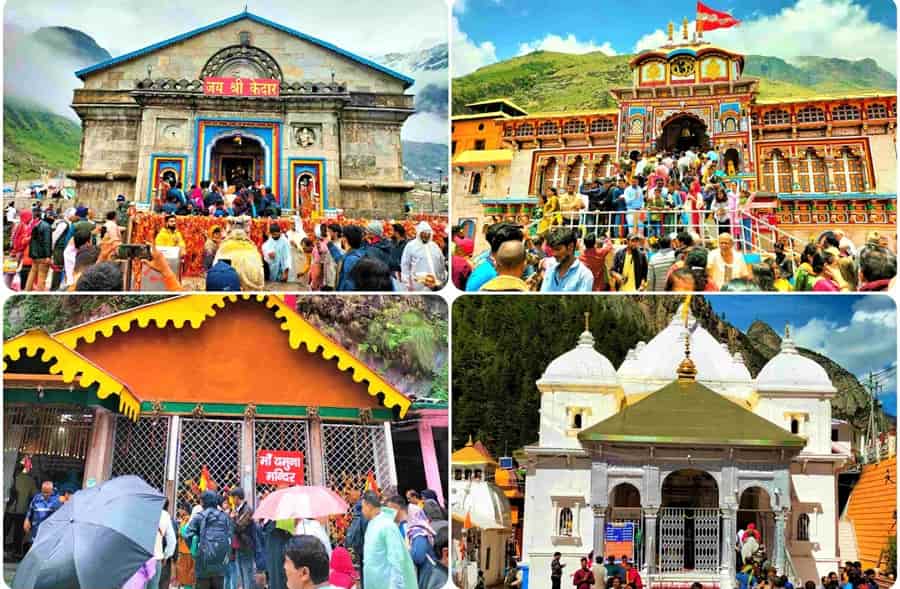
The Correct Order of Visiting Char Dham — Why It Matters
The traditionally accepted order for the Char Dham Yatra is: Yamunotri → Gangotri → Kedarnath → Badrinath. This sequence follows the east-to-west geographic flow of the sacred rivers and the traditional pilgrimage direction as described in Hindu scriptures.
Starting from Yamunotri (source of Yamuna), moving to Gangotri (source of Ganga), then to Kedarnath (Lord Shiva’s abode), and concluding at Badrinath (Lord Vishnu’s abode) is said to represent a journey from Shakti to Shiva to Vishnu — a complete spiritual arc. While it is not mandatory to follow this order, most pilgrims and religious scholars recommend it.
Historical Facts About Each Place
The Char Dham circuit includes four religious sites — Yamunotri, Gangotri, Kedarnath, and Badrinath — each associated with different deities, making this pilgrimage spiritually complete and deeply significant in Hinduism.
Yamunotri
Yamunotri temple has the idol of Maa Yamuna in the sanctum sanctorum. Located in the Uttarkashi district of Uttarakhand, its history dates back to 1839 when it was first constructed on the orders of Maharaja Sudarshan Shah, the king of Tehri Garhwal.
As Hindu scriptures suggest, Asti Muni, the sage, came here to meditate in the serene surroundings of Yamunotri Dham. It is also believed that when he became too old to walk, Maa Ganga herself appeared as a river beside the Yamuna.
Gangotri
The Nepalese Gurkha general Amar Singh Thapa is believed to be the patron of the present Gangotri temple’s construction. Hindu texts carry multiple references to the divinity of this holy place, where the celestial river Ganga descended to the earth, making Gangotri an essential part of the Char Dham circuit.
Kedarnath
The idol of Kedarnath — which resembles a bull’s hump — was found and enshrined by the great Hindu philosopher Adi Shankaracharya around the 8th century CE. He is also credited with rebuilding the temple; further modifications were made by Raja Bhoj, strengthening the religious and historical importance of Kedarnath Dham.
Adi Shankaracharya’s Role in the Char Dham Circuit: One of the most important yet often overlooked facts about the Char Dham Yatra is that the pilgrimage circuit as we know it today was systematised by Adi Shankaracharya in the 8th century CE. He established four mathas (monastic centers) at Badrinath (north), Puri (east), Dwarka (west), and Sringeri (south), and revived the pilgrimage traditions at Kedarnath and Badrinath when they had fallen into obscurity. His mission was to unify Hindu spiritual practices across the Indian subcontinent through these pilgrimage routes.
Badrinath
Similar to Kedarnath, Adi Shankaracharya is credited with reviving the temple at Badrinath around the 7th–8th century CE. The present architecture and appearance of the shrine were shaped by the Garhwal kings in later centuries, contributing to its lasting cultural and spiritual significance.
Religious Significance of Each Place
Yamunotri
Yamunotri is the birthplace of the Yamuna River — the second most sacred river in Hindu tradition after the Ganga. It serves as the starting point of the Char Dham circuit. Devotees take a dip in Surya Kund before darshan, to purify the body and soul. The bathing in this sacred river is considered highly auspicious.
Gangotri
The Gangotri glacier is considered the spot where Goddess Ganga descended to earth. Its religious significance spans the entire Hindu world. The waters of the Ganga are believed to possess purifying powers and are considered a gateway to moksha.
Kedarnath
Among the twelve Jyotirlingas, Kedarnath is the northernmost. It holds deep significance among Shaivites. The greatness of the temple is described in detail in the religious text Kritya-kalpataru, highlighting its profound spiritual importance.
Badrinath
Badrinath is one of the four Char Dham sites of Lord Vishnu (located in all four directions of India). It also holds a place among the 108 Divya Desams (Vishnu temples). The shrine is the earthly abode of Lord Vishnu amidst the Himalayas and is deeply revered by Vaishnava devotees.
Cultural and Social Significance
The Char Dham Yatra is deeply rooted in the heart of India’s Hindu community. For many, undertaking this yatra at least once in a lifetime is a cherished spiritual goal. Through this journey, pilgrims witness ancient traditions, religious practices, and the rich cultural heritage of the Himalayas.
The pilgrimage also promotes collective rituals, community gatherings, and environmental awareness. The improved infrastructure in recent decades has made the yatra more accessible, boosting the local economy of remote Himalayan villages.
Char Dham Yatra — Pilgrim Footfall (For Reference)
The Uttarakhand Tourism Department publishes annual pilgrim data. In recent seasons, total Char Dham pilgrims have consistently crossed 40–50 lakh (4–5 million) annually, making it one of the largest religious gatherings in the world. Kedarnath and Badrinath typically receive the highest footfall. These numbers reflect not just religious devotion but also the significant economic contribution of the pilgrimage to the Uttarakhand state.
Relevance of Char Dham Yatra in Modern Days
In today’s world of constant stress and digital overload, the Char Dham Yatra offers something rare — an invitation to slow down, disconnect, and seek meaning beyond the material world. The trek to Kedarnath, the sound of the Gangotri river, the evening aarti at Badrinath — these experiences leave a permanent imprint.
The yatra also bridges generational gaps and encourages younger Indians to connect with their spiritual and cultural heritage.
Conclusion
Through this blog, we have tried to convey the core importance and spiritual significance of this sacred trip. We hope you will find it interesting and centric.
The Char Dham Yatra is not simply a religious duty — it is an experience of India’s most ancient spiritual geography. Whether you are driven by deep faith, cultural curiosity, or the simple desire to stand before mountains that have humbled pilgrims for centuries, this journey has something profound to offer. If you are planning your first or your tenth yatra, approach it with preparation, respect, and an open heart.
Frequently Asked Questions
Q-1: What is the significance of visiting all four dhams together?
Ans: According to Hindu belief, completing all four Dhams in a single yatra is considered a full spiritual circuit. Each dham represents a different aspect of the divine — Shakti (Yamuna and Ganga), Shiva (Kedarnath), and Vishnu (Badrinath). Completing all four is believed to grant moksha or liberation from the cycle of birth and death.
Q-2: What is the correct sequence for visiting the four Dhams?
Ans: The traditionally recommended order is Yamunotri → Gangotri → Kedarnath → Badrinath. This follows the geographic east-to-west progression and the spiritual arc described in Hindu scriptures. It is not mandatory, but following this order is believed to be more auspicious.
Q-3: Can I skip one dham and still complete the yatra?
Ans: Yes, you can visit any combination. However, visiting all four is traditionally considered the complete Char Dham Yatra. Many pilgrims who cannot complete all four in one trip do a Do Dham (two dhams) or Teen Dham (three dhams) and return the following year to complete the circuit.
Q-4: Is the Char Dham Yatra only for Hindus?
Ans: The temples are Hindu religious sites and have certain rituals and dress codes. Non-Hindus are generally not allowed inside the inner sanctum of some temples (Badrinath in particular may have restrictions). However, the journey through the Himalayas and the surrounding areas is open to all. Non-Hindu visitors are welcome to experience the natural and cultural environment of the yatra.
Q-5: What happens if Kedarnath closes due to snow before I arrive?
Ans: Kedarnath temple typically closes on the day of Bhai Dooj (October–November). If unexpected snowfall occurs before the official closing date, the temple authorities may advance the closure. Always monitor the Badrinath-Kedarnath Temple Committee (BKTC) website or local news for any emergency closures. Travel insurance that covers itinerary disruption is recommended.
Q-6: Who established the Char Dham pilgrimage circuit?
Ans: The Char Dham circuit as a unified pilgrimage was systematised by Adi Shankaracharya in the 8th century CE. He revived and reorganised these shrines when they had fallen into neglect and connected them as a spiritual journey through the Indian subcontinent.
Q-7: What is the difference between Chota Char Dham and Char Dham?
Ans: The Char Dham established by Adi Shankaracharya refers to four sites spread across India: Badrinath (north), Puri (east), Dwarka (west), and Rameshwaram (south). The Chota (small) Char Dham refers specifically to the four Himalayan shrines in Uttarakhand — Yamunotri, Gangotri, Kedarnath, and Badrinath — and is what is commonly meant when people say ‘Char Dham Yatra’.
Q-8: How many pilgrims visit Char Dham every year?
Ans: In recent years, the total pilgrim count for the Char Dham circuit has ranged between 40 and 55 lakh (4–5.5 million) annually. Badrinath receives the highest number of visitors, followed by Kedarnath. The numbers are published by the Uttarakhand Tourism Department at the end of each season.
Q-9: Is the yatra open throughout the year?
Ans: No. The Char Dham temples in Uttarakhand are open only for the summer season — typically from Akshaya Tritiya (April–May) to Bhai Dooj (October–November). The temples are closed during winter due to heavy snowfall. The deity idols are moved to temporary temples at lower altitudes (Ukhimath for Kedarnath, Mukhba for Gangotri, Kharsali for Yamunotri, Pandukeshwar for Badrinath) during the winter months.
Q-10: What is the spiritual benefit of completing the Char Dham Yatra according to Hindu scriptures?
Ans: According to various Hindu Puranas and scriptures, completing the Char Dham Yatra is believed to wash away the accumulated sins of multiple lifetimes, grant moksha (liberation), and bring peace to the souls of ancestors. It is also considered an act of profound devotion (bhakti) that strengthens the spiritual bond between the devotee and the divine.
Suggested Tour:


 Call
Call Enquiry