

- Most Famous Glaciers in Uttarakhand Overview
- 1. Gangotri Glacier
- 2. Yamunotri Glacier
- 3. Bandarpunch Glacier
- 4. Pindari Glacier
- 5. Kafni Glacier
- 6. Milam Glacier
- 7. Nanda Devi Group of Glaciers
- 8. Khatling Glacier
- 9. Doonagiri Glacier
- 10. Satopanth Glacier
- Frequently Asked Questions
- Related Articles
- Related Tour Packages
- About the Author
- Was This Travel Guide Helpful?
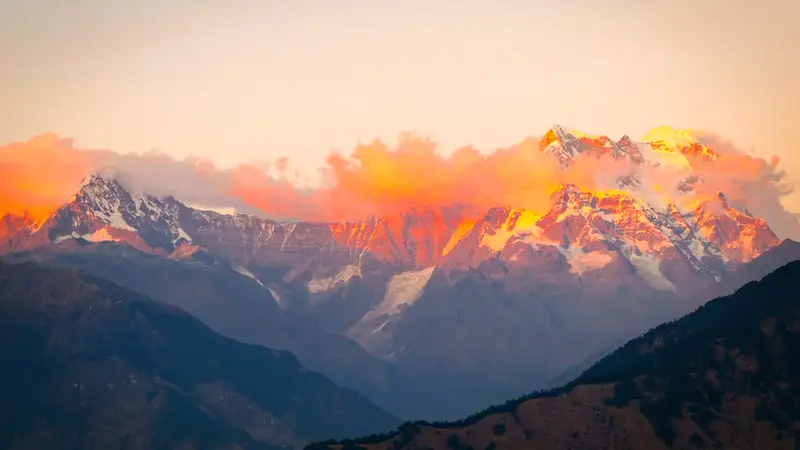
Glaciers, covering almost 10% of the entire land surface of the Earth, are one of the most important geological formations for the survival of humankind, as glacial ice is the largest reservoir of fresh water on Earth providing an essential water source in the form of meltwater, specially in temperate, alpine and seasonal polar climates. In India, the Himalayan range is host to a number of glaciers, source to the majority of the river network that irrigates and sustains the great northern plains. In India, many glaciers and the rivers emanating therefrom are considered sacred, specially in the state of Uttarakhand, often referred to as Devbhumi or the land of the Gods. Glaciers also provide a huge source of tourism, both for religious devotees or simple adventure seekers. Here’s a list of 10 most famous Glaciers in Uttarakhand.
- Gangotri Glacier
- Yamunotri Glacier
- Bandarpunch Glacier
- Pindari Glacier
- Kafni Glacier
- Milam Glacier
- Nanda Devi Group of Glaciers
- Khatling Glacier
- Doonagiri Glacier
- Satopanth Glacier
1. Gangotri Glacier
Gangotri Glacier is one of the primary sources of the river Ganges, the largest and the longest river in India, and undoubtedly the holiest and most revered by most Indians. Situated in the Uttarkashi District of Garhwal region of Uttarakhand, the glacier shares its name with the small but important town of Gangotri, which is one of the destinations of the Char Dham.
Devotees undertake the strenuous yet stunning trek from the town of Gangotri to Gaumukh to pray at the source of the holiest of rivers. This area also serves as a base camp for professional mountaineers looking to scale Shivalinga peak, the Bhagirathi peaks among others. Nestled among incredible peaks and stunning views at a height of almost 3415 metres, visiting Gangotri means going to one of the highest pilgrimages in India.
2. Yamunotri Glacier
 Yamunotri Glacier
The trek is a beautiful one, with snow-clad mountains surrounding the path as it crosses through dense forests laden with snow, captivating streams and gorgeous lakes. After Yamunotri, the trek up to Saptrishi Lake, the frozen lake fed by Champasar Glacier.
3. Bandarpunch Glacier
 Bandarpunch Glacier
The trek to the Bandarpunch Glacier commences from the village of Taluka, where one can reach either via Jeeps or by trekking from Soud. The way onward from Taluka takes trekkers through dense forests of walnuts, willows and chestnuts and into a snowy wonderland. The first major stop en route is the village of Osla after which the trek becomes a little difficult. Ruinsara Lake situated right below the snout of the glacier offers a perfect camping site.
4. Pindari Glacier
 Pindari Glacier
The trek starts from Loharkhet, and after crossing Dhakuri, reaches the village of Khati which is the last inhabited village on the trek. The rest of the trek to Zero Point is dominated by snow and ice, providing a surreal and never-before experience to the visitors.
5. Kafni Glacier
 Kafni Glacier
In order to trek to Kafni Glacier, one has to first cross Zero point, Pindari glacier to reach Dwali. The return journey to the Kafni Glacier can be made from Dwali in one day, and the top of the trek offers a glimpse of the splendid vistas of the main Himalayan Ranges, a once in a lifetime experience for any lucky enough to visit this dreamlike paradise.
6. Milam Glacier
 Milam Glacier
The trek commences from Munsiyari, and trekkers have to navigate a 60 km path to reach the top. The trek is a relatively tiring one and takes approximately 10-15 days to the top and back, and as such ranked at a moderate level. The trek is undertaken between the months of May to October, as the path is inaccessible during the winter months.
7. Nanda Devi Group of Glaciers
 Nanda Devi Group of Glaciers
The Nanda Devi Biosphere reserve presents a wide range of trekking opportunities, each offering something unique and awe-inspiring. One of the most common treks undertaken is the trek to Nanda Devi East Base camp which starts from Munsiyari and branches off from the trek route to Milam Glacier at Rilkot onwards to the Panchu Glacier.
8. Khatling Glacier
 Khatling Glacier
There are three possible routes of varying levels of difficulty that one can take to trek to the Khatling glacier, however all three routes are recommended only for those who have experience in high altitude trekking due to their strenuous nature. The most common route taken by most trekkers which takes around 10 days, starts from the village of Ghuttu and ends at Gaurikunda, which serves as a base camp for Kedarnath temple trek.
9. Doonagiri Glacier
 Doonagiri Glacier
The trek starts from the village of Juma 43 kms from Joshimath, onwards towards Doonagiri Village which can be reached in one day. From Doonagiri village, the glacier can be reached in a single day’s trek, and there are ample spots for camping near the base of the glacier where one can stay for the night before returning back the next day.
10. Satopanth Glacier
 Satopanth Glacier
One of the major trekking routes that attracts adventure enthusiasts and religious devotees alike is the trek to the Satopanth lake which commences from Badrinath. The glacial lake, apart from being absolutely gorgeous and breath-taking in its beauty and scope, is also of utmost importance in Hindu culture, as it is believed that the Divine Trinity, i.e. Brahma, Vishnu and Mahesh used to meditate on each corner of the triangular lake.
From Badrinath, trekkers cross the village of Mana, last village of India on the Indo-Tibetan Border and Vasundhara Falls on their way to Laxmi Van and further to Chakratirtha. Surrounded by the peaks of Chaukhamba, Neelkanth, Satopanth, Parvati and Balakun, the views from Chakratirtha are a sight to behold.
The Satopanth Lake lies 5 km further up the trail, and trekkers can make the journey to the lake and back in a single day with ample time to enjoy the incomparable natural beauty of the place. Avid trekkers and adventure lovers can further continue the trek from the lake up to the Swargarohini Glacier base camp via Chandrakunda and Surajkund, tracing the mythical steps of the Pandavas as they ascended on this path on their way to heaven.
Frequently Asked Questions (FAQs)
Is Gaumukh trek difficult?
Gaumukh trek ranges between moderate to difficult zones. Mainly because the trek takes you through some challenging geography at high altitude. You will be faced with forests, rocky terrain with stones and boulders blocking your way. You don’t have to be an expert trekker or a mountain climber but you will be required to have strength, stamina and endurance.
What route will I be following for the Pindari Glacier trek?
You will be following this route – Kathgodam – Kharkia – Khati – Dwali – Phurkia – Zero Point – Pindari Glacier – back the same route you came. The trek will start from Khati village.
What is the legend behind the Bandarpoonch Parvat?
The name of the mountain translates to ‘monkey tail’ mountain. It has been named so because according to legends, after wreaking creating havoc in Lanka from his burnt tail, lord hanuman is believed to have come to this mountain to extinguish the fire. The fire that could have been only extinguished here and nowhere else.
How many glaciers are there in Uttarakhand?
There are 1439 glaciers in Uttarakhand which covers an area of over 4,000 kms. All these glaciers are divided and subdivided into different ranges and groups like Gangotri Group, Kamet Group, Satopanth Group, Dhauliganga Group etc.
How do I get to Johar valley?
Trekking is the only way to reach Johar Valley which starts from Munsiyari. Munsiyari can be easily reached from Delhi to Kathgodam via Almira.
Which is the largest glacier in the Himalayas?
Siachen is the glacier in the Himalayas outside of the polar regions. It is 76 kms long, located in the Karakoram and is the longest glacier in the Himalayas region.
Which is the smallest glacier in India?
Gangotri glacier is the smallest is India.
Which river originates from Satopanth Glacier?
laknanda river, that moves past Badrinath temple, originates from Satopanth Glacier. This river meets uttar gang upstream to Alka Puri and then at Mana village Alaknanda River meets Saraswati which goes on to drain into the Badrinath basin.
What is the legend of Dronagiri Mountain?
In Ramayan, when Laxman was wounded it was up to Hanuman to go get the medicine from the hills of Uttarakhand. He got confused about which medicine to bring and instead he picked up the whole mountain rock and brought it to Laxman so that everyone who is badly wounded gets the medication they need. It was this Dronagiri Mountain that was brought by Lord Hanuman that was said to contain Sanjeevani Booti.
What are some nearby glaciers to Kafni Glacier?
Some other glaciers you can explore nearby include Pindari Glacier, Maiktoli Glacier and Milam Glacier.
Compare relevant packages and request a customised travel plan from the Namaste India Trip team.








Share your experience, ask a question, or leave useful tips for other travelers.