Last Updated on 01/07/2026
Dwarka, located on the western coast of Gujarat along the Arabian Sea, is one of India’s most sacred pilgrimage destinations and is believed to be the ancient kingdom of Lord Krishna. As one of the revered Char Dham and Sapta Puri, the city attracts millions of pilgrims and tourists every year. From the iconic Dwarkadheesh Temple and sacred Bet Dwarka island to the Nageshwar Jyotirlinga, Gomti Ghat, and beautiful coastal attractions, the best places to visit in Dwarka offer a perfect blend of spirituality, mythology, history, and scenic beauty.
Whether you’re planning a one-day Dwarka sightseeing trip or a relaxed 2-day pilgrimage, this Dwarka Travel Guide 2026 covers everything you need to know before your visit. You’ll find the top places to visit in Dwarka, updated darshan timings, entry fees, travel tips, itinerary suggestions, budget estimates, accommodation options, local food recommendations, and answers to the most frequently asked questions, helping you plan a smooth and memorable journey.
1. Dwarkadheesh Temple (Jagat Mandir)
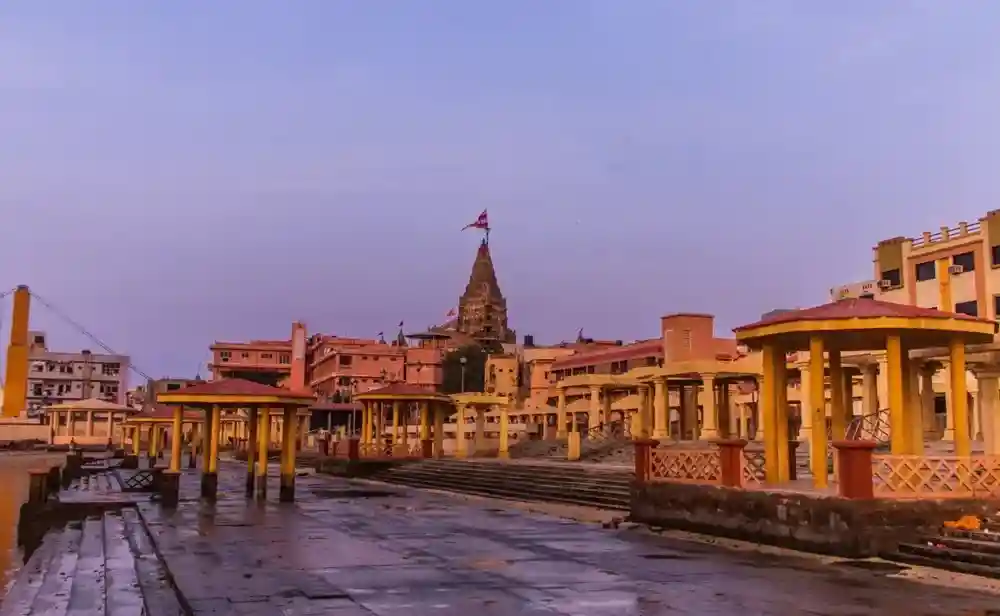
The Dwarkadheesh Temple is the beating heart of Dwarka — one of the four sacred Char Dham pilgrimage sites. The presiding deity is Lord Krishna (Dwarkadheesh = Lord of Dwarka). It stands 78.3 metres high in Chalukya-style architecture with 72 ornate carved pillars and a 84-foot flag on its spire that can be seen from miles away.
Every day, six elaborate shringaar rituals are performed — the deity is bathed, dressed in fresh attire, and offered food at precise times. The most sacred is the Mangala Aarti at 6:30 AM, when the sanctum fills with incense and bells in the soft morning light. Janmashtami 2026 (15-16 August) is the most spectacular time to visit — legendary celebrations with lakhs of devotees. Book accommodation 6-8 weeks in advance.
| Deity |
Lord Krishna (Dwarkadheesh) |
| Darshan Timings |
6:30 AM-1:00 PM & 5:00 PM-9:30 PM (approx — verify at temple trust) |
| Entry Fee |
Free | Camera: Not permitted | Parking: charges apply |
| Dress Code |
Traditional attire preferred; cover shoulders & knees |
| 💡 Insider Tip: Arrive before 6:30 AM for the Mangala Aarti — the temple is quieter, the atmosphere more intimate, and the morning light on the spire is stunning for photography from outside. |
2. Bet Dwarka (Beyt Dwarka / Shankhodhar)
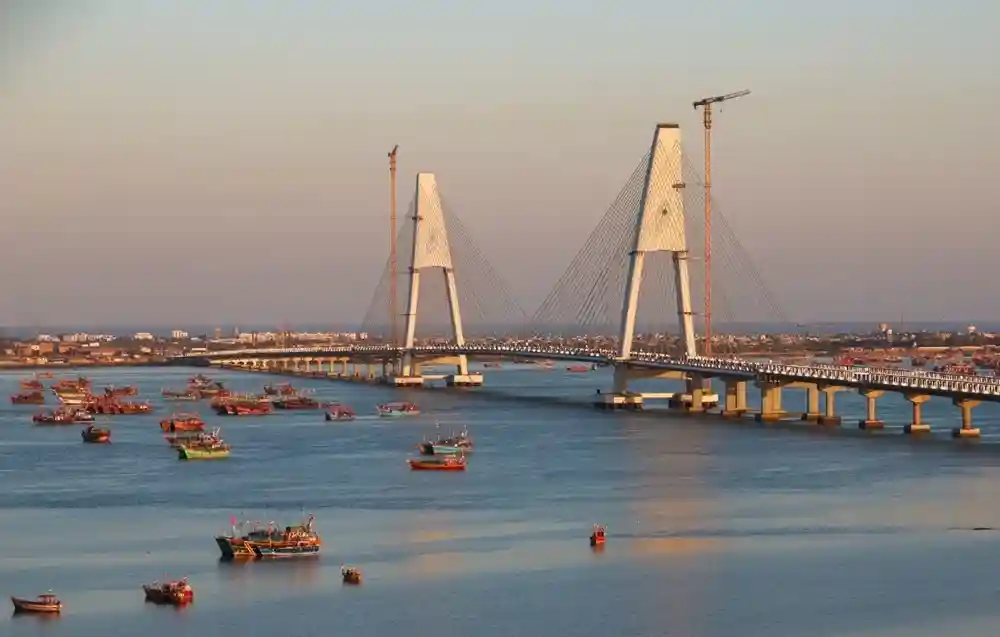
Bet Dwarka is a sacred island about 30 km from Dwarka city, accessible by ferry from Okha port. According to Hindu tradition, this was Lord Krishna’s personal residence — separate from the royal administrative city of Dwarka. The island is dotted with over 50 temples and shrines, each linked to a different episode from Krishna’s life.
Walking through the narrow lanes of Bet Dwarka — with temple bells ringing and the sea breeze in the air — feels like stepping into an ancient world. The island also has a significant Jain temple, making it sacred for Jain pilgrims too. The surrounding Okha Marine National Park offers coral reefs, dolphins, sea turtles, and snorkeling opportunities.
| ★ The sight of Bet Dwarka’s temple towers rising from the sea as you approach by ferry is one of the most stirring images in all of Gujarat travel. |
| Ferry from |
Okha port (~30 km from Dwarka) |
| Ferry Timings |
Approx. 6:00 AM-6:00 PM | Suspended during rough monsoon seas |
| Entry Fee |
Ferry: approx Rs 20-30 per person | Temple entry: Free |
| ID Proof |
Carry government-issued ID for ferry boarding |
3. Nageshwar Jyotirlinga Temple
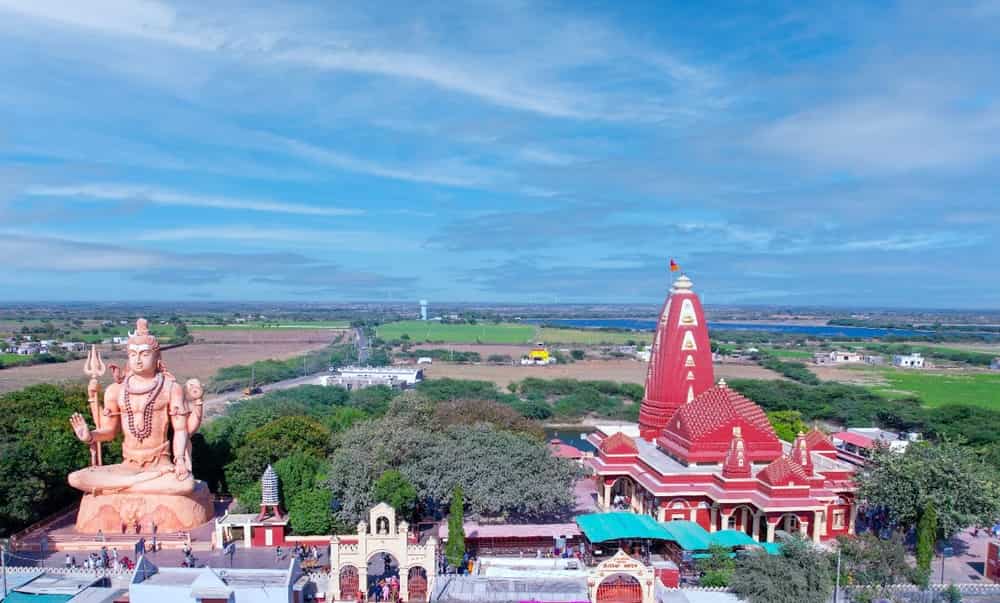
One of the 12 most sacred Jyotirlinga shrines of Lord Shiva, located approximately 17 km from Dwarka city on the road to Bet Dwarka. The presiding deity is Nagnath — Lord of the Nagas. The Shiva linga faces south — an unusual and highly auspicious orientation. The linga’s texture remarkably resembles a Rudraksha bead.
The temple complex features an 82-foot (25-metre) seated Shiva statue — one of the largest in Gujarat and a landmark visible from the highway. The sheer scale of the statue, set against open sky, makes for an unforgettable visual.
| ★ Temple Origin (Shiva Purana): Devotee Supriya, captured by demon Daruka, chanted Lord Shiva’s name without ceasing. Shiva manifested here as the Jyotirlinga, slew Daruka, and freed all captives. Considered extraordinarily powerful for those facing hardship. |
| Distance |
~17 km from Dwarka |
| Darshan Timings |
6:00 AM-9:00 PM (approx — verify before visiting) |
| Entry Fee |
Free | VIP Darshan: available (charges apply) |
4. Rukmini Devi Temple
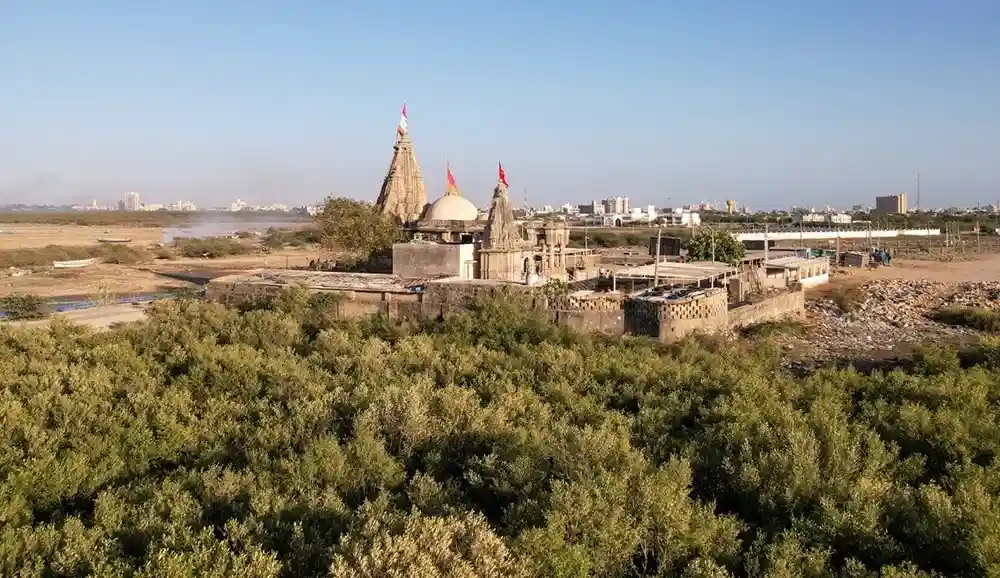
Located approximately 2 km from the Dwarkadheesh Temple, this 12th-century Solanki-style temple is dedicated to Rukmini — Lord Krishna’s principal queen and an avatar of Goddess Lakshmi. Its exterior walls carry intricate carvings of deities and celestial beings. The four-handed presiding idol is considered radiantly beautiful by devotees.
The story of Rukmini and Krishna is one of the most romantic in Hindu mythology. Rukmini, deeply in love with Krishna and opposed by her brother Rukmi, secretly sent a message to Krishna begging rescue. Krishna came, swept her away before the wedding, and defeated Rukmi in battle — a story of courage, devotion, and divine love.
| ★ Why apart: Sage Durvasa cursed estrangement after Rukmini drank water before offering it to him during a chariot journey. The two temples stand 2 km apart — a physical expression of an ancient myth. |
| Distance |
~2 km from Dwarkadheesh Temple |
| Darshan Timings |
6:00 AM-12:30 PM & 5:00 PM-8:30 PM (approx) |
| Entry Fee |
Free |
5. Gomti Ghat
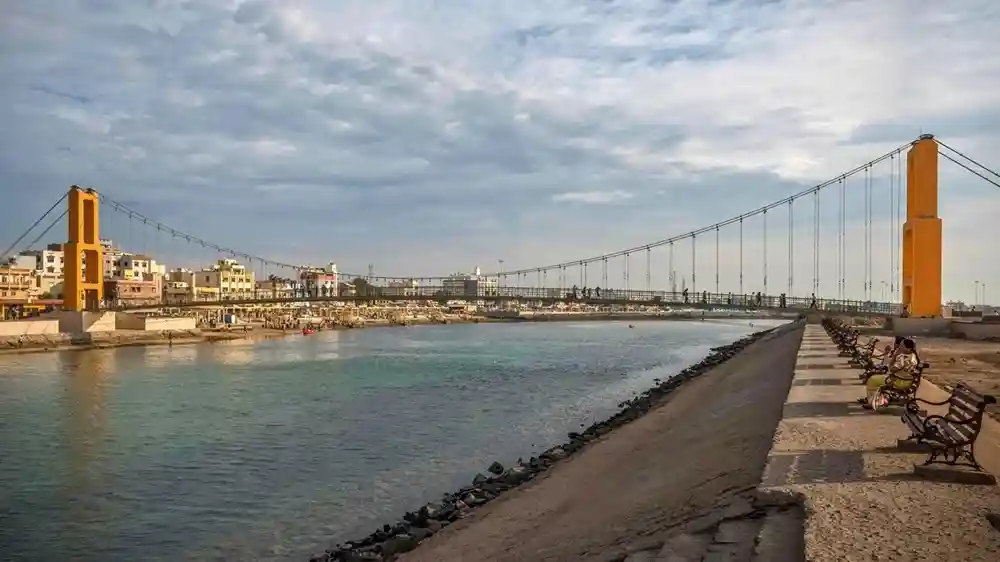
The most sacred bathing ghat in Dwarka, at the confluence of the Gomti River and the Arabian Sea — accessible from the Swarg Dwar (Gate to Heaven) exit of the Dwarkadheesh Temple. Taking a holy dip here before temple darshan is considered essential by pilgrims.
The morning aarti at Gomti Ghat — priests at the water’s edge as the sun rises over the Arabian Sea — is one of the most serene experiences in all of Dwarka. Bells ringing, flowers floating on water, and the temple spire shimmering in the background create an atmosphere of pure tranquility.
| Best Time |
5:30-7:00 AM for sunrise aarti |
| Entry Fee |
Free | Locker facility available nearby |
| 💡 Our Tip: Visit Gomti Ghat before 6 AM — the aarti is more peaceful and far less crowded than afternoon hours. |
6. Sudama Setu
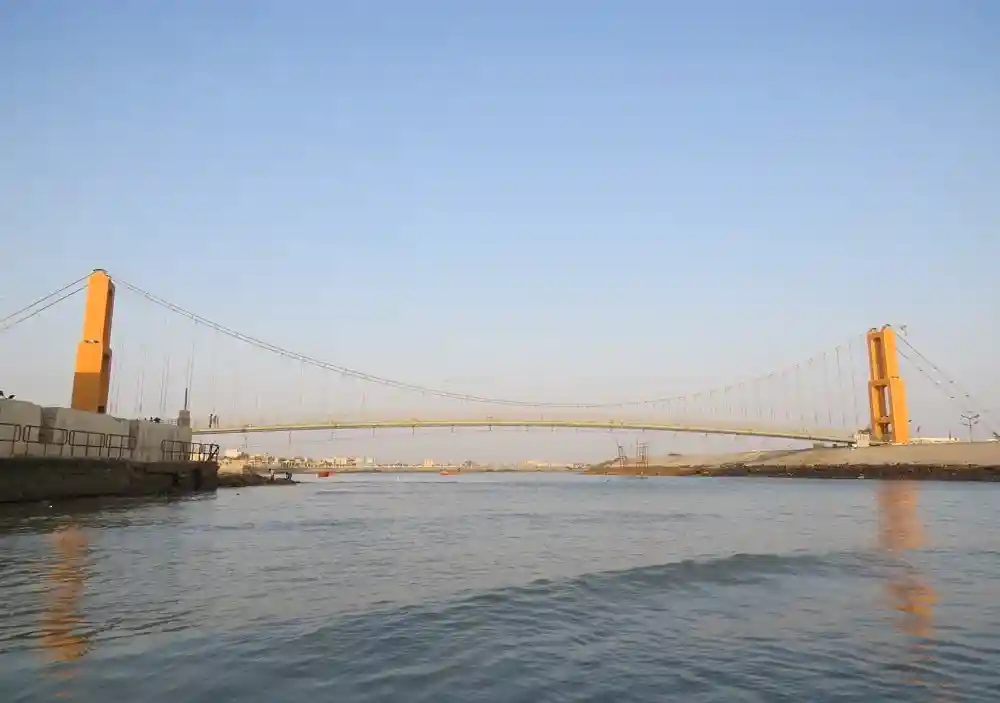
The Sudama Setu is a 230-metre pedestrian suspension bridge named after Lord Krishna’s childhood friend Sudama — whose story of unconditional devotion is one of the most beloved in the Bhagavata Purana. The bridge connects the Dwarkadheesh Temple area to Panchkui Tirtha across the Gomti River.
Walking across the Sudama Setu is one of the most scenic things to do in Dwarka. The bridge sways gently above the Gomti, offering panoramic views of the temple spire on one side and the open Arabian Sea on the other. At sunrise, the golden light catches the temple and water simultaneously — a favourite spot for photographers.
| Entry Fee |
Free |
| Best Time |
Early morning (6-7 AM) or evening (5:30-7 PM) |
| Best For |
Photography, evening strolls, panoramic temple views |
7. Bhadkeshwar Mahadev Temple
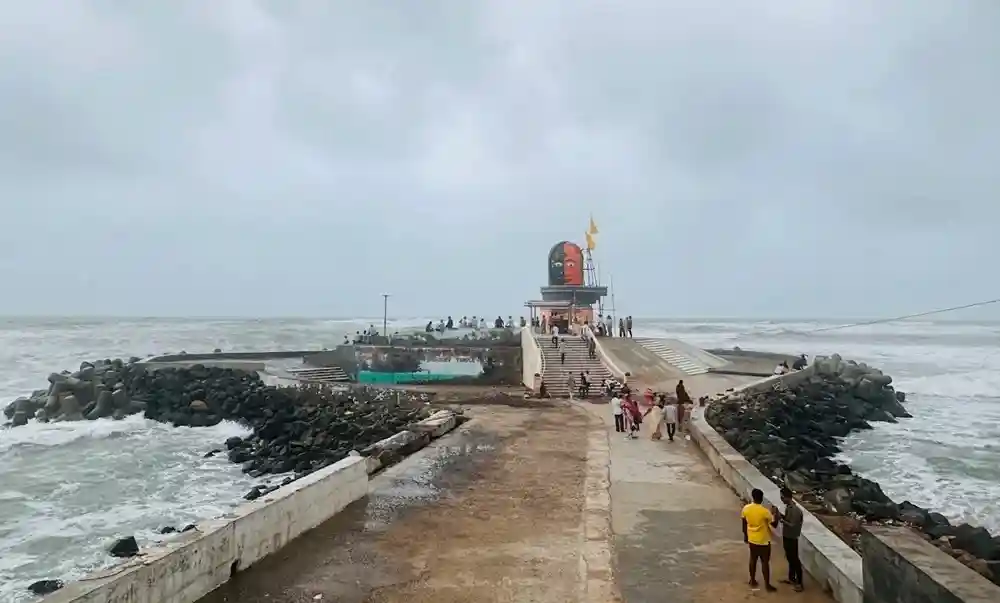
The Bhadkeshwar Mahadev Temple is one of the most dramatically situated shrines in Gujarat — a Shiva temple standing on a rocky island in the middle of the Arabian Sea, connected to shore by a narrow stone causeway that waves wash over at high tide.
The experience of walking across this causeway — with the Arabian Sea swirling on both sides, waves crashing all around, and the ancient temple ahead — is unlike anything else in Dwarka. It is especially breathtaking at sunrise, when the first light catches the temple walls and the sea turns gold around it. During Shravan month (July-August), Shiva devotees perform jalabhishek here even in monsoon rains.
| Deity |
Lord Shiva (Bhadkeshwar Mahadev) |
| Entry Fee |
Free |
| Best Time |
Sunrise or low tide for best causeway access |
| Note |
Causeway may submerge at very high tide — check locally before visiting |
8. Gopi Talav
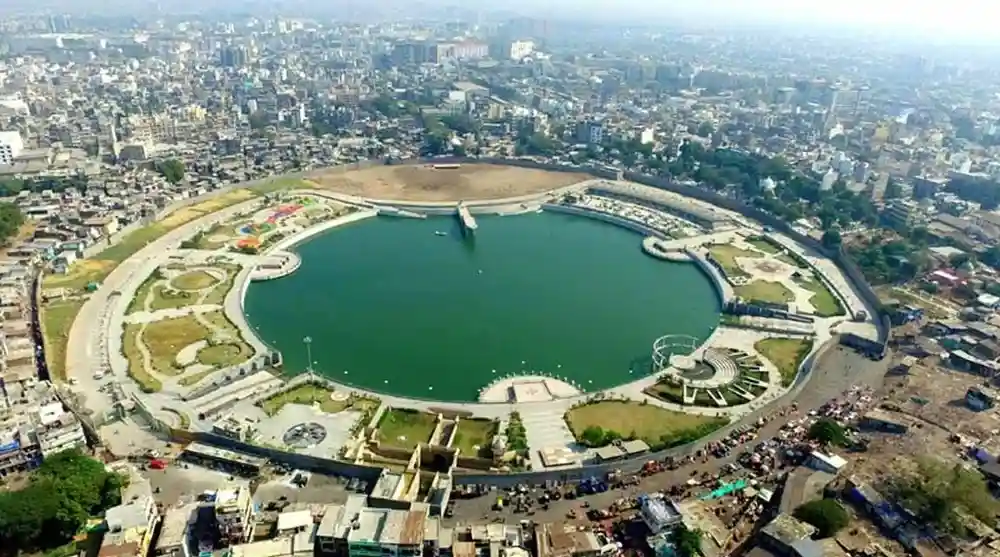
Gopi Talav is a sacred lake approximately 20 km from Dwarka city, on the road to Nageshwar Jyotirlinga. According to the Bhagavata Purana, this is where the Gopis (cowherd maidens of Vrindavan) met Lord Krishna for the very last time — and where, overcome with divine love, they merged with the earth.
Their bodies transformed into the sacred yellowish-white clay known as Gopi Chandan — found only around this lake and used by Vaishnavas worldwide as a tilak mark. Gopi Talav is quietly beautiful, rarely overcrowded, and deeply meditative — a welcome contrast to the busier pilgrimage sites.
| Distance |
~20 km from Dwarka, on Nageshwar road |
| Significance |
Source of sacred Gopi Chandan (yellow-white clay) |
| Entry Fee |
Free |
| Best Time |
Early morning — quiet and meditative |
9. Dwarka Lighthouse
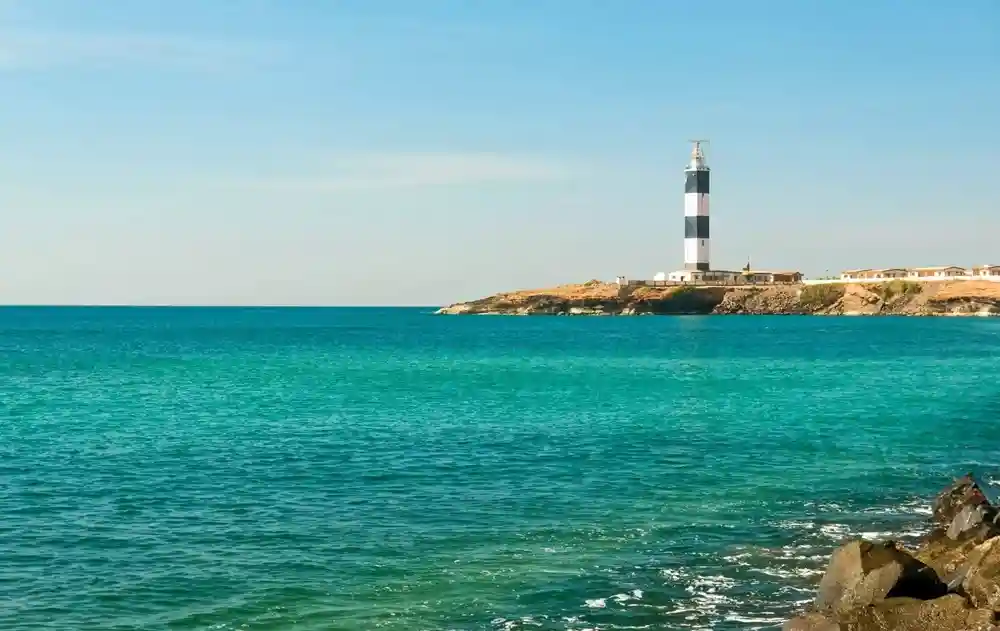
Standing at the western tip of Dwarka, the Dwarka Lighthouse is one of the oldest and most recognisable landmarks on the Gujarat coastline. Visitors who climb the tower are rewarded with a breathtaking 360-degree view — the deep blue Arabian Sea stretching to the horizon on one side, and ancient temple spires rising over the city’s rooftops on the other.
This is the best single viewpoint in all of Dwarka for understanding the city’s remarkable geography — perched at the very tip of a peninsula, surrounded by water on three sides. The late afternoon golden light and the sunset from the top are considered among the finest views in coastal Gujarat.
| Location |
Western tip of Dwarka, near the sea coast |
| Viewing Hours |
4:00 PM-6:00 PM (approx — verify locally before visiting) |
| Entry Fee |
Nominal fee applies |
| Best For |
Photography, sunset views, panoramic Arabian Sea views |
10. Chakratirth Beach (Dwarka Beach)
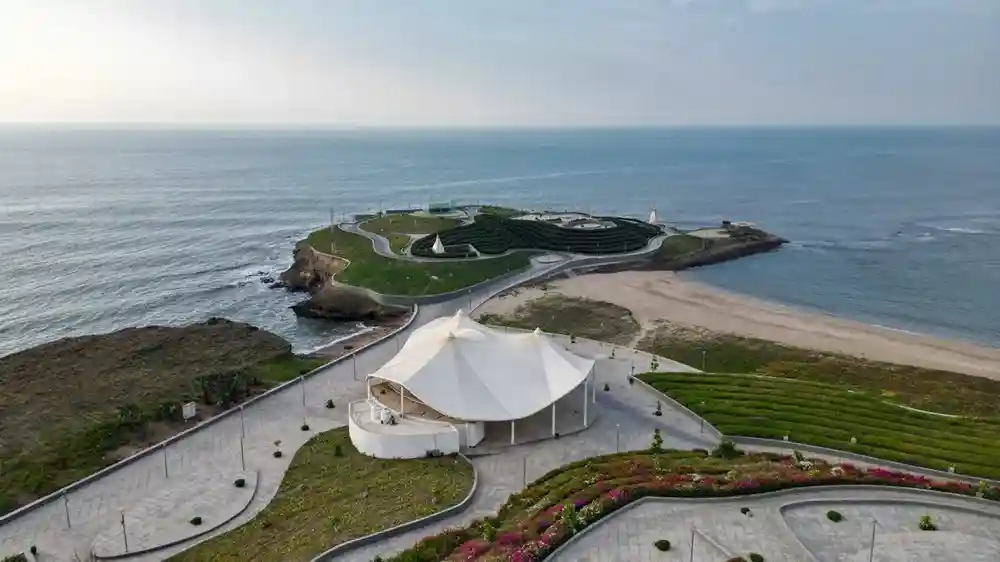
Chakratirth Beach is the main beach in Dwarka, at the sacred confluence of the Gomti River and the Arabian Sea near Swarg Dwar. For pilgrims, a holy dip (snan) here is an important part of the Dwarka darshan circuit.
In the early morning, with few people around and soft light, the view of the Dwarkadheesh Temple spire rising over palm trees with the sea in the foreground is genuinely stunning. In the evening, the beach comes alive with devotees and families — temple bells in the distance, sea breeze, and a vivid Gujarat sunset all combining into a memorable scene.
| Entry Fee |
Free |
| Best Time |
Early morning (6-8 AM) or evening (5:30-7 PM) |
| Safety Note |
Strong currents — swim only in designated areas |
11. Samudranarayan Temple
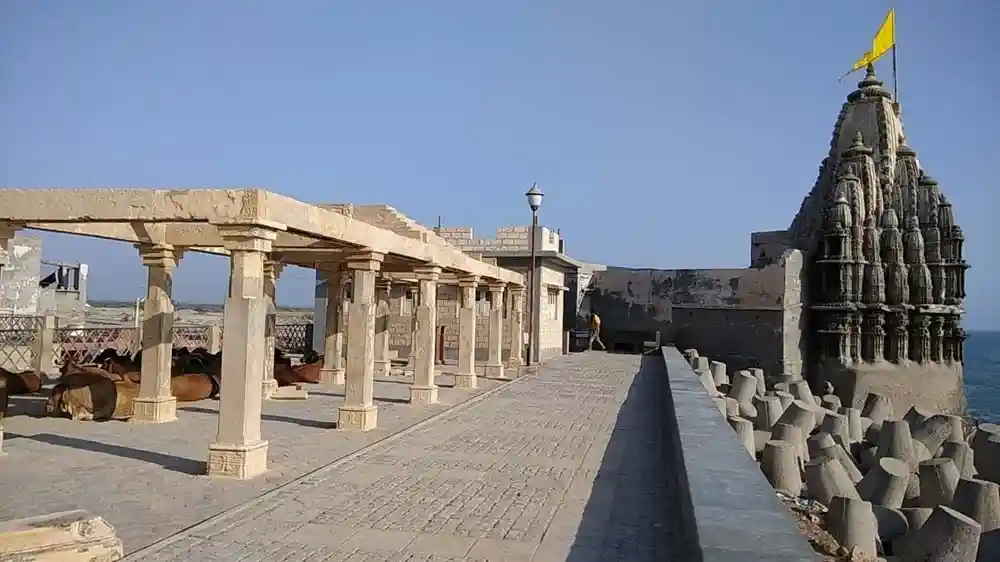
The Samudranarayan Temple is dedicated to Lord Vishnu in his ocean-dwelling form — Samudranarayan, meaning the Lord who resides in the ocean. Situated close to the sea, this temple holds special significance in Dwarka because the ocean is believed to guard the submerged ancient city of Krishna.
Unlike the busier pilgrimage sites in Dwarka, Samudranarayan attracts fewer visitors — making it one of the most peaceful spots for darshan in the city. Visiting here completes the traditional Pancha-tirtha (five sacred sites) of Dwarka.
| Deity |
Lord Vishnu (Samudranarayan form) |
| Entry Fee |
Free |
| Best Time |
Morning darshan (7-10 AM) |
12. Okha Port & Okha Marine National Park
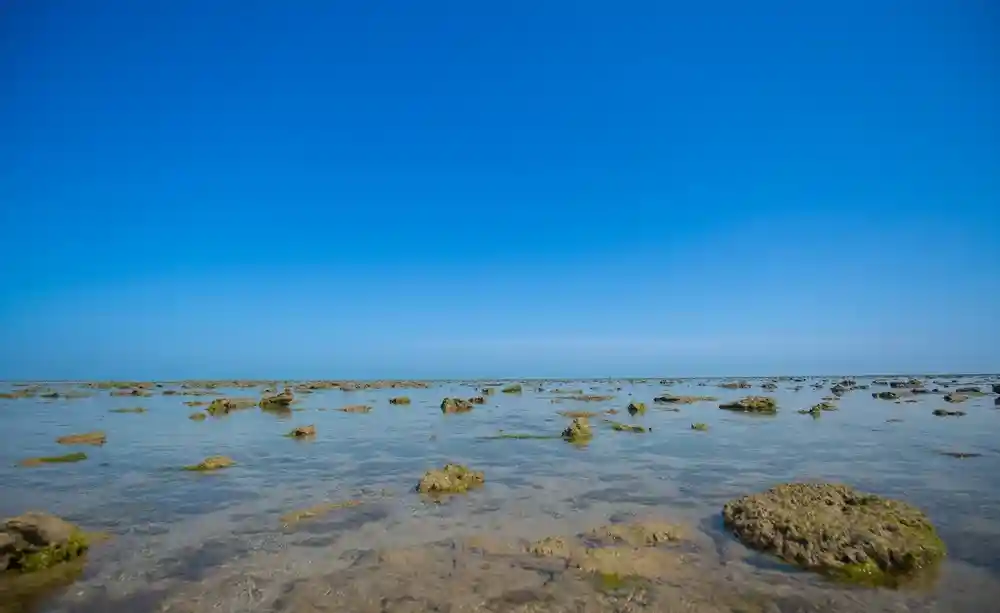
Okha is a port town approximately 30 km from Dwarka and the main departure point for ferries to Bet Dwarka. Beyond its role as a ferry hub, Okha is home to the Marine National Park, Gulf of Kutch — one of India’s most important marine protected areas.
The park protects coral reefs, mangroves, sea turtles, dolphins, sea horses, and hundreds of species of fish and migratory birds. Boat safaris and snorkeling sessions can be arranged through local operators — an excellent activity for families and nature lovers. The rugged Okha coastline, fishing boats, and salt pans offer a striking contrast to the temple atmosphere of Dwarka.
| Distance |
~30 km from Dwarka |
| Main Purpose |
Ferry hub for Bet Dwarka; Marine National Park |
| Ferry Frequency |
Regular throughout the day — verify locally |
| Marine Activities |
Boat safari & snorkeling via local operators |
| Entry Fee |
Free entry to Okha; park and safari fees apply |
Dwarka Itinerary – 1 Day and 2 Days
One-Day Itinerary
- 5:30 AM — Gomti Ghat sunrise aarti and holy dip
- 6:30 AM — Mangala Aarti at Dwarkadheesh Temple
- 9:00 AM — Rukmini Devi Temple (~2 km away)
- 10:30 AM — Nageshwar Jyotirlinga Temple (~17 km)
- 1:00 PM — Gujarati thali lunch near the temple
- 3:00 PM — Sudama Setu walk and Chakratirth Beach
- 4:30 PM — Dwarka Lighthouse (sunset views)
- 6:30 PM — Evening aarti at Dwarkadheesh Temple
Two-Day Itinerary
- Day 1: Follow the one-day plan above
- Day 2 Morning: Taxi to Okha (~30 km), then ferry to Bet Dwarka
- Day 2 Afternoon: Bet Dwarka temples, Gopi Talav (~20 km), Bhadkeshwar Temple
- Day 2 Evening: Samudranarayan Temple, rest in Dwarka
| 💡 2026 Note: Janmashtami falls on 15-16 August 2026. Book accommodation 6-8 weeks in advance for this period. |
How to Reach Dwarka
- By Train: Dwarka Railway Station on the Rajkot-Okha line. Direct trains from Ahmedabad, Rajkot, Surat, and Mumbai. Saurashtra Mail and Dwarka Express are the most popular options.
- By Air: Jamnagar Airport (~137 km) and Rajkot International Airport (~220 km). Taxis and state buses available from both airports.
- By Road: NH-51. Ahmedabad to Dwarka is approximately 450 km (~7-8 hrs). Regular state buses from Ahmedabad, Jamnagar, and Porbandar.
- Local Transport: Auto-rickshaws for city temples. Taxi or shared jeep to Okha for the Bet Dwarka ferry.
Best Time to Visit Dwarka
| Season |
Months |
Conditions |
Recommended? |
| Winter |
Oct – Mar |
15-28 degrees C, calm seas, clear skies |
Best |
| Janmashtami |
Aug 15-16, 2026 |
Festive, very large crowds |
For devotees |
| Summer |
Apr – Jun |
Up to 40 degrees C; early morning visits only |
Manageable |
| Monsoon |
Jul – Sep |
Heavy rain; Bet Dwarka ferries may be suspended |
Not ideal |
Trip Budget Breakdown (Per Person, 2026)
| Category |
Budget (Rs) |
Notes |
| Accommodation (1 night) |
Rs 600 – 3,000 |
Dharamshalas from Rs 600; mid-range hotels Rs 1,500-3,000 |
| Food (per day) |
Rs 200 – 600 |
Gujarati thali Rs 100-200; restaurants Rs 300-600 |
| Local transport |
Rs 300 – 600 |
Auto/taxi within city; taxi to Okha approx Rs 400 return |
| Ferry (Bet Dwarka) |
Rs 50 – 80 |
Return ferry approx Rs 40-60; verify current rates at Okha |
| Temple fees |
Free – Rs 500 |
Most temples free; VIP darshan charges may apply |
| Total (2 days) |
Rs 2,500 – 6,000 |
Budget to mid-range estimate per person |
| ⚠ Fees, ferry charges, and VIP darshan prices change periodically. Always verify current rates at official sites or locally before visiting. |
Local Food and Where to Stay
Must-Try Local Food
- Gujarati Thali — dal, kadhi, rotli, shaak, rice, chaas — available at dhabas near the temple
- Farsan — khaman, thepla, gathiya — popular snacks at local shops
- Satvik food — pure vegetarian, no onion-garlic, suited to pilgrims near the temple area
- Dwarka prasad — sweet panchamrit and dry fruits from temple shops
Where to Stay
- Budget: Dharamshalas run by the temple trust (Rs 300-800 per night)
- Mid-range: Hotels near Gomti Ghat and the main temple area (Rs 1,200-3,000)
- Book 4-6 weeks in advance for October-March and Janmashtami season
- UPI accepted at most hotels and shops; carry Rs 1,000-1,500 cash for smaller vendors and ferry
Nearby Places (within 100-160 km of Dwarka)
| Place |
Distance |
Highlight |
| Okha |
~30 km |
Ferry hub for Bet Dwarka; Marine National Park |
| Porbandar |
~100 km |
Birthplace of Mahatma Gandhi; coastal city |
| Jamnagar |
~137 km |
Marine sanctuary, Lakhota Lake, Balachadi Beach |
| Gir National Park |
~160 km |
Only habitat of wild Asiatic lions in the world |
| Somnath Temple |
~235 km |
Major Jyotirlinga and Char Dham-adjacent pilgrimage |
Practical Travel Tips
- Dress code: Cover shoulders and knees. Traditional attire recommended at Dwarkadheesh Temple.
- Photography: Strictly prohibited inside Dwarkadheesh sanctum. Always ask before photographing at other temples.
- Jeans: Accepted at outer premises; traditional attire preferred inside the main sanctum.
- Senior citizens: Wheelchair ramps and special darshan queues available at Dwarkadheesh Temple.
- VIP darshan: Available at Dwarkadheesh and Nageshwar Jyotirlinga — verify and book online via temple trust website.
- Parking: Paid parking near the temple complex. Arrive early in peak season to secure a spot.
- Network: Good 4G coverage in Dwarka city. Bet Dwarka island may have spotty connectivity.
- Monsoon 2026: Confirm Bet Dwarka ferry status before travelling to Okha during July-September.
Frequently Asked Questions
What is Dwarka famous for?
Dwarka is one of the four sacred Char Dham pilgrimage sites and one of the Sapta Puri (seven holy cities of Hinduism). It is believed to be the ancient kingdom of Lord Krishna and home to the magnificent 78-metre Dwarkadheesh Temple.
How many days are needed for Dwarka?
2 days are ideal — Day 1 for city temples and ghats, Day 2 for Bet Dwarka and Nageshwar. 3 days allows a more relaxed pace including Gopi Talav and the Okha coast.
What is the best time to visit Dwarka in 2026?
October to March is best — pleasant weather (15-28 degrees C) and calm seas. Janmashtami (15-16 August 2026) is the most spiritually vibrant time but draws very large crowds.
Is Dwarka and Bet Dwarka the same?
No. Dwarka is the main city on the Gujarat coast. Bet Dwarka is a separate island approximately 30 km away, reached by ferry from Okha port. Both have their own temples and distinct significance.
Which is the main temple in Dwarka?
The Dwarkadheesh Temple (Jagat Mandir) — one of the Char Dham sites, dedicated to Lord Krishna, with a 78.3-metre spire and 72 ornate pillars.
Is Nageshwar Jyotirlinga near Dwarka?
Yes — approximately 17 km from Dwarka city on the Bet Dwarka road. One of the 12 Jyotirlingas of Lord Shiva — easily covered as a day trip from Dwarka.
Why is the Rukmini Temple separate from Dwarkadheesh?
According to legend, sage Durvasa cursed Krishna and Rukmini to be estranged after Rukmini drank water without first offering it to the sage during a chariot journey. The two temples stand about 2 km apart, physically reflecting this mythological separation.
How to reach Dwarka from Ahmedabad?
Ahmedabad to Dwarka is approximately 450 km. Options: direct train on Saurashtra Mail (8-9 hrs), state bus (8 hrs), or private taxi on NH-51. Flying to Jamnagar (137 km from Dwarka) is also a convenient option.
What is the entry fee for Dwarkadheesh Temple?
Entry is free. Camera is not permitted inside the sanctum. VIP darshan and puja bookings have separate fees — check the official Dwarkadheesh Temple Trust website for current details.
Can we wear jeans to Dwarkadheesh Temple?
Jeans are accepted at outer premises. Traditional attire (dhoti or saree) is preferred inside the main sanctum. Many visitors wrap a dhoti over their jeans at the entrance.
Is a mobile phone allowed in Dwarkadheesh Temple?
Mobiles are allowed but must be on silent mode. Photography and video are strictly prohibited inside the sanctum. Most pilgrims use the locker facility near the entrance.
Is VIP darshan available in Dwarka?
Yes — at Dwarkadheesh Temple and Nageshwar Jyotirlinga. Book online via the temple trust website or at the trust office. Fees and availability change periodically — verify before visiting.
How much does a 2-day Dwarka trip cost?
A budget trip costs approximately Rs 2,500-4,000 per person (accommodation, food, local transport, ferry). A mid-range trip is around Rs 5,000-8,000 per person.
Is the Bet Dwarka ferry safe?
Yes — well-established, operating daily in non-monsoon months. During July-September, rough seas may cause suspensions. Always verify ferry status before travelling to Okha in monsoon season.
Where to park near Dwarkadheesh Temple?
Paid parking is available in designated lots near the temple complex. Arrive before 7 AM in peak season to secure a spot. Auto-rickshaws connect parking to the temple entrance.
What is the Gomti River in Dwarka?
Dwarka’s Gomti is a small coastal river that flows into the Arabian Sea — completely different from the Gomti of Uttar Pradesh (a Ganges tributary from the Himalayas). Both rivers share the name but are entirely unrelated geographically.
What is Gopi Chandan?
Sacred yellowish-white clay found at Gopi Talav (approximately 20 km from Dwarka), used by Vaishnavas as a forehead tilak. According to tradition, it is where the Gopis merged with the earth on their last meeting with Lord Krishna.
Is Dwarka safe for solo travelers and women?
Yes — Dwarka is one of India’s safer pilgrimage cities, with regular police presence, well-managed temple areas, and good tourist infrastructure. Standard travel precautions apply.
Are there wheelchair facilities in Dwarka?
Dwarkadheesh Temple has wheelchair-accessible ramps and special darshan queues for senior citizens. Most ghats involve steps — temple volunteers provide assistance on request.
What is the best one-day Dwarka sightseeing route?
Gomti Ghat sunrise aarti (5:30 AM) > Dwarkadheesh Temple > Rukmini Devi Temple > Nageshwar Jyotirlinga > Sudama Setu > Chakratirth Beach > Dwarka Lighthouse > Evening aarti at Dwarkadheesh.
What is Dwarka famous for in terms of food?
Gujarati Thali, farsan (khaman, thepla, gathiya), satvik pure vegetarian food near the temples, and temple prasad including sweet panchamrit and dry fruits.
Is Dwarka part of the Char Dham?
Yes — the city of Dwarka is one of the four sacred Char Dham sites alongside Badrinath (Uttarakhand), Puri (Odisha), and Rameswaram (Tamil Nadu). It is also one of the Sapta Puri (seven holy cities of Hinduism).
What are the best places to visit near Dwarka within 100-160 km?
Okha (30 km, ferry hub), Porbandar (100 km, Gandhi’s birthplace), Jamnagar (137 km, marine sanctuary), Gir National Park (160 km, Asiatic lions), and Somnath Temple (235 km, Jyotirlinga).
Is UPI accepted in Dwarka?
Most hotels, restaurants, and larger shops in Dwarka accept UPI payments. Carry Rs 1,000-1,500 in cash for smaller vendors, ferry charges, and local auto-rickshaws.
Can elderly people visit all Dwarka temples comfortably?
Yes — most city temples are accessible for elderly visitors. Dwarkadheesh Temple has wheelchair ramps and senior citizen queues. Bet Dwarka involves a ferry and uneven walking surfaces — assess feasibility beforehand. Ghat steps require some care; volunteers are available to assist.
Conclusion
The places to visit in Dwarka offer a rare and moving combination of ancient devotion, architectural grandeur, and coastal beauty. From the sacred Mangala Aarti at Gomti Ghat to the island temples of Bet Dwarka, from the powerful Jyotirlinga at Nageshwar to the dramatic sea-facing Bhadkeshwar Temple — every Dwarka attraction leaves a lasting impression on every visitor.
Spend at least 2 days, visit between October and March for the best experience, and approach every temple with the respect these holy places in Dwarka deserve. Dwarka is not just a destination — it is an experience that stays with you long after you return home.
Plan your Dwarka pilgrimage tour with Namaste India Trip — expert-guided packages from Ahmedabad, Delhi, Mumbai, and Hyderabad. Call / WhatsApp: +91-9718779629
Suggested Tours


 Call
Call Enquiry