

- History of Amarnath – The Real Story of Amarnath Temple Overview
- Where Amarnath Is and Why It Matters
- The Old Stories — Myth and Meaning
- Early Mentions in Literature
- From Story to Pilgrimage
- A Fragmented but Enduring Legacy
- Why It Still Matters
- Plan Your Amarnath Trip
- Related Articles
- Related Tour Packages
- About the Author
- Was This Travel Guide Helpful?
Amarnath is more than a place on a map. For many who travel there, it’s a threshold between ordinary life and something deeper — a rugged Himalayan journey, an ancient story, and a moment of quiet awe before a naturally formed Shiva lingam made of ice.
This story isn’t about stone temples or grand architecture. It is about a cave high in the mountains where nature itself becomes sacred. Its history lives in legend, in old texts, in oral traditions, and in the memories of those who have made the long trek.
Where Amarnath Is and Why It Matters
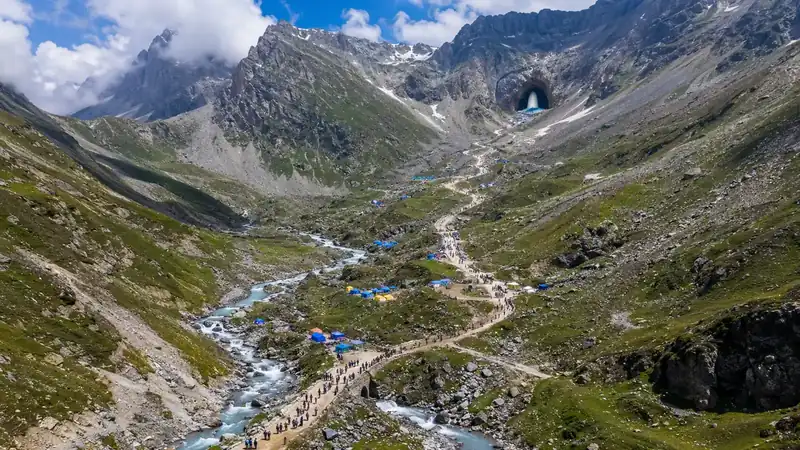
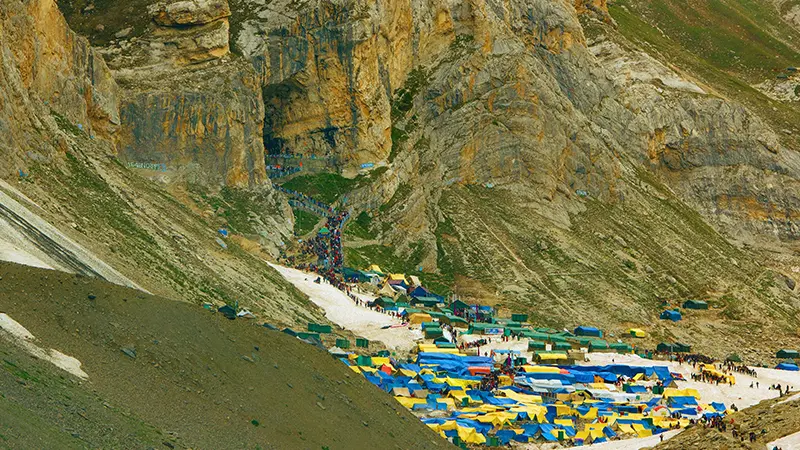
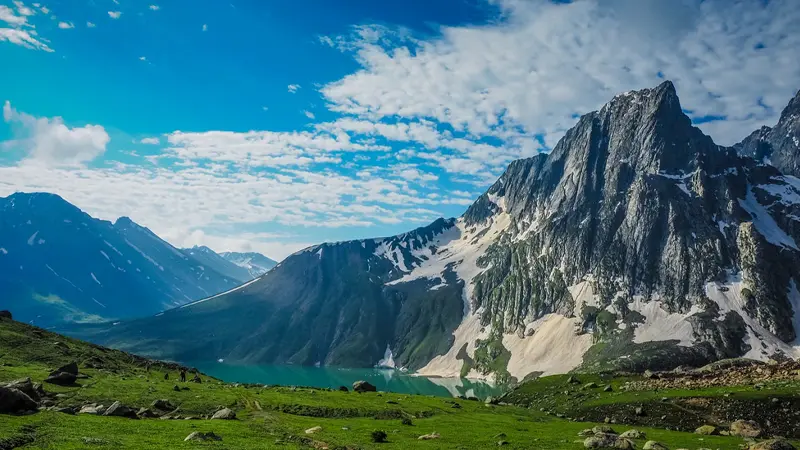
The Amarnath cave shrine lies deep in the Himalayas of Jammu & Kashmir, at around 3,888 metres above sea level in the Anantnag district — a remote location that, for hundreds of years, could only be reached by foot or on horseback.
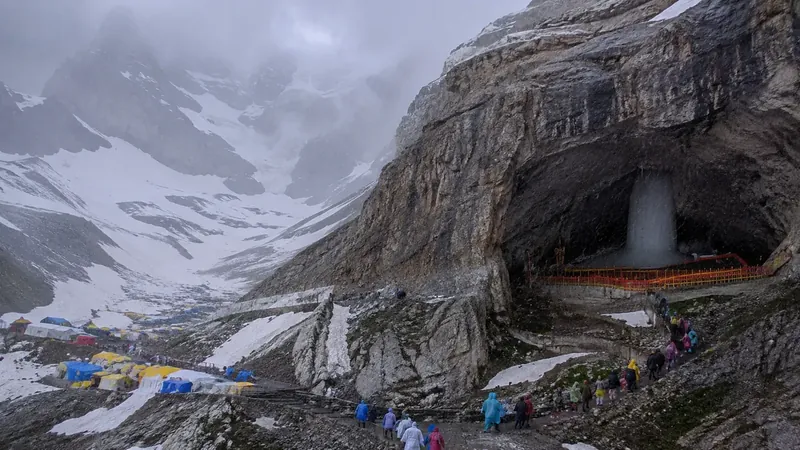
For Hindus, it is among the most sacred pilgrimage sites in India. The reason isn’t a carved idol or a constructed temple. It’s a natural formation: a stalagmite of ice that forms each summer inside the cave, revered as a Shiva lingam — a symbolic representation of Shiva himself.
People call it “Baba Barfani” — the Lord of Ice — because the lingam rises from the earth in ice and then melts as the season passes.
The Old Stories — Myth and Meaning
There is no single historical record pinpointing exactly when people first began the pilgrimage, but the mythological roots go very deep.
According to Hindu tradition, this is where Shiva chose to reveal the secret of immortality — the “Amar Katha” — to his consort Parvati. Out of respect for the natural order of life and death, Shiva vanishes the teaching in sacred fire so that no one else can hear it. Legend tells that a pair of pigeons overheard this divine talk and were blessed with immortality — and sightings of pigeons in the cave are still considered auspicious by devotees.
This story — part of the Amarnath Mahatmya and echoed across many local narrations — gives the cave its name: Amarnath meaning “the Immortal Lord.”
Many Himalayan folk traditions also speak of ancient sages like Bhrigu Rishi experiencing or describing the cave in their wanderings, tying the place to the earliest spiritual memory of Kashmir.
One well‑known local tale tells of the cave’s modern rediscovery by a shepherd named Buta Malik. As the story goes, he was given a bag of coal by a mysterious sage, only to find gold inside when he reached home. Trying to thank the sage, he was led to the mountains — and found the cave instead.
Early Mentions in Literature
Though myth carries the emotional heft, real historical references appear in older Indian texts:
- The Nilamata Purana — a text describing the ancient religious life of Kashmir — mentions the shrine.
- The Rajatarangini, a 12th‑century chronicle by Kalhana, notes a ruler who visited the cave.
These are not precise historical details the way a modern chronicle would record dates and anniversaries, but they show the cave was known and revered long before modern pilgrimages took shape.
From Story to Pilgrimage
Over the centuries, Amarnath evolved from myth and folklore into a living tradition of pilgrimage.
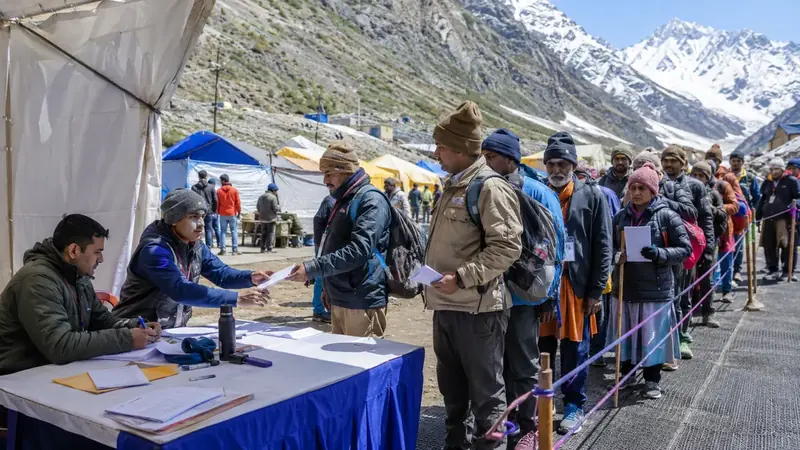
The annual Amarnath Yatra — typically between June/July and August — brings hundreds of thousands of pilgrims to the high Himalayas each year. They leave base camps in Pahalgam or Baltal and climb steep trails, crossing rivers and rocky passes, often in unpredictable weather.
For centuries, this trek was an undertaking of great physical effort and spiritual resolve. It demanded acclimatisation to altitude, preparation for cold nights, and commitment to arduous terrain. Even today, the journey is not easy for most travellers — and many prepare for months to reduce risk of altitude sickness and exposure.
A Fragmented but Enduring Legacy
Unlike many ancient temples built and rebuilt, Amarnath’s shrine has no single point of construction. It was never carved by artisans with hammer and chisel. It is a place where earth, water, cold and sun shape something sacred, year after year, each season bringing a new formation of ice.
In that sense, its history is not a simple narrative of kings or kingdoms, but a living story — one carried in pilgrim footsteps, in whispered prayers, and in the chill of a stalagmite that no human hand has ever made.
Why It Still Matters
For those who walk the route today, the history of Amarnath is felt in the body as much as in the mind — in aching knees after a long day’s slope, in the thin mountain air, and in the first sight of the cave as the sun rises over snow.
History here isn’t just about books or records. It’s an embodied experience, stitched together by myth, mountain, and devotion.
Must Read:
Compare relevant packages and request a customised travel plan from the Namaste India Trip team.






Share your experience, ask a question, or leave useful tips for other travelers.