

- Kedarnath Overview
- Legends and Origin Story
- Historical Account
- Kedarnath History — Key Timeline
- The Shivalinga at Kedarnath
- The 2013 Kedarnath Flood
- Kedarnath in Ancient Texts and Scriptures
- Frequently Asked Questions
- Related Articles
- Related Tour Packages
- About the Author
- Was This Travel Guide Helpful?
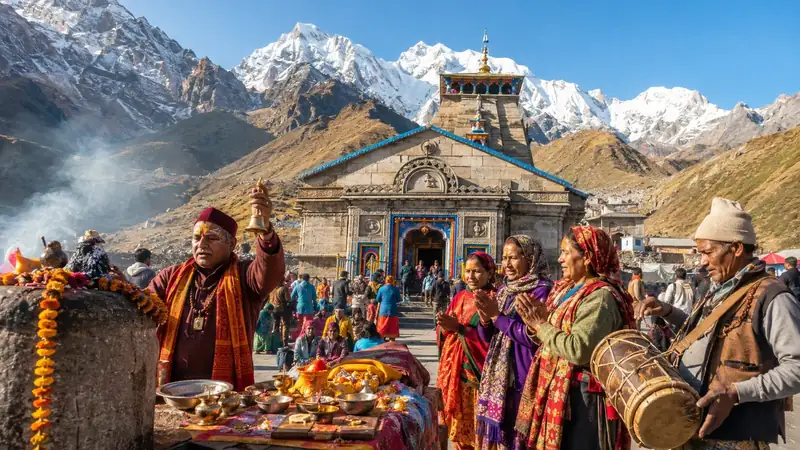
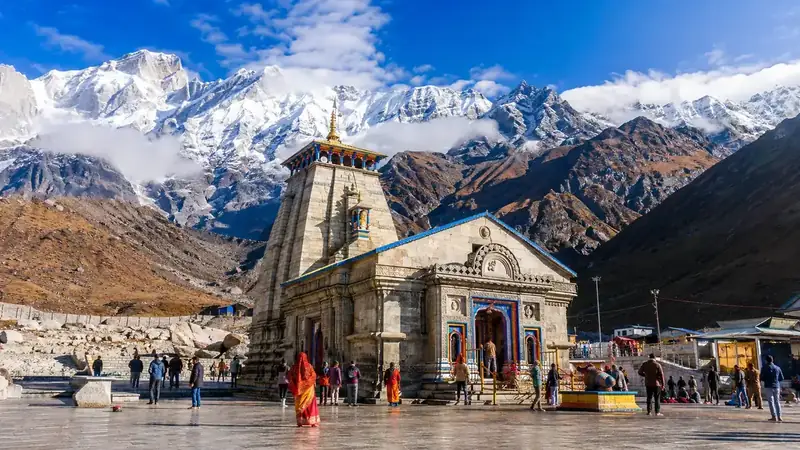
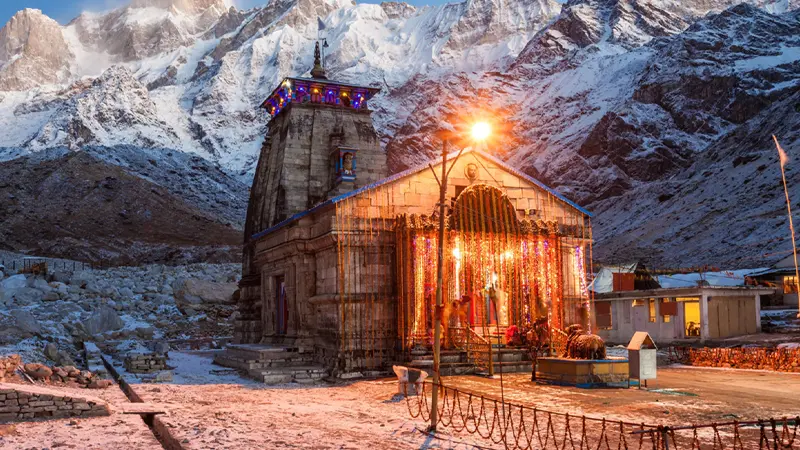
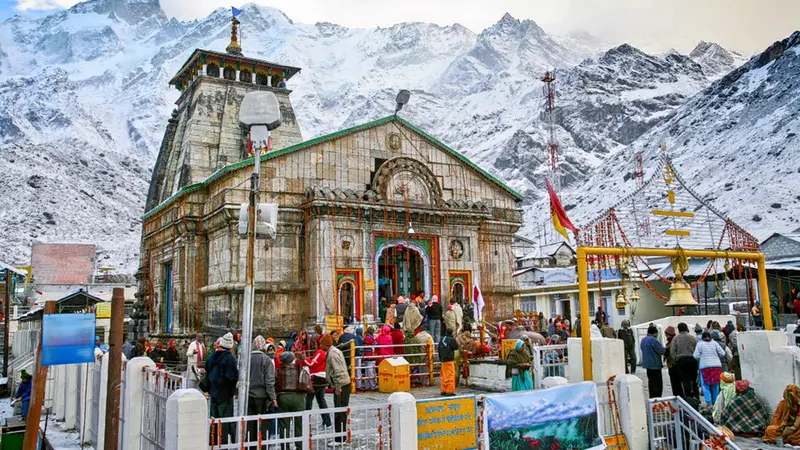
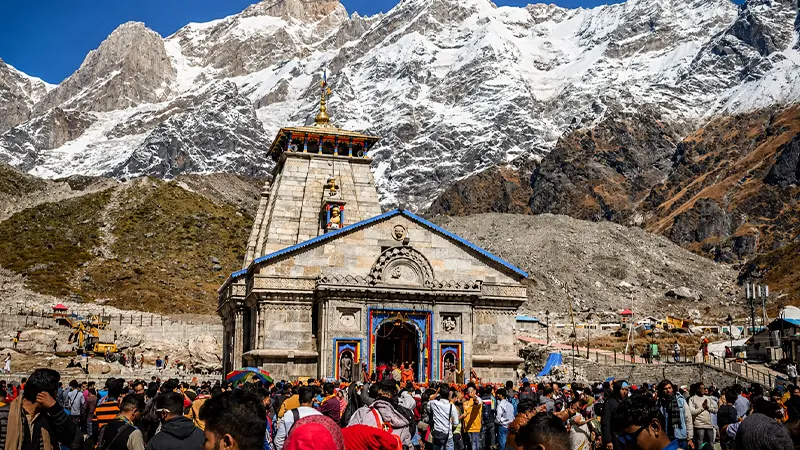
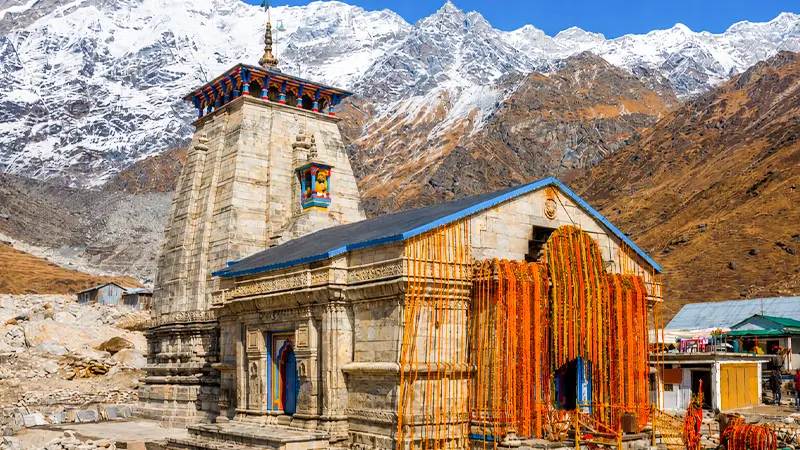
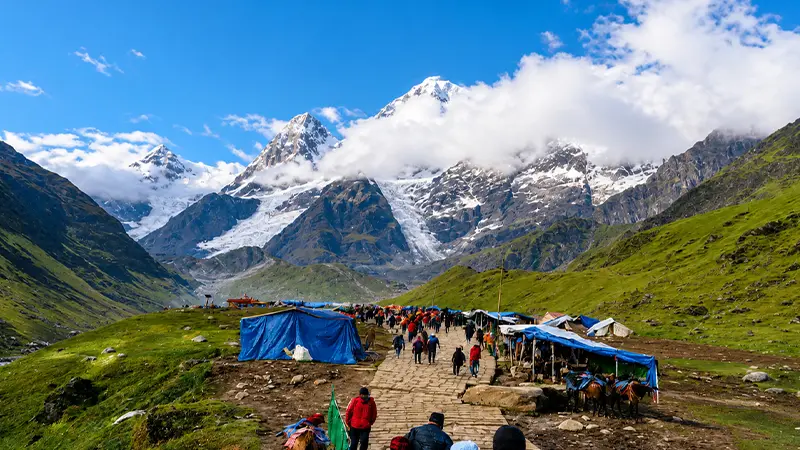
Kedarnath is considered one of the most sacred sites in Hinduism — and one of the twelve Jyotirlingas of Lord Shiva. The temple has centuries of legends, mythology, and historical significance woven into its story. Throughout a long and eventful history — surviving glacier encasement, floods, and the passage of time — the shrine has endured as a nerve centre of India’s religious and cultural identity.
Its origins are tied to the Pandavas. However, based on historical evidence, the temple was reconstructed by Adi Shankaracharya in the 8th century CE. This guide provides an in-depth look at the history of Kedarnath.
Legends and Origin Story
The Pandava Story
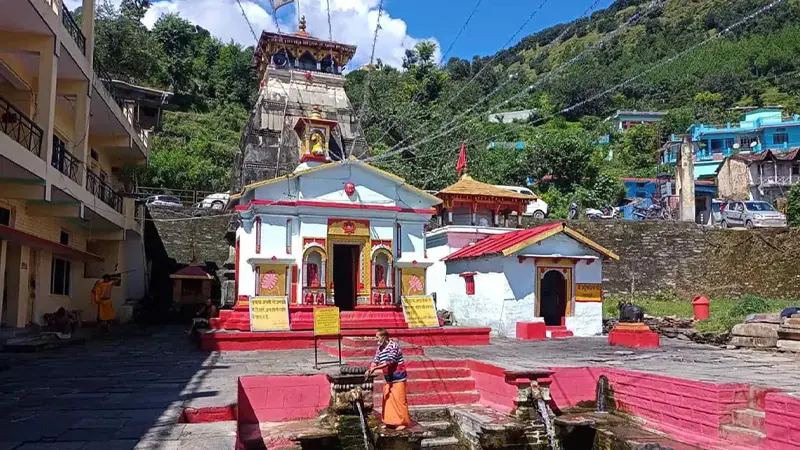
After the Mahabharata war, the Pandavas were consumed by grief and guilt over killing their own cousins, the Kauravas. Draupadi accompanied them as they set out northward into the Himalayas seeking Lord Shiva’s absolution. Meanwhile, Shiva — reluctant to grant them pardon easily — took the form of a bull in Guptkashi to avoid them.
Bhima spotted the unusual bull and chased it. As the bull began sinking into the earth, Bhima seized its hump to prevent it from vanishing completely. The bull’s body disappeared, but the hump remained at that very spot. This is why the Shivalinga at Kedarnath takes the form of a hump — a naturally formed conical rock, not artificially shaped.
Pleased by the Pandavas’ perseverance, Lord Shiva absolved them of their sins. It is said they then built the original shrine at Kedarnath.
The Panch Kedar: The bull’s other body parts are believed to have appeared at four other locations. Together with Kedarnath, these form the Panch Kedar — five sacred Shiva shrines in Uttarakhand:
| Shrine | Body Part (Bull Form) | District |
|---|---|---|
| Kedarnath | Hump (back / prushtha) | Rudraprayag |
| Tungnath | Arms (bhuja) | Rudraprayag |
| Rudranath | Face (mukh) | Chamoli |
| Madhyamaheshwar | Navel (nabhi) | Rudraprayag |
| Kalpeshwar | Matted hair (jata) | Chamoli |
The Nar-Narayan Legend
A second important legend involves the twin sages Nar and Narayan, who performed intense tapasya (meditation) at Kedarnath. Pleased by their devotion, Lord Shiva agreed to reside permanently at this location in the form of the Jyotirlinga — granting liberation (moksha) to all sincere worshippers.
Historical Account
- It is believed Adi Shankaracharya reconstructed and revitalised the temple, and attained Mahasamadhi here at the age of 32
- He chose Kedarnath as his final resting place. His Samadhi Sthal (memorial shrine) stands behind the temple to this day
- Kedarnath is one of the twelve Jyotirlingas of Lord Shiva — among the most sacred Shiva shrines across India
 Legends & Origin Story
Kedarnath History — Key Timeline
| Period | Event |
|---|---|
| Vedic / Epic Age | Kedarnath referenced in Skanda Purana, Shiva Purana, and Kashi Kedara Mahatmya as a supreme site of liberation |
| 8th Century CE | Adi Shankaracharya reconstructs the temple; attains Mahasamadhi at Kedarnath |
| ~1300–1900 CE | Temple partially or wholly encased in glacial ice during the Little Ice Age (confirmed by Wadia Institute research) |
| June 2013 | Catastrophic cloudburst and flash flood devastates Kedarnath valley; over 5,700 lives lost; temple structure survives |
| March 2014 | Reconstruction of Kedarnath Valley and temple precinct begins; ₹700 crore allocated by State and Central Government |
| 2019 | Major reconstruction milestones completed; PM visits; laser light show launched |
The Shivalinga at Kedarnath
- The Shivalinga in the inner sanctum (Garbhagriha) is a naturally formed conical rock — not artificially shaped
- It is worshipped in the form of the bull’s hump, as per the Pandava legend
- At the entrance to the Garbhagriha, in the Mandap, stands a large idol of Nandi (the sacred bull)
- Behind the temple is the Samadhi Sthal of Adi Shankaracharya, where he is believed to have merged with the divine
The 2013 Kedarnath Flood
On June 16–17, 2013, an unprecedented cloudburst above the Chorabari glacier triggered a catastrophic flash flood and landslide that swept through the Kedarnath valley. Thousands of pilgrims and residents lost their lives in one of India’s worst natural disasters in recent times.
Remarkably, the ancient Kedarnath temple itself survived largely intact — a fact widely noted by scientists and believers alike. Researchers later identified that a large boulder above the temple had diverted the main surge of debris water around the structure. For many devotees, this was seen as divine protection.
Reconstruction of the valley and temple precinct began in March 2014, with nearly ₹700 crore allocated for medium and long-term restoration. A 25-minute laser light show — now operational at the site — depicts the Mahabharata story and the events of 2013.
Kedarnath in Ancient Texts and Scriptures
The reference to Kedarnath can be found in the Skanda Purana, which is believed to be one of the 18 Mahapuranas. In this text, Kedarnath has been described as a site where the River Ganges was released by Lord Shiva from his matted locks.
Another text that mentions Kedarnath is the Kashi Kedara Mahatmya. In this ancient text, Kedarnath is considered to be the crop of liberation.
Kedarnath Temple is also considered to be one of the two hundred and seventy-five Paadal Petra Sthalams in Tevaram, the Shaiva Tamil devotional text. These texts signify the religious prominence of Kedarnath.
Frequently Asked Questions (FAQs)
What is unique about the history of Kedarnath?
Kedarnath’s history is uniquely layered: its mythological origins are tied to the Pandavas, its architectural revival to Adi Shankaracharya in the 8th century CE, and its modern narrative shaped by the 2013 catastrophic flood — which the 1,200-year-old temple survived intact. It is also the site of Adi Shankaracharya’s Mahasamadhi and one of the twelve Jyotirlingas.
How old is the Kedarnath shrine?
The current temple structure is believed to be over 1,200 years old, having been reconstructed by Adi Shankaracharya in the 8th century CE. The site’s sanctity is described in texts that predate even that reconstruction.
Who revived the Kedarnath Temple?
Adi Shankaracharya — the 8th-century CE theologian and philosopher — is credited with reviving and reconstructing the Kedarnath shrine, establishing it as a major tirtha (pilgrimage site).
Is there a Vedic reference to Kedarnath?
Yes. Kedarnath is mentioned in major Hindu scriptures including the Skanda Purana, Shiva Purana, and Kashi Kedara Mahatmya, all of which highlight its significance as the holiest Shiva shrine.
Is Kedarnath a Jyotirlinga?
Yes. Kedarnath is one of the twelve Jyotirlingas of Lord Shiva — the most sacred Shiva shrines in India.
Compare relevant packages and request a customised travel plan from the Namaste India Trip team.



Share your experience, ask a question, or leave useful tips for other travelers.