Last Updated on 04/02/2026
There are very few places in the world where history, faith, silence, and human vulnerability come together so naturally. The Mahabodhi Temple Complex at Bodh Gaya is one of them.
People often describe it as the birthplace of Buddhism. That is correct, but incomplete. Bodh Gaya is not only about what happened here more than 2,500 years ago. It is about what still happens — quietly, daily, without spectacle.
Monks sitting cross-legged for hours. Elderly pilgrims whispering prayers. Young travelers sitting silently, unsure of what they are feeling but knowing it is something unfamiliar. You do not “see” Bodh Gaya. You slowly experience it.
And that experience tends to stay with you much longer than most tourist destinations.
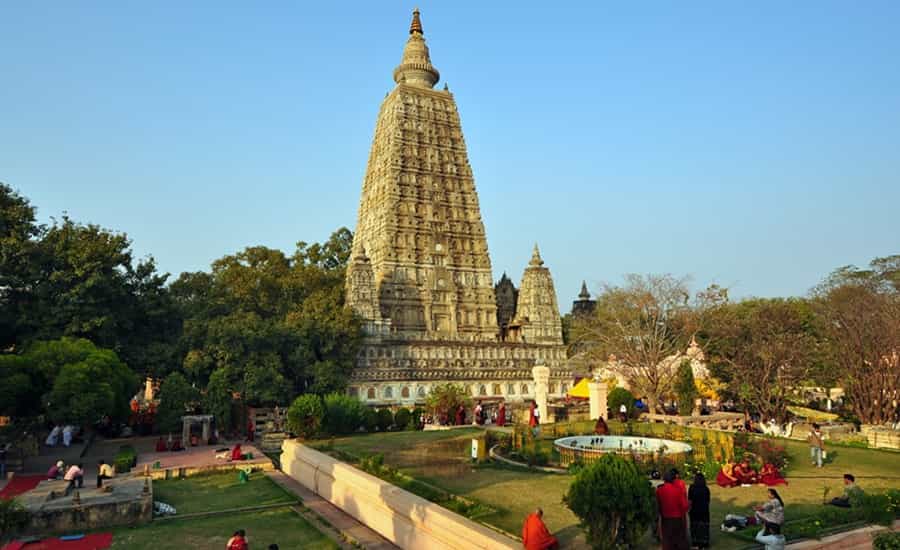
Why Bodh Gaya Matters — Even If You Are Not Religious
Bodh Gaya is the place where Siddhartha Gautama attained enlightenment and became the Buddha. This moment is central to Buddhism, but the deeper value of this place is universal.
What happened here was not a miracle, not divine intervention, not a dramatic event. It was a human sitting in silence, confronting suffering, confusion, fear, and desire — and understanding them.
That alone makes Bodh Gaya powerful.
You do not need to be Buddhist. You do not even need to be spiritual. Many visitors arrive out of curiosity and leave with a quiet shift in perspective. Something softens. Something slows.
That is rare in modern travel.
A Short History — Without Overloading You
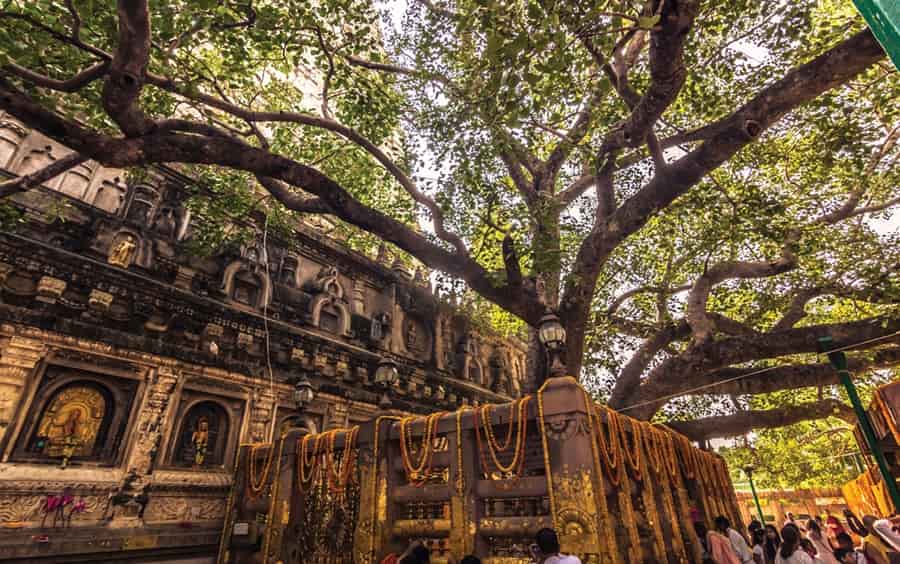
Around the 6th century BCE, Siddhartha Gautama meditated under a fig tree on the banks of the Falgu River. After days of deep contemplation, he attained enlightenment. That tree later became known as the Bodhi Tree, and the area around it became Bodh Gaya.
Centuries later, Emperor Ashoka visited the site and built the first shrine and stone railings to mark the sacred location. Over time, temples and monasteries developed around it.
Then came a long period of decline. Political changes, invasions, and the gradual weakening of Buddhist institutions in India led to neglect. For hundreds of years, the site remained forgotten.
It was only in the late 19th century that systematic archaeological work brought the Mahabodhi Temple back into attention. Restoration followed. Global Buddhist communities became involved. Eventually, UNESCO recognized its universal value and declared it a World Heritage Site in 2002.
The structure you see today is not new — but it also is not untouched. It carries layers of history, damage, rebuilding, faith, and survival.
The Mahabodhi Temple Complex — What You Actually See and Feel
The main temple rises quietly, not aggressively tall, not grand in the way modern monuments are. Its simplicity makes it powerful.
At the heart of the complex stands the Bodhi Tree — a descendant of the original tree. People sit beneath it from before sunrise until late at night. Some meditate. Some pray. Some simply sit.
Nearby lies the Vajrasana, the stone platform believed to mark the exact spot of Buddha’s meditation. Visitors rarely crowd it loudly. Most approach slowly, respectfully, often barefoot, instinctively lowering their voices.
Surrounding the main shrine are monasteries built by Buddhist communities from Thailand, Japan, Bhutan, Tibet, Sri Lanka, Myanmar, and other countries. Each monastery reflects its native architectural style, turning Bodh Gaya into a surprisingly international spiritual town.
You hear different languages. You see different robes. Yet everything blends into a shared silence.
What It Actually Feels Like to Be There
This is where many articles become unrealistic. They talk about peace, spirituality, and magic — but ignore the reality.
Bodh Gaya is peaceful, yes. But it is also crowded, dusty, noisy outside the temple walls, and at times chaotic. The contrast is sharp.
Inside the complex, there is calm. Outside, there are honking vehicles, vendors, pilgrims, beggars, guides, hotels, construction noise, and local traffic.
This contrast makes the temple experience stronger. When you step inside, the noise drops instantly. Even your breathing seems louder.
If you go early in the morning, before sunrise, the experience is profoundly different. The chants are softer. The number of visitors is manageable. The air feels cooler and calmer.
If you go during midday or peak season, it can feel busy. Meditation becomes harder. Silence is fragmented.
This is not a flaw. It is simply reality.
Best Time to Visit — Based on Real Travel Conditions
October to March is the most comfortable period. The weather is mild, and international pilgrims arrive in large numbers.
April to June is extremely hot. Temperatures can cross 40°C, making walking and sitting outdoors uncomfortable.
July to September brings monsoon rains. While the surroundings look greener, humidity and waterlogging can create difficulties.
If your purpose is meditation or slow exploration, winter mornings offer the most rewarding experience.
Getting There — Practical Travel Routes
- Nearest Airport: Gaya International Airport
- Nearest Major Railway Station: Gaya Junction
- Road Connectivity: Well-connected with Patna, Rajgir, Nalanda, and Varanasi
From Patna, Bodh Gaya is about a 3–4 hour road journey, depending on traffic.
Transport is easily available, but traffic congestion near the temple during peak hours is common.
Entry Rules, Dress Code & Visitor Conduct
The temple complex follows strict discipline to maintain spiritual dignity:
- Shoes must be removed before entry
- Loud conversations are discouraged
- Mobile phones should be kept silent
- Modest clothing is preferred
Photography is allowed in most open areas but restricted near meditation zones. People often underestimate how seriously silence is respected here.
Accommodation Reality — What to Expect
Bodh Gaya offers a wide range of accommodations, but luxury hotels are limited.
You will find:
- Budget guesthouses
- Monastery-run dormitories
- Mid-range hotels
- Simple ashram-style lodgings
Most international pilgrims stay in monastery accommodations, which are clean but basic. Comfort-focused travelers may need to research hotels carefully.
Challenges Visitors Commonly Face
Despite global importance, Bodh Gaya struggles with basic infrastructure.
Common issues include:
- Poor road management
- Limited sanitation facilities outside temple zones
- Aggressive street vendors
- Overcrowding during festivals
These factors can disturb the spiritual atmosphere if expectations are unrealistic. Approaching Bodh Gaya as a reflective journey rather than luxury tourism helps manage disappointment.
Who Will Truly Appreciate Bodh Gaya?
This destination deeply suits:
- Spiritual seekers
- Meditation practitioners
- History lovers
- Cultural explorers
- Slow travelers
It may not suit:
- Party travelers
- Luxury-focused tourists
- Fast-paced sightseeing itineraries
Bodh Gaya requires time, patience, and openness.
Global Importance of Mahabodhi Today
Bodh Gaya has evolved into a global Buddhist hub. Monks from dozens of countries live, study, and teach here. International meditation programs operate year-round.
Academic research institutions conduct philosophical studies. Interfaith dialogues occur quietly. Cultural exchanges happen naturally.
This continuous activity keeps the site alive — not frozen in history, but breathing in the present.
Preservation & Conservation — A Delicate Balance
Preserving Mahabodhi Temple is not easy.
Millions of visitors, environmental exposure, urban development pressure, and political administration all intersect here.
UNESCO guidelines regulate construction, but maintaining structural stability while allowing religious activity is an ongoing challenge. Conservation work happens regularly, though it sometimes disrupts visitor access.
10 Real FAQs About Mahabodhi Temple Complex
1. Can non-Buddhists enter Mahabodhi Temple?
Yes. Visitors of all religions are welcome.
2. Is meditation allowed under the Bodhi Tree?
Yes, but space is limited during busy hours.
3. How long should one spend here?
At least 2–3 hours. Serious visitors often stay half a day.
4. Is silence strictly enforced?
Inside the main complex, yes — strongly encouraged.
5. Is Bodh Gaya safe for solo travelers?
Generally yes, including for foreign tourists.
6. Are guided tours helpful?
Only if taken from licensed guides; misinformation is common.
7. Are there meditation retreats available?
Yes, multiple centers offer short and long-term retreats.
8. Is photography allowed?
Yes, except in restricted meditation zones.
9. Are good restaurants available nearby?
Mostly simple vegetarian food; limited variety.
10. Is one-day visit enough?
For sightseeing, yes. For spiritual experience, 2–3 days is better.
A Final Thought — Why Bodh Gaya Stays With You
Most travel destinations fade into photographs.
Bodh Gaya becomes a memory that quietly returns during stressful moments — a reminder of stillness, simplicity, and reflection.
It teaches nothing loudly. It offers no dramatic spectacle. And perhaps that is why it feels honest.
If you allow yourself to slow down here, even briefly, the experience tends to reshape how you view time, effort, and silence.
Suggested Buddhist Tour in India:


 Call
Call Enquiry