Last Updated on 24/06/2026
If you’re planning to visit India for the first time, then the Golden Triangle tour of India is the ideal match for your requirements. It is one of the most popular and well-explored trails amongst travelers. If you want to discover the real India, then this package is for you.
Golden Triangle tour of India is the journey to the three most prominent cities: Delhi, Agra, and Jaipur. You will visit Delhi’s famous monuments and explore the streets of Old Delhi and Chandni Chowk.
After Delhi, Agra awaits with its Mughal culture and the iconic Taj Mahal. Last but not least is Jaipur — the city of Maharajas and Maharanis.
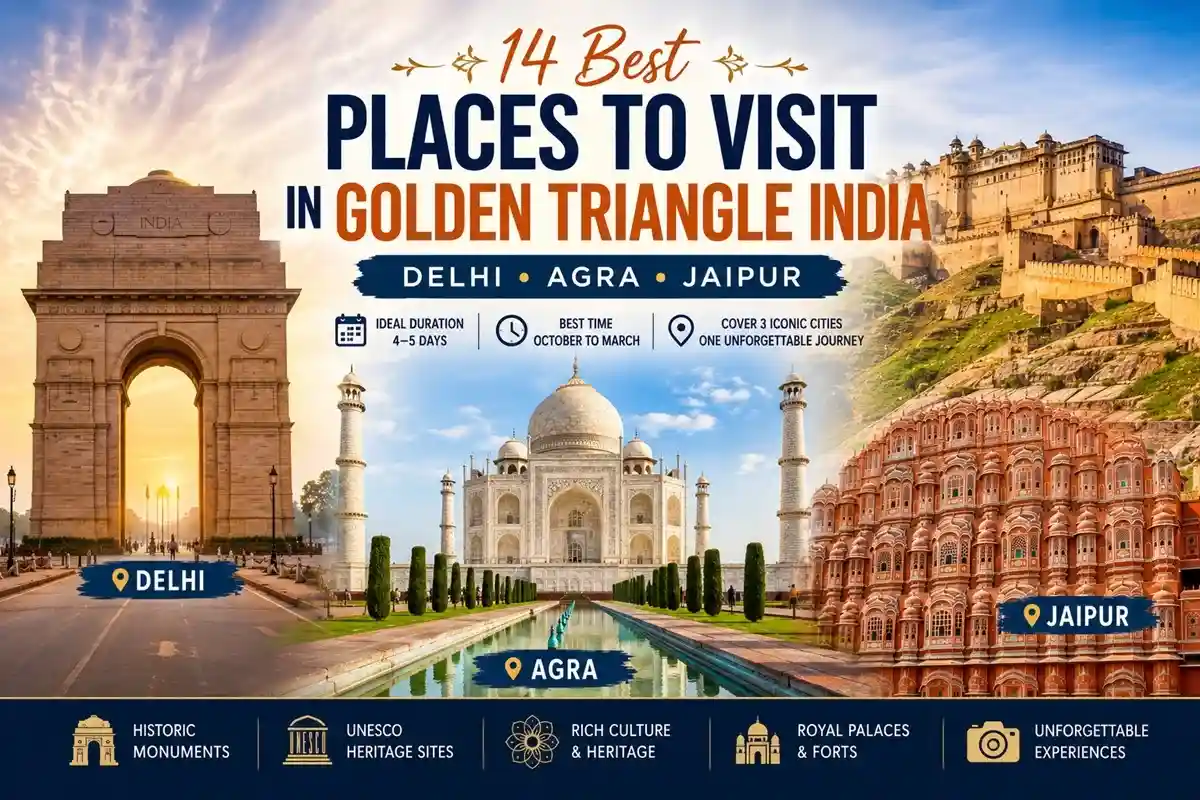
⚡ Quick Overview: The Golden Triangle tour covers Delhi, Agra, and Jaipur. Key attractions: India Gate (Delhi), Taj Mahal (Agra), Amber Fort (Jaipur). Ideal duration: 4–5 days. Best time: October to March. Can be done by road, rail, or a combination.
Now, let’s see the best places to visit during your Golden Triangle Tour of India:
At a Glance
| # |
Place |
City |
Built |
UNESCO? |
| 1 |
India Gate |
Delhi |
1931 |
No (National Monument) |
| 2 |
Red Fort |
Delhi |
1638–1648 |
Yes (2007) |
| 3 |
Qutub Minar |
Delhi |
Started 1193 |
Yes (1993) |
| 4 |
Jama Masjid |
Delhi |
1650–1656 |
No |
| 5 |
Akshardham Temple |
Delhi |
2005 |
No (Guinness Record) |
| 6 |
Lotus Temple |
Delhi |
1986 |
No |
| 7 |
Humayun’s Tomb |
Delhi |
1565 |
Yes (1993) |
| 8 |
Taj Mahal |
Agra |
1632–1653 |
Yes (1983) |
| 9 |
Mehtab Bagh |
Agra |
Early 16th c. |
No |
| 10 |
Fatehpur Sikri |
Agra |
1571–1585 |
Yes (1986) |
| 11 |
City Palace |
Jaipur |
1729–1732 |
No |
| 12 |
Hawa Mahal |
Jaipur |
1799 |
No |
| 13 |
Nahargarh Fort |
Jaipur |
1734 |
No |
| 14 |
Amber Fort |
Jaipur |
1592 |
Yes (Hill Forts of Rajasthan, 2013) |
Delhi: Starting Point of Golden Triangle Tour of India
Golden Triangle India itinerary will start from Delhi, which is famous for its nightlife, food, and famous monuments. Whether it is the Lotus Temple, India Gate, or the Akshardham Temple, this place is full of adventures.
You can explore the local streets of Old Delhi and relish some mouth-watering local food. The venue also consists of adventure parks where you can go with your family.
1. India Gate
- Built: 1921–1931
- Designed by: Sir Edwin Lutyens
- Commemorates: Around 70,000 soldiers of World War I (1914–1921) and the Third Anglo-Afghan War
- Height: 42 metres (138 feet)
- Location: Eastern end of Kartavya Path (formerly Rajpath), New Delhi
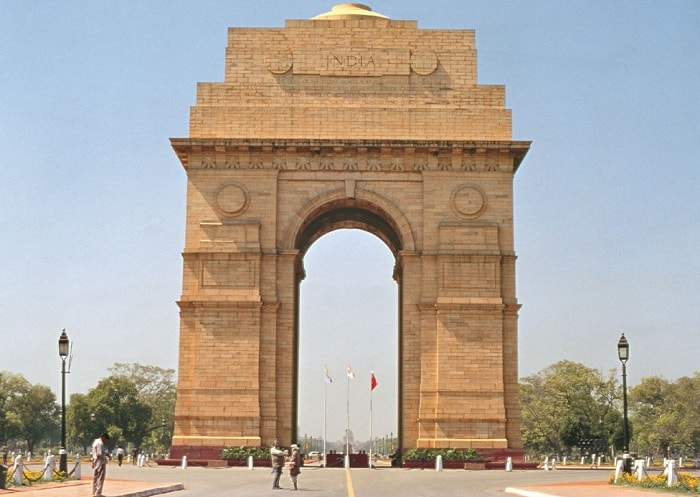
One of the most famous attractions of Delhi is India Gate, earlier known as the All India War Memorial. Built to commemorate around 70,000 Indian soldiers who gave their lives during World War I (1914–1921).
The memorial walls bear the names of over 13,500 soldiers. If anyone is visiting Delhi, India Gate is the first place that comes to mind.
The memorial walls bear the names of over 13,500 soldiers who fell on the Northwestern Frontier and in the Afghan War of 1919. If anyone is visiting Delhi, India Gate is the first place that comes to mind.
Located at the eastern end of Kartavya Path (formerly Rajpath), India Gate stands 42 metres (138 feet) tall. It is the first place that comes to mind when visiting Delhi, and the expansive lawns are a beloved public space, especially in winter evenings.
2. Red Fort
- Built: 1638–1648
- Commissioned by: Mughal Emperor Shah Jahan
- Material: Red sandstone
- UNESCO World Heritage Site: 2007
- Location: Old Delhi, India
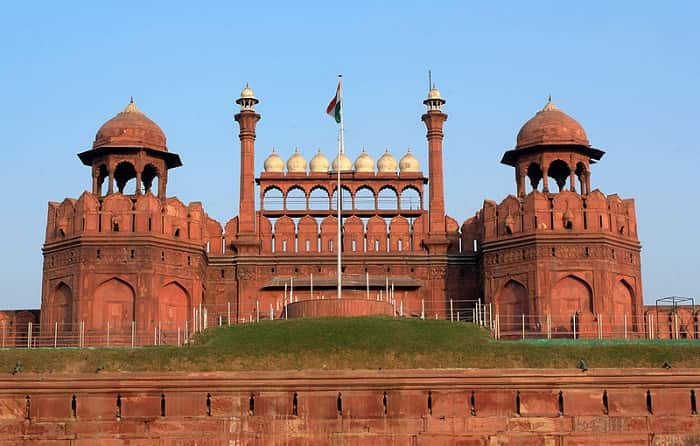
Another famous monument of Delhi is the beautiful Red Fort (Lal Qila) — a representation of Mughal culture in India. Independence Day is celebrated at Red Fort every year.
The citadel consists of red sandstone walls and took a decade to complete under Mughal Emperor Shah Jahan. A UNESCO World Heritage Site since 2007.
3. Qutub Minar
- Construction started: 1193 CE
- Commissioned by: Qutb-ud-Din Aibak (initial construction); completed by later rulers
- Height: 73 metres
- UNESCO World Heritage Site: 1993
- Architectural Style: Indo-Islamic
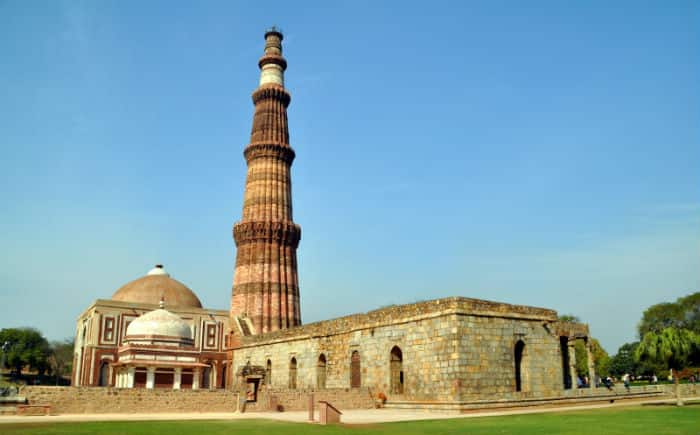
The Qutub Minar is a towering 73-metre pillar. Construction was started in 1193 by Qutb-ud-Din Aibak, with additional storeys added by later rulers including Iltutmish and Firoz Shah Tughlaq.
This UNESCO World Heritage Site has impressively survived the ravages of time. The Minar is surrounded by lush green gardens and attracts almost 4 million visitors per year.
4. Jama Masjid
- Built: 1650–1656
- Commissioned by: Mughal Emperor Shah Jahan
- Capacity: 25,000 worshippers
- Location: Old Delhi, India
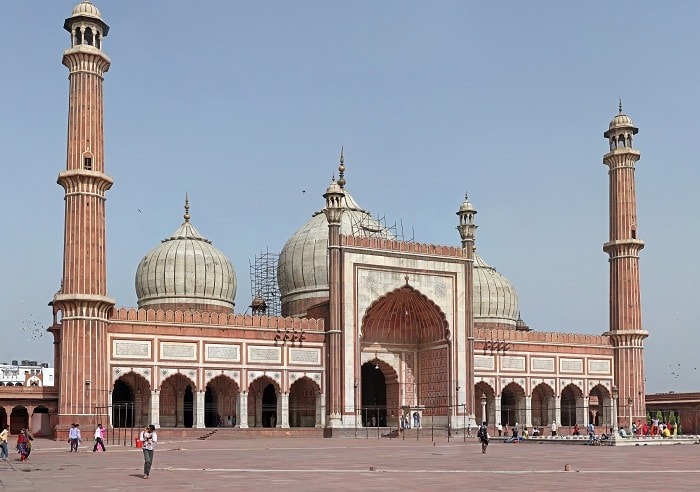
Jama Masjid of Delhi, also known as Masjid-i-Jahanuma, is located in Old Delhi. Shah Jahan constructed it between 1650 and 1656. It is one of the largest mosques in India.
Muslims gather here for Friday communal prayers. Shah Jahan’s most celebrated work is the seventh wonder — the Taj Mahal. For a unique experience, add Jama Masjid to your Delhi tour.
5. Akshardham Temple
- Built: 2005
- Dedicated to: Swaminarayan
- World record: Guinness World Record — world’s largest Hindu temple complex
- Notable for: Intricate carvings and cultural exhibitions
- Location: NH 24, Pramukh Swami Maharaj Marg, New Delhi
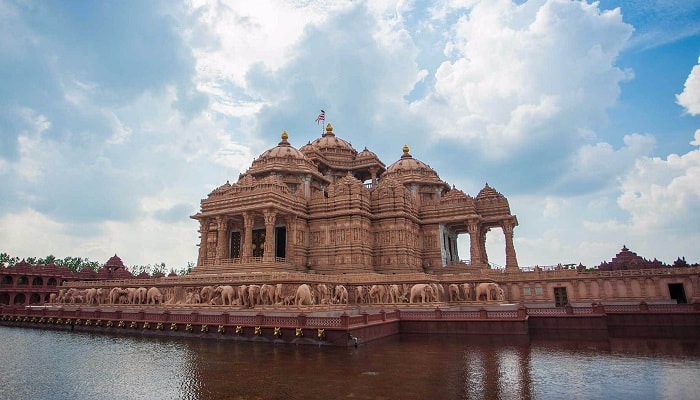
Besides the Mughal architecture, Delhi has magnificent Hindu shrines, and one of them is the beautiful Akshardham Temple. A perfect definition of Indian culture, spirituality, and devotion.
Recognised as one of the largest Hindu temple complexes in the world by the Guinness World Records and dedicated to Swaminarayan, Akshardham is among the topmost tourist attractions in Delhi.
6. Lotus Temple
- Built: 1986
- Designed by: Fariborz Sahba
- Architectural Style: Lotus flower shape
- Open to: All religions
- Location: Bahapur, Kalkaji, New Delhi
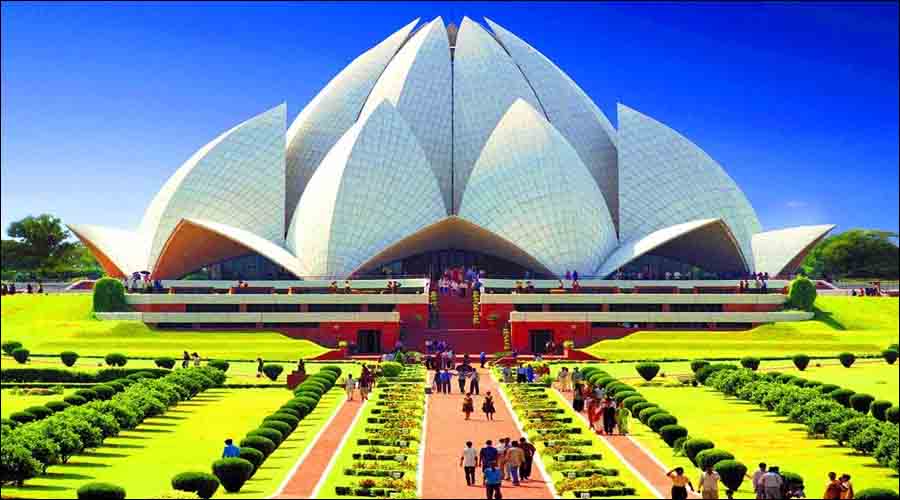
Shaped in the alluring form of a lotus with pretty white petals, the Lotus Temple is a breathtaking building and prime destination for tourists. Also known as the Baháʼí House of Worship.
It has no specific pattern for worshipping or performing ceremonies — it is open to people of all faiths. A must-visit for architecture lovers.
7. Humayun’s Tomb
- Built: 1565–1572
- Commissioned by: Humayun’s widow, Empress Bega Begum
- Architectural Style: Persian-Mughal
- UNESCO World Heritage Site: 1993
- Location: Mathura Road, Nizamuddin, Delhi
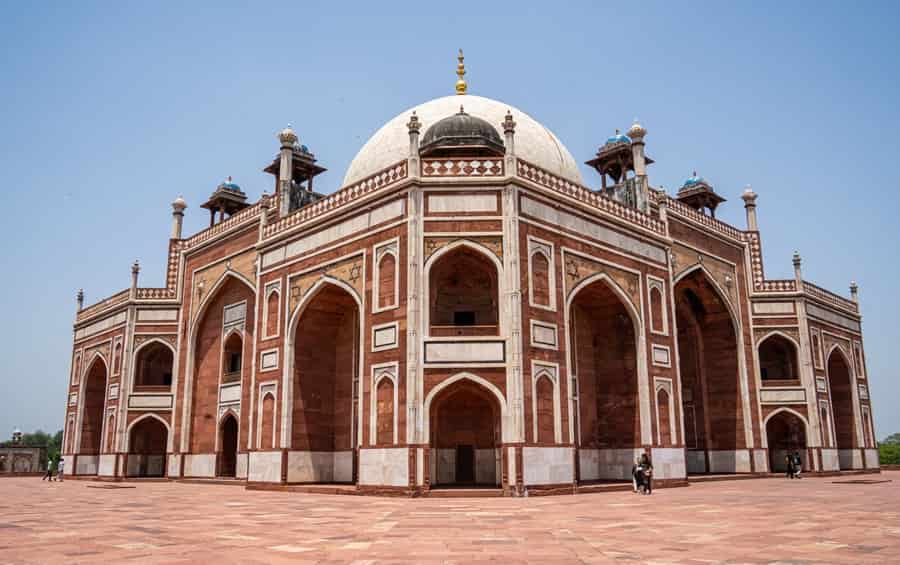
Humayun’s Tomb is a magnificent mausoleum and the last refuge of the Mughal Emperor Humayun. It is situated in the eastern part of Delhi and plays a significant role in Mughal history. Considered the precursor to the Taj Mahal in its design philosophy, it was the first garden-tomb on the Indian subcontinent.
Agra: Second City to Visit in Golden Triangle Tour of India
The home of the seventh wonder of the world — the Taj Mahal — is the city of Agra. Situated on the bank of the river Yamuna, this place gives the feel of Mughal lifestyle. The city is also famous for its local food and sweets like Agra ka Petha.
8. Taj Mahal
- Built: 1632–1653 (mausoleum completed 1648; full complex 1653)
- Commissioned by: Mughal Emperor Shah Jahan
- Material: White marble
- UNESCO World Heritage Site: 1983
- Recognised as: One of the New Seven Wonders of the World
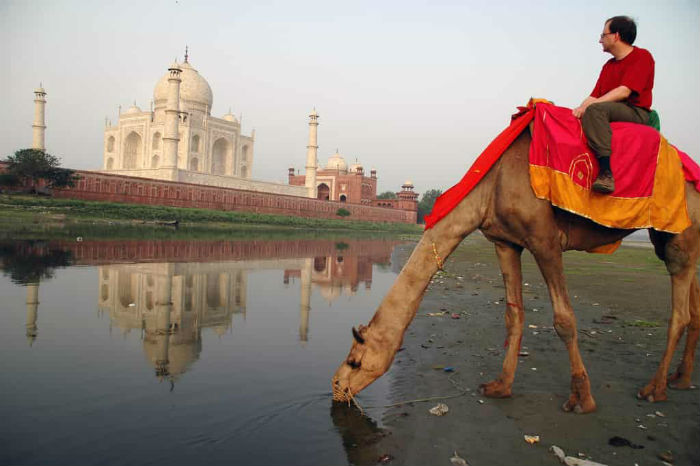
The Taj Mahal is the iconic white marble mausoleum on the bank of the river Yamuna. Built by Shah Jahan in memory of his wife Mumtaz Mahal, construction began in 1632.
The main mausoleum was completed in 1648; the full complex in 1653 — approximately 22 years in total. Over 20,000 workers and artisans were employed during its construction.
The Taj Mahal was designated a UNESCO World Heritage Site in 1983 and is recognised as one of the New Seven Wonders of the World. You can add the Taj Mahal tour to your bucket list.
9. Mehtab Bagh
- Built: Early 16th century
- Designed by: Mughal Emperor Babur
- Location: North of the Taj Mahal, across the Yamuna River
- Known for: Panoramic views of the Taj Mahal
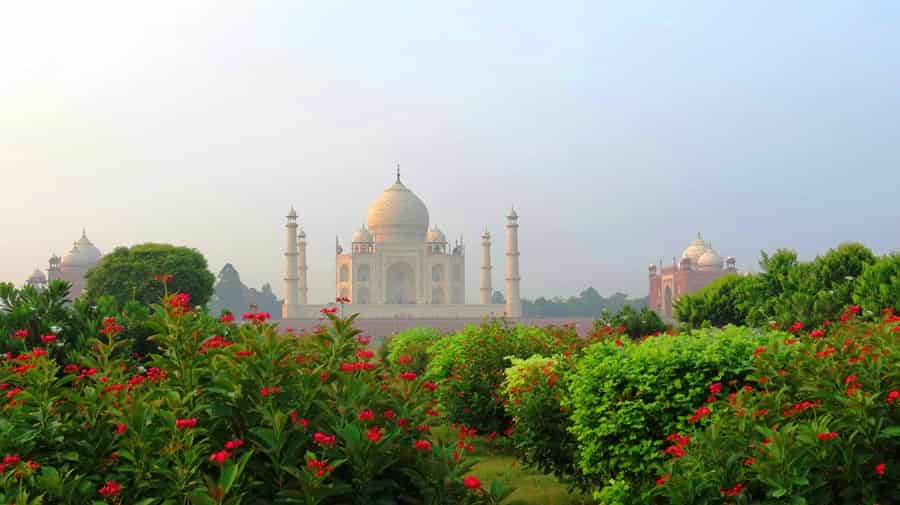
A Charbagh complex in Agra, Mehtab Bagh is located to the north of the Taj Mahal complex, across the river Yamuna. It is the last of the Mughal gardens on the Yamuna banks.
This place is ideal for watching the Taj Mahal from a distance. With beautiful ponds, fountains, and lush gardens, Mehtab Bagh is perfect for the iconic sunset view of the Taj.
10. Fatehpur Sikri
- Built: 1571–1585
- Commissioned by: Mughal Emperor Akbar
- Material: Red sandstone
- UNESCO World Heritage Site: 1986
- Notable Structures: Buland Darwaza, Panch Mahal
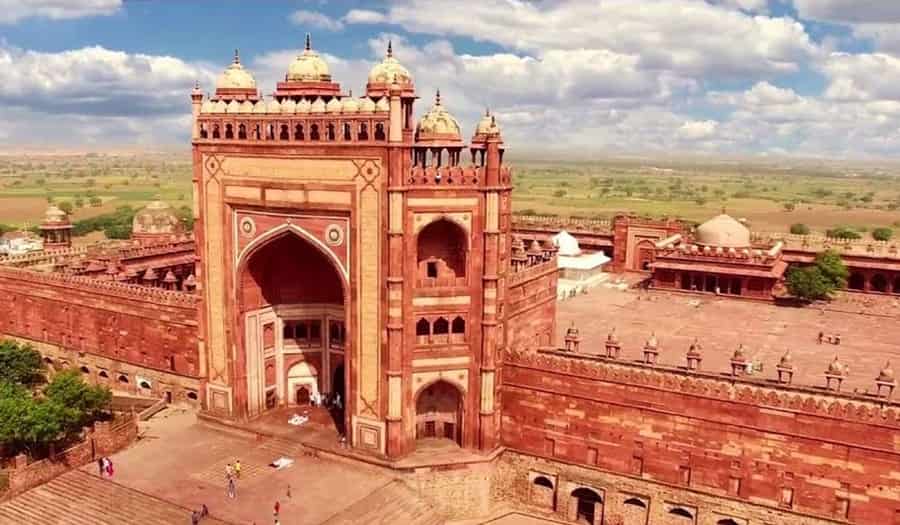
Positioned 37 km away from Agra, Fatehpur Sikri is a city built by Mughal Emperor Jalal-ud-Din Muhammad Akbar. Predominantly built with red sandstone, the walls reveal the glory of that era.
The Buland Darwaza (54 m) is among the largest gateways in the world. A UNESCO World Heritage Site since 1986 — a great one-day outing from Agra.
10b. Agra Fort
- Built: 1565–1573 (main construction); expanded by later emperors
- Commissioned by: Mughal Emperor Akbar (current structure); earlier fort existed before
- Material: Red sandstone
- UNESCO World Heritage Site: 1983
- Location: Agra, Uttar Pradesh
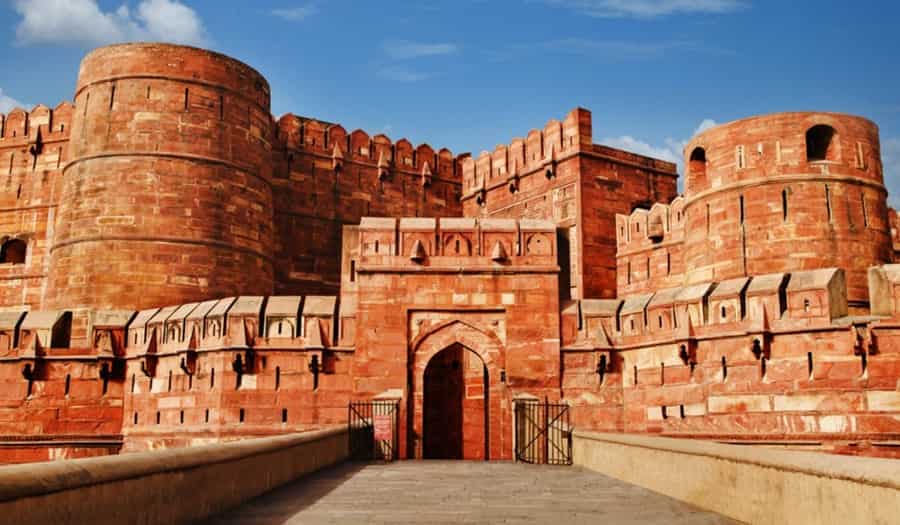
Just 2.5 km from the Taj Mahal, Agra Fort is a must-visit on the Golden Triangle tour. This massive UNESCO World Heritage Fort was the main residence of Mughal emperors until 1638.
Shah Jahan was later imprisoned here by Aurangzeb, from where he could see the Taj Mahal. The fort covers 94 acres with palaces, mosques, and audience halls.
The fort complex covers 94 acres and includes the Diwan-i-Am (Hall of Public Audience), Diwan-i-Khas (Hall of Private Audience), Khas Mahal, and several mosques. A visit to both the Taj Mahal and Agra Fort gives a complete picture of Mughal grandeur.
Jaipur: Pink City – Last Stop of Your Golden Triangle Tour
After Agra, you will be welcomed to the Pink City — Jaipur — famous for its diverse culture, delicious cuisines, and historical palaces.
One can spend an entire day in the city markets and local bazaars of Jaipur. Enjoy the local food on the streets and shopping for you and your family.
11. City Palace, Jaipur
- Built: 1729–1732
- Commissioned by: Maharaja Sawai Jai Singh II
- Architectural Style: Combination of Rajput, Mughal, and European styles
- Location: Central Jaipur, India
- Features: Chandra Mahal, Mubarak Mahal
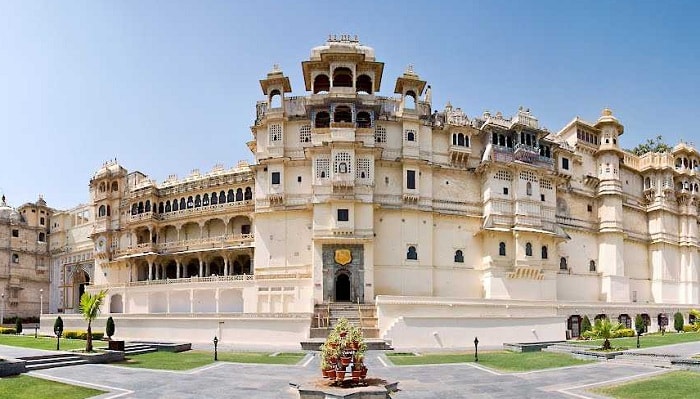
The City Palace is located in the heart of Jaipur city and is where the Maharaja reigned. It is home to the famous Chandra Mahal and Mubarak Mahal.
The City Palace reflects the lifestyle of Rajputs and Maharajas with Rajput, Mughal, and European architectural styles. The palace museum has an outstanding royal collection.
12. Hawa Mahal
- Built: 1799
- Commissioned by: Maharaja Sawai Pratap Singh
- Designed by: Lal Chand Ustad
- Architectural Style: Rajput
- Known for: 953 small windows (Jharokhas)
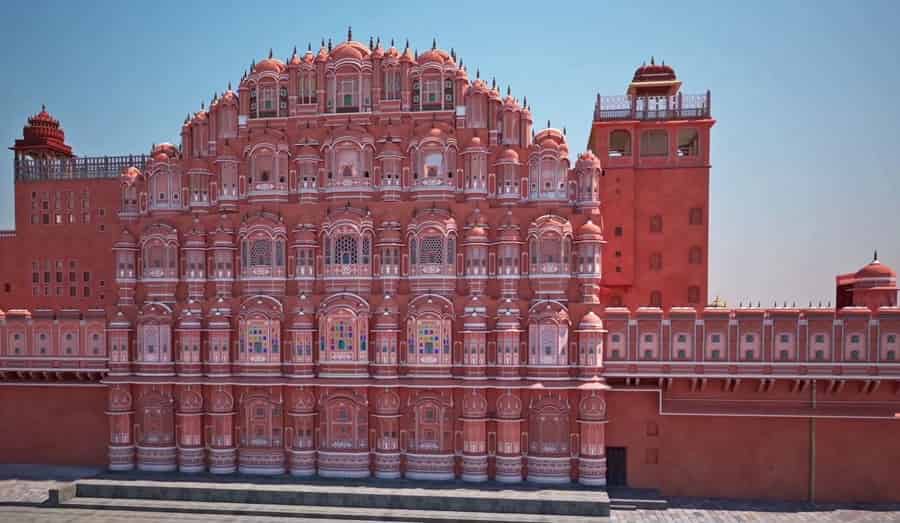
The Hawa Mahal, also known as the Palace of Winds, is a delicately built pink-painted five-storey palace facade. Built by Maharaja Sawai Pratap Singh so that royal ladies could watch city life from the windows without being seen.
The palace is renowned for its 953 small windows (jharokhas), which allow cool breezes to flow through the building — acting as a natural air-conditioning system.
13. Nahargarh Fort
- Built: 1734
- Commissioned by: Maharaja Sawai Jai Singh II
- Location: Aravalli Hills
- Features: Panoramic views of Jaipur, food court, museum
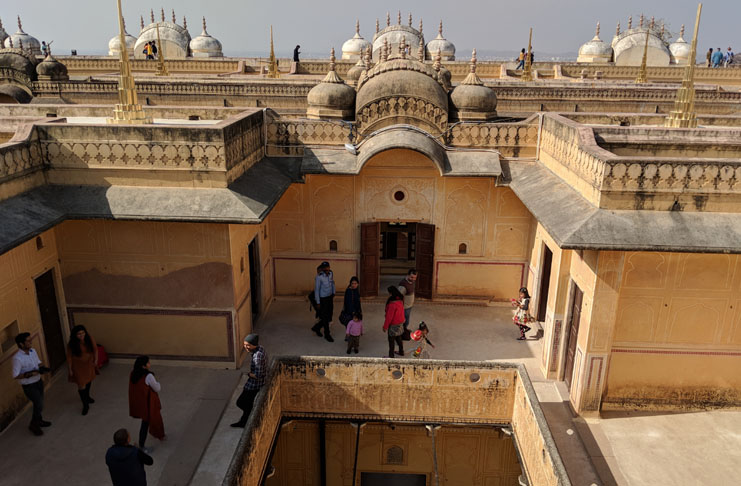
Nestled along the Aravalli Hills, Nahargarh Fort gives a mesmerizing view of the complete Jaipur city and the surrounding landscape. The fort consists of a museum, food court, and restaurants. Visiting Nahargarh is a must during your Jaipur tour — the sunset views from the ramparts are particularly spectacular.
14. Amber Fort
- Built: 1592
- Commissioned by: Maharaja Man Singh I
- Location: Top of Aravalli Hills, 11 km from Jaipur
- Features: Maze-like staircases, Sheesh Mahal (Mirror Palace)
- Notable for: Blend of Hindu and Rajput architecture; Shila Devi Temple
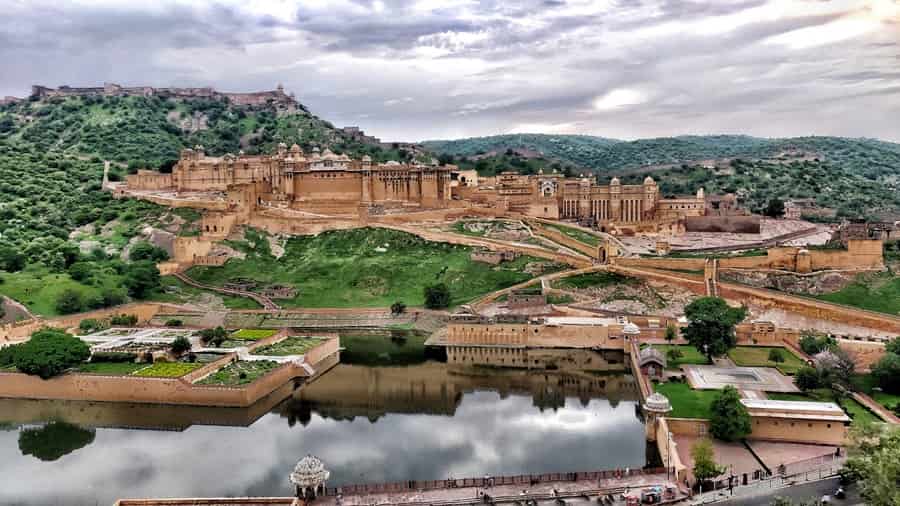
Another wonder of Jaipur found on top of the Aravalli Hills is the magnificent Amber Fort. Made with hundreds of maze-like staircases and secret passages, these acted as emergency getaways during wartime.
People come to Amber Fort to admire the architecture and to take blessings at the Shila Devi Temple — dedicated to Shila Mata (Goddess Kali), the presiding deity of the fort.
In the night, the fort is decorated and illuminated beautifully, making it an equally rewarding evening visit. The fort is approximately 11 km from the Jaipur city centre and you can reach there by cab or taxi.
15. Jantar Mantar, Jaipur
- Built: 1724–1727
- Commissioned by: Maharaja Sawai Jai Singh II
- UNESCO World Heritage Site: 2010
- Location: Central Jaipur, near City Palace
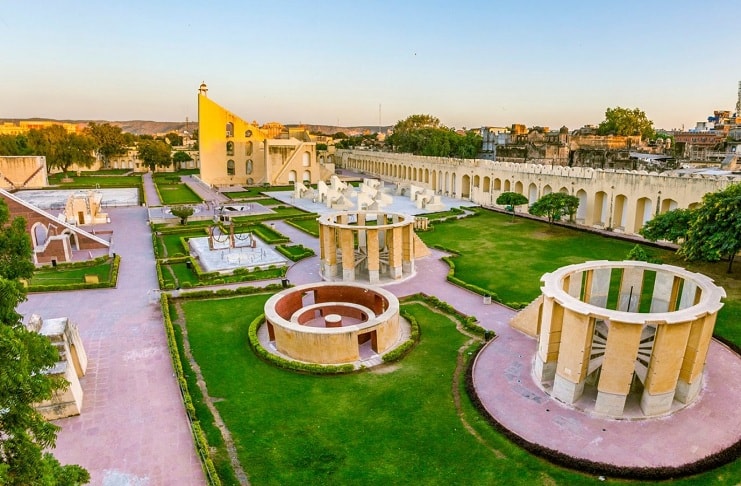
Jantar Mantar is one of the five astronomical observatories built by Maharaja Sawai Jai Singh II across India. The Jaipur Jantar Mantar is the largest and best-preserved, and was designated a UNESCO World Heritage Site in 2010. The observatory contains 19 architectural astronomical instruments, including the Samrat Yantra — the world’s largest stone sundial, standing 27 metres tall.
Located adjacent to the City Palace, Jantar Mantar is a fascinating blend of science and architecture. It is one of Jaipur’s most underrated attractions and a must-visit for anyone interested in history, science, or architecture.
Travel Tips and Best Time to Visit
- Best time to visit: October to March. Weather is pleasant across Delhi, Agra, and Jaipur. Avoid May–July (extreme heat, up to 45°C in Agra and Jaipur).
- Ideal duration: 4–5 days is the minimum; 6–7 days allows more leisurely exploration with day trips.
- Route order: Most tours start from Delhi, proceed to Agra, then Jaipur, and return to Delhi — forming a geographic triangle.
- Distance: Delhi to Agra: ~233 km via Yamuna Expressway (~3 hrs by road; ~2 hrs by Gatimaan Express). Agra to Jaipur: ~240 km (4–5 hrs). Jaipur to Delhi: ~280 km (5–6 hrs).
- Best transport: Rajdhani/Shatabdi Express trains for Delhi–Agra; road by cab/taxi for Agra–Jaipur. Hiring a private car for the full circuit is the most flexible option.
- Taj Mahal tip: The Taj Mahal is closed on Fridays. Visit at sunrise for the most magical light and shorter queues.
- Photography: Camera fees apply at most monuments. Video cameras may require a separate ticket. Mobile phones are free.
4-Day and 5-Day Itinerary
| Day |
City |
Key Attractions |
Stay |
| Day 1 |
Delhi |
India Gate, Red Fort, Jama Masjid, Qutub Minar, Humayun’s Tomb |
Delhi |
| Day 2 |
Delhi → Agra |
Akshardham Temple (morning) → drive to Agra. Sunset: Taj Mahal, Mehtab Bagh |
Agra |
| Day 3 |
Agra → Jaipur |
Taj Mahal at sunrise, Agra Fort, Fatehpur Sikri en route to Jaipur |
Jaipur |
| Day 4 |
Jaipur |
Amber Fort, City Palace, Hawa Mahal, Jantar Mantar, Nahargarh Fort sunset |
Jaipur/Delhi |
| Day 5* |
Jaipur → Delhi |
Jal Mahal, Albert Hall Museum, shopping, drive back to Delhi |
Delhi |
* Day 5 is optional for a 5-day itinerary. For a 7-day tour, add Ranthambore National Park (Day 5) and Pushkar (Day 6) before returning to Delhi on Day 7.
Conclusion
The Golden Triangle tour of India — covering Delhi, Agra, and Jaipur — is one of the world’s great heritage journeys. From India Gate to the Taj Mahal to Amber Fort — every stop is unforgettable.
Whether you have 4 days or 7, the Golden Triangle India itinerary is the perfect introduction to the history, culture, and architecture that makes India one of the world’s most extraordinary travel destinations. Plan your Golden Triangle tour between October and March for the most comfortable experience.
FAQs
Q1. What is the Golden Triangle tour of India?
The Golden Triangle tour covers three iconic cities: Delhi (the capital), Agra (home of the Taj Mahal), and Jaipur (the Pink City). The three cities form a rough triangle on the map. It is India’s most popular tourist circuit, rich in Mughal and Rajput heritage, UNESCO World Heritage Sites, and cultural experiences.
Q2. How many days are needed for the Golden Triangle tour?
A minimum of 4 days is recommended for a basic Golden Triangle tour (1 day Delhi, 1 day Agra, 2 days Jaipur). A 5–6 day itinerary allows a more relaxed pace with a day trip to Fatehpur Sikri from Agra. A 7-day tour lets you explore each city thoroughly.
Q3. What is the best time to visit the Golden Triangle India?
October to March is the best time for the Golden Triangle tour. Winters (December–February) offer the most pleasant weather. Avoid May–July when temperatures in Agra and Jaipur can exceed 45°C. The monsoon (July–September) can make outdoor sightseeing uncomfortable.
Q4. What does India Gate in Delhi commemorate?
India Gate is a war memorial commemorating around 70,000 Indian soldiers who died in World War I (1914–1921) and the Third Anglo-Afghan War. The walls bear the names of over 13,500 soldiers. Designed by Sir Edwin Lutyens, inaugurated in 1931. It is not a World War II memorial.
Q5. How long did it take to build the Taj Mahal?
The Taj Mahal took approximately 22 years to build in total. The main mausoleum was completed in 1648, while the full complex (including gardens, mosque, and gate) was completed in 1653. Construction started in 1632 under Mughal Emperor Shah Jahan. Over 20,000 workers were employed.
Q6. What is Amber Fort in Jaipur famous for?
Amber Fort is famous for its blend of Rajput and Hindu architecture, the Sheesh Mahal (Hall of Mirrors) with its intricate mirror mosaics, maze-like staircases, and the Shila Devi Temple (dedicated to Shila Mata, a form of Goddess Kali). It sits atop the Aravalli Hills approximately 11 km from Jaipur city. Elephant rides to the fort entrance were traditionally popular.
Q7. How many windows does Hawa Mahal have?
The Hawa Mahal (Palace of Winds) in Jaipur has 953 small windows (jharokhas) — not 100 as sometimes stated. This distinctive facade was built in 1799 by Maharaja Sawai Pratap Singh to allow royal ladies to observe street life while remaining unseen. The windows create a natural ventilation effect.
Q8. Which places in Delhi are part of the Golden Triangle tour?
Key Delhi attractions on the Golden Triangle tour include India Gate, Red Fort (UNESCO, 2007), Qutub Minar (UNESCO, 1993), Jama Masjid, Akshardham Temple, Lotus Temple, and Humayun’s Tomb (UNESCO, 1993). Most tours cover 3–5 of these in 1 day in Delhi.
Q9. Is the Taj Mahal open every day?
No. The Taj Mahal is closed on Fridays. It is open Saturday to Thursday from sunrise to sunset. The monument is also not accessible for viewing on select national holidays. The sunrise visit (6:30–7:00 AM) is the most popular for the best light and smallest crowds.
Q10. What are the UNESCO World Heritage Sites on the Golden Triangle tour?
Golden Triangle UNESCO World Heritage Sites: Red Fort, Delhi (2007); Qutub Minar, Delhi (1993); Humayun’s Tomb, Delhi (1993); Taj Mahal, Agra (1983); Agra Fort, Agra (1983); Fatehpur Sikri, near Agra (1986); Amber Fort, Jaipur — part of Hill Forts of Rajasthan (2013); Jantar Mantar, Jaipur (2010). The Golden Triangle has an extraordinary concentration of UNESCO heritage.
Q11. How far is Delhi from Agra and Jaipur?
Delhi to Agra: approximately 233 km via Yamuna Expressway (3 hours by road; ~2 hours by Gatimaan Express). Delhi to Jaipur: approximately 280 km (5–6 hours by road). Agra to Jaipur: approximately 240 km (4–5 hours). The complete Golden Triangle circuit is approximately 750–760 km.
Q12. What is Fatehpur Sikri and why should I visit it?
Fatehpur Sikri is a UNESCO World Heritage City built by Mughal Emperor Akbar between 1571 and 1585, located 37 km from Agra. It was the Mughal capital for just 14 years before being abandoned. Key sights include the Buland Darwaza (54 m tall gateway), Panch Mahal, and the Dargah of Salim Chishti. A 3–4 hour half-day trip from Agra.
Q13. Can I combine the Golden Triangle with Rajasthan?
Yes. Jaipur is the gateway to Rajasthan, making the Golden Triangle easily extendable into a Rajasthan circuit. Common extensions include: Pushkar (140 km from Jaipur), Ranthambore Tiger Reserve (180 km), Jodhpur (340 km), and Udaipur (400 km). Most 7–10 day India heritage tours combine the Golden Triangle with Rajasthan.
Q14. What should I eat on the Golden Triangle tour?
Food highlights by city: Delhi — butter chicken, chole bhature, parathas at Paranthe Wali Gali, and Old Delhi’s street food at Chandni Chowk. Agra — Agra ka Petha (sugar sweet), tandoori food. Jaipur — Dal Baati Churma, Ghewar, Laal Maas. Each city has a vibrant food scene that is as much a part of the experience as the monuments.
Q15. What is the entry fee for the Taj Mahal in 2026?
Entry fees for the Taj Mahal are set by the Archaeological Survey of India (ASI) and are subject to change. As of recent years, Indian citizens paid ₹50–100, while foreign nationals paid approximately ₹1,100. Always verify the latest fees at the official ASI website (asi.nic.in) or at the ticket counter before visiting. Children under 15 are free.
Q16. Is Amber Fort a UNESCO World Heritage Site?
Yes. Amber Fort is a UNESCO World Heritage Site as part of the ‘Hill Forts of Rajasthan’ inscription (2013), which includes six majestic Rajput forts: Chittorgarh, Kumbhalgarh, Sawai Madhopur, Jhalawar, Jaisalmer, and Amber. This makes Amber Fort one of the UNESCO-listed monuments on the Golden Triangle tour.
Q17. What is Agra Fort and should I visit it?
Agra Fort is a UNESCO World Heritage Site (1983) located just 2.5 km from the Taj Mahal. Built by Mughal Emperor Akbar in 1565–1573, it served as the main Mughal residence until 1638. Key sights include the Diwan-i-Am, Diwan-i-Khas, Khas Mahal, and views of the Taj Mahal from the fort walls. Highly recommended on the Golden Triangle tour.
Q18. What is Jantar Mantar in Jaipur?
Jantar Mantar is a UNESCO World Heritage astronomical observatory (2010) built in 1724 by Maharaja Sawai Jai Singh II. It contains 19 instruments including the Samrat Yantra — the world’s largest stone sundial at 27 metres.
Suggested Tour


 Call
Call Enquiry
Every stop in Golden Triangle Tour Packages feels like a page from a fairytale.