

- Kamakhya Temple Visitor FAQs – All You Need Overview
- About Kamakhya Temple
- 1What is Kamakhya Temple and why is it one of India's most sacred temples?
- 2What is the Ambubachi Mela? Should I plan my trip around it?
- 3What is the red prasad (Angavastra) from Kamakhya Temple?
- 4What other temples are inside the Kamakhya complex on Nilachal Hill?
- 5Can non-Hindus visit Kamakhya Temple?
- 6What happens during Ambubachi Mela?
- 7Why is Kamakhya Temple famous for fertility blessings?
- 8What is the significance of the red cloth (Angavastra)?
- 9What are the 10 Mahavidya temples? Can I visit them all?
- 10Is there black magic or tantric practice at Kamakhya?
- 11Can I get married at Kamakhya Temple?
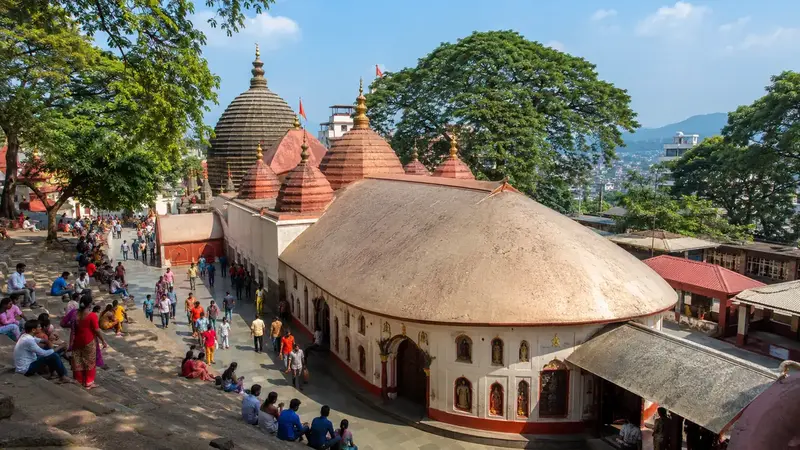
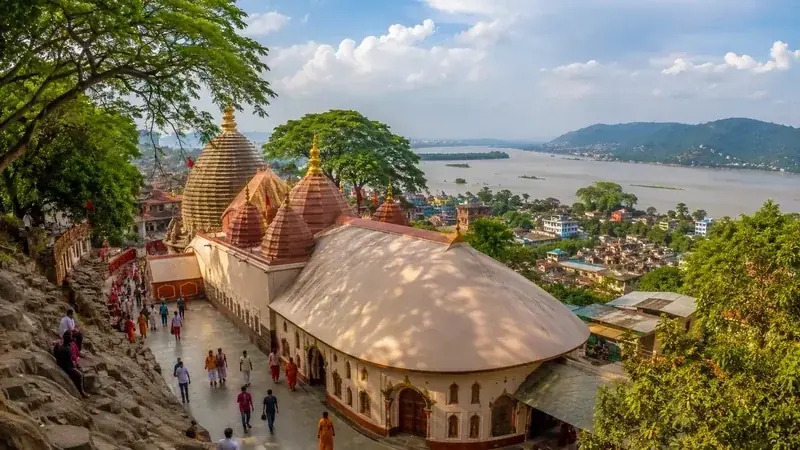
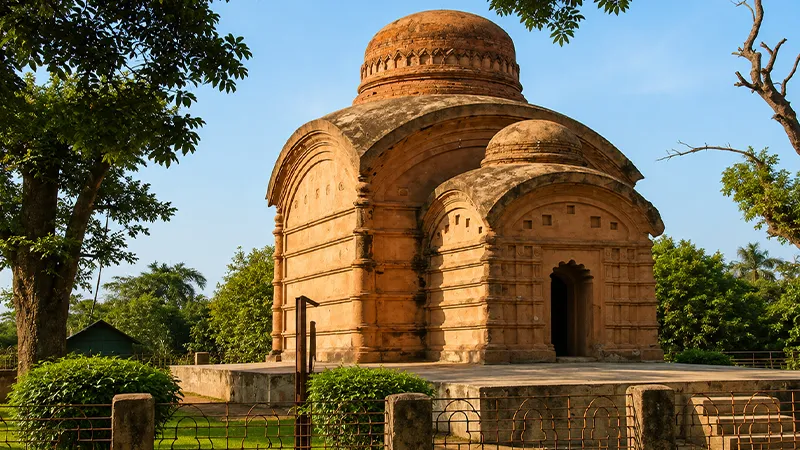
- 12What is the Nilachala Style of Architecture?
- Related Articles
- Related Tour Packages
- About the Author
- Was This Travel Guide Helpful?
About Kamakhya Temple
History, significance, and everything spiritual about this sacred Shakti Peetha.
1What is Kamakhya Temple and why is it one of India's most sacred temples?
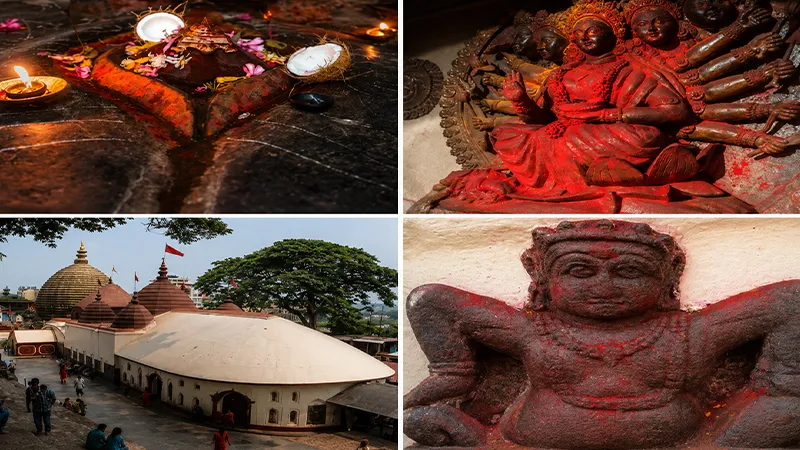
Kamakhya Temple, located on Nilachal Hills in Guwahati, Assam, is one of the 51 most sacred Shakti Peethas in India — and widely regarded as the most powerful among them. It is dedicated to Goddess Kamakhya, the Goddess of Desire and divine feminine energy. According to Hindu mythology, the womb and yoni of Goddess Sati fell at this exact location during Lord Shiva's Tandava dance, making it an extraordinary centre of Shakti worship and Tantric tradition. Millions of devotees from across India and the world visit every year seeking blessings for fertility, wish-fulfilment, marriage, and spiritual transformation.
2What is the Ambubachi Mela? Should I plan my trip around it?
Ambubachi Mela is the most important annual festival at Kamakhya Temple, held every year in June (typically June 22–25). It celebrates the menstrual cycle of Goddess Kamakhya, symbolising the fertility and regenerative power of the divine feminine. During these 3 days, the temple remains completely closed. When it reopens on the 4th day, millions of devotees, sadhus, and Tantric practitioners gather — making it one of India's largest religious congregations.
Planning Tip:3What is the red prasad (Angavastra) from Kamakhya Temple?
The red cloth prasad from Kamakhya Temple — called Raktavastra or Angavastra — is considered extremely sacred and auspicious. It is distributed free of cost by authorised Shebait priests during Ambubachi Mela. Devotees believe this cloth carries the divine blessings of Maa Kamakhya and is kept at home for prosperity, fertility, and wish-fulfilment.
Important:4What other temples are inside the Kamakhya complex on Nilachal Hill?
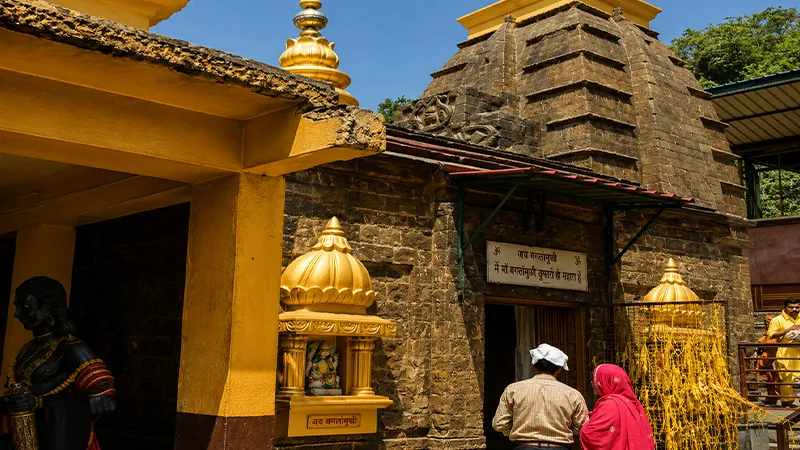
The Kamakhya hill complex is home to temples of all ten Mahavidyas (the ten forms of divine feminine). Along with the main Kamakhya Temple, you can visit Bhuvaneswari Temple, Tara Temple, Bhairavi Temple, Dhumavati Temple, Maa Kali Temple, Maa Chhinnamasta Temple, Maa Bagala Temple, Tripureswari Temple, Maa Banadurga Temple, and Ghantakarna Temple. For a complete darshan of all these temples, a minimum of 2–3 hours is needed on the hill beyond the Kamakhya darshan time itself.
5Can non-Hindus visit Kamakhya Temple?
Yes, The temple welcomes visitors of all religions who wish to explore its history and spirituality. There is no religious restriction for entry. Respectful behavior and modest dress are expected from all visitors regardless of faith.
6What happens during Ambubachi Mela?
June 22-26, 2026 (dates vary yearly):
- Days 1-3: Temple completely closed (Goddess's menstruation)
- Day 4: Grand reopening with special rituals
- Prasad distributed: Angodak (holy water), Angavastra (red cloth), Bhog (khichdi)
- No VIP passes: Everyone queues equally
- Massive crowds: 6+ lakh pilgrims expected
Spiritually powerful but logistically challenging. Book accommodation 4-6 months in advance.
7Why is Kamakhya Temple famous for fertility blessings?
Kamakhya is the Shakti Peeth where Goddess Sati's yoni (womb) fell, making it the ultimate symbol of feminine creative power (Shakti). The temple celebrates the menstruation of the Goddess (Ambubachi Mela) as sacred—not impure. Couples seeking children, marriage partners, or relief from reproductive issues specifically visit. The red cloth (Angavastra) and holy water (Angodak) collected during Ambubachi are believed to carry potent fertility blessings.
8What is the significance of the red cloth (Angavastra)?
During Ambubachi Mela, the Yoni Peeth is covered with white cloth which turns red over 3 days—symbolizing the Goddess's menstrual blood. This Raktavastra/Angavastra is distributed free to devotees as the most powerful prasad. It represents: fertility, feminine power, and the sanctity of natural female biological processes. Many preserve it lifelong or use during their own family rituals.
9What are the 10 Mahavidya temples? Can I visit them all?
The Das-Mahavidyas are ten forms of Goddess Shakti worshipped in tantric tradition:
- Kali
- Tara
- Tripura Sundari (inside main temple)
- Bhuvaneshwari
- Chhinnamasta
- Bhairavi
- Dhumavati
- Bagalamukhi
- Matangi (inside main temple)
- Kamala (inside main temple)
7 have individual temples on Nilachal Hill (walkable circuit). 3 are inside the main Kamakhya complex. Visiting all 10 takes 6-8 hours.
10Is there black magic or tantric practice at Kamakhya?
Misconception. While Kamakhya is a tantric center, authentic practice involves meditation, mantra, and ritual worship—not "black magic." The temple authorities and hereditary priests (shebaits) strictly prohibit harmful practices, animal sacrifice (except symbolic), and commercial tantric shows. Genuine sadhus practice privately. Beware of fake "tantriks" near temple offering spells or curses for money—these are exploitative scams.
11Can I get married at Kamakhya Temple?
No temple marriages were performed in the main complex. However, couples seek blessings for marital harmony and fertility. Special marriage blessing pujas can be arranged through authorized priests (₹5,000-15,000). For actual wedding ceremonies, nearby temples or Guwahati venues are used, followed by Kamakhya blessing visit.
12What is the Nilachala Style of Architecture?
The Kamakhya Temple showcases a unique Nilachala Style - India's only blend of Nagara (North Indian) and Saracenic (Mughal) architecture. Built in 1565 by Koch King Naranarayan, it features a 16-sided polygonal dome instead of traditional conical spire. The temple has five distinct chambers: garbhagriha (sanctum), antarala (vestibule), jagamohan (assembly hall), bhogmandir (ritual chamber), and natmandir (dance hall added by Ahom King Rajeswar Singha in 1759). Each chamber has different roof styles, making it an architectural laboratory that influenced all subsequent Assam temple design.
13Why does Kamakhya Temple look different from other Hindu temples?
Unlike typical Nagara-style temples with conical spires, Kamakhya's dome was built using brick saracenic technique after stone masons failed to reconstruct the original 11th-12th century stone temple. The round dome was modified into a 16-sided polygon with horizontal bands - creating the distinctive "beehive" appearance. This hybrid style was born from necessity but became the template for Assam's temple architecture for centuries.
14Who are the Shebaits of Kamakhya Temple?
Shebaits are the hereditary priest families who have exclusive rights to perform rituals at Kamakhya for over 500 years. Unlike other temples where priests rotate, Kamakhya's shebaits inherit their positions through patrilineal descent from the original families appointed by the Koch kings. They are the only ones authorized to touch the Yoni Peetha, perform special pujas, and distribute prasad. When booking rituals, ensure you're working with authorized shebaits - not freelance priests who may approach you near the temple.
15Can any priest perform puja at Kamakhya Temple?
No. Only hereditary shebaits can perform rituals inside the main sanctum. While freelance priests may offer services outside, they cannot enter the garbhagriha or provide official prasad. The temple administration strictly controls access to prevent exploitation. For authentic rituals, book through the official temple counter or verified shebait families - never through touts claiming "special connections."
16Is Kamakhya Temple just one temple or a complex?
Kamakhya is a vast temple complex covering Nilachal Hill with 16+ shrines:
- Main Temple: Kamakhya (Tripura Sundari) with Matangi and Kamala inside
- 7 Individual Mahavidya Temples: Kali, Tara, Bhuvaneshwari, Bagalamukhi, Chhinnamasta, Bhairavi, Dhumavati
- 5 Shiva Temples: Kameswara, Siddheswara, Kedareswara, Amratokeswara, Aghora
- 1 Vishnu Temple: Kautilinga
- Additional shrines to other deities
Most visitors only see the main temple - the 4-day tour covers the complete circuit of all Mahavidyas and Shiva temples.
17What are the Das-Mahavidyas and why are they important?
The Ten Mahavidyas are tantric manifestations of Goddess Shakti worshipped at Kamakhya: Kali (time), Tara (protection), Tripura Sundari (beauty), Bhuvaneshvari (space), Chinnamasta (self-sacrifice), Bhairavi (terror), Dhumavati (void), Bagalamukhi (paralysis), Matangi (outcaste), Kamala (wealth). Each represents a different cosmic power and has individual temples on Nilachal Hill (except Tripura Sundari, Matangi, and Kamala who are inside the main temple). Visiting all 10 is considered complete spiritual circuit - possible only with 3+ day tours.
18What is Deodhani/Devadhwani Mela and when does it happen?
The Deodhani Mela (also called Manasa Puja) occurs during Sravana Sankranti (July-August) for 3 days. It features Deodhani Nritya - a rare shamanistic dance where dancers (Deodhas/Ghoras/Jokis) enter trance states believed to channel gods/goddesses. This is not staged performance but authentic tantric ritual. Thousands visit specifically to witness this spiritual phenomenon. If your visit coincides with this festival, it's a once-in-a-lifetime experience of living tantric tradition.
19What is Kumari Puja and why is it controversial?
Kumari Puja (Virgin Worship) is performed during Durga Puja and major festivals. A pre-pubescent girl is worshipped as living Goddess Kamakhya, decorated in red saree, jewelry, and sindur. Philosophically, it symbolizes the "seed of creation" and establishes value of women in Shaktism. However, critics question modern relevance. At Kamakhya, it's done with strict traditional protocols - the girl must be healthy, willing, and from specific communities. Visitors may witness but not photograph this sensitive ritual.
20How is Durga Puja different at Kamakhya Temple?
Unlike Kolkata's artistic pandals, Kamakhya's Durga Puja (called Pakhua Puja) is a 15-day ritual marathon (Krishna Navami to Sukla Navami of Aswina). Unique features: Mahasnan (ritual bath with Panchagavya), Bali (sacrifice of buffaloes, goats, pigeons, fish, gourds, pumpkins, sugarcane), and Kumari Puja integration. The focus is tantric ritual power, not decoration. Animal sacrifice happens in designated areas - sensitive visitors should be prepared.
21Is Kamakhya Temple's origin pre-Hindu or tribal?
Both interpretations exist. Archaeological evidence suggests pre-Aryan tribal origins - the site was likely a sacred fertility cult location before formal Hinduization. However, religious texts (Devi Bhagawat, Kalika Purana, Yogini Tantra, Hevajra Tantra) claim the original temple was built by Kamdev (god of desire) who regained his beauty here after being burned by Shiva. The current structure (1565) was rebuilt by Koch King Naranarayan using ruins of an 11th-12th century stone temple. The "truth" depends on perspective - archaeological vs. faith-based. Both narratives coexist at Kamakhya.
22What happened to the original Kamakhya Temple?
The original stone temple (believed built by Kamdev with Vishwakarma's help) was massive and architecturally superior to the current structure. For unknown reasons, its upper portion was completely destroyed. Some theories suggest:
- Natural earthquake (Assam is seismic zone)
- Islamic invasion (though no specific record)
- Internal conflict during Pragjyotisha Kingdom period
The ruins were used to build the 1565 temple. This destruction is why Kamakhya "lost importance" for centuries until the Koch revival.
Ready to Plan Your Kamakhya Temple Visitor FAQs – All You Need Journey?
Compare relevant packages and request a customised travel plan from the Namaste India Trip team.

Share your experience, ask a question, or leave useful tips for other travelers.