

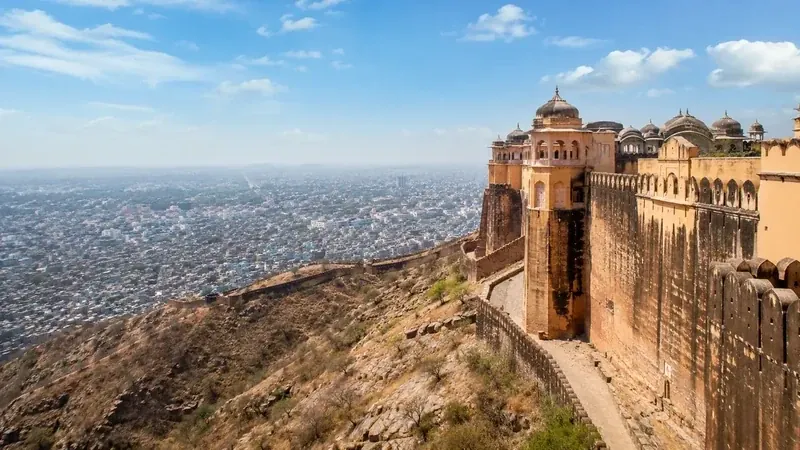
The various historical tourist destinations in the state of Rajasthan are always a charm for the people who want to become a temporary inhabitant of any such site. The very thought of being in a place where a lot of events that we read about in history books can also be quite exciting. To cater to the requirements of such tourists, the abandoned forts are restored and maintained by the authorities who ensure that the present and future generations are able to connect with the history of mankind by being there and not just reading about the same in the books. Lohagarh Fort of Rajasthan, which was once a bustling fort during the occupation of various rulers, is now maintained as a site where the tourists can feel the essence of the old times.
Location
The Lohagarh Fort is located in the city of Bharatpur.
History
 Lohagarh Fort
The name of the fort is derived from Loha, meaning iron. True to its name, the fort was impregnable and was built to endure any sort of attack by the enemies. The Jat rulers of Bharatpur are credited with the construction of this fort. The deep moats surrounding the fort were filled with water during the occupancy of any ruler, thus making it immune against any type of enemy attacks.
The construction of the fort began in 1732 under the reign of Maharaja Suraj Mal of the Jat Dynasty and ended around sixty years later. A distinguishing characteristic of the fort is that its outer walls are very thick. The mud used in these walls was able to stop the cannons fired by the enemies and launch the same to attack back. The construction of these walls, measuring as long as seven kilometers in length, took eight years.
The entrance to this fort is through the Ashtadhatu Gate, which translates to eight metals, the primary constituents of this huge gate. The gate depicts the elephants marching during the war. This gate was first installed at the Fort of Chittorgarh and was taken to Delhi by Alauddin Khilji after he attacked the Rajput rulers when Jats attacked Delhi and brought the gate to be installed in this fort in 1764. Similarly, the gate installed to the south of the fort named as Charbhuja was also brought from Delhi.
The fort was attacked in 1805 by the British forces that made numerous attempts to enter the fort in a span of six weeks. Despite losing 6000 soldiers and trying out every possible tactic, the British forces withdrew the army.
Structure
Unlike other forts that were heavily decorated, the Lohagarh Fort was exempted of any additional adornments that reflected the wealth, preferences, and religious inclination of the rulers. The Jat rulers wanted their forts to be built in a simple manner, with emphasis on functionality and safety.
Except for the meeting hall and a few residential chambers, there are no traces of decoration in the entire fort, a symbol of a simple life that Jat rulers used to believe in. Murals of elephants can be seen at the gate which is quite simple and has faded away with time.
What to See
Within the fort premises, there are you places named as Kamra Palace, Mahal Khas, and Palace of Badan Singh. Other monuments in the fort include the Kishori Mahal, Moti Mahal, Kothi Khas, Fateh Burj and Jawahar Burj.
A museum was established in the Kamra Palace and meeting hall in 1944. Inside this museum, you will find a wide collection of sculptures found during the excavation, with few of them dating back to the second century. These sculptures, along with other objects, were found near the fort and in neighboring villages. A statue of Lord Shiva, depicting his avatar of a cosmic dancer along with a Shivlinga, enhances the beauty of the museum collections. In the museum’s art gallery, a few portraits of the Jat Kings and other rulers of Bharatpur, along with miniature paintings are worth looking.
The armory section of the museum showcases the guns and other weapons used by the armies in the ancient period. The Jawahar Burj, a tower built to commemorate the victory of Maharaja Suraj Mal over the Mughals, stands tall within a rampart at the fort. The coronation ceremony was also held in this tower. Another prominent tower within the fort is the Fateh Burj that was built again by Suraj Mal to commemorate his victory over the Britishers. It also served as a watch tower for the rulers. The Vijay Stambha or the Victory Column, an iron pillar inside the palace, is inscribed with the lineage of the Jat royal family.
The Ganga Mandir built in 1845 was among the last additions made to the fort. The king who was looking after the construction instructed that all the people working for the state must donate one month’s salary and any increments they receive in the salary towards the construction of this temple. Laxman Mandir is another brilliant example of architectural detailing. The ceilings, walls, pillars, and arches of this temple enhance the beauty of the structure. Nehru Park, a garden located between the entrance and the museum complex, is a perfect place to relax with your companions or alone after exploring the fort.
Eat, Drink, Collect
The Madhuban Cafe is a place where you can have snacks, meals, and non-alcoholic beverages. In the city, there are a lot of restaurants and roadside vendors where local delicacies and other cuisines are available throughout the day.
Tourists can opt to stay at Shagun Guest House, where the prices are relatively low than many modern hotels and lodges. Those who are looking for a more posh option for staying can head to the Swaraj Resorts, where along with lodging and food, you will get a pool, Wi-Fi service, garden and a multi-cuisine restaurant and bar.
Best Time to Visit
The museum opens and 10:00 am and closes down by 04:30 pm. It is closed on Mondays. To make the most of your trip, it is advised that you plan your visit to this fort during the months of October through March, as the weather is cool and exploring the vastness of the fort and other places in the city becomes easy. Summers in the city can be harsh with the mercury soaring up to 45 degrees, which might force you to remain within the confines of your hotel room, rather than enhancing your senses with the view that this city has to offer.
How to Reach
The closest airport to Bharatpur is in Agra, at a distance of approximately 54 kilometres. Other airports close to the city are in Agra, Jaipur, and Delhi, at a distance of 174 and 1823 kilometers respectively. From these destinations, public transportation and private vehicles are available in plenty. Tourists can reach to Bharatpur by boarding one of the many trains that connect this historical city to the neighboring cities and other states such as West Bengal, Assam, Madhya Pradesh, Uttar Pradesh, etc.
Bharatpur is connected to the city of Jaipur through National Highway 11 and with Delhi through National Highway 2. The state-run buses make it easier for the tourists to reach Bharatpur and explore the city and market area apart from the fort.
Compare relevant packages and request a customised travel plan from the Namaste India Trip team.







Share your experience, ask a question, or leave useful tips for other travelers.