

Buddhism, one of the world’s major religions, originated in ancient India around the 6th century BCE. Founded by Siddhartha Gautama, known as the Buddha, it offers a profound philosophy and way of life that resonates with millions of people worldwide. Buddhism encompasses a rich tapestry of teachings, practices, and principles aimed at understanding the nature of reality, alleviating suffering, and achieving enlightenment. In this essay, we will explore the fundamental aspects of Buddhism, including its historical context, core beliefs, practices, and its relevance in the modern world.
Historical Context
Buddhism emerged in a time of great spiritual and social transformation in ancient India. Siddhartha Gautama, born into a privileged royal family, renounced his luxurious life to seek answers to the fundamental questions of human existence: the nature of suffering and the path to liberation. After years of meditation and contemplation, Siddhartha attained enlightenment under the Bodhi tree, becoming the Buddha, or the awakened one. He spent the rest of his life teaching his insights and establishing a monastic community.
Core Beliefs
At the heart of Buddhism lies the Four Noble Truths, which encapsulate the essence of the Buddha’s teachings. The first truth acknowledges the existence of suffering (dukkha) as an inherent part of human existence. The second truth suggests that suffering arises from craving and attachment. The third truth asserts that suffering can be overcome by ending craving and attachment. The fourth truth outlines the Noble Eightfold Path as a means to achieve liberation from suffering.
The Noble Eightfold Path consists of right understanding, right thought, right speech, right action, right livelihood, right effort, right mindfulness, and right concentration. These eight interrelated aspects serve as a guide to living a virtuous and mindful life, leading to the end of suffering and the realization of enlightenment.
Suggested Post:Buddhist Monasteries in Ladakh
Practices and Rituals
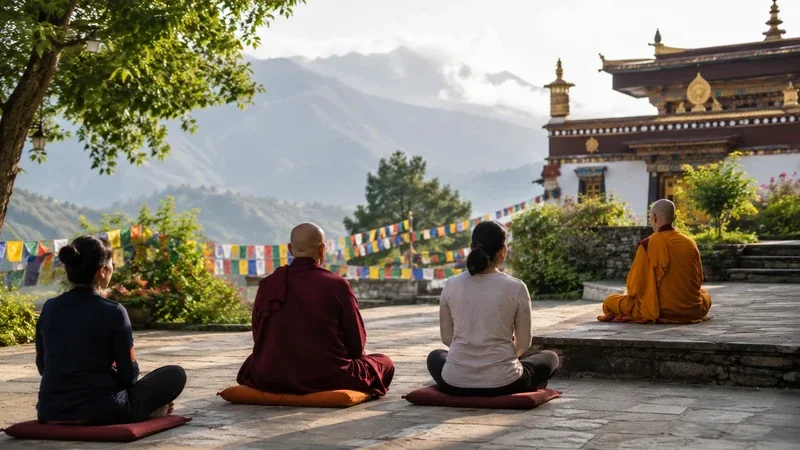
Buddhism offers a range of practices and rituals that vary across different traditions and cultures. Meditation holds a central place in Buddhist practice. Through meditation, practitioners cultivate mindfulness, concentration, and insight, leading to a deep understanding of the self and the nature of reality. Other practices include chanting, prostrations, devotional offerings, and acts of compassion and generosity. Monasticism is also an important aspect of Buddhism, with monastic communities serving as centers for study, meditation, and the preservation of Buddhist teachings.
Relevance in the Modern World
In today’s fast-paced and interconnected world, Buddhism continues to provide valuable insights and guidance. Its teachings on mindfulness and compassion have gained widespread recognition and acceptance, influencing fields such as psychology, neuroscience, and mindfulness-based therapies. The practice of meditation, rooted in Buddhism, has shown numerous benefits for mental well-being and stress reduction. Moreover, Buddhism’s emphasis on ethical conduct, non-violence, and environmental stewardship resonates with the growing concerns for social justice and ecological sustainability.
Suggested Post:Buddhist Caves in India
Here’s Some Additional Information about Buddhism:
1. The Three Jewels: Buddhists take refuge in the Three Jewels, also known as the Three Treasures. These are the Buddha (the awakened one), the Dharma (the teachings of the Buddha), and the Sangha (the community of Buddhist practitioners). Taking refuge in the Three Jewels signifies a commitment to following the Buddhist path.
2. Reincarnation and Karma: Buddhism accepts the concept of reincarnation, believing in the cycle of birth, death, and rebirth. This cycle continues until one attains enlightenment and breaks free from the cycle, achieving Nirvana. Karma, the law of cause and effect, plays a significant role in this process. It suggests that our actions in this life and previous lives shape our present circumstances and future rebirths.
3. The Middle Way: Buddhism emphasizes the Middle Way, which encourages practitioners to avoid extreme or excessive behaviors. It encourages a balanced approach to life, steering clear of both self-indulgence and self-mortification. The Middle Way promotes moderation, mindfulness, and non-attachment to find a harmonious path.
4. Buddhist Schools and Traditions: Over time, Buddhism diversified into various schools and traditions. Theravada Buddhism, prevalent in Southeast Asia, adheres closely to the original teachings of the Buddha. Mahayana Buddhism, popular in East Asia, emphasizes the universal liberation of all sentient beings. Vajrayana Buddhism, practiced mainly in Tibet and Nepal, incorporates esoteric rituals and practices.
5. Bodhisattva Ideal: In Mahayana Buddhism, the Bodhisattva ideal plays a crucial role. A Bodhisattva is an enlightened being who compassionately postpones their own final liberation to assist others in achieving enlightenment. Bodhisattvas are revered figures who embody compassion, wisdom, and altruism.
6. Buddhist Art and Iconography: Buddhist art has produced magnificent sculptures, paintings, and architectural wonders throughout history. Iconography, such as the Buddha statues, mandalas, and thangkas (scroll paintings), often depict symbolic representations of Buddhist concepts and deities. These artistic expressions serve as aids for meditation and devotion.
7. Mindfulness and Insight Meditation: Mindfulness meditation, known as Vipassana or insight meditation, is a core practice in Buddhism. It involves developing moment-to-moment awareness of one’s thoughts, emotions, and sensations without judgment. Through mindfulness meditation, practitioners cultivate insight into the impermanent and conditioned nature of reality, ultimately leading to liberation.
8. Engaged Buddhism: Engaged Buddhism emerged in the 20th century as a response to social and political issues. It emphasizes the active application of Buddhist principles in addressing societal problems, such as poverty, discrimination, and environmental degradation. Engaged Buddhists strive to alleviate suffering and promote social justice through compassionate action.
9. Major Buddhist Festivals: Buddhism celebrates various festivals throughout the year. Vesak, also known as Buddha’s Birthday, commemorates the birth, enlightenment, and death of the Buddha. Other significant festivals include Magha Puja, Asalha Puja, and the Tibetan New Year (Losar). These occasions provide opportunities for reflection, gratitude, and community gathering.
10. Global Spread: Buddhism has spread beyond its birthplace in India and has become a global religion. It has gained followers in countries such as China, Japan, Thailand, Sri Lanka, Tibet, Vietnam, and many Western nations. The teachings of Buddhism continue to resonate with individuals seeking spiritual fulfillment, inner peace, and a deeper understanding of life’s mysteries.
Conclusion
Buddhism offers a profound and practical philosophy for living a meaningful and fulfilling life. Its teachings on the nature of suffering, the path to liberation, and the cultivation of mindfulness and compassion continue to inspire and guide millions of people worldwide. By embracing the principles of Buddhism, individuals can find solace, wisdom, and inner peace in the midst of life’s challenges. As the world grapples with complex problems, Buddhism’s timeless wisdom provides a relevant and compassionate approach to addressing the needs of the modern era.
Compare relevant packages and request a customised travel plan from the Namaste India Trip team.












Share your experience, ask a question, or leave useful tips for other travelers.