Last Updated on 16/06/2026
The term “Jyotirlinga” is a combination of two Sanskrit words: Jyoti and Linga. There are twelve Jyotirlingas in India, and they are some of the most revered abodes of Lord Shiva. They include the snow-covered Kedarnath to the Kashi Vishwanath Temple by the Ganga River. Individuals across the world visit to pray and experience the immense power of Shiva. These are spiritual centers that are not only filled with divine power but are also famous for their historical significance and beautiful buildings. Simply in words, every Jyotirlinga demonstrates some particular aspect of the cosmic nature of Shiva.
It is a hardcore belief of many Hindus that by visiting all twelve Jyotirlingas, they will be able to get rid of their bad karma. They also believe that when an individual worships in these temples, it aids him/her in attaining the ultimate spiritual liberation known as moksha. Planning to visit any of these sites? If so, then continue scrolling down this well-drafted guide to the 12 Jyotirlingas of Lord Shiva — including temple times, mythological and historical significance, and the pilgrimage route.
Quick Overview: The 12 Jyotirlingas are self-manifested sacred shrines of Lord Shiva spread across India. They are located in Gujarat (Somnath, Nageshwar), Andhra Pradesh (Mallikarjuna), Madhya Pradesh (Mahakaleshwar, Omkareshwar), Uttarakhand (Kedarnath), Maharashtra (Bhimashankar, Trimbakeshwar, Grishneshwar), Uttar Pradesh (Kashi Vishwanath), Jharkhand (Baidyanath), and Tamil Nadu (Ramanathaswamy). Visiting all 12 is believed to grant moksha (spiritual liberation).
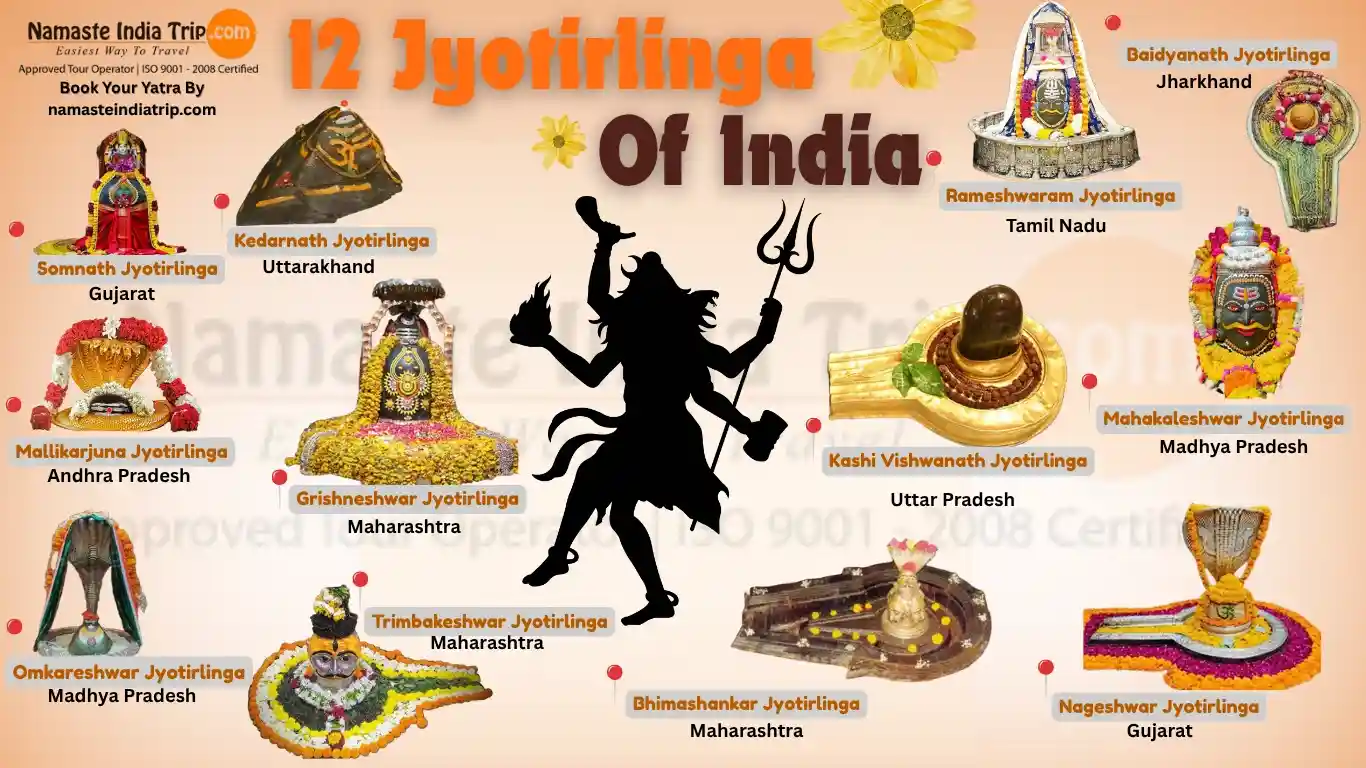
The 12 Jyotirlingas — Locations and Temple Timings
Here is the complete list of all 12 Jyotirlingas of Lord Shiva with their cities, states, direction, and opening/closing timings:
| Name |
City |
State |
Direction |
Opening |
Closing |
| Somnath |
Prabhas Patan, Veraval |
Gujarat |
East |
6:00 AM |
9:00 PM |
| Mallikarjuna |
Srisailam |
Andhra Pradesh |
East |
4:30 AM |
10:00 PM |
| Mahakaleshwar |
Ujjain |
Madhya Pradesh |
South (Dakshin Mukhi) |
4:00 AM |
11:00 PM |
| Omkareshwar |
Mandhata Island, Khandwa |
Madhya Pradesh |
East |
5:00 AM |
9:30 PM |
| Kedarnath |
Kedarnath, Rudraprayag |
Uttarakhand |
West |
4:00 AM (May–Nov) |
9:00 PM (May–Nov) |
| Bhimashankar |
Bhorgiri village, Pune dist. |
Maharashtra |
East |
5:00 AM |
9:30 PM |
| Kashi Vishwanath |
Varanasi |
Uttar Pradesh |
East |
3:00 AM |
11:00 PM |
| Trimbakeshwar |
Trimbak, Nashik |
Maharashtra |
East |
5:30 AM |
9:00 PM |
| Baidyanath |
Deoghar |
Jharkhand |
East |
4:00 AM |
9:00 PM |
| Nageshwar |
Near Dwarka |
Gujarat |
West |
6:00 AM |
9:00 PM |
| Ramanathaswamy |
Rameswaram |
Tamil Nadu |
East |
5:00 AM |
9:00 PM |
| Grishneshwar |
Verul, Chhatrapati Sambhajinagar |
Maharashtra |
East |
5:30 AM |
9:30 PM |
Note: Temple timings may vary on festival days such as Mahashivratri and Shravan Mondays. Always verify current timings with the temple trust before visiting.
1. Somnath (Gir, Gujarat)
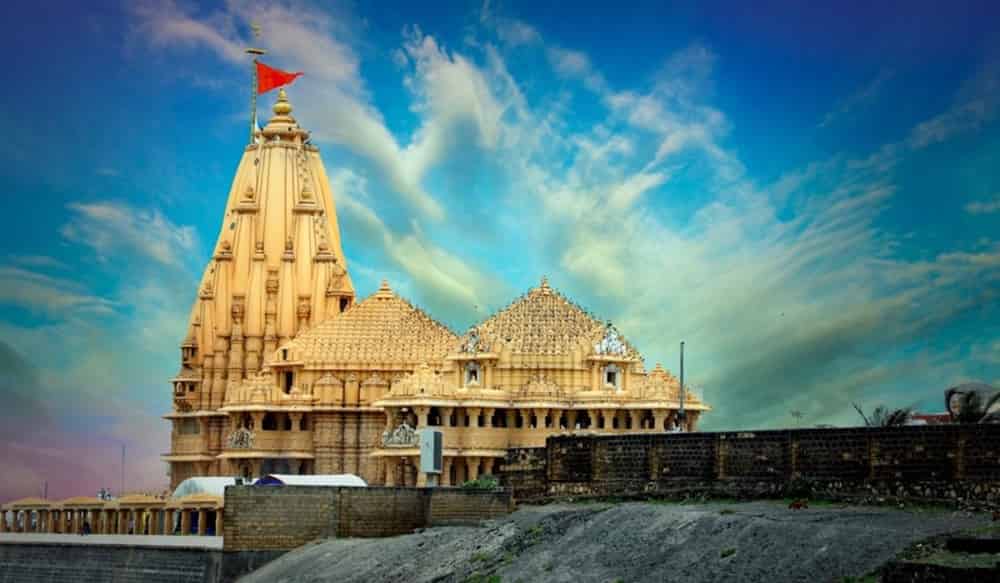
Somnath Jyotirlinga is considered one of the most revered Shiva shrines in India, where pilgrims from all across the globe visit. It is in Prabhas Kshetra, near Veraval in Gujarat, and it is very spiritual and historically significant. It is believed that Somnath is one of the oldest temples in India. Historical records indicate the temple was destroyed and rebuilt multiple times over centuries — a testament to the resilience of its devotees.
According to the Shiva Purana, the Moon god, Chandra Dev, was cursed by his father-in-law, Daksha Prajapati, to fail in shining. Chandra prayed to Lord Shiva to end the curse. Shiva was pleased with the devotion of Chandra and manifested himself in the form of a Jyotirlinga, and the Moon god shone brightly once more. The temple is named Somnath, which means the Guardian of the Moon.
- Nearby Attractions: Bhalka Tirth, Gita Mandir, Triveni Sangam, and Somnath Beach
- Highlight: Daily Light & Sound Show from 8:00 PM to 9:00 PM
- Tickets: ₹30 for adults | ₹10 for children (below 10 years)
2. Mallikarjuna (Srisailam, Andhra Pradesh)
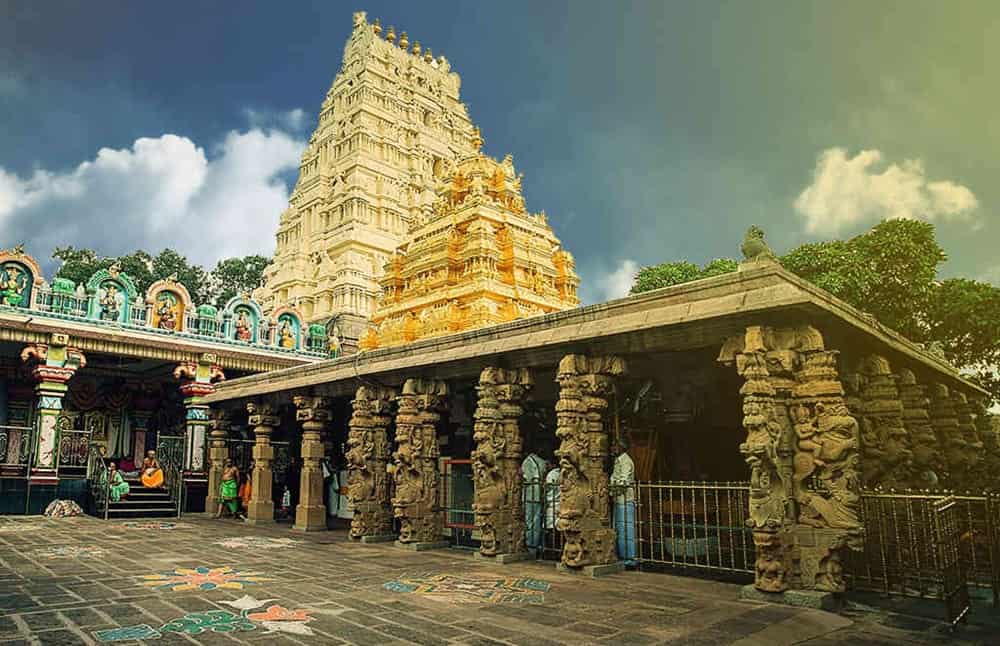
Located beautifully in the majestic Nallamala hills, Mallikarjuna Temple is another heavily crowded pilgrimage in India. This revered shrine is dedicated to Lord Shiva, and devotees can also seek the blessings of Goddess Parvati. The pilgrimage is also one of the 18 Maha Shakti Peethas (out of the 51 recognized Shakti Peethas), making it the only temple complex in India that contains both a Jyotirlinga and a Shakti Peetha. Legends tell that Lord Shiva and Goddess Parvati came here as Mallikarjuna and Bhramaramba when they wanted to stay close to their son, Kartikeya.
- Nearby Attractions: Bhramaramba Devi Temple, Srisailam Dam, Sakshi Ganapati Temple, Akkamahadevi Caves
- Highlight: The gold-plated tower (Vimana) and the Sahasra Linga with 1000 tiny Lingas carved
- Tickets: No entry fee
3. Mahakaleshwar (Ujjain, Madhya Pradesh)
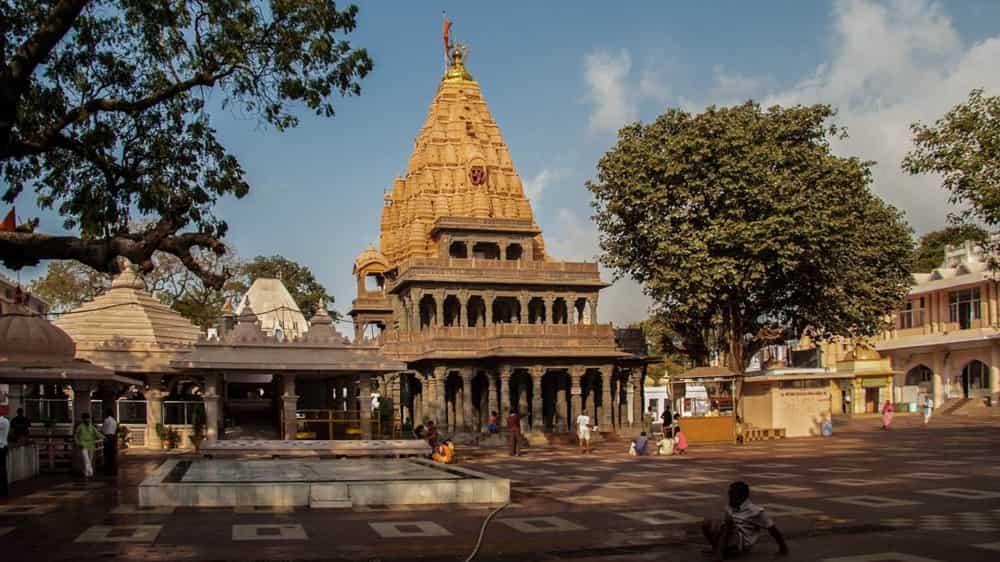
The Mahakaleshwar Temple is one of the most revered temples of Lord Shiva located in Ujjain, Madhya Pradesh. It is among the 12 Jyotirlingas and is unique as the lingam is considered to be Swayambhu (self-grown). The temple is also south-facing — popularly known as Dakshin Mukhi — which is an uncommon direction among Jyotirlingas. It is a mix of Bhumija, Maratha, and Chalukya architecture.
The temple is situated on the bank of the sacred River Shipra. Moreover, this astonishing temple is also a focal point of the festival of Maha Shivaratri, where Ujjain fills with devotion and happiness.
- Nearby Attractions: Kal Bhairav Temple, Sandipani Ashram, Ram Ghat
- Highlights: Daily Bhasma Aarti at dawn — performed with sacred ash symbolizing Shiva’s cycle of creation and destruction
- Tickets: No entry fee
4. Omkareshwar (Khandwa, Madhya Pradesh)
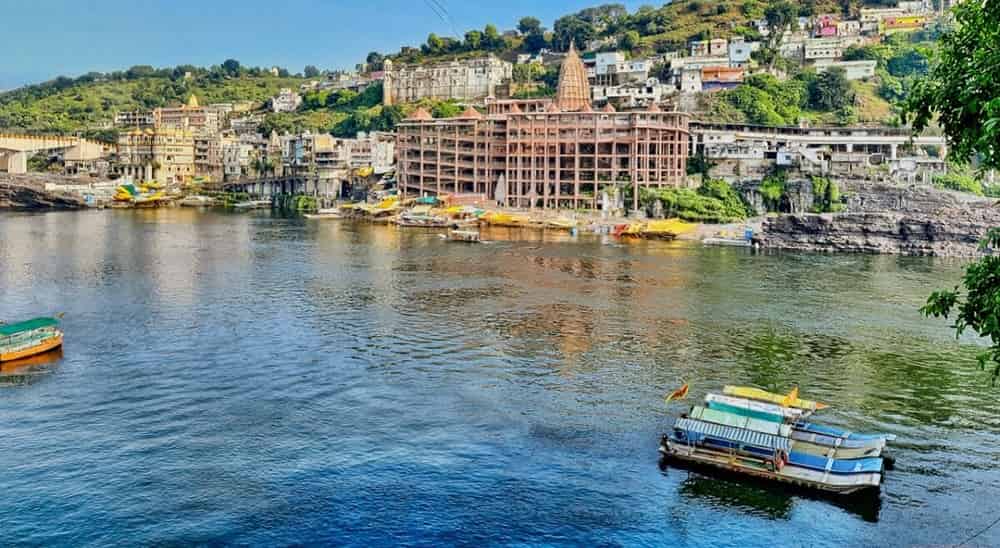
Omkareshwar Temple is located on the Mandhata Island on the Narmada River within Khandwa in Madhya Pradesh. The island itself forms the sacred shape of the Om symbol — hence the name Omkareshwar, meaning Lord of Om. This unique geography and spirituality has made it one of the most sacred Jyotirlinga pilgrimage places in India.
The architecture of the temple is awe-inspiring, decorated with beautiful carved pillars, fancy domes, and stone sculptures. The principal lingam is considered Swayambhu (self-manifested). Thousands of devotees visit more so during Maha Shivaratri.
- Nearby Attractions: Siddhanath Temple, Mamleshwar Temple, Gauri Somnath Temple
- Highlights: Om-shaped island and scenic boat rides on the Narmada
- Tickets: Free entry; charges apply for boat rides
5. Kedarnath (Rudraprayag, Uttarakhand)
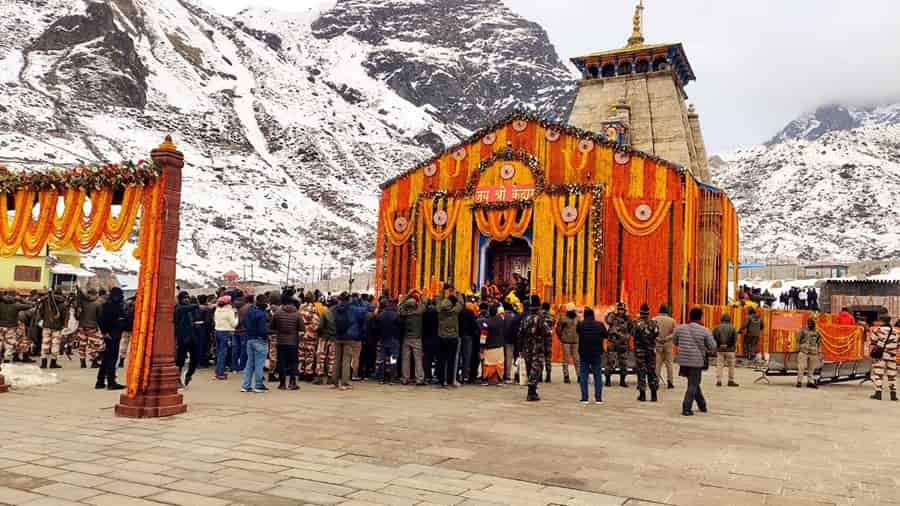
Kedarnath Jyotirlinga is located in the district of Rudraprayag in Uttarakhand, at 3,583 metres above sea level along the Mandakini River. It is one of the twelve Jyotirlingas open only for approximately 6 months (May to November). It is also an important destination of the Chota Char Dham Yatra.
People believe that Lord Shiva appeared here as a Jyotirlinga to wipe the sins of the Pandavas. The Pandavas initially assembled the stone structure of the temple, later restored by Adi Shankaracharya in the 8th century. Within the main hall, there is a cone-shaped lingam which is Lord Shiva in his Sadashiva form. Due to extreme weather conditions, the temple remains open between April/May and November. After the closing ceremony each year, the idol of Lord Kedarnath is ceremoniously shifted to Omkareshwar Temple in Ukhimath, where worship continues through winter.
- Nearby Attractions: Gaurikund, Vasuki Tal, Bhairav Nath Temple
- Highlights: Spectacular Himalayan vista and powerful spiritual atmosphere
- Tickets: No entry fee; donations as per your wish
6. Bhimashankar (Pune, Maharashtra)
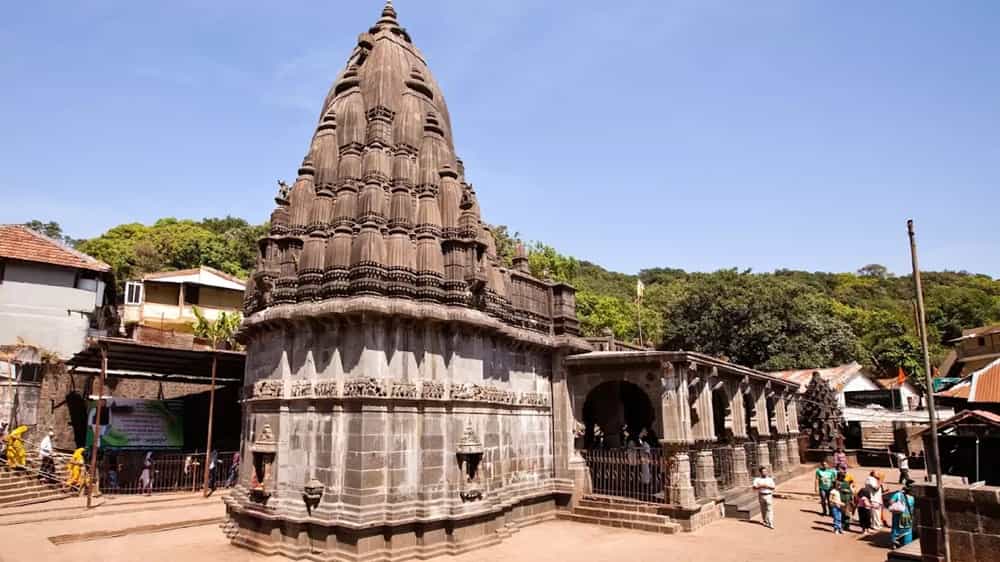
The Bhimashankar temple stands in the middle of a dense forest in the Sahyadri hills, approximately 3,250 feet above sea level. It provides a peaceful area to pray and also a scenic environment. The Bhimashankar temple is built in Nagara architectural style with elaborate carvings on stone and houses a peaceful sanctum where the Shiva lingam is enshrined.
According to the primary legend in the Shiva Purana, Lord Shiva manifested as Bhimashankar Jyotirlinga after destroying the demon Bhima (son of Kumbhakarna), who had terrorised the three worlds. A secondary legend also associates the shrine with Tripurasura. After the battle, Lord Shiva’s sweat is believed to have formed the Bhima River, which flows through Maharashtra to this day.
The Bhimashankar Wildlife Sanctuary surrounds the temple and is also the habitat of the Giant Indian Squirrel (Shekru). Maha Shivaratri is particularly a busy time when thousands gather for blessings.
- Nearby Attractions: Hanuman Lake, Nagphani Point, Sakshi Ganapati Temple
- Highlights: Nagara-style architecture; Bhimashankar Wildlife Sanctuary surrounding the temple
- Tickets: No entry fee; open to all devotees year-round
7. Kashi Vishwanath Temple (Varanasi, Uttar Pradesh)
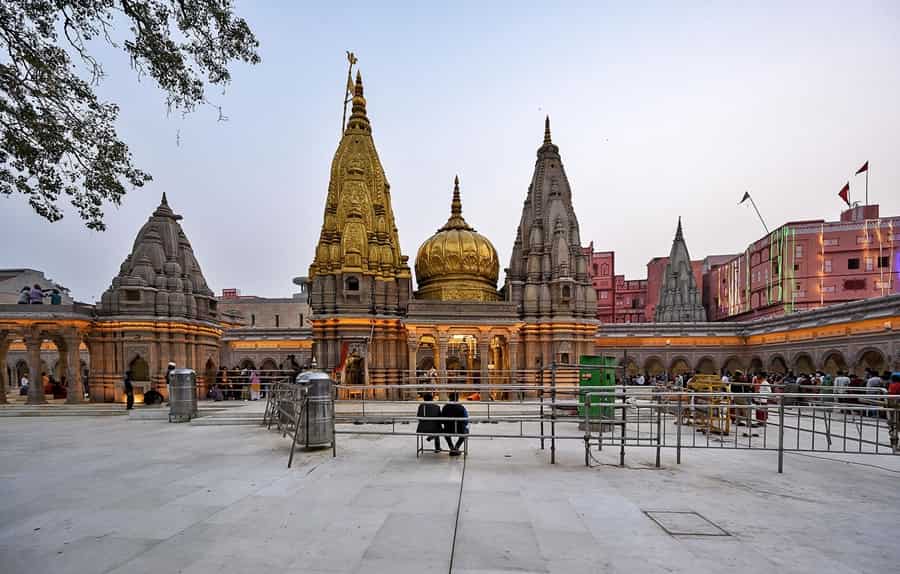
It is located on the west bank of the sacred Ganga River and is among the twelve Jyotirlingas — the preferred destination for spiritual seekers. Many believe that a visit to Kashi Vishwanath, followed by bathing in the Ganga, will liberate you from the cycle of birth and death.
The presiding deity, Vishwanath (Lord of the Universe), is represented by a black stone lingam. Queen Ahilyabai Holkar of Indore rebuilt the current building in 1780. The domes are ornamented with gold plating — hence people refer to it as the Golden Temple of Varanasi. In recent times, the Kashi Vishwanath Corridor project has simplified access to the temple through the Ganga Ghats. The temple remains buzzing all year round — Maha Shivaratri and the month of Shravan attract enormous crowds.
- Nearby Attractions: Ghats, Banaras Hindu University (BHU), Sarnath
- Highlights: Evening Ganga Aarti at the ghats; boat ride on the Ganga
- Tickets: No entry fee
8. Trimbakeshwar Temple (Nashik, Maharashtra)
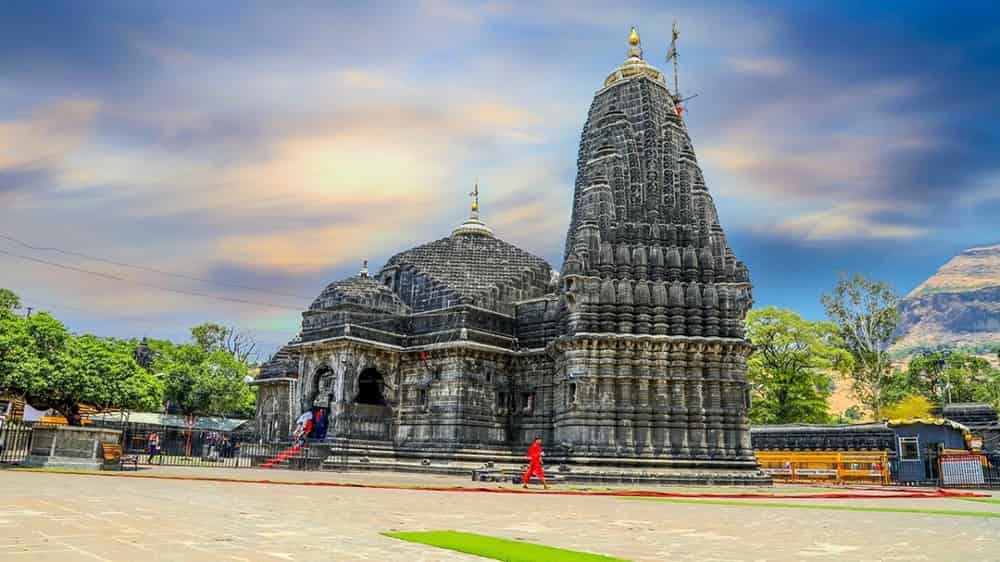
Located in the Nashik district of Maharashtra, Trimbakeshwar is one of the most significant Jyotirlingas in India. The lingam established here uniquely represents the divine power of the trinity (Brahma, Vishnu, and Shiva) — making it the only Jyotirlinga with three faces. The temple is constructed in Hemadpanthi style using black basalt stone, built by Peshwa Balaji Baji Rao in the 18th century.
The pilgrimage is situated near the source of the Godavari River. The legend behind the temple is associated with Sage Gautama Rishi and his wife Mata Ahalya, who lived on the Brahmagiri hills. Gautama Rishi performed intense penance to bring the Ganga down to earth to purify the land — this sacred flow became the Godavari River. Pleased by his devotion, Lord Shiva took permanent abode here as Trimbakeshwar.
Correction Note: Some sources incorrectly mention ‘Gautam Buddha’ in connection with this legend. The correct figure is Sage Gautama Rishi (Maharishi Gautama) — a Vedic sage, entirely different from Siddhartha Gautama (Gautam Buddha), the founder of Buddhism.
- Nearby Attractions: Brahmagiri Hill, Neel Parbat, Anjaneri Fort
- Highlights: Kushavarta Kund — holy tank where pilgrims take a dip; three-faced unique Jyotirlinga
- Entry Fee: No fee; donations welcome
9. Vaidyanath (Deoghar, Jharkhand)
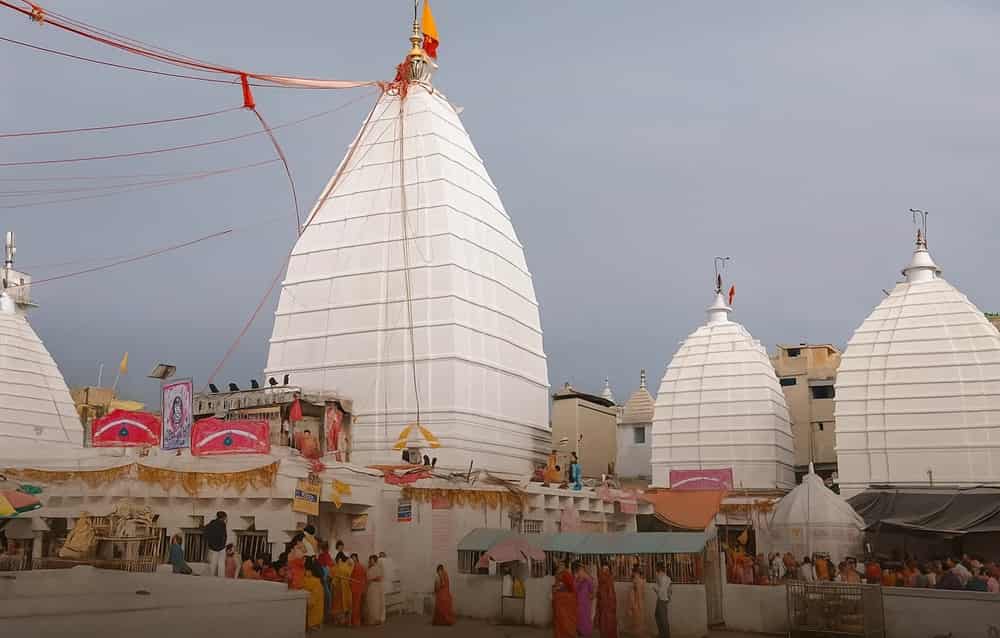
Popularly called Baidyanath Dham, Vaidyanath Temple is one of the most explored Jyotirlingas in North India. According to mythological tales, this place is linked to Ravana, who devoted his ten heads to Lord Shiva to gain invincibility. His deep devotion compelled Lord Shiva to appear and bless him. The temple complex is simple yet fills devotees with a strong spiritual feel, featuring a tall Shikhara and many small shrines around the main temple.
- Nearby Attractions: Tapovan Caves, Basukinath Mandir, Naulakha Mandir
- Highlight: Shravani Mela — millions of Kanwariyas visit the temple during this festival
- Entry Fee: No charge; VVIP pass available for priority darshan
10. Nageshwar Jyotirlinga (Near Dwarka, Gujarat)
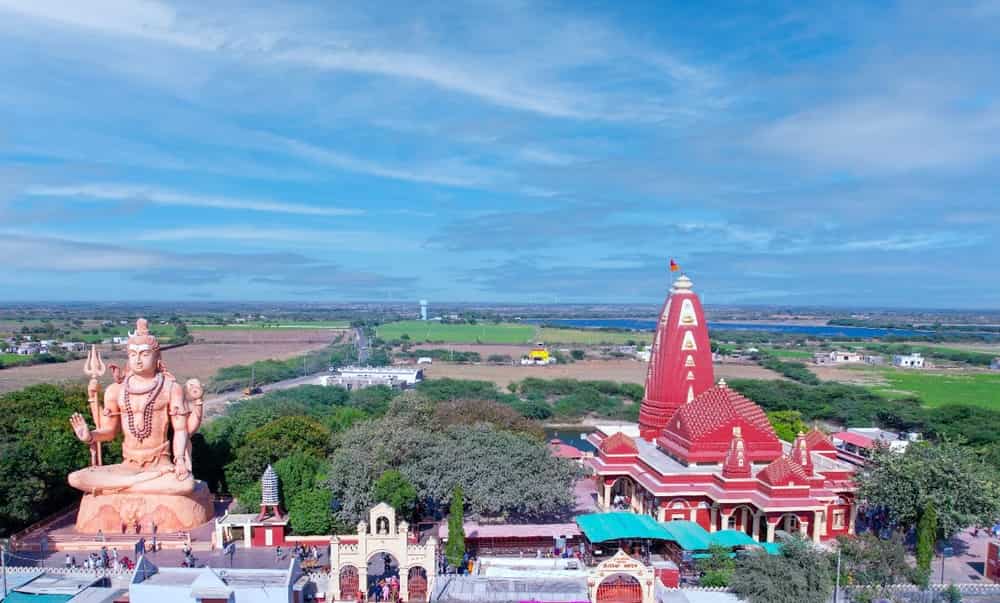
Located gracefully on the coast of Saurashtra, near the holy city of Dwarka, Nageshwar Temple holds immense spiritual significance in Hinduism. It represents a shield against every poison and negativity. In Hindu mythology, Lord Shiva came here in the form of Nageshwar Mahadev to protect his devotee Supriya from the demoness Daruka. The name is based on the Sanskrit word Naga (serpent), showing association with protection and transformation.
The unique Shiva lingam is crafted from a smooth dark stone. Worshippers believe that praying here frees them from fear and evil spirits. The temple complex also boasts a 25-metre-tall statue of Lord Shiva in a sitting meditative pose — one of the most striking features visible from a distance.
- Nearby Attractions: Gomti Ghat, Rukmini Temple, Dwarkadhish Temple
- Highlights: 25-metre Shiva statue; serene coastal setting near the Arabian Sea
- Entry Fee: No fee
11. Ramanathaswamy (Rameswaram, Tamil Nadu)
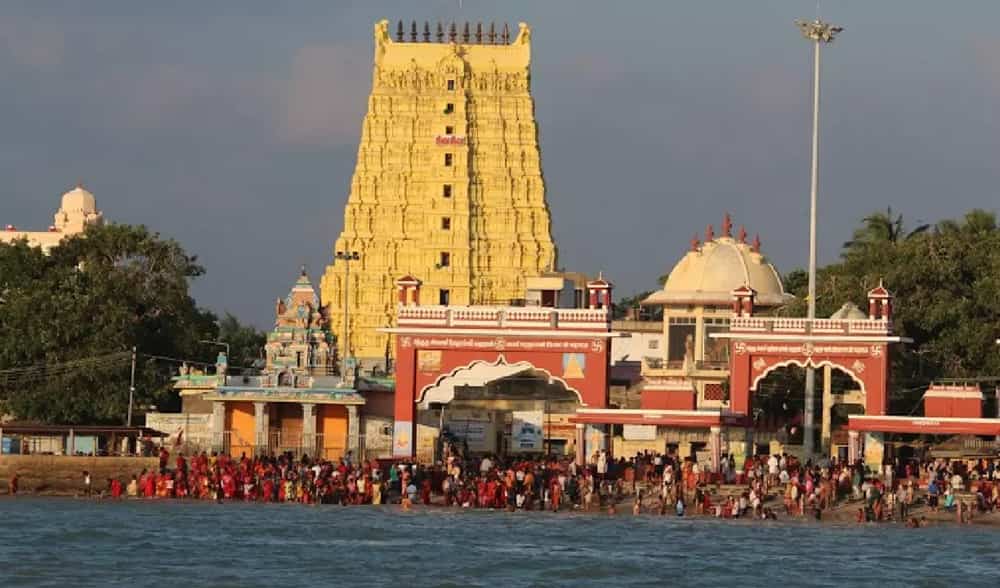
A major pilgrimage site for Shiva followers, Ramanathaswamy is also famous for its beautiful Dravidian-style architecture, long pillared halls, and the 22 sacred Theerthams (holy water pools) said to purify devotees of sin. The temple is on the serene island of Rameswaram and demonstrates the closeness between Lord Vishnu and Lord Shiva.
It is said that Lord Rama prayed here to Lord Shiva before his journey to Lanka, installing the Ramanathaswamy lingam to seek blessings and atonement for the sin of Brahmahatya (killing Ravana, a brahmin). The main lingam was established by Lord Rama himself. The temple was later expanded by the Pandya Dynasty and the Jaffna kingdom.
- Nearby Attractions: Adam’s Bridge, Agni Theertham, Dhanushkodi
- Highlights: Longest temple corridor in the world; 22 sacred Theerthams
- Entry Fee: Free entry
12. Grishneshwar (Verul, Chhatrapati Sambhajinagar, Maharashtra)
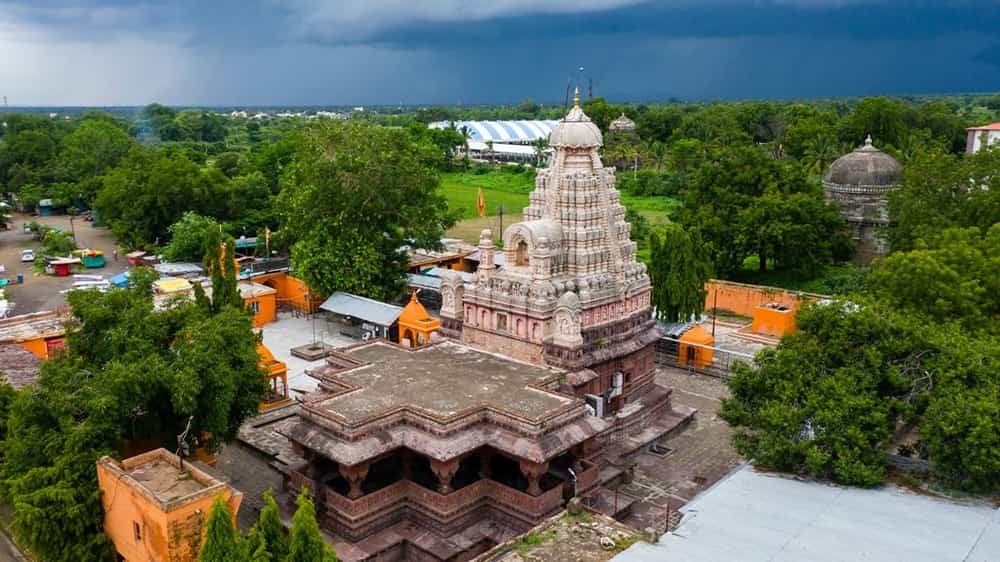
Built in a blend of South Indian and Hemadpanthi architectural styles using red volcanic basalt stone, Grishneshwar is the twelfth and final Jyotirlinga of Lord Shiva. The word Grishneshwar is translated as the Lord of Compassion. There is a common belief that by praying in this temple, people can make their wishes come true and get rid of bad karma.
The temple is located in Verul village near the famous Ellora Caves, approximately 30 km from Chhatrapati Sambhajinagar (formerly Aurangabad). As per Hindu mythology, the place is associated with a devoted woman named Kusuma who worshipped a Shiva Lingam with heartfelt devotion. Lord Shiva restored her son’s life and assured that he would remain there permanently as Grishneshwar Jyotirlinga. The present structure was rebuilt in the 18th century by Queen Ahilyabai Holkar. Uniquely, you can touch the statue and perform special pujas like Rudrabhishek here.
Location Update: The city was officially renamed from Aurangabad to Chhatrapati Sambhajinagar in 2023. The temple is in Verul village, approximately 1.5 km from the Ellora Caves.
- Nearby Attractions: Bibi Ka Maqbara, Ellora Caves, Daulatabad Fort
- Highlights: Smallest Jyotirlinga temple; allows devotees to touch the Shivlinga
- Entry Fee: Free for all devotees
Suggested Tour:
How to Plan the 12 Jyotirlinga Yatra
Visiting all 12 Jyotirlingas in one journey is a lifelong dream for many devotees. From a practical standpoint, it can be done in 15 to 20 days with careful planning. Here is a region-wise grouping to help you plan efficiently:
| Region |
Jyotirlingas |
Best Base City |
| Gujarat |
Somnath + Nageshwar |
Ahmedabad / Dwarka |
| Madhya Pradesh |
Mahakaleshwar + Omkareshwar |
Indore / Ujjain |
| Maharashtra |
Bhimashankar + Trimbakeshwar + Grishneshwar |
Pune / Nashik / Aurangabad |
| Uttar Pradesh |
Kashi Vishwanath |
Varanasi |
| Uttarakhand |
Kedarnath |
Haridwar / Rishikesh |
| Jharkhand |
Baidyanath |
Deoghar |
| Andhra Pradesh |
Mallikarjuna |
Hyderabad |
| Tamil Nadu |
Ramanathaswamy |
Madurai / Rameswaram |
- Best time for the full circuit: October to March (avoids monsoon and Kedarnath off-season)
- Kedarnath is open only May to November — plan accordingly
- Book accommodation in advance for Varanasi, Ujjain, and Rameswaram
- For senior citizens, helicopter services are available for Kedarnath and Vaishno Devi
Spiritual Significance of the 12 Jyotirlingas
In Hindu philosophy, a Jyotirlinga is not merely a temple — it is a point where Lord Shiva is believed to have manifested as an infinite pillar of light (Jyoti = light, Linga = symbol). The Shiva Purana describes how Lord Brahma and Lord Vishnu once argued about supremacy, and Shiva appeared as an endless column of light to settle the dispute — establishing the cosmic significance of the Jyotirlinga.
- Each Jyotirlinga is believed to be Swayambhu — self-manifested, not created by human hands
- Worshipping at all 12 is said to cleanse one of all sins and lead to moksha (liberation)
- Most face East (direction of purity and enlightenment); Mahakaleshwar faces South; Kedarnath and Nageshwar face West
- Mahakaleshwar is the only south-facing (Dakshin Mukhi) Jyotirlinga — considered especially powerful
Practical Tips for Visiting 12 Jyotirlinga Temples
- Dress code: Most temples require modest attire. Men must remove shirts inside Grishneshwar’s sanctum.
- Photography: Photography inside the sanctum is prohibited at most Jyotirlinga temples.
- Best darshan time: Early morning (first aarti) for minimal crowds and peaceful atmosphere.
- VIP/paid darshan: Available at Baidyanath, Tirupati (nearby), and select others for faster entry.
- Mahashivratri: The most auspicious time but extremely crowded — book 3–4 weeks in advance.
- Shravan month (July–Aug): Heavy pilgrim rush at all Jyotirlinga temples — plan accordingly.
FAQs
Q1. What are the 12 Jyotirlingas?
The 12 Jyotirlingas are the most sacred self-manifested shrines of Lord Shiva in India. Each is believed to radiate his eternal presence. They are located across India — from Somnath in Gujarat to Ramanathaswamy in Tamil Nadu — and visiting all 12 is considered the highest form of Shiva pilgrimage.
Q2. What does ‘Jyotirlinga’ mean?
The word Jyotirlinga combines two Sanskrit words: Jyoti (light or flame) and Linga (symbol of Shiva). It refers to a column of divine light through which Lord Shiva is believed to have manifested himself. These 12 shrines are where that manifestation occurred, making them the most powerful Shiva temples in the world.
Q3. Which is the most powerful Jyotirlinga?
All 12 Jyotirlingas hold equal divine sanctity. However, Kashi Vishwanath in Varanasi and Somnath in Gujarat are particularly revered — Kashi for its association with liberation from the cycle of birth and death, and Somnath for being the first Jyotirlinga. Mahakaleshwar is uniquely powerful as the only south-facing Jyotirlinga.
Q4. In which direction do the 12 Jyotirlingas face?
Most of the 12 Jyotirlingas face East, symbolizing purity and enlightenment. Mahakaleshwar (Ujjain) faces South and is called Dakshin Mukhi. Kedarnath and Nageshwar face West. This directional orientation holds deep spiritual significance in Shaivite tradition.
Q5. How many days does it take to complete the 12 Jyotirlinga Yatra?
Completing the full 12 Jyotirlinga pilgrimage typically takes 15 to 20 days depending on your starting point and mode of transport. Grouping temples by region — Gujarat, Madhya Pradesh, Maharashtra, then moving to other states — is the most efficient approach. October to March is the best period.
Q6. Which is the only Jyotirlinga that contains both a Jyotirlinga and a Shakti Peetha?
Mallikarjuna at Srisailam, Andhra Pradesh, is the only temple in India that contains both a Jyotirlinga (Lord Mallikarjuna) and a Maha Shakti Peetha (Goddess Bhramaramba). This dual sanctity makes it one of the most spiritually significant pilgrimage sites in the entire country.
Q7. Is there a 13th Jyotirlinga?
Officially, there are only 12 Jyotirlingas as described in the Shiva Purana and other ancient texts. Some references mention symbolic sites, but none are scripturally recognized as a 13th Jyotirlinga. Devotees and scholars widely accept the 12 listed in classical Hindu texts.
Q8. Are women allowed to enter all 12 Jyotirlinga temples?
Yes, women are welcome and allowed to visit all 12 Jyotirlinga temples. There are no restrictions on women’s entry at any of these shrines. However, modest attire is expected at all temples as a mark of respect.
Q9. What is the best time to visit the 12 Jyotirlingas?
October to March is the best period for the 12 Jyotirlinga Yatra overall. Mahashivratri (February–March) and Shravan Mondays (July–August) are spiritually significant but extremely crowded. Kedarnath is only accessible from May to November due to snowfall.
Q10. Which Jyotirlinga is the oldest?
Somnath in Gujarat is widely regarded as the oldest Jyotirlinga, with references in ancient texts including the Rig Veda and multiple Puranas. It is traditionally listed as the first among the 12 Jyotirlingas and has been a pilgrimage site since antiquity.
Q11. How to reach Kedarnath Jyotirlinga?
Kedarnath is accessible by trekking 16 km from Gaurikund, or by helicopter from Phata or Sitapur. The nearest major railway station is Rishikesh (216 km) and the nearest airport is Jolly Grant Airport, Dehradun (239 km). The temple is open only from May to November.
Q12. Can the 12 Jyotirlinga Yatra be done by senior citizens?
Yes, with proper planning. Most Jyotirlingas are accessible by road and have facilities for senior pilgrims. Kedarnath is the most challenging; however, helicopter services and pony/palki options are available. It is advisable to consult a doctor before high-altitude pilgrimages like Kedarnath.
Q13. Which Jyotirlinga is the southernmost?
Ramanathaswamy Temple in Rameswaram, Tamil Nadu, is the southernmost of all 12 Jyotirlingas. It is located on the Pamban Island in the Gulf of Mannar and is also an important part of the Char Dham Yatra in its broader sense.
Q14. What is special about Mahakaleshwar Jyotirlinga?
Mahakaleshwar in Ujjain is the only south-facing (Dakshin Mukhi) Jyotirlinga among the 12, which is considered exceptionally powerful. The daily Bhasma Aarti performed at dawn using sacred ash is a unique ritual not seen at any other Jyotirlinga temple.
Q15. Is there any connection between the 12 Jyotirlingas?
Yes — all 12 Jyotirlingas are spiritually united as manifestations of Lord Shiva’s infinite divine light. Reciting the Dwadasa Jyotirlinga Stotram (12-verse prayer listing each shrine) is believed to carry the same merit as physically visiting all 12. They collectively represent various aspects of Shiva’s cosmic power across India.
Conclusion
The 12 Jyotirlingas of Lord Shiva are not merely religious sites — they are living symbols of India’s ancient civilisation, faith, and spiritual heritage. From the coastal grandeur of Somnath to the Himalayan majesty of Kedarnath, each of these twelve sacred shrines of Shiva offers a unique divine experience. Whether you are a devout pilgrim or a curious traveller, a visit to even one of these Jyotirlinga temples will leave you with a sense of peace, purpose, and connection to something far greater than the self.
Planning to visit all 12? Start with the ones closest to you, group them by region for efficiency, and aim for the October–March window. With proper preparation, the complete 12 Jyotirlinga Yatra can be one of the most transformative journeys of your life.


 Call
Call Enquiry
VERY NICE PICTURES AND INFORMATIVE