Last Updated on 23/06/2026
Lord Shiva — also known as Mahadev, Bholenath, and Shankar — is one of the principal deities of the Hindu Trimurti, alongside Brahma and Vishnu. Each god has its own characteristics. Out of them, Lord Shiva is considered the supreme god in the Shaiva tradition. Shiva is mostly depicted as a peaceful deity who loves animals and meditation. He is also described as a fierce deity when he takes up the form of Natraj or Bhairav. The deity is worshipped in the symbolic form of a Shivling throughout India. Numerous temples and pilgrimages are dedicated to him in the subcontinent. From Kashmir and Kanyakumari to Saurashtra and Assam, Shiva is worshipped as the destroyer of evil and a rescuer of the innocent.
These 20 famous Shiva temples in India will make you feel closer to the lord:
- Shore Temple
- Somnath Temple
- Lingaraj Temple
- Kedarnath Temple
- Da Parbatia Temple
- Murudeshwar Temple
- Tarakeshwar Temple
- Omkareshwar Temple
- Trimbakeshwar Temple
- Mahakaleshwar Temple
- Brihadeshwara Temple
- Vadakkunnathan Temple
- Ramanathaswamy Temple
- Baba Bhootnath Mandir
- Baba Baidyanath Temple
- Tungnath Mahadev Temple
- Kashi Vishwanath Temple
- Mallikarjuna Swamy Temple
- Shri Amarnath Cave Temple
- Chidambaram Nataraja Temple
1. Kedarnath Temple (Uttarakhand)
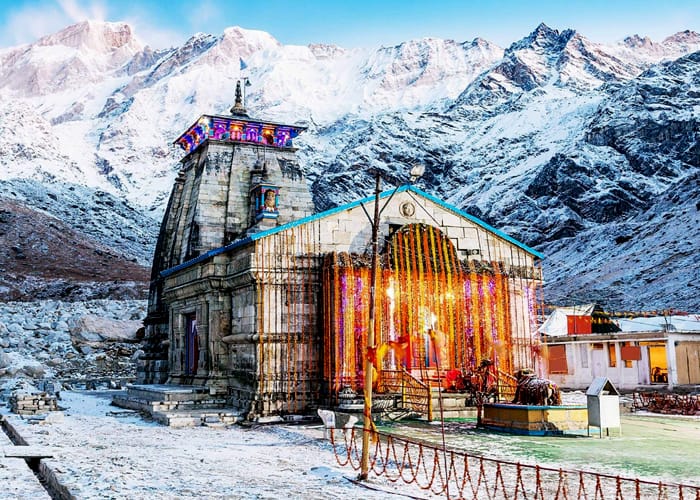
Located in the lush valley of the Garhwal Himalayas, Kedarnath is an ancient Shiva temple. Important for being a part of the Chota Char Dham Yatra of Uttarakhand, the temple receives a heavy footfall of devotees during the yatra. It is also believed that Lord Shiva used to stay here with Goddess Parvati before heading to Amarnath cave. The foundation was laid by the Pandava brothers. It was later on revived by the 8th-century propagator of Advaita Vedanta, Adi Shankaracharya. The presiding deity is worshipped in the form of a triangular rock. The temple is located on the banks of the holy Mandakini River and against the stunning backdrop of the Kedar dome range of mountains.
- Location: Rudraprayag district, Uttarakhand — 3,583 metres (11,755 feet) above sea level
- Nearby Attractions: Gaurikund, Vasuki Tal, Bhairav Nath Temple, Chorabari Lake
- Highlight: One of the 12 Jyotirlingas and Char Dham; temple open May to November only
- Timings: 4:00 AM – 9:00 PM (May to November)
- Entry: Free; donations as per wish
Click Here to Enquiry for: Chardham Yatra by Helicopter
2. Shri Amarnath Cave Temple (Jammu and Kashmir)
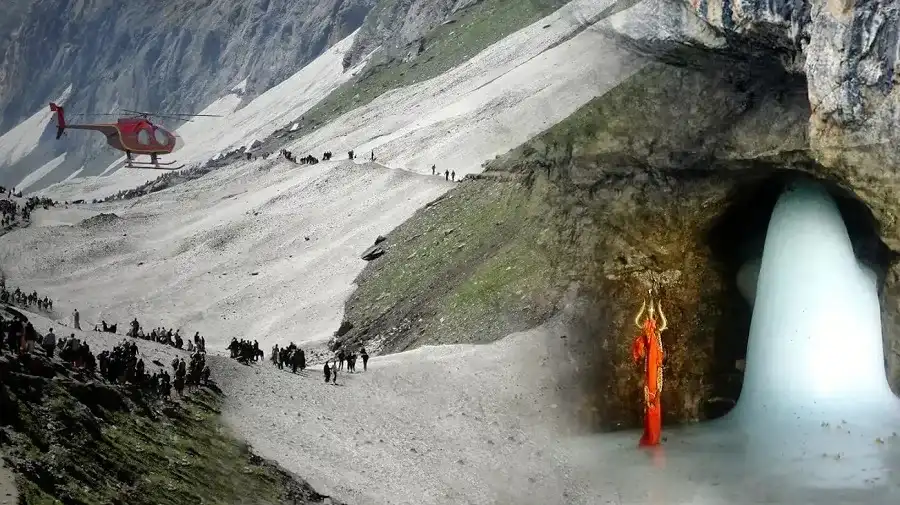
The cave temple of Amarnath is unique in every sense. Located in the remote location of Jammu Kashmir, this cave temple is the focal point for the Amarnath Yatra. Each year scores of devotees make the gruelling and challenging pilgrimage to offer their prayer to Lord Shiva. This pilgrimage is a testament to the pure devotion of the pilgrims. The route is a high-altitude challenging way that tests the emotional and physical boundaries of every devotee. The shrine represents an important part of Hinduism. This is because it was here that the Lord had revealed the secret of immortality to his consort Goddess Parvati.
- Location: Pahalgam / Baltal route, Anantnag district, J&K — 3,888 metres (12,756 feet)
- Nearby Attractions: Pahalgam, Chandanwari, Sheshnag Lake, Mahagunas Top
- Highlight: Natural ice Shivlinga forms every year; pilgrimage open July–August (dates vary)
- Timings: Yatra season only (registration required via Shri Amarnathji Shrine Board)
- Entry: Registration fee applies; check Shrine Board website
3. Lingaraj Temple (Odisha)
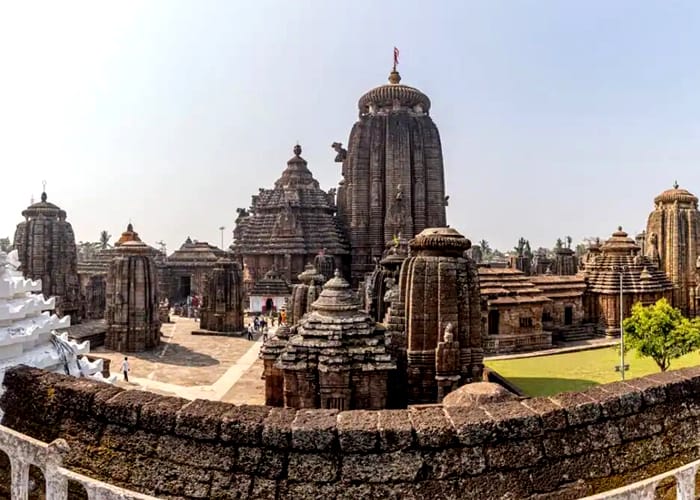
Dedicated to the Harihara incarnation of Lord Shiva, the Lingaraja Temple is known for its impressive Kalinga style of architecture. This temple is a must-visit for everyone. Constructed by the Somavamsi Dynasty rulers, the temple complex is large and very well done. It is also one of the must-visit places in Bhubaneswar. The temple is named after the lingam form of Lord Shiva. A part of the temple was built during the 6th century and later on completed to its present form by the last decade of the 11th century. Made up of laterite and sandstone that gives the temple its classic red hue, the temple is a must-visit for every Shiva devotee.
- Location: Bhubaneswar, Odisha
- Nearby Attractions: Mukteshwar Temple, Rajarani Temple, Odisha State Museum
- Highlight: 55-metre Kalingan style shikhara; Maha Shivratri festival draws lakhs of devotees
- Timings: 6:00 AM – 9:00 PM
- Entry: Free; non-Hindus may view from a designated platform
4. Shore Temple (Tamil Nadu)
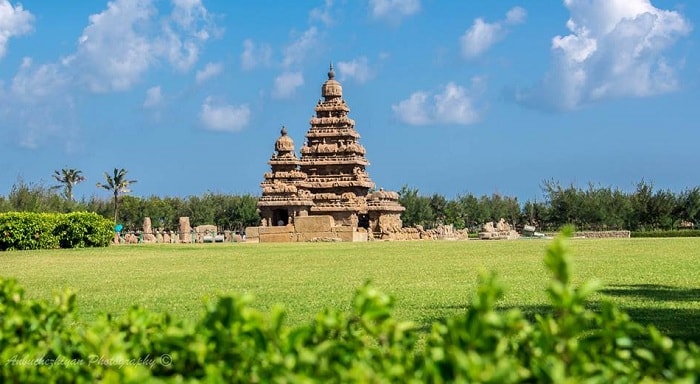
Overlooking the Bay of Bengal, the Shore Temple of Mahabalipuram was built from 700–728 AD. The unmatched architectural beauty of the temple has stood the test of time. As a part of one of the groups of monuments at Mahabalipuram, it has been included in the UNESCO World Heritage Site. During ancient times, the Shore Temple used to act as a landmark for the Mahabalipuram port to trading ships. The two main temples here are dedicated to Lord Shiva while one small temple in the complex is dedicated to Lord Vishnu.
- Location: Mahabalipuram (Mamallapuram), Kanchipuram district, Tamil Nadu
- Nearby Attractions: Five Rathas, Arjuna’s Penance rock relief, Mahabalipuram Beach
- Highlight: UNESCO World Heritage Site; one of the oldest structural stone temples in South India (700–728 AD)
- Timings: 6:00 AM – 6:00 PM
- Entry: ₹40 per person (Indians); ₹600 (foreigners)
5. Baba Baidyanath Temple (Jharkhand)
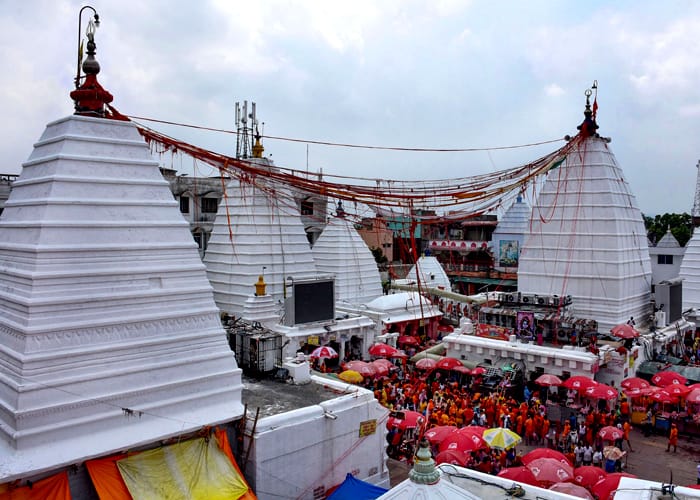
Located in Deoghar, as the name suggests, the temple is dedicated to the Lord of medicine. It is derived from the Hindu term ‘Vaidya’ and ‘Nath.’ The humble-looking, stunning white temple is also a part of the 12 Jyotirlinga. As per Hindu legends, it’s believed that the demon king Ravana used to perform his meditation and puja rituals at the current temple site, to please Lord Shiva and gain his boons. This temple also springs to life during the annual Kanwar Yatra where the devotees or Kanwarias offer Gangajal to Lord Shiva here.
- Location: Deoghar, Jharkhand
- Nearby Attractions: Nandan Pahad, Trikoot Parvat, Satsang Ashram
- Highlight: One of 12 Jyotirlingas; Kanwar Yatra during Shravan month draws millions
- Timings: 4:00 AM – 9:00 PM
- Entry: Free
6. Trimbakeshwar Temple (Maharashtra)
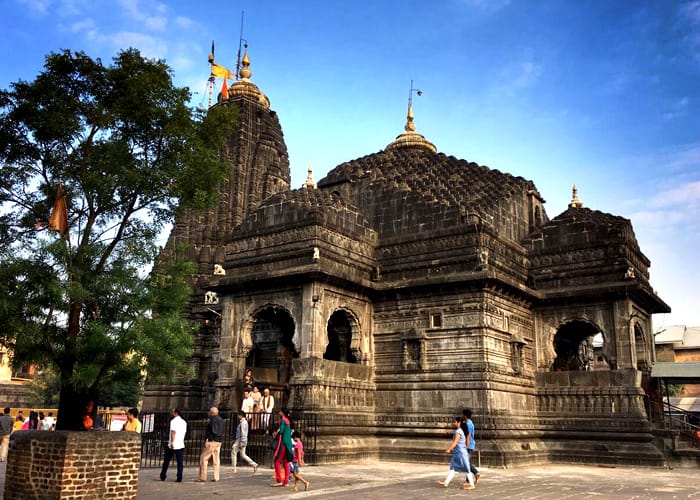
Dedicated to Lord Shiva and famous as one of the 12 Jyotirlinga temples. It is located on the origin point of the holy Godavari River and the current temple is recorded to have been built by Peshwa Balaji Bajirao. The temple houses 3 lingas dedicated to Brahma, Vishnu, and Mahesh. These 3 lingas are adorned with various precious gems and expensive metals like gold. Situated 28 km away from Nashik, the temple is built in a traditional Hemadpanthi style of architecture. Made entirely of black stone, its appealing architecture and impressive sculptures add beauty to the foothills of Brahmagiri.
- Location: Trimbak, 28 km from Nashik, Maharashtra
- Nearby Attractions: Brahmagiri hill, Godavari source, Gangadwar
- Highlight: Only Jyotirlinga with three-faced linga (Brahma, Vishnu, Mahesh); Kumbh Mela site
- Timings: 5:30 AM – 9:00 PM
- Entry: Free
Suggested Tour: Maharashtra Jyotirlinga Yatra Package
7. Mahakaleshwar Temple (Madhya Pradesh)
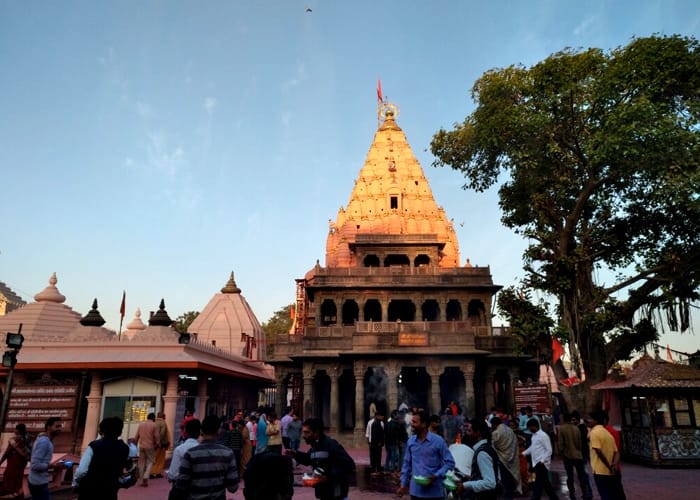
Mahakaleshwar Temple is a Hindu Shiva temple and is considered to be one of the most sacred of all Shiva abodes in the world. Located in the ancient city of Ujjain, the temple graces the banks of the holy river Shipra. The presiding deity is worshipped in the form of a Swayambhu, which means that it has been formed on its own. For this reason, this Shiva temple is also a part of the 12 Jyotirlinga. Mahakaleshwar is also a very important and powerful Jyotirlinga. This is a must-see place among Shiva devotees as well as people spending their holiday in Ujjain.
- Location: Ujjain, Madhya Pradesh, on the banks of river Shipra
- Nearby Attractions: Kal Bhairav Temple, Sandipani Ashram, Ram Ghat, Harsiddhi Temple
- Highlight: Only south-facing (Dakshin Mukhi) Jyotirlinga; famous Bhasma Aarti at dawn
- Timings: 4:00 AM – 11:00 PM
- Entry: Free
8. Somnath Temple (Gujarat)
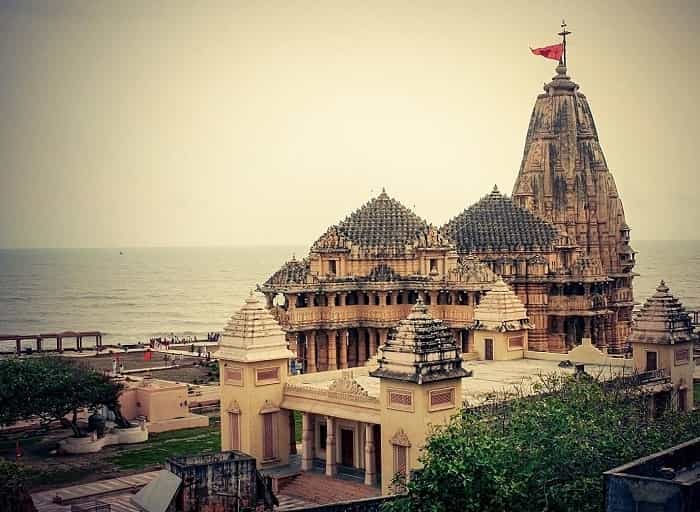
Gujarat is known for its delicious food, humble people, rich history, and iconic temples. Somnath Mahadev Temple has to be one of the top places of Shiva worship. This Jyotirlinga is situated in Prabhas Patan and is a very sacred pilgrimage site for Hindus. The Arabian Sea waves crashing against the temple boundary walls are a sight to behold. Constructed in a typical Hindu temple architecture style, Somnath’s history is dynamic. It has been constructed, destroyed, and reconstructed multiple times over the centuries — historical records document at least six major reconstructions. The foundation of the temple was laid between the 1st millennia to 9th century. The temple complex also consists of a museum and a sound and light show that takes place every evening.
- Location: Prabhas Patan (Veraval), Saurashtra, Gujarat
- Nearby Attractions: Bhalka Tirth, Gita Mandir, Triveni Sangam, Somnath Beach
- Highlight: First of 12 Jyotirlingas; daily Light & Sound Show at 8:00 PM
- Timings: 6:00 AM – 9:00 PM
- Entry: Free; Light & Sound Show: ₹30 adults, ₹10 children
Click Here to Enquiry for Dwarka Somnath Trip Plan
9. Tarakeshwar Temple (West Bengal)
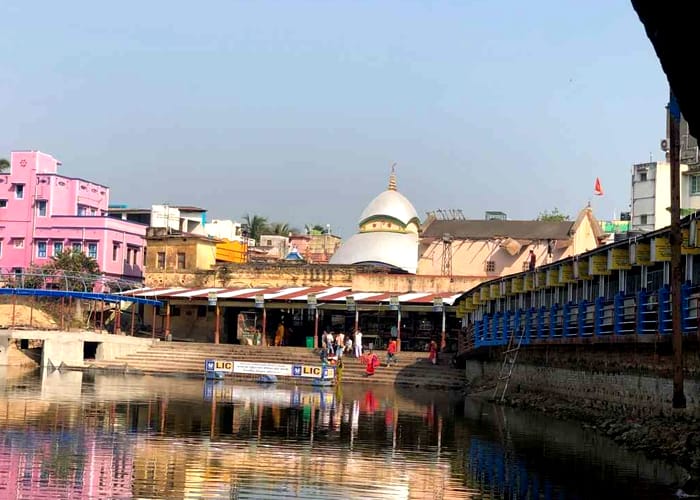
Located in West Bengal, the Taraknath Temple is a major pilgrimage centre for Lord Shiva in the state. The temple graces a small part of the holy Hooghly River. Its traditional Bangla style of architecture makes it a very unique Shiva temple. The temple also houses a small water tank. People say taking a dip in it would please the Lord and he will grant the devotee whatever their heart desires. The presiding deity is the Ugra form of Lord Shiva who drank the poison that had come up during Samudra Manthan. The linga worshipped in the temple was discovered in the nearby Tarakeshwar region.
- Location: Tarakeshwar, Hooghly district, West Bengal
- Nearby Attractions: Hooghly Imambara, Bandel Church, Triveni Sangam
- Highlight: Famous healing water tank (Dukhi Kunda); major Shiva Chaturdashi festival
- Timings: 5:00 AM – 9:30 PM
- Entry: Free
10. Kashi Vishwanath Temple (Uttar Pradesh)
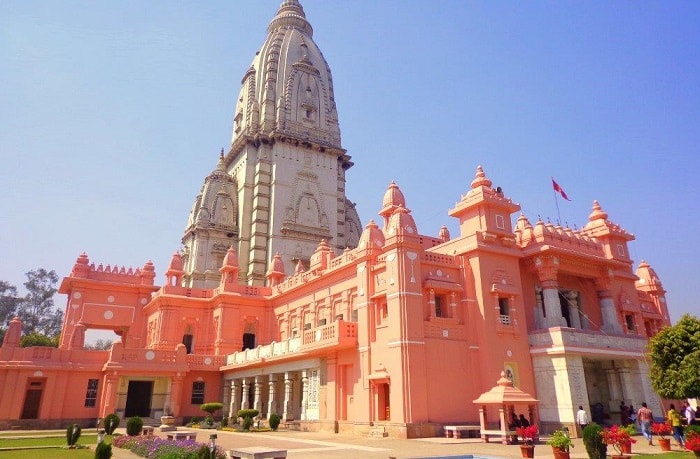
When it comes to iconic ancient Shiva temples, Kashi Vishwanath Mandir deserves a special mention. Situated in Devbhoomi Varanasi, the temple stands on the western bank of the holy Ganga River. The temple is an integral part of Shiva worship and pilgrimage. The lord is worshipped in the form of Vishwanath Ji — the lord of the universe. The temple has been through a long history of demolition by the Mughal emperors. However, the temple always got remade, with the current structure being built by Ahilyabai Holkar of Indore in 1780. Other than its rich historical value, the defining feature of the temple is its 15.5-metre high gold spire and a pure gold dome donated by Maharaja Ranjit Singh. The temple has also been graced by the esteemed presence of notable saints like Adi Shankaracharya, Ramakrishna Paramahamsa, Swami Vivekananda, and many more.
- Location: Vishwanath Gali, Varanasi, Uttar Pradesh (7th Jyotirlinga)
- Nearby Attractions: Dashashwamedh Ghat, Ganga Aarti, Kashi Vishwanath Corridor, Kaal Bhairav Temple
- Highlight: The Kashi Vishwanath Corridor (inaugurated 2021) connects the temple to the Ganga ghats
- Timings: 3:00 AM – 11:00 PM
- Entry: Free
11. Omkareshwar Temple (Madhya Pradesh)
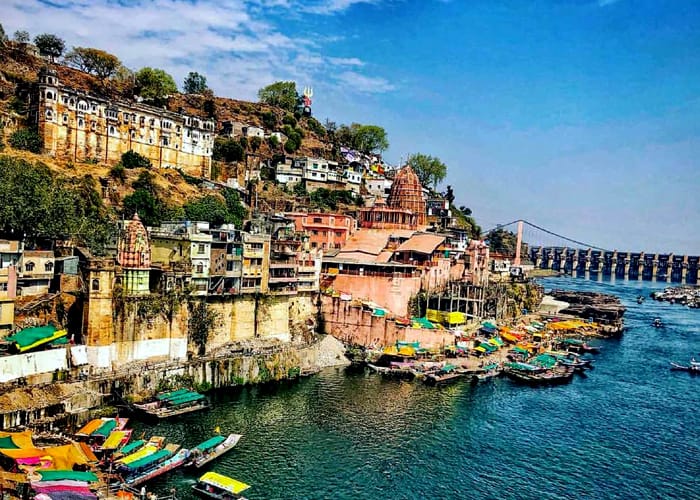
Dedicated to the Hindu Lord Shiva, in Khandwa, Madhya Pradesh, this temple is one of the 12 most highly revered Jyotirlinga in India. As the name suggests, the temple is dedicated to the Omkar form of Shiva — the lord of the ‘Om’ sound. The temple is on an island called Mandhata which is a holy island supposed to be in the shape of the ‘Om’ symbol. The puja rituals here are highly elaborate. The deity is worshipped thrice a day by 3 different priests. The presiding idol of the lord is presented in the form of a 3-headed lingam which has its own mythical importance. According to legends, Lord Shiva is said to have appeared in front of Vindya after being pleased with his worship.
- Location: Mandhata Island, Narmada River, Khandwa, Madhya Pradesh
- Nearby Attractions: Siddhanath Temple, Mamleshwar Temple, Gauri Somnath Temple, Narmada boat rides
- Highlight: Om-shaped island; 3-headed lingam; boat rides around the sacred island
- Timings: 5:00 AM – 9:30 PM
- Entry: Free; boat rides paid separately
12. Mallikarjuna Swamy Temple (Andhra Pradesh)
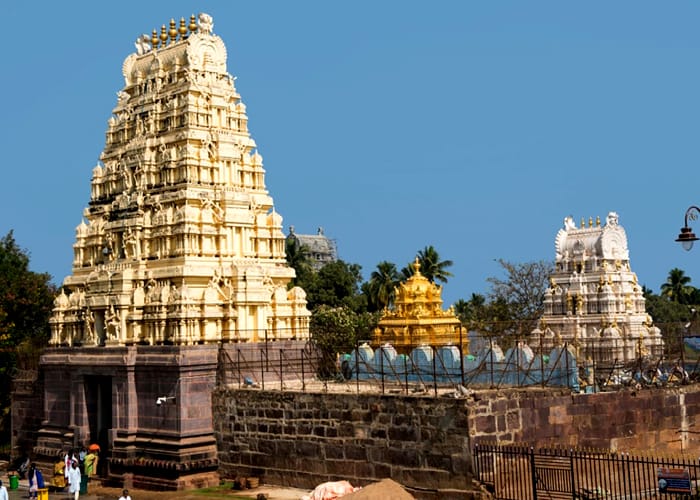
Located in the holy town of Srisailam, and yet another part of the holy Jyotirlinga pilgrimage, this temple is a stunning work of art. Built in a traditional South Indian style of architecture and topped off with a dazzling pure gold roof, the temple is one of a kind. Here, Goddess Parvati is worshipped as Mallika while Shiva is worshipped as Arjuna. It is said that just a darshan of the lord at this temple will grant the devotees moksha. Being located right next to a river has its perks. Every day the presiding lingam of Lord Shiva is bathed with its water.
- Location: Srisailam, Nallamala Hills, Andhra Pradesh
- Nearby Attractions: Srisailam Dam, Bhramaramba Devi Temple, Akkamahadevi Caves
- Highlight: Only place with both Jyotirlinga and Shakti Peetha; gold-plated Vimana
- Timings: 4:30 AM – 10:00 PM
- Entry: Free
13. Brihadeshwara Temple (Tamil Nadu)
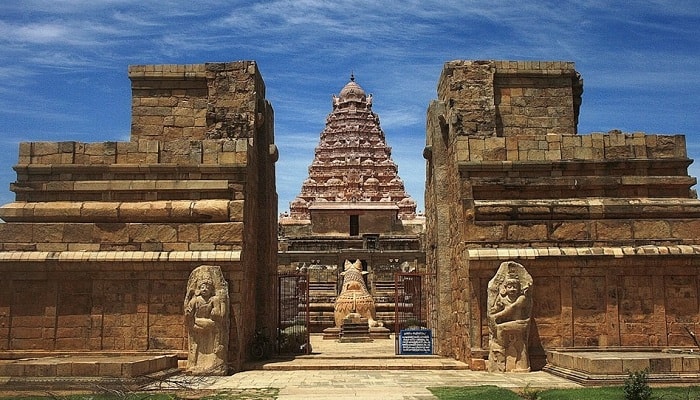
Located on the right bank of the holy Kaveri River, Brihadeshwara Temple is one of the largest Hindu temples in the world. The Tamil architecture utilised in its creation is an exemplary example of exquisite design. The temple, dedicated to Lord Shiva, was built by the Chola emperor Rajaraja I between 1003 and 1010 CE. It is a part of the UNESCO World Heritage Site as part of the Great Living Chola Temples. The term Brihadeshwara dissects into the meaning ‘great lord big Shiva’ temple. The main temple is built entirely in granite with a magnificent Vimana (tower over the sanctum) rising to 216 feet (66 metres) — one of the tallest temple towers in India. The apex Stupi at the summit weighs approximately 80 tons and was placed using an ingenious ramp system by Chola craftsmen.
Note: Vimana height is 216 feet (66 metres) — not 200 feet as sometimes stated. The temple was built by Rajaraja I as an expression of Chola imperial glory between 1003–1010 CE.
- Location: Thanjavur, Tamil Nadu
- Nearby Attractions: Brihadeeswarar Temple Museum, Thanjavur Palace, Saraswati Mahal Library
- Highlight: UNESCO World Heritage Site (1987); 216 ft Vimana; largest Shivalinga in India
- Timings: 6:00 AM – 12:30 PM | 4:00 PM – 8:30 PM
- Entry: Free
14. Tungnath Mahadev Temple (Uttarakhand)
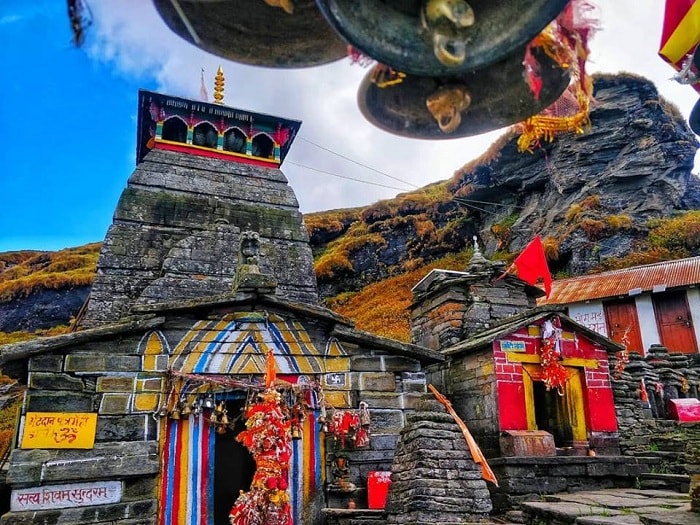
Tungnath Mahadev is famous the world over as the highest Shiva temple. Located in the upper reaches of the Garhwal Himalayas at 3,680 metres (12,073 feet), the temple holds a lot of importance. The term Tungnath literally translates into ‘Lord of the Peaks.’ Surrounded by serene mountain beauty, the temple looks eerily similar to Kedarnath. The foundation for this temple was laid by the Pandava brothers while they were out looking for Lord Shiva. The temple is reached after a trek of approximately 3.5 km from Chopta through a well-paved stone path of alpine meadows. Walking 1.5 km further from the temple site will open up Chandrashila top — which offers mind-blowing views of the surrounding snow-clad mountain ranges that will amp up the spiritual vibes. The temple can be easily visited by family and people who love adventure.
- Location: Rudraprayag district, Uttarakhand — 3,680 m (12,073 ft), world’s highest Shiva temple
- Nearby Attractions: Chandrashila Peak (1.5 km further), Chopta meadows, Deoria Tal
- Highlight: 3rd Panch Kedar; world’s highest Shiva temple; trek from Chopta: 3.5 km
- Timings: 6:00 AM – 7:00 PM (May to November only)
- Entry: Free
15. Da Parbatia Temple (Assam)
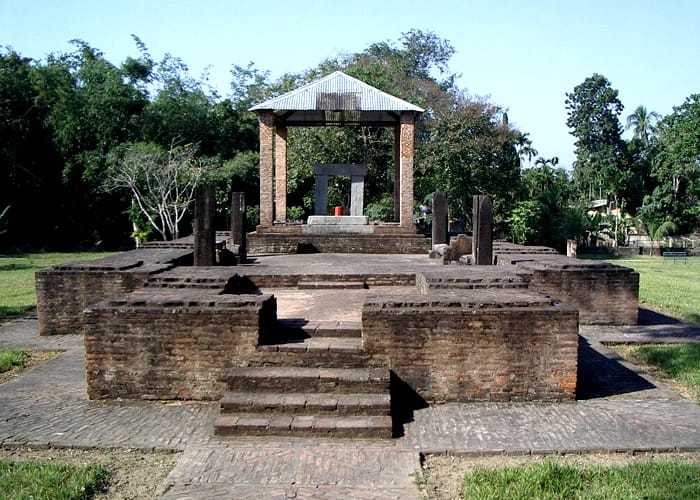
Located in a small village just a couple of km away from Tezpur, Da Parbatia is one of the oldest Hindu temples in Assam. Built during the 5th–6th century, the temple is now categorised as a protective site under the Archaeological Survey of India. The temple is said to have been buried under rubble and bricks as a result of a violent earthquake. Later on, by the 1980s, the temple was properly excavated. It revealed that the temple contained several marvellous works of art. The intricate carvings and fine engravings on the temple walls and doorway represent the rich history India is home to.
- Location: Near Tezpur, Sonitpur district, Assam
- Nearby Attractions: Agnigarh Hill, Cole Park, Chitralekha Udyan, Tezpur
- Highlight: One of the oldest Hindu temples in Assam (5th–6th century CE); ASI-protected monument
- Timings: Sunrise to Sunset
- Entry: Free
16. Murudeshwar Temple (Karnataka)
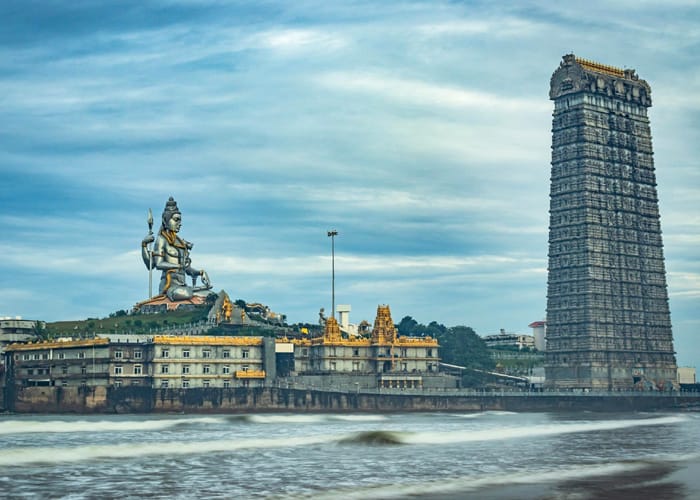
Murudeshwar is one of those Shiva temples that will take your breath away in one glance. Sitting peacefully next to the roaring sea is a magnificent Shiva statue in a yogi position. This statue is famous for being one of the tallest Shiva statues in the world. The temple is located in the sacred Kanduka hills which are surrounded on 3 sides by the Arabian Sea. The entire temple surface is decorated with intricate and detailed carvings. Although the temple compound has been modernised, the sanctum of the temple is made in traditional style. The legend of this temple revolves around demon king Ravana and his experience with Lord Shiva.
- Location: Murudeshwar, Bhatkal taluk, Uttara Kannada, Karnataka
- Nearby Attractions: Netrani Island (diving), Om Beach Gokarna, Mirjan Fort
- Highlight: One of the tallest Shiva statues in the world; temple surrounded by Arabian Sea on 3 sides
- Timings: 6:00 AM – 8:30 PM
- Entry: Free
17. Vadakkunnathan Temple (Kerala)
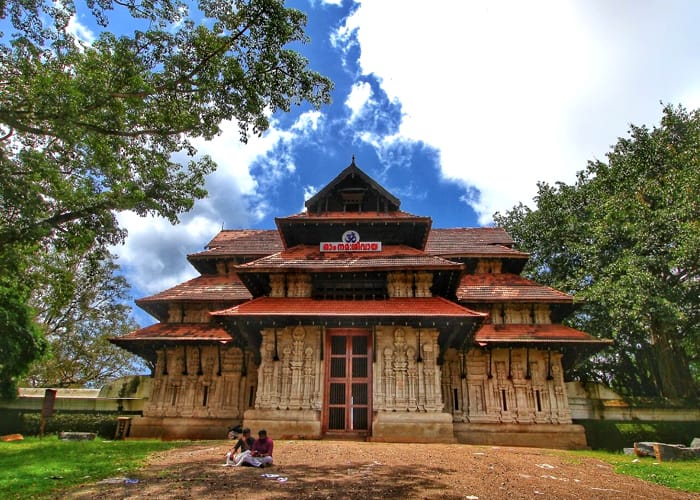
This ancient Hindu temple dedicated to Lord Shiva is located in Thrissur. The temple is known for its aesthetic values. Famous as one of the oldest temples in Kerala, Vadakkunnathan Temple is an Ancient Monument protected by the Archaeological Survey of India (ASI). The murals and paintings decorated on the walls of the temples are 400–1000 years old. Along with a Shiva shrine, a shrine dedicated to Lord Vishnu is also created inside the temple. The temple is situated on top of a small hillock and spread out over an area of 9 acres. Reflecting the art and culture of the heritage of Kerala, there is a small museum also located within the temple premises.
Note: This temple is an ASI-protected Ancient Monument. It is not on the UNESCO World Heritage Site list.
- Location: Thrissur, Kerala
- Nearby Attractions: Kerala Sahitya Akademi, Thrissur Zoo, Shakthan Thampuran Palace
- Highlight: Thrissur Pooram festival (world’s most spectacular temple festival) is centred here
- Timings: 4:00 AM – 10:30 AM | 5:00 PM – 8:30 PM
- Entry: Free; non-Hindus cannot enter the main sanctum
18. Ramanathaswamy Temple (Tamil Nadu)
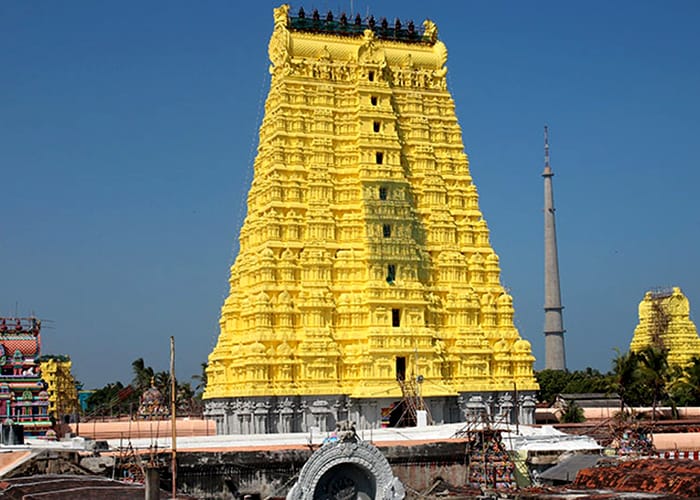
Situated on the spiritually evoking island of Rameswaram, Ramanathaswamy Temple is a majestic Shiva temple. It is also a part of the holy Char Dham Yatra along with Badrinath, Dwarkadheesh, and Jagannath Temple. The temple foundation and the Shivling were established by Lord Ram himself. He created the temple here as a place of Shiva worship before heading for war against Ravana in Lanka. The temple is exquisite in every sense — from the grand exteriors to the incredibly mind-boggling interior design. Every pillar and wall is intricately carved with elaborate designs and colourful paint that enhances the unmatched beauty of the entire surroundings.
- Location: Rameswaram island, Tamil Nadu (11th Jyotirlinga)
- Nearby Attractions: Dhanushkodi, Pamban Bridge, Agnitheertham, Adam’s Bridge
- Highlight: Longest temple corridor in the world (1,220 m); Char Dham and Jyotirlinga together
- Timings: 5:00 AM – 9:00 PM
- Entry: Free
19. Baba Bhootnath Mandir (Himachal Pradesh)
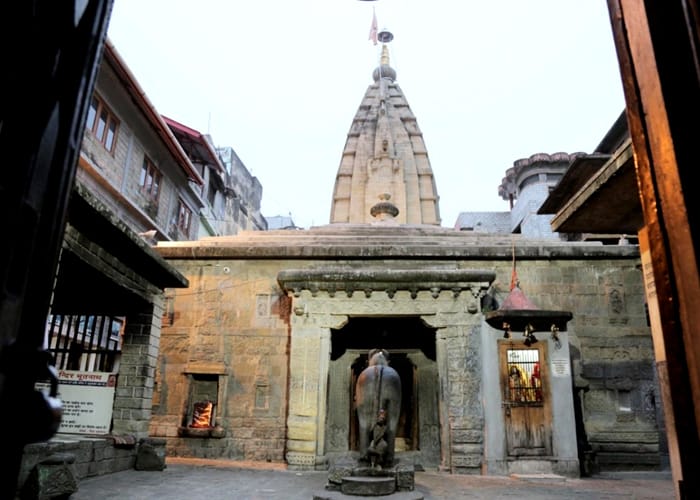
Bhootnath Temple was built by Raja Ajber Sen during the 15th century in the heart of Mandi, Himachal Pradesh . As per folklore, Lord Shiva had appeared in the king’s dream and directed him to extricate a Shivling from the earth. The temple serves as a centre of religious and cultural activity in Mandi. The Shivratri festival at Bhootnath Temple is one of the most celebrated events in Himachal Pradesh, attracting devotees from across the region.
- Location: Mandi, Himachal Pradesh
- Nearby Attractions: Rewalsar Lake, Prashar Lake, Pandoh Dam, Mandi Bazaar
- Highlight: International Mandi Shivratri Fair — one of the biggest festivals in Himachal Pradesh
- Timings: 6:00 AM – 8:00 PM
- Entry: Free
20. Chidambaram Nataraja Temple (Tamil Nadu)
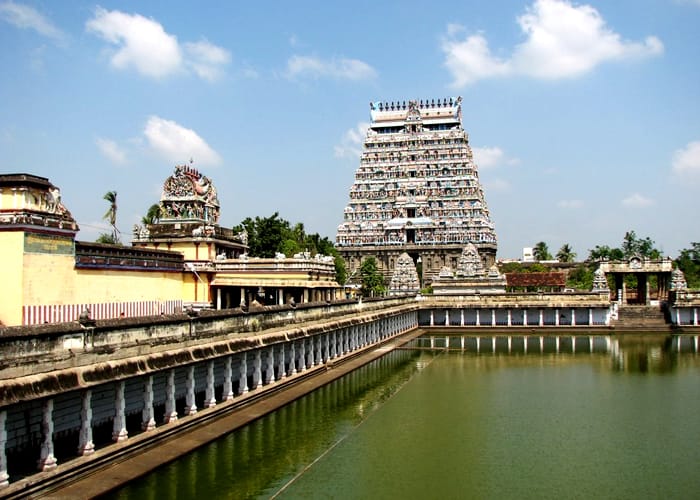
The Chidambaram Nataraja Temple is one of the most spiritually significant Shiva temples in India. Dedicated to Lord Shiva in his Nataraja (cosmic dancer) form, this temple is one of the Pancha Bhuta Stalas — representing the element of Akasha (space/ether). The temple complex is one of the largest in South India, with four massive gopurams (gateway towers) at the cardinal directions covered in sculptural detail. According to legend, Lord Shiva performed the Ananda Tandava (dance of bliss) at Chidambaram. The golden-roofed inner sanctum is revered as one of the most sacred spots in all of Tamil Nadu.
- Location: Chidambaram, Cuddalore district, Tamil Nadu
- Nearby Attractions: Pichavaram Mangrove Forest, Thillai Kali Amman Temple, Muthupet Lagoon
- Highlight: Pancha Bhuta Stala (Akasha/Space); Nataraja as cosmic dancer; one of the oldest active temples
- Timings: 6:00 AM – 12:00 PM | 5:00 PM – 10:00 PM
- Entry: Free
20 Famous Shiva Temples in India – Quick Reference
| Temple |
Location |
Type |
Timings |
| Kedarnath |
Rudraprayag, Uttarakhand |
Jyotirlinga + Char Dham |
4 AM–9 PM (May–Nov) |
| Amarnath |
Anantnag, J&K |
Cave temple; Yatra site |
Yatra season only |
| Lingaraj |
Bhubaneswar, Odisha |
11th century Kalinga |
6 AM–9 PM |
| Shore Temple |
Mahabalipuram, TN |
UNESCO Heritage (700 AD) |
6 AM–6 PM |
| Baidyanath |
Deoghar, Jharkhand |
Jyotirlinga (9th) |
4 AM–9 PM |
| Trimbakeshwar |
Nashik, Maharashtra |
Jyotirlinga (11th) |
5:30 AM–9 PM |
| Mahakaleshwar |
Ujjain, MP |
Jyotirlinga (3rd, S-facing) |
4 AM–11 PM |
| Somnath |
Veraval, Gujarat |
Jyotirlinga (1st) |
6 AM–9 PM |
| Tarakeshwar |
Hooghly, West Bengal |
Bangla style Shiva shrine |
5 AM–9:30 PM |
| Kashi Vishwanath |
Varanasi, UP |
Jyotirlinga (7th) |
3 AM–11 PM |
| Omkareshwar |
Khandwa, MP |
Jyotirlinga (4th); Om island |
5 AM–9:30 PM |
| Mallikarjuna |
Srisailam, AP |
Jyotirlinga + Shakti Peetha |
4:30 AM–10 PM |
| Brihadeshwara |
Thanjavur, TN |
UNESCO; 216 ft Vimana |
6 AM–12:30 PM | 4–8:30 PM |
| Tungnath |
Rudraprayag, UK |
World’s highest (3,680 m) |
6 AM–7 PM (May–Nov) |
| Da Parbatia |
Tezpur, Assam |
5th–6th c; ASI monument |
Sunrise–Sunset |
| Murudeshwar |
Uttara Kannada, KA |
Tallest Shiva statue |
6 AM–8:30 PM |
| Vadakkunnathan |
Thrissur, Kerala |
ASI-protected; Kerala arch. |
4 AM–10:30 AM | 5–8:30 PM |
| Ramanathaswamy |
Rameswaram, TN |
Jyotirlinga + Char Dham |
5 AM–9 PM |
| Baba Bhootnath |
Mandi, Himachal Pradesh |
15th century; Shivratri Fair |
6 AM–8 PM |
| Chidambaram |
Cuddalore dist., TN |
Pancha Bhuta Stala (Akasha) |
6 AM–12 PM | 5–10 PM |
Conclusion
From the snow-kissed Kedarnath and world’s highest Tungnath in Uttarakhand to the coastal Somnath in Gujarat, the architectural grandeur of the Brihadeshwara Temple in Tamil Nadu, and the ancient cave shrine of Amarnath in Kashmir — these 20 famous Shiva temples of India offer some of the most profound spiritual, historical, and cultural experiences on earth.
Whether you are embarking on a Jyotirlinga Yatra, planning a Char Dham pilgrimage, or simply seeking the divine blessings of Mahadev — each of these sacred Shiva temples in India connects you to millennia of devotion, mythology, and the eternal presence of Lord Shiva.
Frequently Asked Questions
Q1. What are the most famous Shiva temples in India?
The most famous Shiva temples include all 12 Jyotirlingas (Somnath, Kashi Vishwanath, Kedarnath, Mahakaleshwar, Omkareshwar, Trimbakeshwar, Rameshwaram, Baidyanath, Nageshwar, Grishneshwar, Bhimashankar, Mallikarjuna), plus Tungnath (world’s highest), Amarnath, Brihadeshwara, Chidambaram, Murudeshwar, and Lingaraj.
Q2. How many Shiva temples are there in India?
India has hundreds of thousands — lakhs — of Shiva temples across every state. Among these, 12 Jyotirlingas, 5 Panch Kedar temples, and 5 Pancha Bhuta Stalas hold the highest religious significance. The total number of Lord Shiva shrines across India is uncountable as nearly every town and village has at least one Shiv mandir.
Q3. Which is the biggest Shiva temple in India?
By architectural scale, the Brihadeshwara Temple in Thanjavur, Tamil Nadu, is among the largest. Its Vimana (tower) stands 216 feet (66 metres) tall — one of the tallest in India. The Ramanathaswamy Temple in Rameswaram has the longest temple corridor in the world at approximately 1,220 metres.
Q4. Which is the highest Shiva temple in the world?
Tungnath Temple in Rudraprayag district, Uttarakhand, is the world’s highest Shiva temple at 3,680 metres (12,073 feet). It is the 3rd Panch Kedar temple and is reached by a 3.5 km trek from Chopta.
Q5. What is the altitude difference between Tungnath and Kedarnath?
Tungnath is at 3,680 metres (12,073 feet) and Kedarnath is at 3,583 metres (11,755 feet). The difference is approximately 97 metres (318 feet) — not merely a couple of feet as sometimes stated.
Q6. Is Vadakkunnathan Temple a UNESCO World Heritage Site?
No. Vadakkunnathan Temple in Thrissur, Kerala, is an Ancient Monument protected by the Archaeological Survey of India (ASI). It is not a UNESCO World Heritage Site. The UNESCO-listed Shiva temples are the Great Living Chola Temples in Tamil Nadu (Brihadeshwara, Gangaikondacholapuram, Airavatesvara).
Q7. What are the 12 Jyotirlingas of Lord Shiva?
The 12 Jyotirlingas are: Somnath (Gujarat), Mallikarjuna (Andhra Pradesh), Mahakaleshwar (MP), Omkareshwar (MP), Kedarnath (Uttarakhand), Bhimashankar (Maharashtra), Kashi Vishwanath (UP), Trimbakeshwar (Maharashtra), Vaidyanath (Jharkhand), Nageshwar (Gujarat), Rameshwaram (Tamil Nadu), and Grishneshwar (Maharashtra).
Q8. What is the significance of the Brihadeshwara Temple?
Built by Chola emperor Rajaraja I (1003–1010 CE), the Brihadeshwara Temple in Thanjavur is a UNESCO World Heritage Site (1987). Its Vimana stands 216 feet (66 metres) — one of India’s tallest. The 80-ton apex stone was placed without mortar using Chola engineering ingenuity.
Q9. What is special about Mahakaleshwar Temple in Ujjain?
Mahakaleshwar Temple in Ujjain is the only south-facing (Dakshin Mukhi) Jyotirlinga among the 12. The presiding deity is Swayambhu (self-manifested). The daily Bhasma Aarti at dawn — performed with sacred ash — is one of the most unique and powerful rituals in all of India.
Q10. Can non-Hindus visit Shiva temples in India?
Most Shiva temples in India allow visitors of all religions. However, some restrict entry to Hindus: Lingaraj (Bhubaneswar) allows non-Hindus on a viewing platform only; Kashi Vishwanath has strict entry rules; Vadakkunnathan (Thrissur) restricts non-Hindus from the main sanctum. Always check individual temple policies before visiting.
Q11. What is the best time to visit Shiva temples in India?
October to March is ideal for most Shiva temples. Himalayan temples (Kedarnath, Tungnath, Amarnath) are open May–October/November only. Maha Shivratri (February–March) is the most auspicious time to visit any Shiva temple across India.
Q12. What are the Panch Kedar temples?
The Panch Kedar are five sacred Shiva temples in Garhwal, Uttarakhand: Kedarnath (3,583 m), Tungnath (3,680 m), Rudranath (3,600 m), Madhyamaheshwar (3,497 m), and Kalpeshwar (2,134 m). Each is associated with a part of Lord Shiva’s body from the Pandava legend.
Q13. What is the Shore Temple famous for?
The Shore Temple in Mahabalipuram was built from 700–728 AD and is one of the oldest structural stone temples in South India. It is a UNESCO World Heritage Site as part of the Group of Monuments at Mahabalipuram. Two of its three shrines are dedicated to Lord Shiva; it overlooked the ancient Mahabalipuram port.
Q14. What is the significance of the Amarnath Cave Temple?
The Amarnath Cave Temple in J&K (3,888 m) is where Lord Shiva is said to have revealed the secret of immortality to Goddess Parvati. A natural ice Shivalinga forms inside the cave each year. The annual Amarnath Yatra (July–August) is one of India’s most challenging and spiritually significant pilgrimages.
Q15. What is the Chidambaram Nataraja Temple known for?
The Chidambaram Nataraja Temple in Tamil Nadu is dedicated to Lord Shiva as the cosmic dancer (Nataraja). It is one of the Pancha Bhuta Stalas representing the element of Akasha (space). According to legend, Lord Shiva performed the Ananda Tandava (dance of bliss) here. It has four magnificent gopurams and a golden-roofed sanctum.


 Call
Call Enquiry