


Adi Kailash Tour Package from Delhi with Om Parvat
Home » India » Uttarakhand » Adi Kailash » Adi Kailash Tour Package from Delhi with Om Parvat
 Tour Overview
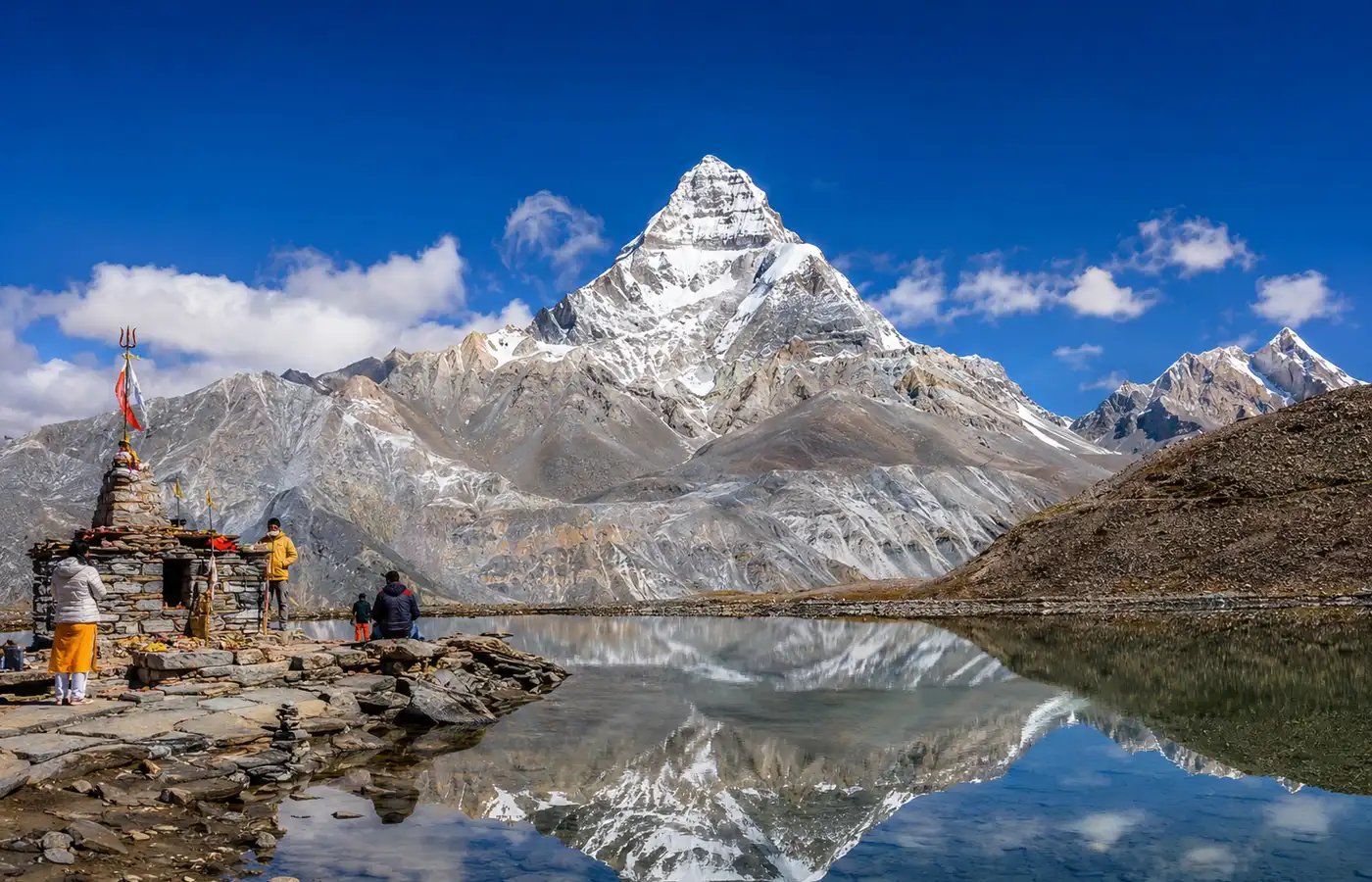
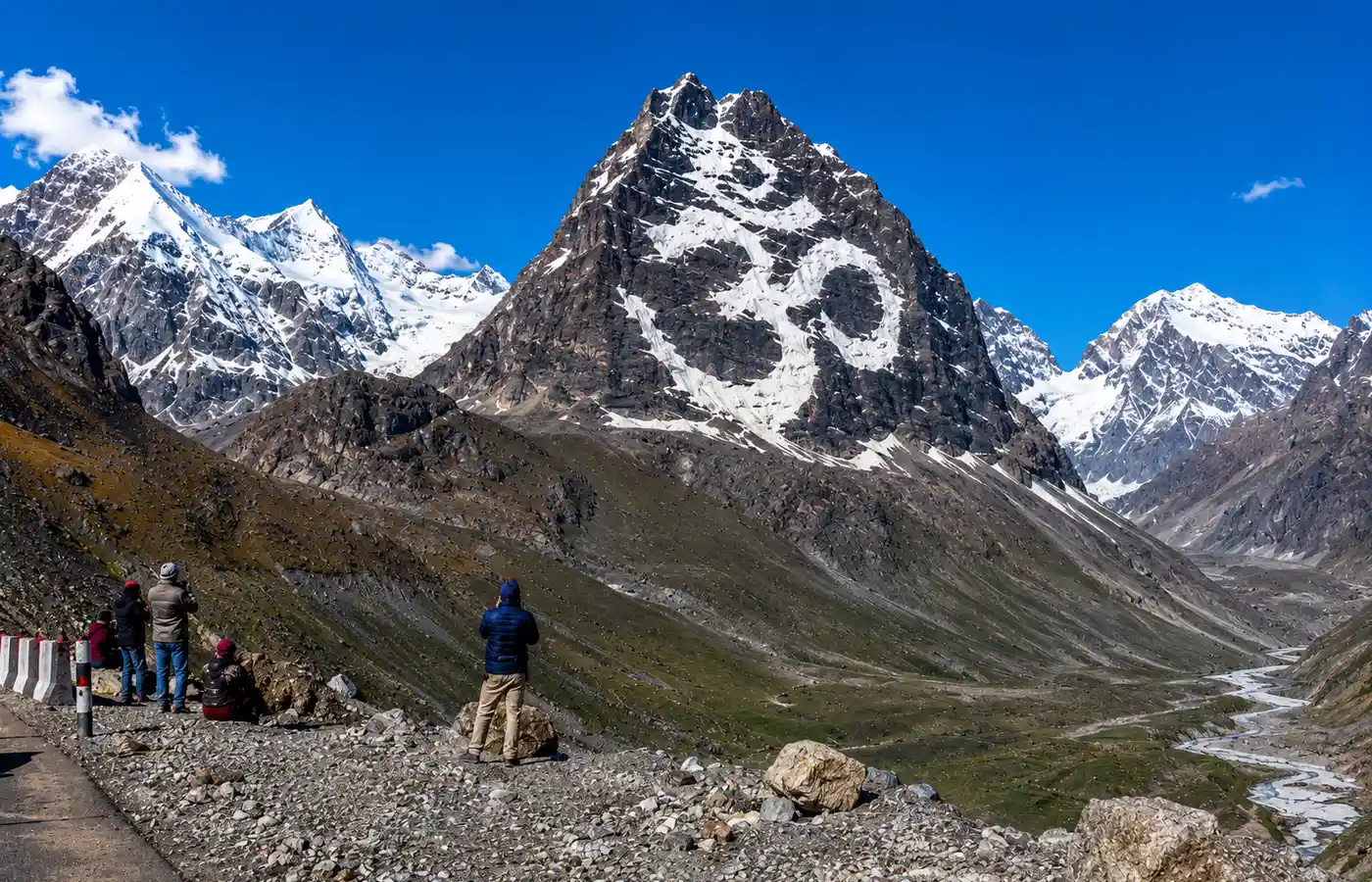
The Adi Kailash Om Parvat Yatra from Delhi takes you to the "Home of Lord Shiva" in the high Himalayas of Uttarakhand. No passport, no Tibet visa. You drive from Delhi through the Kumaon hills to Gunji village on a route built around a tight 7-day frame — though several operators run it over 8 to 9 days if you want a slower acclimatization pace. You stand before Chhota Kailash at Parvati Sarovar, and you watch the "ॐ" that snow forms naturally on the face of Om Parvat. For pilgrims who've wanted a Kailash-style journey but couldn't manage the Tibet logistics, this is the domestic route that gets talked about most. See More
Adi Kailash Yatra: Quick Facts
| Detail | Information |
|---|---|
| Duration | 7 Days / 6 Nights |
| Start / End Point | Delhi |
| Adi Kailash Peak Height | Published sources disagree: 5,945 m (Wikipedia) to 6,191 m (Pithoragarh district government site) |
| Highest Point Reached (Om Parvat viewpoint) | Roughly 4,300–4,500 m at Nabhi-Dhang, depending on the exact point measured |
| Trekking Involved | Short walks around Jyolingkong/Gauri Kund; exact distance depends on current roadhead — largely vehicle-based now, not a multi-day trek |
| Best Time to Visit | May–June and September–October (avoid July–Aug monsoon) |
| Meals | Vegetarian, Breakfast & Dinner |
| Starting Cost | From ₹33,515 per person — operator-supplied, verify before booking |
| Permits Needed | Inner Line Permit (~₹600–800/person) + Medical Fitness Certificate |
| Eligibility | Indian citizens only — ILP is not issued to foreign nationals/NRIs on this route |
Why Adi Kailash and Om Parvat Are So Sacred
Adi Kailash is popularly known as Chhota Kailash or Baba Kailash and is deeply revered in Hindu pilgrimage tradition as an abode of Lord Shiva and Mother Parvati; it's often grouped informally with a set of peaks referred to as the Panch Kailash. Local tradition also links the wider region to legends of Ravana's devotion to Shiva. Whether you take that as literal history or as regional folklore, the reverence pilgrims bring to the site is real either way.
Pilgrims don't summit Adi Kailash — darshan happens from Jyolingkong and Parvati Sarovar, well below the peak, so the exact summit figure matters less on the ground than it does on paper. For what it's worth, published sources don't agree on that figure: Wikipedia lists 5,945 m, while the Pithoragarh district government site lists 6,191 m. We're not going to pretend there's a single verified number when the sources contradict each other. Om Parvat's height is less disputed — 5,590 m at the summit is consistent across the sources we checked — though the Nabhi-Dhang viewpoint where pilgrims actually see it sits lower, somewhere around 4,300–4,500 m depending on the exact spot.
Om Parvat's draw is the "ॐ" that forms where snow settles into the ridgelines of the black rock face. In good light the resemblance to the written symbol is genuinely striking. For pilgrims who can't manage the Tibet journey to Mount Kailash — visa process, cost, time off — Adi Kailash offers a separate, still deeply revered Himalayan pilgrimage that stays entirely within Indian territory.
Vehicle Arrangement on the Route
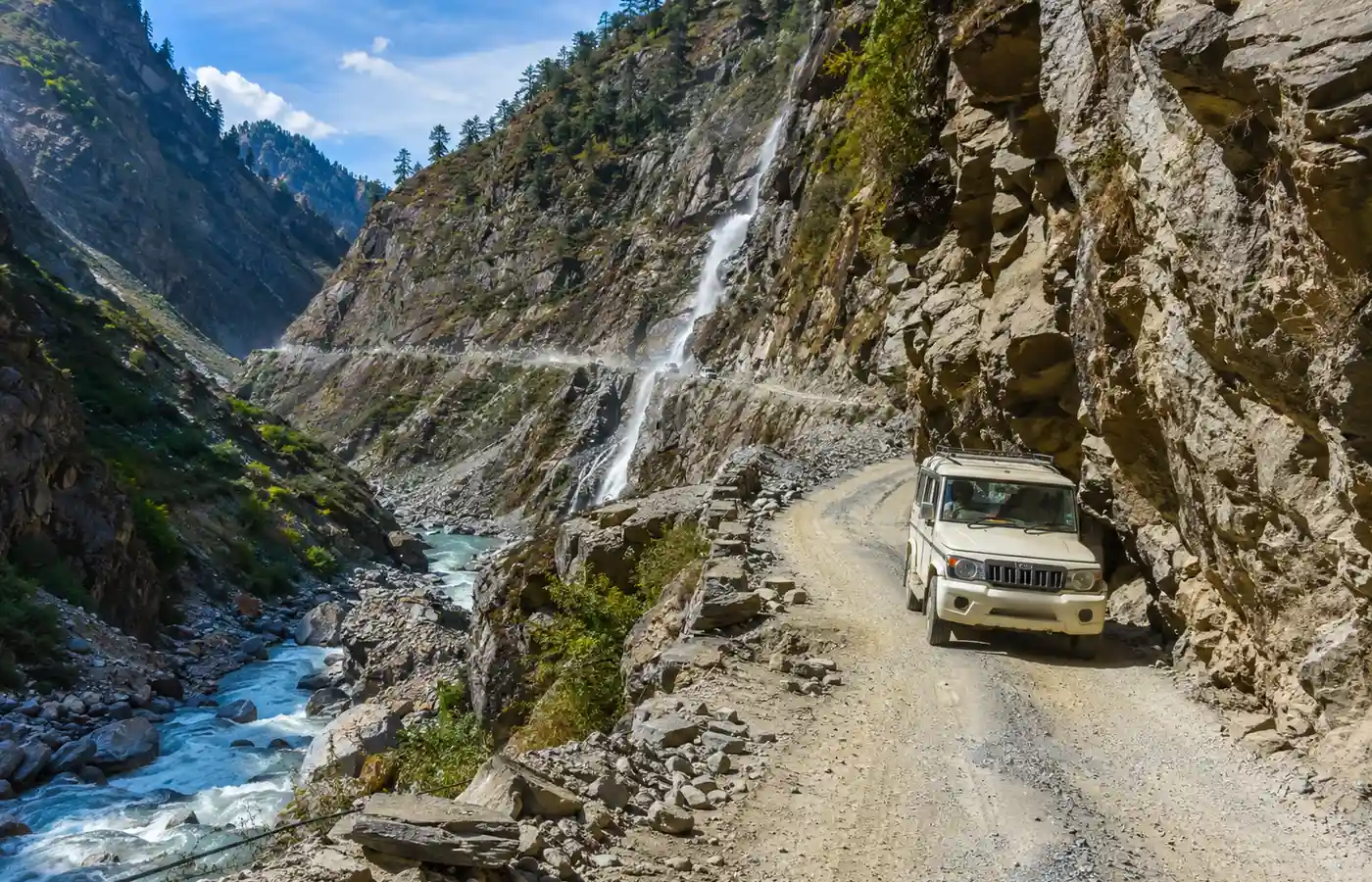
From Delhi to Dharchula, you travel by Sedan, SUV, or Tempo Traveller depending on group size. Beyond Dharchula, the route is restricted Himalayan terrain, and the administration requires suitable local 4x4 vehicles — Bolero and Scorpio-type vehicles are both commonly used, driven by drivers experienced with the mountain roads and checkpoints. Exact vehicle allocation depends on current local arrangements, so confirm with your operator rather than assuming a specific model.
Where You Will Stay
Accommodation moves from proper hotels in the plains to basic homestays in the high villages — that shift is part of the experience, not a downgrade in service.
| City | Standard Category | Deluxe Category | Nights |
|---|---|---|---|
| Pithoragarh | Hotel Jyonar / Shrestha Inn | Sumeru / Pine Resort | 1 |
| Gunji / Nabi | Local Homestay | Wooden Homestay (attached bath) | 2 |
| Dharchula / Didihat / Chaukori | Kailash Manas / Panchachuli Inn | Kailash Hotel / Adi Kailash / KMVN | 1 |
| Bhimtal / Kathgodam / Haldwani | Kumaon Inn | Five Elements / Maplewood Premier | 2 |
Hotel and homestay names above are sample/representative properties, subject to availability and season — confirm your actual booking with the operator. Adi Kailash and Om Parvat sit in a remote, high-altitude region with limited tourism infrastructure, so rooms in Gunji and Nabi are clean, basic homestays, not 5-star properties. Go in expecting that, and it won't feel like a downgrade.
Adi Kailash Om Parvat Yatra Cost (2026)
The Adi Kailash Om Parvat Yatra cost from Delhi depends on your hotel category and group size. Here's the package-level comparison first.
| Package | Cost Per Person | Hotel Type | Best For |
|---|---|---|---|
| Standard | ₹33,515 | Basic / Budget | Cost-conscious pilgrims focused on darshan over comfort |
| Deluxe | ₹44,900 | Comfort / Mid-Range | Families wanting better rooms in the plains and key towns |
Group size changes the per-person price, since vehicle cost is split across travellers and the vehicle category itself changes as the group grows (a Sedan gives way to an Innova, then a Tempo Traveller). That's why the per-person number doesn't fall in a straight line as group size rises — it steps down within a vehicle category and can jump when the vehicle changes. A rough breakdown, on Standard hotels:
| Group Size | Vehicle | Cost Per Person |
|---|---|---|
| 1 Person | Sedan | ₹87,500 |
| 2 Persons | Sedan | ₹45,500 |
| 4 Persons | Innova | ₹31,850 |
| 6 Persons | Tempo Traveller | ₹36,400 |
| 10 Persons | Tempo Traveller | ₹27,300 |
| Child (with bed) | — | ₹11,830 |
| Child (without bed) | — | ₹4,680 |
Most tour operators currently bill domestic packages at 5% GST without claiming input tax credit, which keeps the package price lower — but this depends on how the operator structures their invoice, so confirm the exact rate on your quote before you compare it against another operator's number.
What's Included and What's Not
Included in the Package
- Transport from Delhi to Delhi by Sedan, SUV, Innova, or Tempo Traveller, depending on group size
- Dedicated 4x4 Mahindra Bolero for the restricted Himalayan stretch beyond Dharchula
- Twin/triple-sharing accommodation in hotels, resorts, and village homestays
- Daily vegetarian breakfast and dinner
- Assistance with Inner Line Permit and medical fitness formalities
- Oxygen cylinder in the vehicle and a first-aid kit for the high-altitude stretch
- Experienced driver trained for Himalayan terrain
Not Included
- Lunch, mineral water, and any highway meals not on the fixed menu
- Personal expenses — tips, monument entry, camera charges, laundry
- Costs from landslides, roadblocks, or permit delays — settled directly on the spot
- Travel insurance and emergency evacuation
- 5% GST on the total package cost
Registration Process & Documents Required
Since the route passes through an Inner Line Permit (ILP) zone near the India-Nepal-Tibet border, paperwork has to be sorted before you reach Dharchula. The ILP is issued by the SDM (Sub-Divisional Magistrate) of Dharchula, costs roughly ₹600–800 per person, and is only available to Indian citizens — foreign nationals and NRIs cannot obtain this permit for the Adi Kailash and Om Parvat stretch. You will need:
- A filled yatra application and permit form for Adi Kailash, with a coloured photograph
- A medical fitness certificate from any MBBS doctor
- A copy of ID proof — Aadhaar card, Indian passport, or Voter ID
- Two additional coloured passport-size photographs
The tour operator assists with the Inner Line Permit itself, but the medical certificate has to be arranged from your home city in advance — this is the one document that trips up last-minute bookings most often. Apply with at least 5–7 days of buffer; during peak May–June and September–October dates, some operators recommend booking 30 days out since permit issuance can pause without notice, as it did on 2 July 2026.
Packing List – What to Carry for Adi Kailash Yatra
Nights at Gunji and Kalapani drop close to freezing even in the peak season, so pack for cold, not for a hill-station weekend.
- Trekking shoes with a rubber sole
- A warm sweater, pullover, or jacket, plus thermal wear
- A woollen scarf or buff, and 4–5 pairs of woollen and cotton socks
- Chappals for indoor and homestay use
- Gloves — one woollen pair, one waterproof pair
- A light raincoat
- Electrolyte powder, ORS, or Glucon-D for altitude fatigue
- Sunglasses (avoid blue-tinted lenses at altitude)
- A personal medical kit — painkillers, band-aids, antiseptic cream, cotton
Buy your warm clothing at home and wear it at least once before you leave. Dharchula and Pithoragarh don't stock proper Himalayan gear, and this is not a purchase you want to be making at the last minute.
Best Time to Visit Adi Kailash and Om Parvat
May–June and September–October are the two windows when the Inner Line Permit process stays open and road conditions are at their most predictable. The 2026 season officially runs from mid-May to around end-September/October, but July–August falls inside this window on paper only — monsoon rain regularly triggers landslide-driven suspensions, exactly what happened on 2 July 2026, when permits were paused until the administration confirmed the 15 September reopening. Daytime temperatures generally sit between 8°C and 18°C, while nights can fall to –5°C or lower near Gunji and Kalapani. Heavy snowfall shuts the permit process completely through winter, so this is not a year-round pilgrimage — plan around the May–June or September–October windows, and treat July–August as avoid-if-possible even though it's technically open.
On the Ground: Altitude, Roads and Network — What to Actually Expect
Road conditions vary by section and season. Most of the stretch to Dharchula is paved and in reasonable shape, but monsoon damage, ongoing BRO work, and landslides can change that with little notice. Past Dharchula, the roads get rougher — a mix of gravel and dirt tracks — which is why the vehicle switches to 4x4 at that point.
Acute Mountain Sickness (AMS) is the real risk at this altitude, and it deserves to be taken seriously rather than shrugged off. Symptoms include headache, fatigue, nausea, loss of appetite, and breathlessness, and they come from the drop in oxygen pressure, not from poor fitness. If symptoms appear, stop ascending, tell your guide immediately, and get a medical assessment — descent is the primary treatment for anything that's worsening. Supplemental oxygen, where available, may help as an emergency measure, but it isn't a substitute for descending if symptoms don't ease. Travellers with pre-existing conditions — blood pressure, breathing issues, heart conditions — should talk to their doctor before booking, not after arriving at Dharchula.
Network connectivity is patchy but not absent: Airtel, BSNL, and Jio work up to Dharchula, and Wi-Fi is available only at select community stays near Nabi village. Tell family back home to expect radio silence for a couple of days rather than assuming the worst.
Common Mistakes Pilgrims Make
- Booking without a medical certificate ready, which delays the Inner Line Permit at Dharchula
- Packing city-weight jackets instead of proper Himalayan thermal wear
- Skipping the acclimatization pace and pushing straight to Gunji without a buffer day
- Assuming Dharchula or Pithoragarh will have warm clothing shops — they largely don't
- Ignoring early AMS symptoms instead of reporting them to the guide immediately
Pro Tips From Past Travellers
- Carry cash — ATMs stop being reliable well before Dharchula
- Keep original ID documents on you at every checkpoint, not just copies
- Morning darshan at Adi Kailash usually means clearer skies and a calmer lake reflection
- Senior travellers should discuss the Gunji-to-Om Parvat day with a doctor beforehand — it's the highest altitude of the trip
- Book the May–June slots early; this window fills up faster than September–October
Our Cancellation & Refund Policy
The terms below are our own package policy — check them against your specific booking confirmation, since exact terms can vary by departure date and inclusions.
| Timing | Charge |
|---|---|
| Before 30 days of departure | 25% of total package cost |
| 15–30 days before departure | 75% of total package cost |
| 0–15 days before departure | 100% of total package cost |
| Weather or govt. restrictions | Governed by our booking terms — we'll offer an alternate arrangement where feasible rather than a blanket no-refund |
Why Choose Us for the Adi Kailash Om Parvat Yatra
This itinerary is built around what the Kumaon terrain actually allows, not a template copied from a plains tour. Our package includes an oxygen cylinder and first-aid kit in the vehicle, and drivers experienced on this specific stretch rather than a general highway driver assigned for the week. Permit paperwork, medical formalities, and homestay bookings in Gunji are handled end-to-end, so the main thing you need to prepare is your own fitness and warm clothing.
- Transparent, itemised pricing with no hidden vehicle charges
- Fixed 4x4 vehicles for the restricted stretch, arranged in advance, not on arrival
- Support with Inner Line Permit and medical fitness formalities
- Small-group departures that keep the homestay experience genuine
 Adi Kailash Om Parvat Yatra ItinerarySee More
Here's what a typical seven-day itinerary looks like. Distances below are approximate and route-dependent — different operators measure from different start and end points (Dharchula vs. Gunji vs. Nabi vs. the actual roadhead), so treat these as planning ranges, not fixed numbers. If you'd rather move slower and spend an extra day acclimatizing, ask your operator about their 8–9 day version instead.
Day 1: Delhi to Kathgodam / Bhimtal
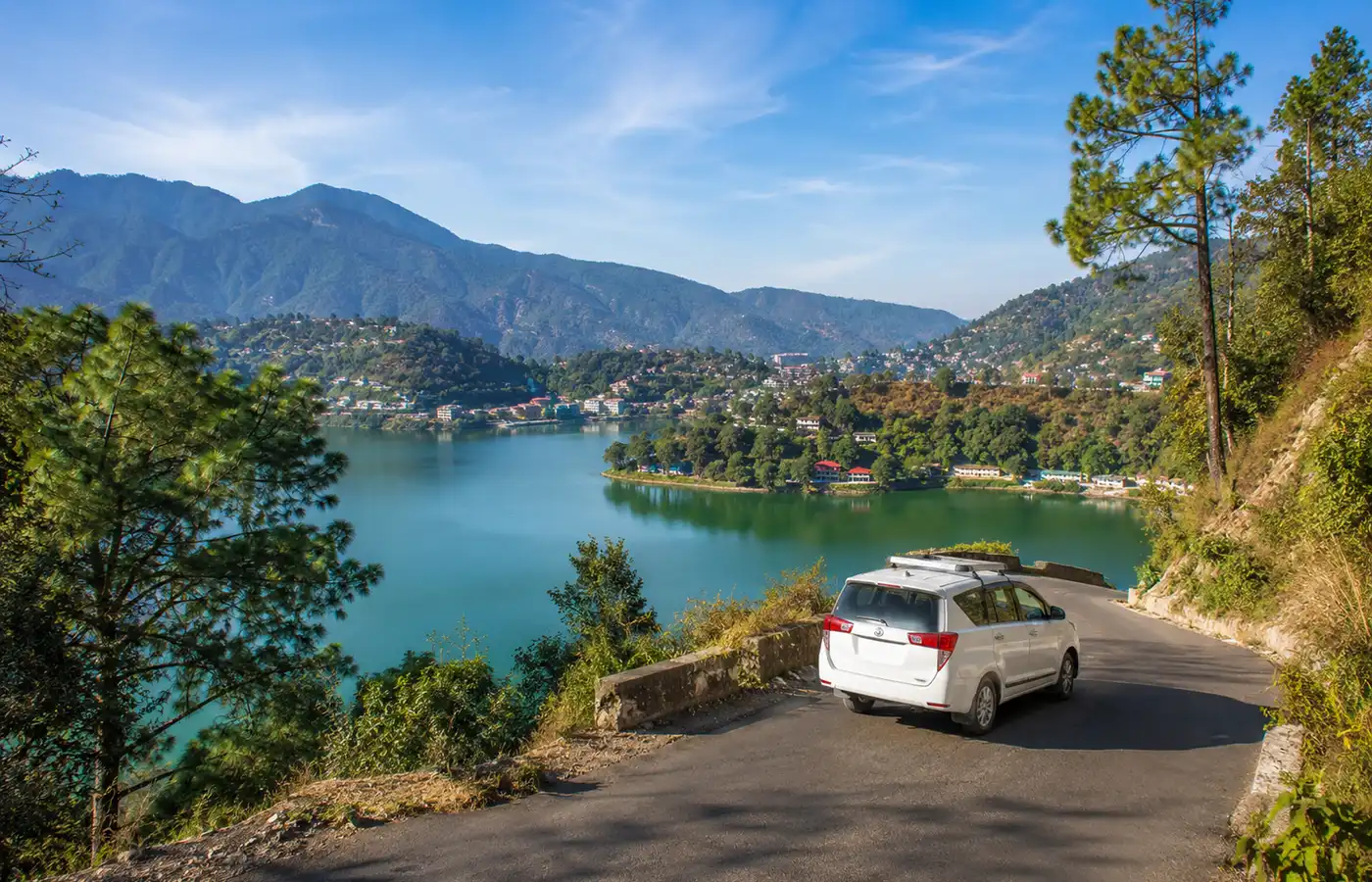
Your Adi Kailash yatra begins with pickup from Delhi airport or railway station. You'll drive roughly 330 km through the plains and into the lower Kumaon hills, reaching Kathgodam, Haldwani, or the lake town of Bhimtal by evening. Check in, have dinner, and rest — the real climb starts tomorrow.
Meals: Dinner Max Elevation: Approx. 400 m Distance: Approx. 300–330 km / 7–8 hrs Stay: Kathgodam / Bhimtal (Hotel)
Day 2: Kathgodam to Pithoragarh
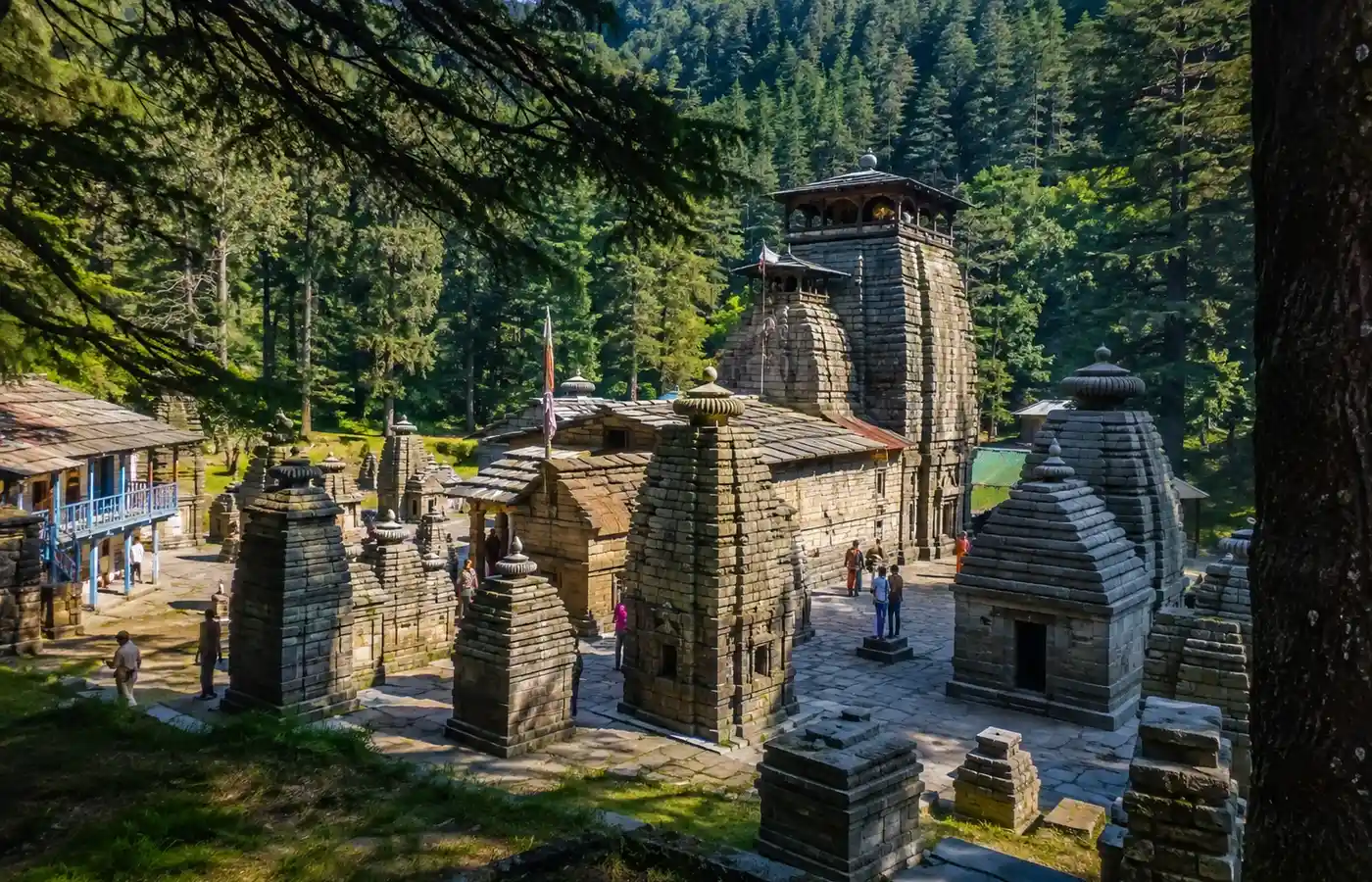
This is a sightseeing-heavy day. En route you'll stop at Bhimtal lake, Kainchi Dham (the Neem Karoli Baba ashram), the 12th-century Golu Devta temple known as the seat of the "God of Justice," and Jageshwar Dham — a cluster of more than 100 stone Shiva temples often called the Valley of Gods. You reach Pithoragarh, the gateway town for Adi Kailash and Om Parvat, by evening.
Meals: Dinner Max Elevation: Approx. 1,650 m Distance: Approx. 185–200 km / 7–8 hrs Stay: Pithoragarh (Hotel)
Day 3: Pithoragarh to Dharchula to Gunji / Nabi
After breakfast you head to Dharchula, a border town on the Kali River, for the mandatory medical check-up and Inner Line Permit formalities — this is non-negotiable, so build in waiting time. From there the road climbs through Chialekh Valley's alpine meadows, the traditional village of Garbyang, and Napalchu, before reaching Gunji or Nabi village, the actual base for the Adi Kailash region.
Meals: Breakfast, Dinner Max Elevation: Approx. 3,200 m Distance: Approx. 175–185 km combined (Pithoragarh–Dharchula ~95–100 km + Dharchula–Gunji/Nabi ~80 km) / 7–8 hrs Stay: Gunji / Nabi Homestay (shared washroom)
Day 4: Gunji to Jyolingkong to Adi Kailash Darshan
This is the spiritual heart of the yatra. You drive to Jyolingkong at the base of Adi Kailash, also called Chhota Kailash, where the mountain's reflection sits in the clear waters of Parvati Sarovar. A walk around the lake and on to Gauri Kund and the Shiva temple is part of the darshan — how far you walk depends on the current roadhead and season, and some itineraries run this closer to 4–5 km rather than a short stroll, so ask your operator what their route actually covers. Pilgrims typically perform puja and sit for a while before heading back to Gunji.
Meals: Breakfast, Dinner Max Elevation: Approx. 4,400–4,570 m Distance: Approx. 60–65 km round trip by road, plus local walking / 5–6 hrs Stay: Gunji / Nabi (return)
Day 5: Gunji to Om Parvat, Kalapani to Didihat / Chaukori
Today's drive takes you to Nabhi-Dhang, the last vehicle point, for the darshan of the Om-shaped peak. On the way back you pass Kalapani — believed to be the origin of the Kali River — along with the Shani Temple, Kali Temple, and Vyas Gufa, the cave associated with Sage Ved Vyas. The day ends with a long drive down to Didihat or Chaukori.
Meals: Breakfast, Dinner Max Elevation: Approx. 4,300–4,500 m Distance: Distance varies by route; figure on a full 8–9 hr driving day Stay: Didihat / Chaukori (Hotel)
Day 6: Didihat / Chaukori to Patal Bhuvaneshwar to Bhimtal
A long driving day, broken up by one of Uttarakhand's most unusual stops — Patal Bhuvaneshwar, an underground limestone cave temple where natural rock formations are associated with Ganesha, Sheshnag, Garuda, and a Shivling. You descend through a narrow passage into the cave before continuing on to Bhimtal for the night.
Meals: Breakfast, Dinner Max Elevation: Approx. 940 m Distance: 330 km / 10–12 hrs Stay: Bhimtal (Hotel)
Day 7: Bhimtal to Kathgodam / Delhi Drop
A short morning drive from Bhimtal to Kathgodam closes the loop before the onward leg to Delhi (roughly another 300+ km, typically covered separately by train or road). You leave with the darshan complete and a set of Himalayan photographs.
Meals: Breakfast Max Elevation: — Distance: 25 km / 1 hr Stay: Tour ends
 FAQsSee More
Q1. What is the Adi Kailash Om Parvat Yatra from Delhi?
It's a road pilgrimage from Delhi into the Kumaon Himalayas, usually 7 days on a tight schedule or 8–9 days at a slower pace, covering the darshan of Adi Kailash (Chhota Kailash) and the Om-shaped Om Parvat, along with Kalapani and Patal Bhuvaneshwar.
Q2. Is Adi Kailash the same as Kailash Mansarovar?
No, they're separate pilgrimages. Adi Kailash sits in the Indian Himalayas in Uttarakhand; Kailash Mansarovar is in Tibet. Adi Kailash needs no foreign visa or Tibet permit, which is exactly why it's grown popular as a domestic alternative.
Q3. What is Om Parvat, exactly?
Om Parvat is a Himalayan peak, roughly 5,590 m at its summit, where snow settles naturally into the shape of the "ॐ" symbol on its rock face.
Q4. Is the Adi Kailash Om Parvat Yatra open right now?
As of September 2, 2026, it's under a monsoon suspension. A Pithoragarh administration order reported on 2 July 2026 paused new Inner Line Permits over landslide risk. Reports point to a reopening around mid-September, but we haven't found one confirmed date across sources — call the SDM Dharchula office or your operator before locking in travel dates.
Q5. What temperatures should I expect?
Daytime temperatures generally range from 8°C to 18°C. At night, especially around Gunji and Kalapani, it can fall to –5°C or lower, so proper thermal wear is not optional.
Q6. Is the road open in winter?
No. Heavy snowfall shuts the route completely, typically from around December through April. Within the open season, May–June and September–October are the preferred windows; July–August is technically inside the season but best avoided given the monsoon risk.
Q7. Is there trekking involved?
Some walking, yes, but the route today is largely vehicle-based rather than a multi-day trek. The exact walking distance around Jyolingkong, Parvati Sarovar, and Gauri Kund depends on the current roadhead — ask your operator for the specific figure on your itinerary.
Q8. Are the roads smooth or off-road?
Mostly paved up to Dharchula, though monsoon damage and road work can change that season to season. Past Dharchula it's a mix of gravel and dirt track, which is why the vehicle switches to 4x4 there.
Q9. What is AMS and how serious is it?
Acute Mountain Sickness comes from sudden exposure to lower oxygen at altitude — headache, fatigue, nausea, and breathlessness are the usual signs. Don't push through it. Stop ascending, tell your guide, and get assessed; descent is the real treatment if symptoms worsen, and supplemental oxygen is emergency support, not a fix on its own.
Q10. Can I buy warm clothes locally if I forget them?
Not reliably. Dharchula and Pithoragarh don't stock serious Himalayan gear, so warm clothing needs to be bought and tested at home before you travel.
Q11. Will my phone work throughout the trip?
Connectivity gets unreliable past Dharchula and coverage varies by carrier and location. Don't count on being reachable for a couple of days — tell family back home in advance.
Q12. Do I need an Inner Line Permit and medical certificate?
Yes, both are mandatory. The medical fitness certificate must come from any MBBS doctor before you travel, and the operator assists with the Inner Line Permit at Dharchula.
Q13. How much does the Inner Line Permit cost, and who can get one?
The ILP runs roughly ₹600–800 per person, separate from your package cost, issued by the SDM Dharchula. Indian citizens follow the standard ILP process. Foreign nationals and OCI cardholders should confirm current eligibility and any separate restricted-area clearance directly with the authorities before booking — don't assume either way.
Q14. I have a medical history involving BP or breathing issues — can I still go?
Talk to your doctor before booking, not after arriving at Dharchula. The Om Parvat day reaches the trip's highest altitude, and a clearance in advance beats deciding on the spot.
Q15. How much does the Adi Kailash Om Parvat Yatra cost?
Our Standard package starts at ₹33,515 per person on a group basis; Deluxe starts at ₹44,900, plus GST. Solo and small-group travellers pay more per head since vehicle cost is split across fewer people — see the group-size table above for how that scales. These are our current advertised rates, not a market-wide figure.
Q16. What documents do I need to carry?
A filled yatra application form, a medical fitness certificate, a valid ID proof (Aadhaar, passport, or Voter ID), and two additional passport-size photographs.
INR 33,515 Per Adult
INR 38,500
Quick Information
- Duration :7 Days / 6 Nights
- Starting point :Delhi
- Ending point :Delhi
- Places covered :Delhi → Kathgodam / Bhimtal → Pithoragarh → Dharchula → Gunji / Nabi → Jyolingkong → Adi Kailash → Om Parvat → Kalapani → Didihat / Chaukori → Patal Bhuvaneshwar → Bhimtal → Delhi
Need help? Get more information
Kindly feel free to ask the tour provider for details on pricing, permits, accommodation, vehicle arrangements, and additional information.
- Response Time: 1 hour
- Response Rate: 100%

 Call
Call WhatsApp
 Enquiry