India Customisable 2026 3 to 10 Days

Tripura Tour Packages

A complete guide to travelling in Tripura — the Shakti Peeth at Matabari, the rock-cut Shiva panels at Unakoti, a water palace on Rudrasagar Lake, and the orange hills of Jampui — with routes, seasons and guided tour options from Agartala.

Most travellers see Tripura's main sights in 4 to 6 days using Agartala as the base. A short trip covers Ujjayanta Palace, Neermahal on Rudrasagar Lake, Sepahijala Wildlife Sanctuary and the Tripura Sundari Temple at Udaipur. Adding the north — Unakoti's 7th–9th century rock carvings near Kailashahar and the Jampui Hills — takes 7 to 9 days, since those sites are roughly 180–230 km from the capital on hill roads. The comfortable season is October to March. Indian nationals need no Inner Line Permit for Tripura.

Ministry of Tourism, Govt. of India — recognisedIATO & TAAI memberCustom & group departuresNortheast India specialists

Tripura at a glance

Capital
Agartala
Airport
Maharaja Bir Bikram Airport (IXA), about 12 km from Agartala
Railhead
Agartala (Badharghat), broad gauge
Region
Northeast India; borders Bangladesh, Assam and Mizoram
Languages
Bengali, Kokborok, English
Ideal stay
4–6 days core; 7–9 days with north Tripura
Best season
October to March
Permit
No Inner Line Permit for Indian nationals
01 · What there is to see

Places to visit in Tripura

Distances below are road distances from Agartala and are approximate — hill sections in the north take longer than the kilometre figure suggests. Sites are grouped by what travellers usually come for.

Tripura Sundari Temple

~55 km

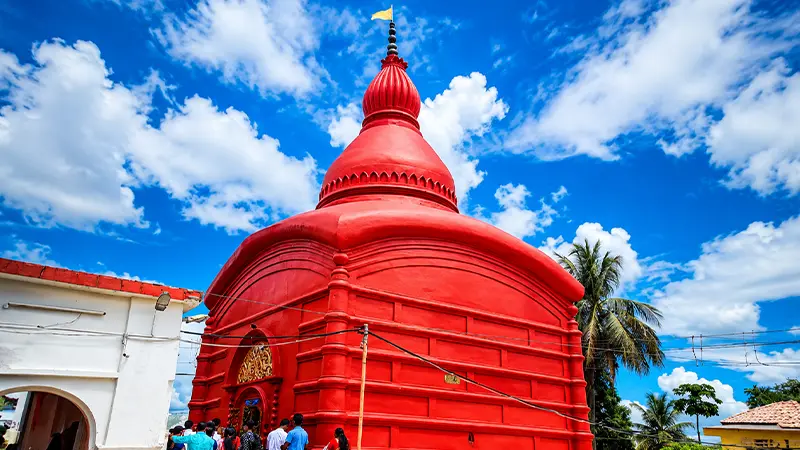
Known locally as Matabari, at Udaipur in Gomati district. Founded in 1501 CE by Maharaja Dhanya Manikya and counted among the 51 Shakti Peethas. The shrine is built in the Bengali ek-ratna style, and because the temple mound is said to resemble a tortoise it is also called Kurma Peeth. The adjoining Kalyan Sagar tank shelters protected softshell turtles and large fish that pilgrims feed. The Diwali Mela here is the state's largest religious gathering.

Pilgrimage

Unakoti

~180 km

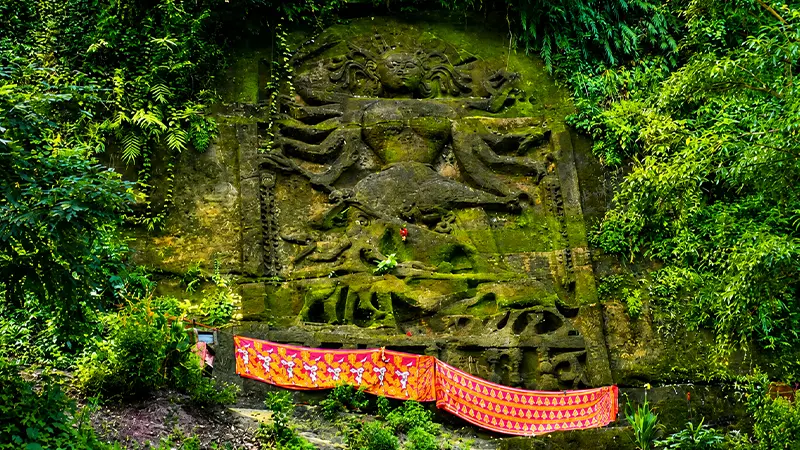
A Shaivite rock-art site in the forested hills near Kailashahar, about 8 km from the town. Colossal reliefs carved directly into the rock faces, dated by art historians to roughly the 7th–9th centuries CE: a towering central Shiva head, giant Ganesha figures, and loose stone images among the boulders and streams. The name means "one less than a crore." Called Subrai Khung in Kokborok. India has placed Unakoti on its UNESCO World Heritage tentative list.

Heritage · archaeology

Neermahal

~53 km

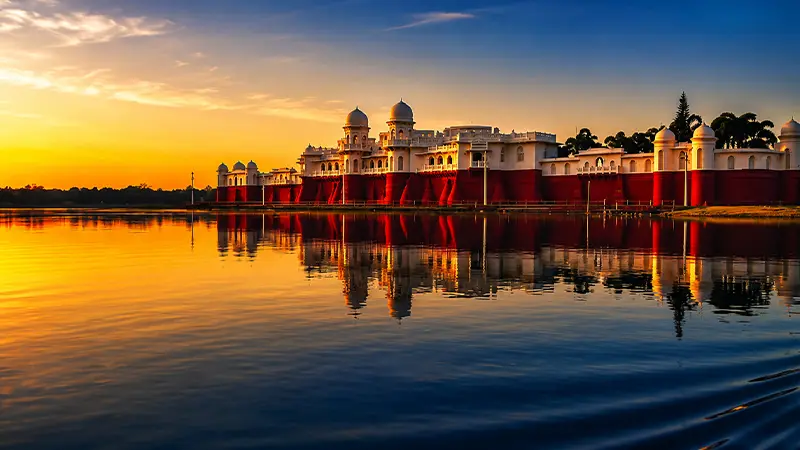
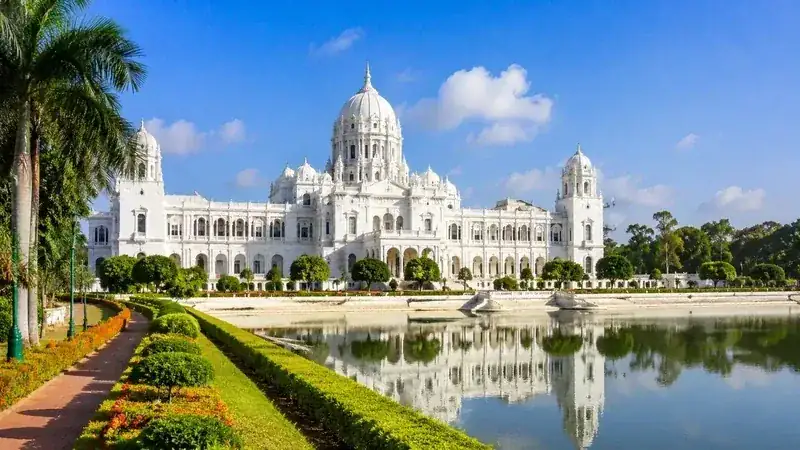
A red-and-white palace standing in the middle of Rudrasagar Lake near Melaghar, built in the early 20th century for Maharaja Bir Bikram Kishore Manikya Bahadur. Its design mixes Mughal and Hindu elements. It is one of only two lake palaces in India, the other being Jal Mahal in Jaipur. You reach it by boat from the lake shore, and the Neermahal Water Festival is held here annually.

Royal heritage

Ujjayanta Palace

In Agartala

The former Manikya royal palace in the centre of Agartala, completed in the early 1900s, with Mughal-style gardens and tank on either side. It housed the Tripura Legislative Assembly until 2011 and now holds the Tripura State Museum, whose galleries cover the art, crafts and communities of the region. The facade is floodlit in the evening, which is when most visitors photograph it.

Museum · city sightseeing

Sepahijala Wildlife Sanctuary

~35 km

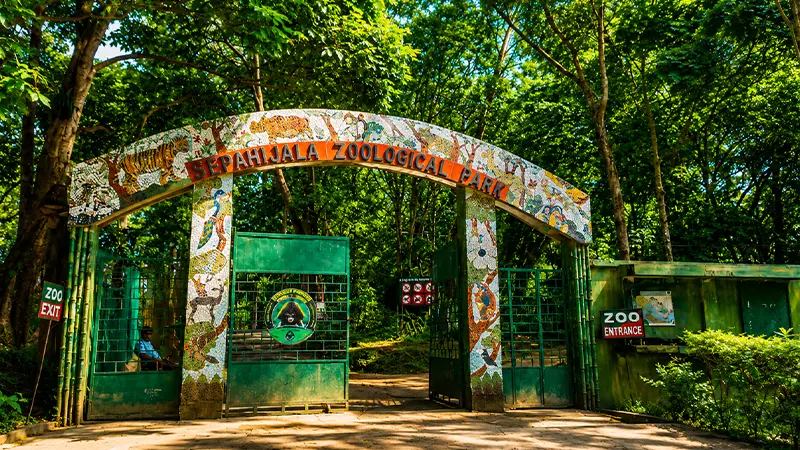
About 18.5 sq km of forest, lake and botanical garden near Bishalgarh, with a zoological park, aviary, boating and a nature learning centre. It is best known for spectacled (Phayre's) langur and for clouded leopard, though big-cat sightings are not something any operator can promise. Birdwatchers record a wide species list here. It is the easiest half-day nature trip from Agartala and works well with children.

Wildlife · family

Jampui Hills

~220 km

The state's highest range, in North Tripura near the Mizoram border, with Vanghmun as the main village. Known for orange orchards, cool air and long views over the valleys, which is why it is called the hill of eternal spring. The Orange and Tourism Festival is held in November, when the fruit is in season. October to February is the sensible window; accommodation is limited, so rooms are booked well ahead.

Hills · offbeat

Chabimura (Debtamura)

~82 km

Panels of large rock carvings cut into a steep cliff above the Gomati River, reached by boat from Amarpur. The figures include Shiva, Vishnu, Kartikeya and Durga. It is quieter and rougher than Unakoti, and the river approach is the point of the trip. Water levels affect access, so the visit is planned around the season rather than the other way round.

Rock art · river trip

Pilak

~100 km

An archaeological area near Jolaibari in South Tripura with Buddhist and Hindu sculpture and terracotta finds, pointing to a long period when both traditions were present in the region. There is little infrastructure on site, which makes a guide worthwhile. Usually combined with other South Tripura stops rather than visited on its own.

Archaeology

Chaturdash Devta Temple

~8 km

The Temple of Fourteen Gods at Old Agartala, the focus of Kharchi Puja, one of Tripura's most important festivals, when the fourteen deities are bathed in the Howrah River. The festival is held in the monsoon month of Ashadha and draws large crowds to the temple grounds.

Pilgrimage · festival

Bhuvaneshwari Temple

~55 km

On the bank of the Gomati at Udaipur, associated with Rabindranath Tagore's writing — the temple appears in his novel Rajarshi and the play Visarjan. It is a short stop, generally added to the Matabari visit since both are in Udaipur.

Heritage · literary

Dumboor Lake

~120 km

A large water body in the Gandacherra area of Dhalai district, dotted with small islands where the Gomati gathers. Good for birdlife and boating, and visited far less than the sites nearer the capital. Reaching it needs a full day from Agartala, so it belongs in a longer itinerary.

Nature · offbeat

Trishna & Rowa Sanctuaries

~100–180 km

Trishna, in South Tripura, is the state's stronghold for gaur (Indian bison) and also holds golden langur. Rowa, in the north, is a small forest reserve nearer Unakoti. Interior access to sanctuaries can require clearance from the Forest Department in Agartala, so these are arranged in advance rather than on arrival.

Wildlife
On distances and timings. Kilometre figures here are indicative road distances from Agartala drawn from state tourism and standard route information. Driving time in north Tripura is longer than the distance implies. Opening hours and entry fees at museums, sanctuaries and palaces change from season to season, so we confirm them for your dates before the trip rather than publishing a figure that may be stale.
02 · Guided tours

Tripura tour packages

Each of these is a routing, not a fixed departure — the day count, hotel category and vehicle are set once we know your group size and dates. All of them start and end at Agartala airport or railway station.

Tripura Heritage Circuit

Agartala → Neermahal → Udaipur (Matabari) → Sepahijala → Agartala

Duration4 nights / 5 days
BaseAgartala
PriceFrom ₹14,850 per person

Route outline

  1. Arrive Agartala; Ujjayanta Palace and the state museum
  2. Melaghar — boat to Neermahal on Rudrasagar Lake
  3. Udaipur — Tripura Sundari Temple, Bhuvaneshwari Temple, Kalyan Sagar
  4. Sepahijala Wildlife Sanctuary and botanical garden
  5. Agartala city market and departure

Who it suits

First-time visitors and families who want the headline sights without long drives. Every day is a return trip from one hotel in Agartala, which keeps packing and unpacking to a minimum — useful for senior travellers.

Matabari Darshan & Temples of Tripura

Agartala → Old Agartala → Udaipur → Agartala

Duration2 nights / 3 days
FocusShakti Peeth darshan
PriceFrom ₹8,160 per person

Route outline

  1. Arrive Agartala; Chaturdash Devta Temple at Old Agartala, evening at Ujjayanta Palace
  2. Full day Udaipur — Tripura Sundari Temple darshan, Kalyan Sagar, Bhuvaneshwari Temple, Gunabati temple group
  3. Jagannath Temple and Laxmi Narayan Temple in Agartala, then departure

Who it suits

Pilgrims travelling specifically for Matabari, and anyone adding a Shakti Peeth to a wider Northeast or Kamakhya trip. The short format works as a weekend extension from Kolkata or Guwahati.

Unakoti & North Tripura

Agartala → Kailashahar (Unakoti) → Jampui Hills → Agartala

Duration6 nights / 7 days
TerrainHill roads
PriceFrom ₹22,450 per person

Route outline

  1. Arrive Agartala; city sightseeing
  2. Drive north to Kailashahar
  3. Unakoti rock carvings, Rowa reserve, local tea estates
  4. Drive to Vanghmun, Jampui Hills
  5. Jampui — orange orchards, viewpoints, village walks
  6. Return drive to Agartala
  7. Departure

Who it suits

Travellers who have already seen the Agartala circuit, photographers, and anyone drawn to archaeology. Be clear-eyed about the driving: the northern legs are long, and hotels in Kailashahar and Jampui are simple rather than luxurious.

Complete Tripura

Agartala → Udaipur → Melaghar → Amarpur → Kailashahar → Jampui → Agartala

Duration8 nights / 9 days
CoverageWhole state
PriceFrom ₹28,900 per person

Adds to the shorter circuits

  • Chabimura cliff carvings by boat from Amarpur
  • Pilak archaeological area, South Tripura
  • Dumboor Lake and the Gandacherra side
  • Tripura State Tribal Museum and craft workshops
  • Unakoti and Jampui Hills in the north

Who it suits

Slow travellers, writers and researchers, and groups who want the state covered properly in one trip instead of two. Needs a private vehicle throughout and is best run between November and February.

Tripura with Northeast Extension

Agartala → Tripura circuit → Guwahati / Shillong / Kamakhya

Duration10–12 days
StatesTripura + Assam / Meghalaya
PriceFrom ₹34,900 per person

How it is built

  • Tripura leg from Agartala as above
  • Flight or surface transfer to Guwahati
  • Kamakhya Temple, Umananda and Assam's Brahmaputra valley
  • Optional Shillong, Cherrapunji and the living root bridges
  • Single booking, one coordinator across both legs

Who it suits

Travellers coming a long distance who would rather see two or three states in one trip. Pairing Matabari with Kamakhya makes sense for pilgrims, since both are Shakti Peethas.

How pricing works. Tripura rates move with the season, hotel category, group size and vehicle type, and air fares to Agartala vary more than the land cost does. Rather than publish a figure that will be wrong by the time you read it, we quote against your actual dates and party size, with the inclusions and exclusions written out in full. Ask for the quotation in writing before paying anything.
03 · Day by day

Sample 5-day Tripura itinerary

This is the Heritage Circuit written out, so you can see how a day actually runs. Timings are indicative; the sequence is adjusted for temple timings, boat operation at Rudrasagar and your flight schedule.

Day 01

Arrive Agartala · Ujjayanta Palace

Arrival at Maharaja Bir Bikram Airport and transfer to the hotel, about 12 km. After lunch, Ujjayanta Palace and the Tripura State Museum, then Laxmi Narayan Temple and the Jagannath Temple nearby. The palace exterior is at its best in the evening light. Overnight in Agartala.

Day 02

Neermahal & Rudrasagar Lake

Drive to Melaghar, roughly 53 km, and take the boat across Rudrasagar Lake to Neermahal. Time at the palace and its terrace, then back across the water. Return to Agartala, with a stop at Sepahijala's gate area or the Tripura State Tribal Museum if time allows. Overnight in Agartala.

Day 03

Udaipur · Tripura Sundari Temple

An early start for Udaipur, about 55 km, for darshan at the Tripura Sundari Temple. Allow extra time on festival days and through the Diwali period, when crowds are heavy. Afterwards the Kalyan Sagar tank, Bhuvaneshwari Temple on the Gomati, and the Gunabati temple group. Return to Agartala. Overnight in Agartala.

Day 04

Sepahijala Wildlife Sanctuary

Morning drive of about 35 km to Sepahijala for the zoological park, aviary, botanical garden and boating, with the best chance of primate sightings early in the day. Back in Agartala in the afternoon for the Battala market and cane and bamboo handicraft shops. Overnight in Agartala.

Day 05

Departure

Any remaining city visits depending on your flight, then transfer to the airport or railway station. Travellers continuing to Guwahati, Shillong or Kolkata are transferred for the onward connection.

04 · Getting there

How to reach Tripura

Flying to Agartala is the practical option from almost anywhere in India. Rail reaches the state but takes far longer, and the road approach from Guwahati is a long haul.

ModeArrival pointTypical journeyNotes
AirMaharaja Bir Bikram Airport (IXA), about 12 km from AgartalaKolkata about 1 hour; Guwahati roughly 50–55 minutes; Delhi about 2¼ hours directThe busiest airport in the Northeast after Guwahati. Direct and connecting services from Kolkata, Guwahati, Delhi and other metros; schedules change by season, so confirm at booking.
RailAgartala railway station, BadharghatTwo to three days from Delhi; a day and a half or more from KolkataTripura is on the broad-gauge network, with services linking Kolkata, Delhi, Guwahati and Silchar. Udaipur and Dharmanagar also have stations.
RoadAgartala via NH-8, earlier numbered NH-44Around 24 hours from Guwahati via ShillongA long drive through hill sections. State and private bus services run from Agartala to the district towns; most visitors hire a vehicle instead for sightseeing.
Via BangladeshAgartala – Akhaura land crossingShort crossing from Dhaka sideBus services connect Agartala with Bangladesh. Foreign nationals need the appropriate visa; entry rules and crossing hours should be checked with the authorities before travelling.
Getting around inside the state. There is no rail or air link between the sightseeing points, so a hired car with a driver is how Tripura is actually travelled. Northern legs to Kailashahar and Jampui are best done as full driving days rather than squeezed around other visits.
05 · When to go

Best time to visit Tripura

October to March is the comfortable window, and November to February the pick of it. Here is what each season actually means for a trip.

SeasonMonthsWhat it is likeBest for
WinterOctober – FebruaryCool and dry, generally pleasant through the day, cooler in the Jampui Hills. The main travel season.Everything. Jampui Hills, Unakoti, boat trips, wildlife, the Diwali Mela at Matabari and the November Orange Festival.
Spring to summerMarch – MayWarm and increasingly humid, with occasional thunderstorms.Temple visits and museums, early-morning sightseeing. Garia Puja falls in April.
MonsoonJune – SeptemberHeavy rain. The landscape is at its greenest, but hill roads and river access are the least reliable of the year.Kharchi Puja at the Chaturdash Devta Temple, and travellers who do not mind rebuilt plans.

Festivals worth timing a trip around

  • Diwali Mela, Matabari — the biggest gathering at the Tripura Sundari Temple, with pilgrim numbers in the lakhs. Book accommodation and darshan arrangements far ahead.
  • Kharchi Puja — the fourteen deities of the Chaturdash Devta Temple are taken to the Howrah River; held in the monsoon month of Ashadha.
  • Garia Puja — an agricultural festival of the state's tribal communities, in April.
  • Orange and Tourism Festival, Jampui — held in November when the orange crop comes in.
  • Neermahal Water Festival — boat races and events on Rudrasagar Lake.
  • Ashokastami Mela, Unakoti — pilgrims gather at the rock-cut site for ritual bathing.

What to pack

  • Light cottons for the plains year-round, with a jacket or fleece for Jampui Hills and for winter mornings.
  • Walking shoes with grip — Unakoti is uneven rock and earth, and the temple approaches involve steps.
  • Modest clothing covering shoulders and knees for temple visits; footwear is removed at shrines.
  • A rain shell from May onwards, and through the monsoon regardless of forecast.
  • Water and snacks for the northern drives and for Unakoti, where facilities on site are minimal.
  • Cash for small purchases in the district towns, where card acceptance is patchy.
  • Mosquito repellent, and any personal medication in original packaging.
06 · Practical planning

Permits, food, stays and booking safely

Permits and entry

  • Indian nationals do not need an Inner Line Permit for Tripura. That requirement applies to some other Northeast states, not to this one.
  • Foreign nationals should confirm current entry conditions for Northeast India before booking, since rules differ by state and are revised from time to time. We check the position for your nationality as part of the booking.
  • Wildlife sanctuaries: entry to interior areas of some sanctuaries needs clearance from the Forest Department in Agartala rather than at the gate. Arranged in advance where your itinerary includes it.
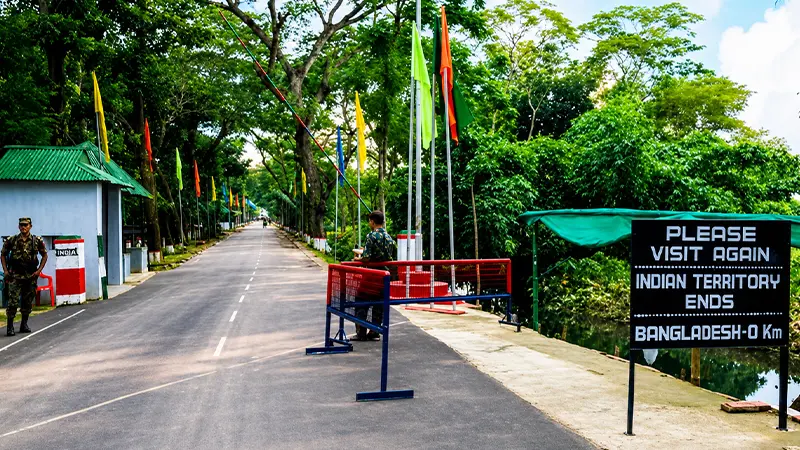
  • Border areas: Tripura is bordered by Bangladesh on three sides. Follow local instruction near the border and at the Akhaura crossing.

Where you stay

  • Agartala has the widest choice, from budget to good business-class hotels, and is the sensible base for the core circuit.
  • Udaipur has simpler options plus pilgrim accommodation near the temple, useful during the Diwali Mela.
  • Kailashahar and Jampui Hills have limited rooms, including tourist lodges. Expect clean and basic rather than luxurious, and book early in season.
  • Tourist lodges run by the state are often the best-placed option at the smaller sites; availability is tight during festivals.

Food and crafts

  • Bengali-influenced cooking dominates, with rice, freshwater fish and mustard oil at its centre, alongside the distinct cuisine of the state's tribal communities.
  • Mui borok, the traditional Tripuri style of cooking, uses the fermented fish seasoning berma; dishes such as chakhwi and gudok are worth asking for.
  • Vegetarian and Jain food is available in Agartala and near the temples; tell us in advance and we brief the hotels and drivers.
  • Cane and bamboo work is the craft Tripura is known for — mats, furniture and basketry — along with handloom textiles. Agartala's markets and the state emporium are where to look.

Booking without getting cheated

  1. Ask for the quotation in writing, with inclusions, exclusions, hotel names and the cancellation terms spelled out — not just a price.
  2. Confirm the hotel category and the actual property name, not a vague "3-star or similar" for the whole trip.
  3. Pay only into the company's own bank account in the company's registered name. Never to a personal account, and never to an account whose name does not match the company.
  4. Check the operator's registration and trade-body membership yourself rather than taking a logo on a website at face value.
  5. Keep every receipt and the written confirmation, and get the voucher before departure.
  6. Treat guaranteed darshan, guaranteed sightings or guaranteed weather as a warning sign. No operator controls any of them.
07 · Who you are booking with

Namaste India Trip

We are a pilgrimage and destination tour operator with our head office in New Delhi, working across Himalayan and Northeast India routes.

Recognised and registered

Recognised by the Ministry of Tourism, Government of India, and a member of IATO and TAAI. Ask us for our registration details and we will send them; you should be able to verify any operator you pay.

Pilgrimage routes as our main work

Our core business is organised pilgrimage travel — Char Dham, Kashi and Ayodhya, Adi Kailash and Om Parvat — which is the same discipline a Matabari or Kamakhya trip needs: temple timings, crowd days, and travel that senior passengers can actually manage.

One coordinator per trip

You deal with the same person from quotation to departure, which matters on a route where a single road closure reshuffles the day. Vehicle, driver and hotel confirmations are sent before you travel.

What we will not promise

We do not guarantee darshan timing, wildlife sightings, or that a boat will run in bad weather, because none of those are ours to guarantee. We will tell you plainly what the risk is on your dates.

Plan your Tripura trip

Send your dates, the number of travellers, and whether you want the Agartala circuit or the full state including Unakoti and Jampui. We will come back with a written itinerary and quotation.

OfficeNew Delhi, India

About the information on this page. Distances, dates and site descriptions are drawn from Tripura Tourism and standard published sources and are indicative. Opening hours, entry fees, boat operation, flight schedules, festival dates and permit conditions change, so confirm them for your travel dates before departure. Nothing here is a guarantee of darshan, wildlife sightings, weather or road access.

Sources:

6+ Packages
3-10 Days
Oct–Mar Best Season
₹8,160 Onwards
Find Your Perfect Tripura Tours
Free cancellation Best price guarantee

6 Tripura Tour Packages

Vermilion Sacred Shakti Shrine
Royal Lakefront Palace Sunset
Rainforest Wildlife Conservation Park
Ancient Hillside Rock Sculptures
International Frontier Viewpoint
Best Seller
4D / 3N
Agartala → Tripura Sundari Temple → Sepahijala → Agartala

Tripura Sundari Temple Tour, Agartala

4.4 (20 reviews)
  • Hotel
  • Meals
  • Transfer
  • Tour
  • Guide
₹14,000 ₹11,880 / Per Person*
Details
Royal Lakefront Palace Sunset
Vermilion Sacred Shakti Shrine
Ancient Hillside Rock Sculptures
International Frontier Viewpoint
Buddhist Heritage Garden Landmark
Short Trip
3D / 2N
Agartala → Tripura Sundari Temple → Sepahijala → Agartala

Tripura Sundari Pilgrimage Tour

4.1 (10 reviews)
  • Hotel
  • Meals
  • Transfer
  • Tour
  • Guide
₹9,600 ₹8,160 / Per Person*
Details
Tripura Neermahal Lake Palace
Tripura Ujjayanta Palace Agartala
Tripura Sundari Temple Udaipur
Rainforest Wildlife Conservation Park
Heritage
5D / 4N
Agartala → Neermahal → Udaipur (Matabari) → Sepahijala → Agartala

Tripura Heritage Circuit

  • Hotel
  • Meals
  • Transfer
  • Tour
  • Guide
₹17,500 ₹14,850 / Per Person*
Tripura Unakoti Rock Carvings
Tripura Jampui Hills View
Tripura Ujjayanta Palace Agartala
Ancient Hillside Rock Sculptures
Offbeat
7D / 6N
Agartala → Kailashahar (Unakoti) → Jampui Hills → Agartala

Unakoti & North Tripura

  • Hotel
  • Meals
  • Transfer
  • Tour
  • Guide
₹26,500 ₹22,450 / Per Person*
Tripura Chabimura River Cliffs
Tripura Unakoti Rock Carvings
Tripura Neermahal Lake Palace
Tripura Sundari Temple Udaipur
Tripura Jampui Hills View
Grand Circuit
9D / 8N
Agartala → Udaipur → Melaghar → Amarpur → Kailashahar → Jampui → Agartala

Complete Tripura

  • Hotel
  • Meals
  • Transfer
  • Tour
  • Guide
₹33,900 ₹28,900 / Per Person*
Tripura Ujjayanta Palace Agartala
Kamakhya Temple Complex Guwahati Assam
Dawki River Crystal Clear Water Meghalaya
Tripura Neermahal Lake Palace
Northeast
10D / 9N
Agartala → Tripura Circuit → Guwahati / Shillong / Kamakhya

Tripura with Northeast Extension

  • Hotel
  • Meals
  • Transfer
  • Tour
  • Guide
₹40,900 ₹34,900 / Per Person*

Tripura Tour Packages Travel Guides

Practical destination guides, planning tips and useful travel information

All Articles

Tripura travel FAQs

Practical answers about Tripura Tour Packages

How many days are enough for Tripura?

Ans: Four to six days cover the main circuit from Agartala: Ujjayanta Palace, Neermahal on Rudrasagar Lake, the Tripura Sundari Temple at Udaipur and Sepahijala Wildlife Sanctuary. Adding north Tripura — Unakoti near Kailashahar and the Jampui Hills — takes it to seven to nine days, because those sites are roughly 180 to 230 km away on hill roads and need full driving days.

Do I need an Inner Line Permit for Tripura?

Ans: No. Indian nationals do not need an Inner Line Permit to enter Tripura; that requirement applies to certain other Northeast states. Foreign nationals should confirm current entry conditions for the region before booking, since the rules vary by state and are revised from time to time.

Separately, entry into the interior of some wildlife sanctuaries needs clearance from the Forest Department in Agartala, which is arranged in advance rather than at the gate.

What is the best time to visit Tripura?

Ans: October to March, with November to February the most comfortable. Winter is dry and cool, which suits the hill drives, the boat trip to Neermahal and the walk around Unakoti. The monsoon from June to September brings heavy rain that affects hill roads and river access. March to May is warm and humid but fine for temples and museums if you start early.

How do I reach the Tripura Sundari Temple at Matabari?

Ans: The temple is at Udaipur in Gomati district, about 55 km south of Agartala and reachable by road in roughly one and a half to two hours depending on traffic. Buses run from Agartala, and there are train services to Udaipur, but most visitors travel by hired car, which also allows the Bhuvaneshwari Temple and Kalyan Sagar on the same trip.

Is Unakoti worth the long drive from Agartala?

Ans: If you have an interest in archaeology or photography, yes. The reliefs are carved into open rock faces in forest, dated to roughly the 7th to 9th centuries CE, and the scale of the central Shiva head and the Ganesha figures is the reason people make the trip. Set expectations on logistics though: it is about 180 km from Agartala and some 8 km from Kailashahar, facilities on site are minimal, and part of the carved material remains buried or weathered. Plan it as an overnight at Kailashahar rather than a day return.

What is Neermahal and can you go inside?

Ans: Neermahal is a palace standing in the middle of Rudrasagar Lake near Melaghar, about 53 km from Agartala, built in the early 20th century for Maharaja Bir Bikram Kishore Manikya Bahadur in a mix of Mughal and Hindu styles. It is one of only two lake palaces in India. You reach it by boat from the shore and can walk the palace and its terrace. Boat operation and visiting hours depend on the season and weather, so they are confirmed for your date.

Can senior citizens manage a Tripura trip?

Ans: The Agartala-based circuit suits senior travellers well, because every day is a return trip from one hotel and the sightseeing involves short walks rather than treks. The temple approaches have steps, and the boat transfer at Rudrasagar needs reasonable mobility. The northern legs to Unakoti and Jampui involve long drives on hill roads and uneven ground at the rock-art site, so we discuss those honestly before including them.

Can Tripura be combined with Kamakhya, Shillong or the rest of the Northeast?

Ans: Yes, and it is a common way to book. Agartala connects to Guwahati by a short flight, which makes Kamakhya Temple, the Brahmaputra valley, Shillong and Cherrapunji straightforward additions. Pairing Matabari with Kamakhya is popular with pilgrims since both are counted among the Shakti Peethas. A combined trip usually runs 10 to 12 days.

What does a Tripura tour package cost?

Ans: It depends on the number of travellers, the hotel category, the vehicle, the season and the routing, and the air fare to Agartala varies more than the land arrangements do. We quote against your actual dates rather than publish a rate that goes out of date. Ask for the quotation in writing, with inclusions, exclusions and cancellation terms stated, before you pay anything.

Is Tripura safe for families and solo travellers?

Ans: The tourist circuit is ordinarily travelled by families, pilgrims and independent visitors, and the usual sensible travel habits apply: keep to daylight hours for long drives, use arranged transport in the districts, follow local instruction near the Bangladesh border, and keep your documents with you. We share the driver's details and the day plan before you travel so someone at home knows the schedule.

What food will I get, and is vegetarian food available?

Ans: Cooking in Tripura is largely Bengali-influenced, built on rice and freshwater fish, alongside the distinct tribal cuisine known as mui borok, which uses the fermented seasoning berma in dishes such as chakhwi and gudok. Vegetarian food is widely available in Agartala and around the temples, and Jain requirements can be arranged if you tell us at the time of booking so we can brief the hotels in advance.

What should I buy in Tripura?

Ans: Cane and bamboo work is the state's signature craft — mats, baskets, lamps and furniture — and the quality at the source is well above what the same items cost elsewhere. Handloom textiles woven by the state's communities are the other thing worth carrying home. Agartala's markets and the government emporium are the practical places to shop.