

Thinking about a trip to Badrinath Temple? Before you begin the journey, it’s natural to have a few questions in mind—about travel routes, timings, weather, and basic arrangements.
This FAQ section is here to make things simple for you. We’ve covered the most commonly asked questions about the Badrinath Yatra so you can plan your visit with clarity and enjoy the journey without confusion.
 Badrinath FAQs – Travel Related Queries and Solutions - What Is The Best Time To Visit Badrinath?
Frequently Asked Questions (FAQs)
What are the Badrinath Temple darshan timings in 2026?
What time does Badrinath Temple open in the morning?
Badrinath Temple opens at 4:30 AM for the sacred Mahabhishek ceremony, conducted by the Rawal (head priest). General darshan for regular pilgrims begins at 6:00 AM. Arriving by 5:30 AM allows you to attend the morning Abhishek aarti — a rare and spiritually elevating experience that most day-trippers miss.
What is the closing time of Badrinath Temple?
The temple closes for the night at 9:00 PM after the Shayan Aarti. There is a significant midday closure from 12:00 PM to 4:00 PM for the Rajbhog and afternoon rituals. Pilgrims who arrive post-noon will have to wait until 4:00 PM for the evening session.
What are the aarti and puja timings at Badrinath Temple?
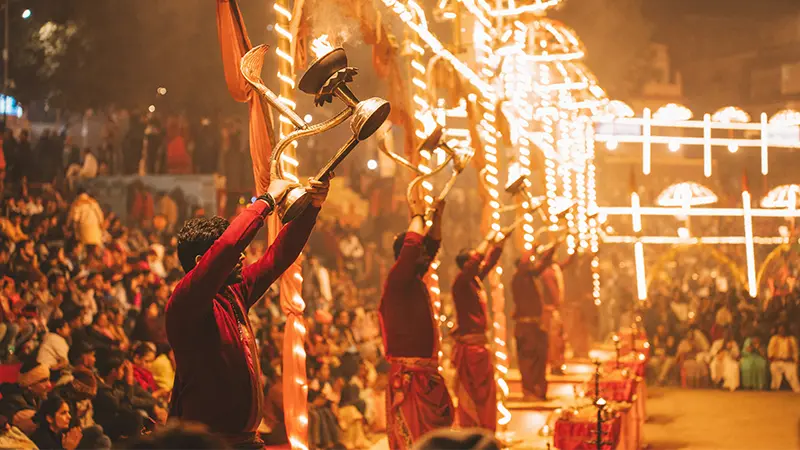
4:30 AM: Mahabhishek (ceremonial bathing of Lord Badrivishal). 5:00–6:00 AM: Abhishek and early morning rituals. 6:00 AM: General darshan opens. 12:00 PM: Rajbhog — temple closes. 4:00 PM: Evening darshan opens. 7:30–8:00 PM: Gita Paath and evening Aarti. 9:00 PM: Shayan Aarti, temple closes. The evening Aarti with the Alaknanda River flowing alongside is an experience of a lifetime.
When did Badrinath Temple open and when does it close in 2026?
Is Badrinath Temple open on Sundays?
When is Badrinath Temple closed in 2026?
Badrinath Temple is tentatively scheduled to close on 13 November 2026. The closing date is officially declared on Vijayadashami (Dussehra). After closure, the divine idol travels to Narsingh Temple, Joshimath, where worship continues through winter. The temple reopens the following April/May.
What is the Badrinath Temple darshan time table?
Morning session: 4:30 AM (Mahabhishek) to 12:00 PM (noon closure). Evening session: 4:00 PM to 9:00 PM (Shayan Aarti). Key aarti times: Morning Abhishek 4:30 AM, Bal Bhog 6:15 AM, evening Gita Paath 7:30 PM, Shayan Aarti 9:00 PM. The noon closure is strictly followed — no exceptions.
Is there VIP darshan at Badrinath Temple and how do I book it?
Badrinath’s closest equivalent to VIP darshan is the Mahabhishek Puja, which costs ₹4,700 per person and takes place between 4:30 AM and 6:30 AM — before general darshan begins. This gives you direct, close access to the deity with a priest. For 2026, Badrinath VIP darshan basic priority entry is ₹300–₹500. Book only via badrinath-kedarnath.gov.in — do not pay agents or WhatsApp sellers.
What is the puja cost and ticket price at Badrinath Temple?
How much time does darshan take at Badrinath Temple?
On less crowded days, darshan takes 45–90 minutes. During peak May–June, queues can extend to 3–5 hours for general darshan. The best strategy: arrive before 6:30 AM for morning darshan, or come after 5:00 PM for the quieter evening session. Booking a puja (especially Mahabhishek) bypasses the general queue.
What is the darshan process at Badrinath Temple?
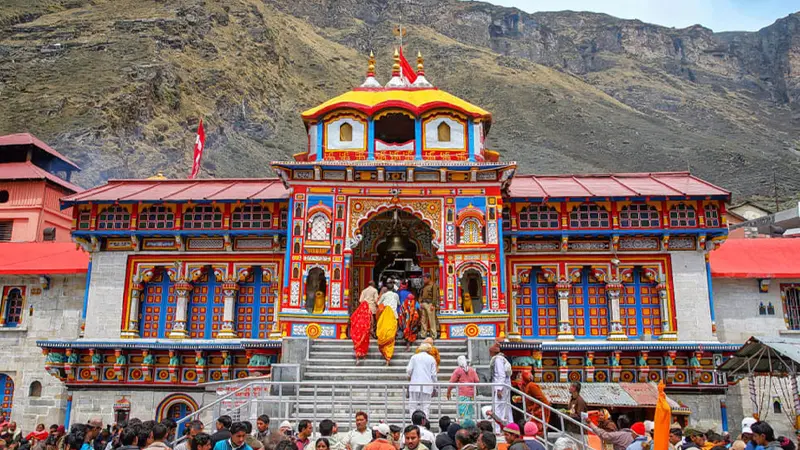
After removing footwear at the entrance, pilgrims proceed through the Sabha Mandap to the inner sanctum for darshan of the black stone idol of Lord Badrivishal in a meditative posture. Prasad (tulsi leaves, misri, and charnamrit) is distributed at the exit. If you’ve booked an Abhishek, a priest guides you through the personal worship ritual.
What is the best time to visit Badrinath Temple?
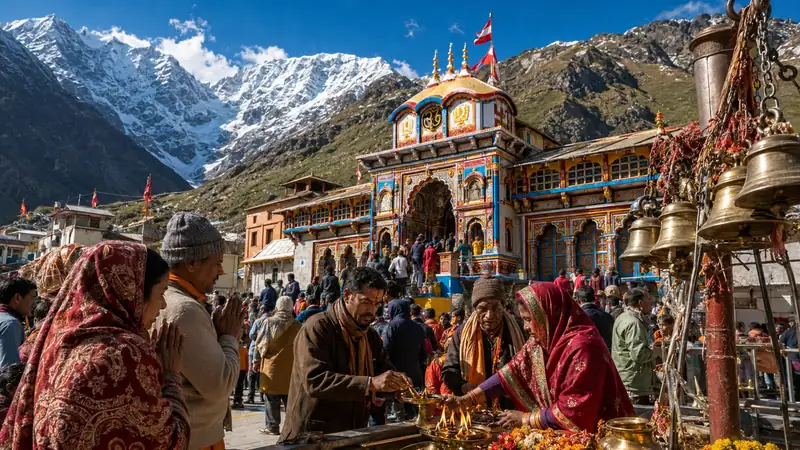
May–June and September–October. For a festive, high-energy pilgrimage experience: visit in May immediately after the kapat opening — the Himalayan landscape is stunning and the temple atmosphere is charged. For peace and clear skies: September is ideal — post-monsoon clarity means spectacular views of Neelkanth Peak and Nar-Narayan Hills from the temple courtyard.
Which month is best for Badrinath darshan?
June tops the list for most pilgrims — roads are good, weather is stable, full temple services are available. For photographers and nature lovers, September offers the best conditions. Avoid the first two weeks of May if you cannot handle large crowds — the opening rush brings tens of thousands of pilgrims.
What is the dress code for Badrinath Temple?
No strictly enforced code, but modest attire is expected. One unique rule at Badrinath: no leather items (shoes, bags, belts) inside the temple complex. Traditional Indian attire is most appropriate. Practically, given the 3,133-metre altitude, layered warm clothing, a rain jacket, and proper trekking shoes are essential even on summer days.
Are mobile phones allowed inside Badrinath Temple?
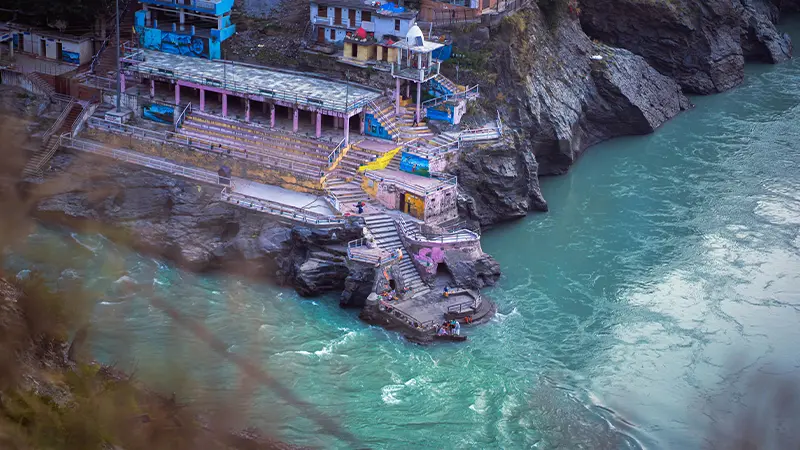
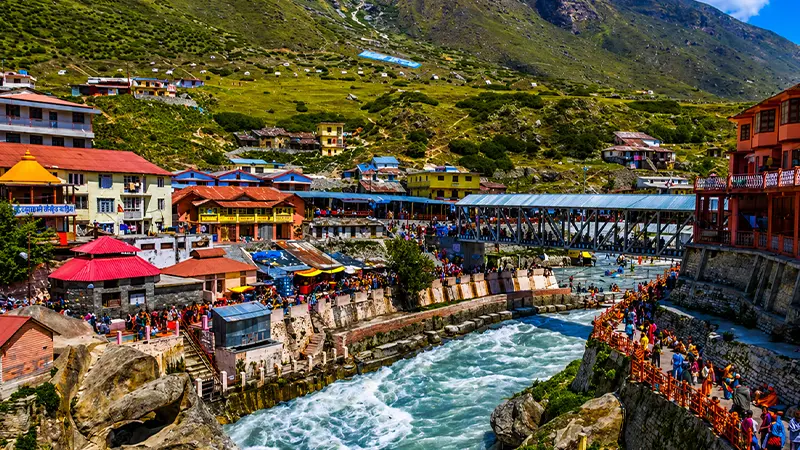
Mobile phones and cameras are not allowed inside the Garbhagriha (inner sanctum). Store your phone in your bag or at the designated counter before entering. Photography of the outer temple area, Tapt Kund, Brahma Kapal, and the Alaknanda riverfront is freely permitted and the views are extraordinary.
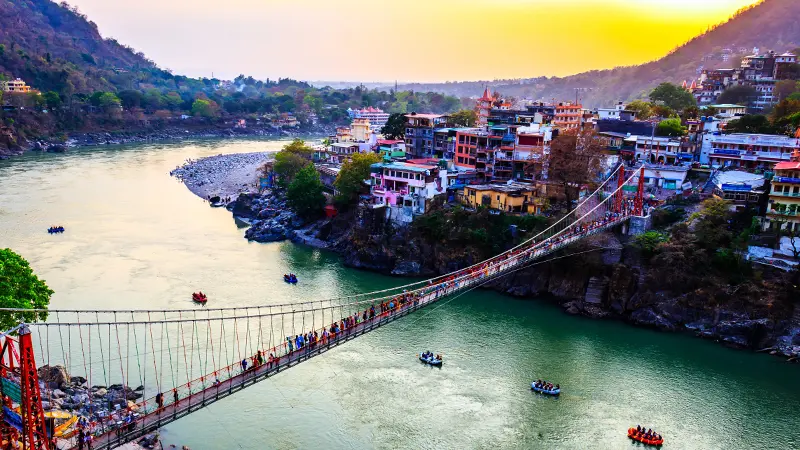
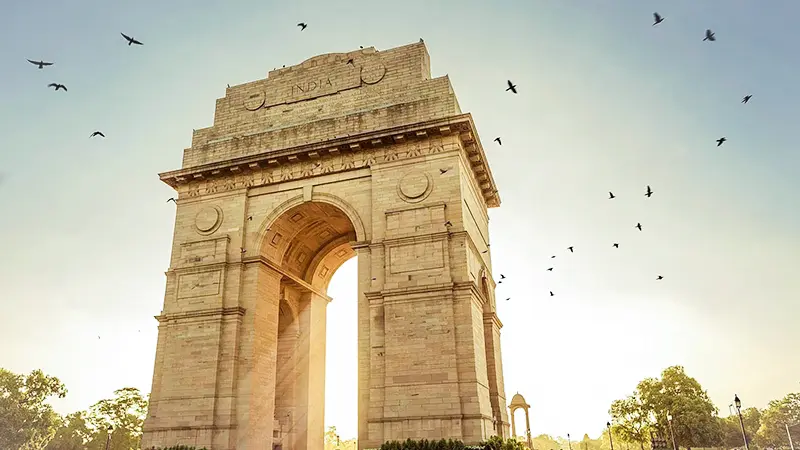
How do I reach Badrinath from Delhi, Haridwar, and Rishikesh?
Is Char Dham Yatra registration mandatory for Badrinath?
Are men and women both allowed at Badrinath Temple?
Yes, Badrinath Temple is open to all devotees — men, women, and people of all faiths and nationalities. There are no gender-based entry restrictions. The temple trust follows an inclusive approach consistent with Vaishnava traditions.
What is Badrinath Temple famous for?
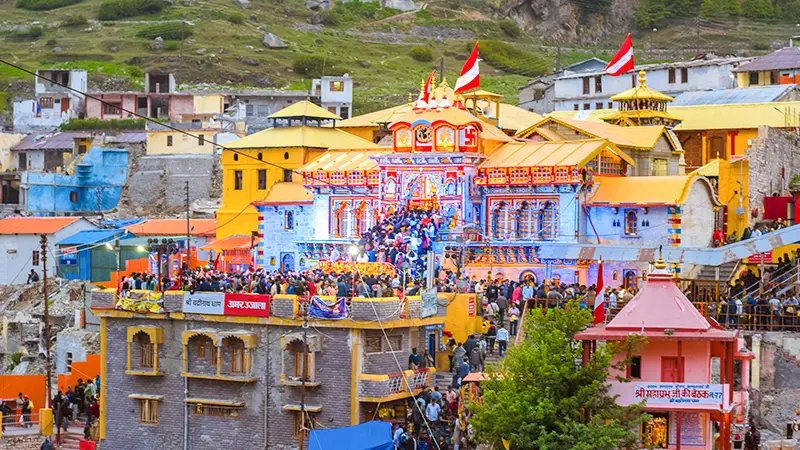
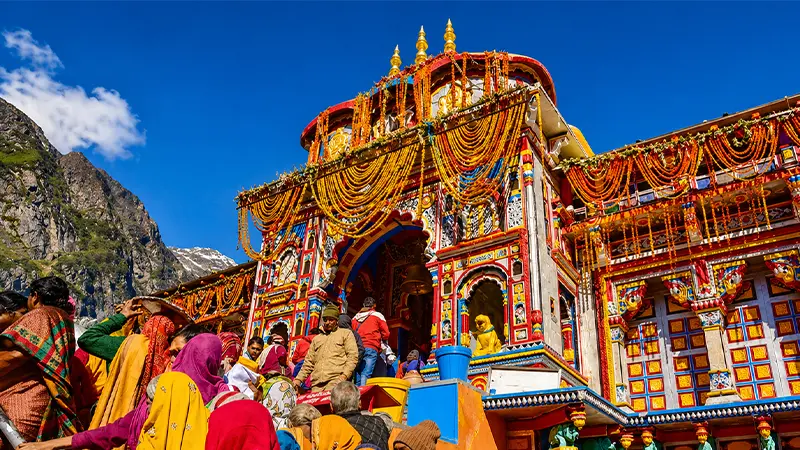
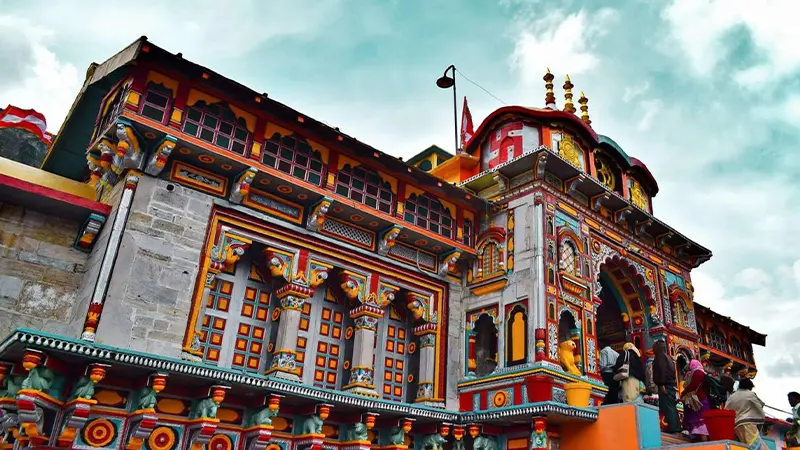
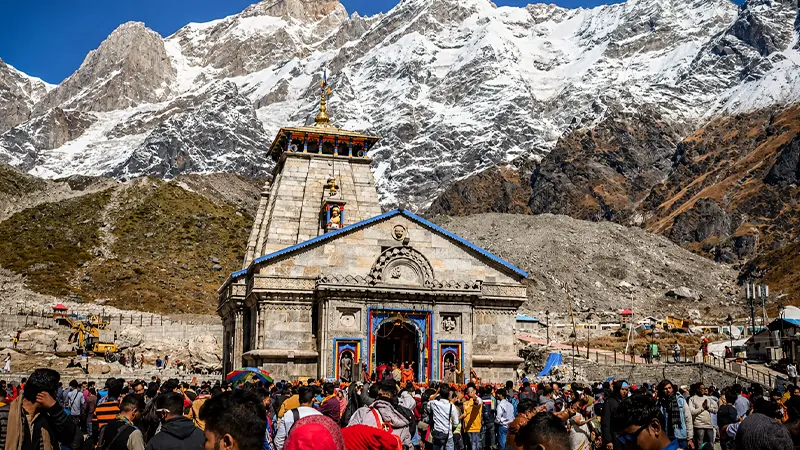
Badrinath is one of the four Char Dhams and one of the 108 Divya Desams — the holiest Vishnu temples recognised by the Vaishnava tradition. It is famous for the black stone idol of Lord Badrivishal in a meditative posture, the Tapt Kund (natural hot water spring for ritual bathing), Brahma Kapal (sacred ghat for ancestor rites), and the tradition of the Rawal — a Nambudiri Brahmin from Kerala who serves as head priest.
What are the places to visit near Badrinath Temple?
What is the history and significance of Badrinath Temple?
Badrinath is one of Hinduism’s most ancient pilgrimage sites, referenced in the Vishnu Purana and Skanda Purana as Badrikshetra — where Lord Vishnu performed penance under a badri (jujube) tree. The temple was revived by Adi Shankaracharya in the 8th century CE, who recovered the idol of Badrivishal from the Narad Kund and reinstalled it. The current temple structure was built by the Garhwal kings and later renovated multiple times.
Is there accommodation near Badrinath Temple?
Options range from the GMVN Tourist Rest House and BKTC dharamshala in Badrinath town (basic, affordable, close to temple) to private hotels and guesthouses. Joshimath (45 km) has more comfortable accommodation options. Book well in advance for May–June — rooms sell out weeks ahead. Most pilgrim accommodation offers vegetarian food only, in line with the temple town’s traditions.
Can I visit Badrinath during monsoon season (July–August)?
You can, but it involves risk. The approach road via NH 7 is prone to landslides during monsoon — road blockages can strand travellers for 1–3 days at a time. The temple remains open, but check BRTF (Border Roads Task Force) road condition updates before travelling. September is a much safer and more rewarding alternative to visiting during peak monsoon.
Are tour packages available for Badrinath?
How many days are needed to visit Badrinath?
Allow a minimum of 2 days: Day 1 for the journey from Joshimath/Rishikesh, Day 2 for darshan and Mana Village sightseeing. For a comfortable experience with time to explore Vasudhara Falls, Brahma Kapal, and Tapt Kund, 3 days is ideal. If combining with Kedarnath, most packages allocate 4–5 days for this section.
What things should I do in Badrinath besides temple darshan?
Take a dip in Tapt Kund (the natural hot spring — this is tradition before darshan). Do Pind Daan at Brahma Kapal if you wish to perform ancestral rites. Visit Mana Village and photograph the Saraswati River before it disappears underground. Walk to Vasudhara Falls. Attend evening Aarti at the river bank. Explore the small local market for prasad, rudraksha, and woolens.
Can pregnant women or senior citizens visit Badrinath?
There are no religious restrictions. Badrinath is accessible by road (no trek required) — making it manageable for pregnant women and senior citizens compared to Kedarnath. However, the high altitude (3,133 m), winding mountain roads, and limited medical facilities should be carefully considered. Consulting a doctor before travel and hiring a comfortable private vehicle are strongly recommended.
What are the Badrinath Temple rules and regulations?
Key rules: No leather items inside the temple complex. No footwear beyond the entrance. No photography in the Garbhagriha. No eating inside the temple premises. Maintain queue discipline — do not push or bypass the line. Loud conversations and phone calls inside are considered disrespectful. The unique rule: no conch (shankh) is blown at Badrinath — rooted in the temple’s mythology about the demon Vatapi.
What is the weather at Badrinath and what to carry?
Badrinath at 3,133 m has an alpine climate. May–June: 7°C–18°C days, 1°C–5°C nights. Monsoon: 10°C–15°C with rain and fog. October: 4°C–12°C. Must carry: warm jacket, thermal layers, rain poncho, trekking shoes, personal medication, sunscreen, sunglasses, and a water bottle. Altitude sickness can affect some pilgrims — acclimatise overnight at Joshimath before proceeding.
Compare relevant packages and request a customised travel plan from the Namaste India Trip team.





Share your experience, ask a question, or leave useful tips for other travelers.