


Approved by
Ministry of Tourism,
Government Of India
Traditional Dresses of Delhi
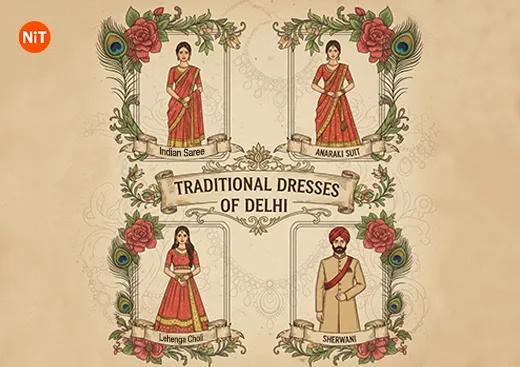
Delhi is not merely the capital of India; it is the museum of cultures and traditions and fashion itself. Since Mughal grace, through Punjabi colour, and Indo-western fusion, the age-old dresses of Delhi carry both the ancient history and diversity. To the travellers, there is no better way to explore Delhi than by exploring its traditional clothes just like it explores monuments or its street food.
As one walks through traditional markets such as Chandni Chowk, Dilli Haat, Lajpat Nagar, and Karol Bagh, one will notice how traditional clothing in Delhi is uniting the past and the present.
1. Saree - The Timeless Traditional Dress of Delhi
The saree is also among the most popular traditional dresses of Delhi for the traveller, particularly in the festivals, weddings and cultural events. Delhi women dress in georgette, chiffon, cotton, silk sarees, and this varies according to the occasion.
The diversity of the Saree culture is its peculiarity. There will be Banarasi silk sarees, Chanderi sarees, Kanjivaram sarees and contemporary designer drapes based on Mughal embroidery. In localities such as Chandni Chowk and South Extension, the travellers may discover sarees that have Zari, zardozi and mirror work.
Traveller Tip: If one wants to get a glimpse of the taste of sarees and accessories, one should attend a wedding or festive event in Delhi.
2. Salwar Kameez - Everyday Traditional Wear of Delhi
Among the useful and most popular Delhi traditional dresses is the salwar kameez. As a tourist, you will find women in it in markets, offices, colleges and even as they sightsee.
The styles of salwar kameez in Delhi are simple cotton suits during summer and heavily embroidered party suits. These clothes are stylish but comfortable, influenced by the Punjabi culture. Such destinations as Lajpat Nagar Market and Karol Bagh would be the ideal places where travellers will be able to purchase authentic salwar suits.
Why Travellers Like It: It is comfortable in the climate of Delhi, as well as suitable for walk tours and exploring the city.
3. Anarkali Suit - Mughal-Era Royal Attire
The Mughal history of Delhi has a great impact on the conventional clothing, and the Anarkali suit represents the archetypical example. Anarkalis are similar long-flowing dresses that are worn in royal court style and are usually embroidered and embellished.
The travellers who visit cultural performances or weddings in Delhi would find women putting on anarkali suits particularly in Old Delhi and heritage sites. These costumes are trendy when there is a festival such as Eid, Diwali, and weddings.
What to See: Chandni Chowk and designer shops in South Delhi.
4. Lehenga Choli - Festive and Bridal Traditional Dress
This is the most striking-looking traditional dress. Travellers will also encounter lehengas in festivals and cultural events although the activity is mostly related to weddings.
Delhi is also known to have bridal lehengas that have elaborate Zardozi, Gotapatti, and sequin work. As a traveller, I got an idea of the fashion legacy of Delhi by visiting bridal markets.
Markets That You Must See: Chandni Chowk, Shahpur Jat, and Mehrauli.
5. Kurti: Modern Traditional Clothing in Everyday Use
As a traveller, the Kurti symbolizes how Delhi is a blend of tradition and a modern way of living. Kurtis wear jeans, palazzos, or leg-ins and are very popular among youthful females.
Kurtis can be light, breathable, and stylish, so they are ideal in investigating monuments, cafes, and shopping streets in Delhi. There are an unlimited number of designs inspired by such traditional prints as block printing and embroidery.
Best Shopping Places: Janpath Market, Sarojni Nagar and Dilli Haat.
6. Sherwani - Royal Traditional Dress for Men
Among men, the sherwani is considered to be one of the most typical classic Indian dresses of Delhi. The sherwanis, which have their origins in Mughal and Persian cultures, are usually worn on weddings and big festivals.
Grooms in Indian weddings or cultural events in Delhi will be found to be wearing beautifully embroidered sherwanis with turbans and Mojris.
Cultural Knowledge: The sherwani is a symbol of luxury, prestige, and custom of the ceremonial clothing worn in Delhi.
7. Kurta Pajama - Classic Traditional Wear for Men
Most traditional men's clothing is the Kurta Pajama. Being a traveller, you will find it worn by locals at festivals, religious visits, and in informal meetings.
The kurtas are as plain cotton ones or as decorative silk kurtas with embroidery. They are cozy and suitable for the weather of Delhi.
Traveller Tip: Purchase a cotton kurta pajama to fit in during holidays such as the Holi or Diwali.
8. Pathani Suit - Influenced by North Indian Culture
Pathani suit is another traditional wear of men which is worn in the city of Delhi, particularly in Old Delhi. It is a long kurta combined with salwar-style trousers and has an influence of North Indian and Mughal.
Visitors of the Jama Masjid or Old Delhi marketplace might encounter locals in Pathani suits at cultural and religious festivals.
9. Ghagra - Traditional Folk Dress Influence
The ghagra is popular in Delhi even though it is more often seen in Rajasthan because it is worn in folk events particularly when they have weddings and festivals. To visitors, the ghagras symbolize the cultural welcoming and impact of other states on Delhi.
Ghagras are available in Dilli Haat cultural festivals where weavers who are spread all over India display traditional clothes.
10. Dupatta - The Essential Traditional Accessory
No Delhi traditional dress can be complete without dupatta. The dupatta, regardless of whether it is worn with salwar kameez, lehenga, or kurta, is a luxurious addition to your outfit and also means something.
Embroidered dupattas are usually purchased by travellers as they are light, cheap and highly traditional.
Best Places to Shop: Chandni Chowk, Dilli Haat and Janpath.
Why Traditional Dresses Matter to Travellers in Delhi
Traditional dresses for travellers go beyond being a dress; it is a cultural experience. The traditional clothing worn or seen helps visitors to relate to the Indian heritage, the social etiquette in the city, and the artistic skills.
Since the olden days when people used to walk through Old Delhi to the modern days when people go to modern malls in South Delhi, conventional fashion continues to be an observable and lively aspect of living.
Best Markets in Delhi
Here are some of the best markets in Delhi for traditional dresses:
- Chandni Chowk: Bridal wear and festal wear.
- Dilli Haat: Handloom and local clothes.
- Lajpat Nagar: Salwar suits and Kurtis.
- Janpath Market: Ethnic clothes at a low cost.
- Karol Bagh: Men's traditional clothes.
FAQs
1. Which is the most popular dress in Delhi?
Ans: The most preferable traditional attire of Delhi is the Saree and Salwar Kameez which are used on a daily basis and during festivals.
2. Is it possible to purchase traditional dresses in Delhi by travellers?
Ans: Delhi is indeed a city to purchase traditional dresses, and Chandni Chowk, Dilli Haat are some of the markets where one can shop.
3. What is the older dress that should be attempted by the male travellers in Delhi?
Ans: Festivals and special occasions Kurt pajama and sherwani can be tried by male travellers.
4. Would traditional dresses be appropriate in Delhi?
Ans: Yes, cotton Kurtas, Salwar Kameez, and light Sarees will be suitable in the climate of Delhi.
5. What is the best market to deal with traditional dresses that are of authentic origin in Delhi?
Ans: Chandni Chowk happens to be the most preferred market in terms of pure and traditional attire in Delhi.
Conclusion
The traditional dresses in the capital city provide the traveller with a profound cultural knowledge since they are made of royal Mughal-inspired clothing and simple ethnic attire, used in everyday life. With these dresses, the visitors get a glimpse of Delhi not only of monuments and food but also of the people of this city, its traditions, and eternal fashion. Delhi traditional attire is a very memorable experience of travel whether you wear it or just gaze at it.

 Call
Call WhatsApp
 Enquiry