


Panch Kedar Yatra Trek Package
Home » India » Uttarakhand » Panch Kedar Yatra Trek Package
Tour Overview
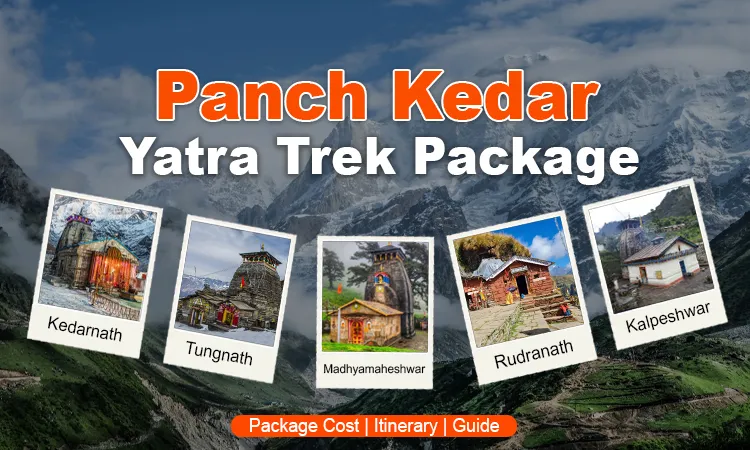
There is a very specific kind of silence so that you only find in the high Himalayas a silence that doesn't feel empty, but full of ancient stories. The Panch Kedar Yatra is your invitation to step into that silence. It is not just a trekking circuit; it is a profound journey into the heart of "Dev Bhoomi" (The Land of Gods). This is a holy journey that links to five old temples of Lord Shiva: Kedarnath, Tungnath, Rudranath, Madhyamaheshwar, and Kalpeshwar.
For today's people, this Yatra is a very good chance to take a break from phones and a very busy life. It also helps you to connect with nature and faith. You will also walk through fresh green forests, open fields, and visit old temples that people have prayed in for many years.
Our Panch Kedar Yatra Trek Package is made to help you at each and every step. We can also manage travel and stay so that you can enjoy the journey. You will taste local food, spend quality time, and feel happy when you reach each temple. Whether you can come for prayer or for the mountains, this journey will touch your heart.
The Legend behind Panch Kedar
The Panch Kedar story is very easy to understand. After the war of Kurukshetra, the Pandava brothers won, but they felt very bad and very unhappy. They thought they had done wrong by killing their own people. To feel peaceful, they went to the Himalayas to find Lord Shiva.
Lord Shiva did not meet them right away. He became a bull and hid in the fields of Guptkashi.
When the Pandavas recognized him, Bhima tried to catch the bull, but it vanished into the earth. Different parts of the bull's divine form then reappeared at five specific spots. His hump rose at Kedarnath, his arms at Tungnath, his face at Rudranath, his navel at Madhyamaheshwar, and his hair at Kalpeshwar. Have deeply moved, the Pandavas built stone temples at each of these locations to honor Mahadev. Today, when you touch the cold stone of these shrines, you are not just visiting a building; you are touching a legend of forgiveness and the eternal human search for a very clean slate.
Choosing the Right Time for the Yatra
The Himalayas do not follow our calendar; they also follow the sun and the snow. Selecting the perfect time for Panch Kedar Yatra is the very difference between a golden sunset and a whiteout blizzard.
- The Summer Awakening (May to June): This is the most beautiful time. As the winter snow retreats, the valleys wake up. The famous Himalayan rhododendrons paint the hillsides in shades of crimson and pink. The weather is very gentle enough for long days of trekking, though the evenings still carry a crisp, cool reminder of the altitude.
- The Autumn Clarity (September to October): If you want beautiful views, come in the autumn. After the monsoon rains wash the dust away, the air becomes very neat and clear. The snow-capped peaks of Nanda Devi and Chaukhamba look so sharp against the deep blue sky that they almost seem painted. The trails are very stable, and the crisp air provides a very natural energy boost for the steep climbs.
Important Note: It is better not to travel in July and August because of the heavy rain. The rain makes the paths very slippery and very unsafe, and landslides can happen in the mountains. From November onward, heavy snow covers the high paths, and most routes remain closed for normal travellers.
Insider Tips for a Better Yatra
- The Layering Secret: Don't bring one big, heavy coat. Bring three layers: a t-shirt, a fleece, and a windbreaker. It is very easy to manage your body temperature as you climb.
- Respect the Silence: When you are inside the temples, keep your voice low. The silence is part of the worship.
- Break in Your Shoes: Never wear brand new shoes on day one. Wear them for at least two weeks at home to avoid any painful blisters.
- Carry a Power Bank: Electricity in the high camps is often solar-powered and can be irregular. A good power bank will keep your camera ready for those sunrise shots.
- Drink lots of water: Keep drinking water, even if you don't feel very thirsty. It helps your body to adjust to the high mountains.
How to Reach: Your Gateway to the Hills
The mountains are remote, but getting there doesn't have to be a struggle.
- By Air: Most travelers fly into Jolly Grant Airport in Dehradun. It's a small, friendly airport with regular flights from Delhi and Mumbai. From there, it's a short drive to Haridwar or Rishikesh where our tour begins.
- By Train: Haridwar Junction is the major railhead. The Shatabdi Express from Delhi is the most comfortable and reliable way to reach.
- Our Transport: Once you are with us, we use sturdy, reliable mountain vehicles. In the hills, a comfortable seat and an experienced driver who knows the curves of the road are your best friends. We handle all the local permits and check-posts, so you can just enjoy the view from the window.
Why Choose Panch Kedar Yatra Package
- We know that a Yatra is a very deeply personal experience. Our Panch Kedar Yatra Package isn't a "one-size-fits-all" tour, it is a supported expedition. We handle the heavy lifting the permits, the transport, the gear so you can also focus on the path beneath your feet and the thoughts in your head.
- Real Human Connections: You will be led by guides who call these mountains home. They won't just tell you the height of a peak; they will tell you the local name for a bird or the story behind a village name.
- Authentic Stays: We move away from sterile hotels wherever possible. Instead, we choose local guest houses and home stays where you can sit by a fire, drink a glass of hot rhododendron juice, and feel the warmth of Garhwali hospitality.
- Safety First: High mountains need very extra care. We give you enough rest so your body can get used to the height. We can carry oxygen and first aid for safety. This journey is very special, and your safety will be our first concern.
The Five Temples of Panch Kedar
Each temple in Panch Kedar is very special and very different.
- Kedarnath (3,583m): A big and famous temple. The mountains behind make it feel strong and important.
Darshan Tip: Wear your warmest layers for the evening Aarti; the temperature drops the moment the sun hides.
- Tungnath (3,680m): It is the highest, yet strangely accessible. The architecture is very simple stone, blending perfectly with the gray rocks.
Darshan Tip: The climb to Chandrashila from here is steep; take it slow and don't rush your breathing.
- Rudranath (3,550m): This is the hermit's temple. It's remote and lonely in the best way possible. There are no crowds here.
Darshan Tip: Bring a headlamp; the temple cave is dark, and the trails can be tricky in the twilight.
- Madhyamaheshwar (3,497m): Known for its aesthetic beauty. The "navel" worship represents the center of energy.
Darshan Tip: The local "Bhandara" (community meal) is often a wonderful way to connect with other Yatris.
- Kalpeshwar (2,200m): Small, ancient, and cozy. It's the only one open all year.
Darshan Tip: It's a very quiet spot, perfect for spending 20 minutes in deep meditation inside the cave passage.
Stay and Meals during the Yatra
When you are trekking 10 to 15 kilometres a day, your "home" for the night matters.
- The Stay: In towns like Guptkashi and Rudraprayag, you will get clean, comfortable hotels with hot water and soft beds. However, as you go higher into places like Panar or Madhyamaheshwar, the accommodation can become simpler. You might stay in a "homestay" where you can be treated like family, or in high-quality trekking tents. It is very rustic, but it is very real.
- The Food: You stick to "mountain food" simple, vegetarian, and high in energy. You'll get plenty of Dal, Rice, and fresh Roti. You will also introduce yourself to local Garhwali dishes like 'Mandua' (finger millet) rotis and 'Chainsoo' (ground black gram). It's the kind of food that fuels a trekker.
- Water: We can encourage you to carry a very reusable bottle. We provide filtered or boiled water at our stops to make sure you stay hydrated without any creating plastic waste in the mountains.
Physical and Mental Preparation
The Panch Kedar Yatra is a physical challenge, but it's also a mental one.
- Physical Prep: You don't need to be a marathon runner, but you should start walking 5-6 km a day at least two months before the trip. It's about building "stamina," not speed.
- Mental Prep: There will be moments when your legs hurt or the rain starts to fall. That's part of the Yatra. Preparing your mind to accept the mountain as it is sometimes tough, always beautiful is key to enjoying the trip.
- Medical Kit: We carry a general kit, but you should bring your own personal medicines, some blister pads, and some hydration salts (ORS). If you have a history of blood pressure or heart issues, a quick chat with your doctor before booking is a must.
Panch Kedar Yatra Cost Details
We believe in transparent pricing. A 16-day expedition in the high Himalayas involves a lot of moving parts.
- What's included: Your transport from day 1 to 16, all your accommodations, three hearty vegetarian meals a day, trekking permits, forest fees, and the expertise of our guides and porters.
- What's Not: Personal expenses like laundry or extra snacks, any pony or palanquin rides you choose to take, and your travel to and from Haridwar/Dehradun.
- The Value: When you book a package, you are paying for the safety net. If a road is blocked, we find the alternative. If a guest feels the altitude, we have the oxygen. That peace of mind is what makes the Yatra truly enjoyable.
Conclusion
The Panch Kedar Yatra is not just a walk; it is a very special journey for your heart. You will see the world as it is beautiful, quiet, and peaceful. From the high peaks of Tungnath to the silent caves of Kalpeshwar, each and every step tells a story, and every temple visit is very special.
Our 16-day Panch Kedar Yatra Package will help you and give you freedom. We will arrange everything for you. If you feel the mountains calling or hear a temple bell, it is time to get ready. The way of the Pandavas is ready, and takes the blessings of Lord Shiva. Let's go on this journey together. Har Har Mahadev!
Panch Kedar Yatra Trek Itinerary 16 Days
Day 1 : Drive from Rishikesh to Pipalkoti
You leave the noise of Rishikesh behind and head upstream. The drive follows the Alaknanda, and watching the blue water crash at the Devprayag confluence is always a highlight. You can also feel the air getting colder and thinner as you climb toward Pipalkoti.
- Altitude: 1,340 m / 4,400 ft
- Drive Distance: 215 km | 8-9 hours
Day 2 : Drive from Pipalkoti to Kalpeshwar and Back
First stop is Kalpeshwar. It is tucked away in a cave and feels like a well-kept secret. Walking through the Urgam Valley is like stepping back in time, just terraced farms and quiet paths. Lord Shiva's hair is worshipped here, and the vibe is very pure peace. You will head back to Pipalkoti tonight, likely feeling a lot lighter in the head and heart after our first blessing.
- Altitude: 2,100 m / 6,900 ft
- Drive Distance: 70 km | 4 hours
Day 3 : Drive to Sagar Village and Trek to Lyuti Bugyal
Time to put your boots to work. Sagar Village is where the pavement ends. The climb through the oak forest is a bit of a lung burner, but once you break out into the meadows of Lyuti Bugyal, you forget the struggle. It is just endless green grass under a massive sky. Sleeping in a tent out here really makes you realize how small we actually are.
- Altitude: 3,000 m / 10,000 ft
- Drive Distance: 30 km | 1 hour
- Trek Distance: 8 km | 6-7 hrs
Day 4 : Trek from Lyuti Bugyal to Rudranath and Back
This is a long day, but it is incredibly special. Crossing those rocky ridges feels like walking on the rooftop of the world. Rudranath is a rock temple where Shiva's face looks out at the snowy peaks. It is lonely, rugged, and beautiful. Staying here is a chance to hear nothing but the wind and feel that ancient Himalayan magic before you head back to your camp.
- Altitude: 3,550 m / 11,600 ft
- Trek Distance: 18 km | 10-12 hrs
Day 5 : Trek from Lyuti Bugyal to Sagar and Drive to Chopta
You are heading back down to Sagar today. The descent is easier on the lungs, but you have to watch your knees on the steep parts! After hitting the road, we'll drive over to Chopta. They call it 'Mini Switzerland' because of the lush meadows and cedar trees.
- Altitude: 2,900 m / 9,500 ft
- Trek Distance: 8 km | 4-5 hrs
- Drive Distance: 35 km | 1-2 hrs
Day 6 : Trek from Chopta to Tungnath and Back
Today, you head up to the highest Shiva temple on earth. Tungnath is a steady climb, but the energy of the place is electric. If you have some gas left in the tank, push up to the Chandrashila summit. The 360-degree view of the white giants is life-changing. You'll feel like you have conquered something big inside yourself when you finally stand at the top.
- Altitude: 3,700 m / 12,000 ft
- Trek Distance: 9 km | 7-8 hrs
Day 7 : Drive from Chopta to Ransi and Trek to Gaundhar
Heading into the deep Madmaheshwar Valley now. The drive to Ransi is pretty, but walking down to Gaundhar is where the real peace is. You'll cross some rushing rivers and pass through tiny villages where life is still simple. Falling asleep to the sound of the water tonight is the best therapy after all those miles on foot.
- Altitude: 1,800 m / 5,800 ft
- Drive Distance: 52 km | 3-4 hrs
- Trek Distance: 6 km | 4-5 hrs
Day 8 : Trek from Gaundhar to Madmaheshwar
Today is a real test for the legs. Climbing up to the temple is slow going through the forest, but then it opens up to a massive green bowl. Madmaheshwar is where Shiva's belly is worshipped. It's incredibly quiet and still. The temple sitting there against the massive, snowy Chaukhamba peaks is a sight that hits you right in the chest.
- Altitude: 3,200 m / 10,600 ft
- Trek Distance: 10 km | 6-7 hrs
Day 9 : Trek from Madmaheshwar to Ransi and Drive to Guptakashi
Saying goodbye to the high meadows is always bittersweet. Gravity helps you get down to Ransi much faster today. You will notice the little things you missed on the way up: different flowers, mountain birds, and the smell of the pine. Once we hit the road, we'll drive to Guptakashi.
- Altitude: 1,400 m / 4,500 ft
- Trek Distance: 16 km | 8-9 hrs
- Drive Distance: 45 km | 2-3 hrs
Day 10 : Drive to Gaurikund and Trek to Kedarnath
This is the big one. You join the crowd of pilgrims headed up to Kedarnath. It is a long, tough walk, but the energy of everyone chanting keeps you moving forward. Seeing that ancient stone temple tucked under the massive glaciers is a moment that stays with you forever.
- Altitude: 3,600 m / 11,700 ft
- Drive Distance: 35 km | 2-3 hrs
- Trek Distance: 16 km | 8-9 hrs
Day 11 : Descend from Kedarnath to Gaurikund and back to Guptakashi
Walking back down to the valley is a time to reflect. You've seen all five Kedars now, and that's no small feat. Your legs might be sore, but your spirit is likely buzzing. Once you drive back to Guptakashi, it's all about sharing stories with other travellers and having one last celebratory dinner together.
- Altitude: 1,400 m / 4,500 ft
- Drive Distance: 35 km | 2-3 hrs
- Trek Distance: 16 km | 8-9 hrs
Day 12 : Drive from Guptakashi to Rishikesh
One last drive through the mountains back to where you started. Watching the river widen as you get closer to Rishikesh is a strange feeling. You are going back to the world, but you're not the same person who left sixteen days ago. You are returning with a much calmer mind and the quiet strength of the high peaks inside you. The journey ends here, but the memories won't.
- Altitude: 400 m / 1,400 ft
- Drive Distance: 180 km | 7-8 hrs
Day 13 : Visit Triyuginarayan Temple (Sacred Detour)
Today you take a slower pace to visit Triyuginarayan. This is the spot where Shiva and Parvati were married, and they say the fire in the temple has been burning for ages.
- Altitude: 1,980 m / 6,500 ft
- Drive Distance: 40 km (round trip) | 3 hrs
Day 14 : Exploration of Ukhimath (Winter Seat of Kedarnath)
You'll visit Ukhimath today, which serves as the winter home for the idols of Kedarnath and Madmaheshwar. It is a place steeped in history and local legend. Walking around the town and the old temples gives you a deeper look into the culture of the Garhwal people.
- Altitude: 1,310 m / 4,300 ft
- Drive Distance: 20 km | 1 hr
Day 15 : Visit Dhari Devi and Drive to Srinagar
On your way back, you will stop at the Dhari Devi temple, which sits right over the river. She's considered the guardian of the mountains. The setting is spectacular and the energy is very strong. Afterward, you'll continue our drive down to Srinagar.
- Altitude: 560 m / 1,840 ft
- Drive Distance: 100 km | 4-5 hrs
Day 16 : Final Drive from Srinagar to Rishikesh
The last part of the trip takes you back to Rishikesh by the Ganges. As the mountains fade behind you, you feel different inside.
- Altitude: 340 m / 1,120 ft
- Drive Distance: 110 km | 4-5 hrs.
Price Details
| Tour Name | Panch Kedar Yatra Trek Package |
|---|---|
| Duration | 16 Days / 15 Nights |
| Destinations | Rishikesh → Pipalkoti → Kalpeshwar → Sagar → Lyuti Bugyal → Rudranath → Chopta → Tungnath → Ransi → Gaundhar → Madmaheshwar → Guptakashi → Kedarnath → Triyuginarayan → Ukhimath → Dhari Devi → Srinagar |
| Tour Price | ₹ On Request |
Chat with specialist who can help plan your tour!
Frequently Asked Questions
Q1. Is it safe to travel alone?
Ans. Yes, it is very safe. People in Garhwal are very kind. In our group, you will have friendly people and a guide to keep you safe.
Q2. Do I need to carry a big bag?
Ans. No. Our helpers will carry your heavy luggage. You only need a small bag for water, a camera, and your jacket.
Q3. Will I have a mobile signal?
Ans. In towns like Guptkashi, yes. On the treks to Rudranath or Madhyamaheshwar, signals are very rare. Think of it as a much-needed digital detox.
Q4. What if I cannot walk the whole way?
Ans. For Kedarnath and Tungnath, ponies are available. For the other three, the trails are more rugged. We recommend a good level of fitness so you can enjoy the walk.
Q5. Is the water safe?
Ans. We give clean water. Don't drink river or stream water unless the guide says it is okay.
Q6. What shoes should I wear?
Ans. High-ankle trekking shoes are best. They keep your ankles safe on rocky paths and help you walk without slipping on wet ground.
Q7. Are there western toilets?
Ans. In hotels, yes. In the higher mountain camps, you will likely find clean, traditional "squat" toilets or dry pit toilets.
Q8. Can I eat meat?
Ans. No. Only vegetarian food is served during the Yatra.
Q9. How much money should I bring?
Ans. Bring some money for snacks, tips, and small things. There are few ATMs outside big towns.
Q10. How many people are in a group?
Ans. Groups are small, about 8 to 12 people, so everyone can get help and attention.
Helicopter Tours
- Chardham Yatra by Helicopter
- Badri Kedar Yatra by Helicopter
- Badrinath Yatra by Helicopter
- Kedarnath Yatra by Helicopter
- Do Dham Yatra by Helicopter
- Char Dham Yatra by Helicopter
- Gangotri Yatra by Helicopter
- Manimahesh Yatra by Helicopter
- Muktinath Yatra by Helicopter
- Kailash Mansarovar Yatra by Helicopter
- Vaishno Devi Yatra by Helicopter
- Amarnath Helicopter Yatra from Baltal
- Amarnath Yatra by Helicopter

 Call
Call WhatsApp
 Enquiry